

 Visualizar na parede
 Compartilhar
 Compartilhar
 Detalhes
 Guia
Guia

 Baixar imagem
 Semelhantes
 Raio X
 Ver diaporama
 Estatísticas
Novgorod
 Oil On Canvas
- WallArt
- Contemporary Realism
 1944
1944 225.0 x 300.0 cm
 Ler mais
Adquira uma imagem digital de alta resolução e aprimorada, muito superior à prévia online.
Cada arquivo é meticulosamente preparado por nossos especialistas internos, utilizando ferramentas avançadas e retoques manuais de alta precisão. Garantimos que cada imagem apresente clareza excepcional, fidelidade de cores e detalhes minuciosos.
O arquivo final é entregue por e-mail em até 72 horas, otimizado para uso imediato em ambientes profissionais, editoriais e de impressão. Esta é a mesma qualidade utilizada por estúdios de design de alto nível, editoras e galerias.
Imagem Digital
Baixe um arquivo de alta resolução para exibição pessoal, impressão e projetos criativos. ( Alternar para Impressão Comprar pintura feita à mão)
Incluído em cada compra de imagem digital
Entrega Digital Especializada e Garantida
Ao escolher o OriginalUniqueArt.com, você não está apenas adquirindo uma imagem — você está recebendo uma obra de arte digital profissionalmente aprimorada, elaborada com precisão e com garantia de satisfação. Aqui está tudo o que acompanha seu pedido, automaticamente:

Entrega rápida por e-mail
O seu arquivo de imagem digital em alta resolução será enviado por e-mail em até 72 horas após o pedido — pronto para uso imediato.

Arquivo Digital com IA Otimizado
Sua obra de arte é otimizada profissionalmente por meio de ferramentas avançadas de IA e edição manual, garantindo o máximo de detalhes, clareza e precisão de cores.

Reenvio gratuito vitalício
Apagou ou perdeu o seu ficheiro acidentalmente? Não se preocupe – nós reenviamos para si a qualquer momento, gratuitamente.

Sem Taxas de Importação - Sempre
Desfrute da sua obra de arte instantaneamente, sem taxas alfandegárias, impostos ou custos de entrega — downloads digitais são sempre isentos de taxas.

Garantia de Fidelidade de Cores
Garantimos que sua imagem digital reflita as cores originais com a maior fidelidade possível, utilizando ferramentas profissionais e gerenciamento de cores.

Garantia de satisfação de 100 dias
Se não estiver satisfeito com a sua imagem digital, nós a revisaremos ou reembolsaremos 100% dentro de 100 dias — sem perguntas.

Garantia de Reembolso 100%
Não está satisfeito? Receba o reembolso total em até 100 dias após o recebimento do seu arquivo digital — sem perguntas.

Descontos para pedidos em lote
Compre 3 imagens, economize 10% - Compre 5, economize 15% - Compre 10+, economize 20%. Ideal para projetos criativos, galerias e agências.
A Vibrant Echo of Novgorod’s Soul
Pyotr Konchalovsky's “Novgorod,” completed in 1944, isn’t merely a depiction of a Russian city; it’s an impassioned testament to its enduring spirit. Executed in Realism style—though undeniably infused with the expressive fervor characteristic of Fauvist tendencies—the painting captures a pivotal moment in Soviet history while simultaneously honoring Novgorod's rich cultural heritage. The artwork immediately draws the eye with its audacious color palette, dominated by blues and greens that shimmer across the riverbanks and foliage, juxtaposed against fiery reds, oranges, and yellows punctuating the architectural facades. This deliberate chromatic boldness wasn’t simply stylistic choice; it mirrored the artistic impulse of the time—a desire to break free from academic conventions and convey emotion directly through pigment.- Composition & Perspective: Konchalovsky skillfully employs a pyramidal composition, anchoring the eye on the towering blue domes of two churches that dominate the skyline. Overlapping elements create depth, guiding the viewer’s gaze from the bustling riverfront—where docked boats laden with sails convey an impression of movement and activity—upwards towards these monumental religious symbols.
- Technique & Texture: The painting demonstrates Konchalovsky's mastery of oil on canvas. Thick brushstrokes imbue the surfaces with palpable texture, particularly evident in the reflections on the water and the solidity of the buildings. These textured marks aren’t merely decorative; they contribute to the overall emotional impact, conveying a sense of immediacy and capturing the atmosphere of Novgorod.
- Symbolism & Historical Context: Novgorod itself holds immense symbolic significance within Russian history—a medieval republic that fiercely resisted Mongol domination and preserved its traditions despite centuries of upheaval. The churches depicted represent not only faith but also resilience and continuity—values deeply ingrained in the collective consciousness of the Soviet era.
Further Exploration
- Discover more about Pyotr Konchalovsky’s artistic journey here
- Admire “Novgorod” alongside other masterpieces of Russian Impressionism here
- Explore the Cathedral of St. George in Novgorod and its artistic legacy here
Perguntas e Respostas
Qual é o tamanho de impressão recomendado para "Novgorod", de Piotr Konchalovsky?
O tamanho de impressão recomendado para "Novgorod", de Piotr Konchalovsky é Large.
Piotr Konchalovsky, criador(a) de "Novgorod", é conhecido(a) por outros nomes?
Piotr Konchalovsky também é conhecido pelos nomes Petr Konchalovsky, Pyotr Petrovich Konchalovsky.
Qual é a técnica e a data de criação de "Novgorod", de Piotr Konchalovsky?
A técnica de "Novgorod", de Piotr Konchalovsky é Oil On Canvas, e a obra data de 1944.
Biografia do Artista
A Life Immersed in the Russian Artistic Spirit
Pyotr Petrovich Konchalovsky, born February 21, 1876, in the village of Slavianka near Kharkiv, was more than just a painter; he was a visual chronicler of a Russia undergoing profound transformation. His artistic journey mirrored the nation’s own tumultuous passage through revolution and ideological shifts, marked by a relentless search for new forms of expression. Konchalovsky's upbringing steeped him in an atmosphere rich with intellectual and creative currents. His father, Petr Petrovich Konchalovsky, was a respected translator and art publisher whose Moscow home became a vibrant hub frequented by leading artists of the era—Valentin Serov, Mikhail Vrubel, Vasily Surikov all graced their residence after the family’s move to the capital in 1889. This early exposure wasn't merely observational; it instilled within young Pyotr a deep appreciation for artistic expression and laid the foundation for his future path. Weekends spent absorbing the masterpieces at the Tretyakov Gallery proved formative, shaping his aesthetic sensibilities with the power of Russian masters.From Parisian Influences to Avant-Garde Innovation
Konchalovsky’s formal training began at the Moscow School of Painting, Sculpture and Architecture, but a pivotal period followed in Paris from 1896 to 1898 at the Académie Julian. This immersion in the French art world proved transformative. He encountered the groundbreaking work of Paul Cézanne and Vincent van Gogh, artists who challenged conventional representation and explored new ways of perceiving form and color. A subsequent journey to Arles allowed him a deeper understanding of Van Gogh’s artistic vision—a pilgrimage into the heart of expressive intensity. Returning to Russia, he continued his studies at the Imperial Academy of Arts in Saint Petersburg, graduating in 1907. However, it was upon his return that Konchalovsky truly began to forge his own distinctive style. He became a central figure in the Russian avant-garde movement, co-founding the influential “Jack of Diamonds” (Knave of Diamonds) society in 1910. This group rejected academic traditions and championed experimentation, seeking inspiration not only from Western European modernism but also from Russia’s own folk art traditions—icons, tavern signs, and colorful popular prints known as *lubok*. He was a master of observation, capable of transforming the mundane into something extraordinary through the power of his vision.Navigating Shifting Ideologies: Style and Subject Matter
Konchalovsky’s artistic style evolved throughout his career, reflecting both personal exploration and the changing political climate of Russia. Initially influenced by Fauvism and Cézanne, his early works were characterized by bold colors, simplified forms, and a focus on structure. Paintings like “Still Life with a Coffeepot” exemplify this period, showcasing a vibrant palette and a dynamic composition. Following service in the Russian army during World War I, Konchalovsky’s style began to shift. The rise of Socialist Realism under the Soviet regime demanded art that served ideological purposes, celebrating socialist ideals and portraying prominent figures. While this represented a departure from his earlier avant-garde explorations, Konchalovsky adapted, becoming known for his ceremonial portraits. Despite these changes, he maintained a distinctive artistic voice, infusing even his more politically charged works with a sense of solidity and monumentality. Throughout his prolific career—estimated at over 5,000 pieces—he consistently explored still lifes, landscapes, and portraiture, demonstrating a remarkable versatility and unwavering commitment to the art of painting.A Prolific Output: Key Themes & Subjects
Konchalovsky’s vast body of work reveals recurring themes and subjects that demonstrate his artistic preoccupations. Still lifes were a constant throughout his career, allowing him to explore form, color, and composition in a controlled environment. He often depicted everyday objects—fruits, flowers, dishes—imbuing them with a sense of weight and presence. He was particularly drawn to the vibrant colors and textures of Russian folk art, which informed his approach to both still life and landscape painting. Landscapes, particularly those inspired by his travels, also held a special place in his oeuvre, capturing the beauty and grandeur of the natural world. However, it was perhaps in portraiture that Konchalovsky truly excelled, creating compelling likenesses of his contemporaries, often imbued with psychological depth. His portraits ranged from intimate depictions of family members to grand ceremonial representations of Soviet officials. He also experimented with genre scenes and historical subjects, demonstrating a willingness to tackle diverse artistic challenges. The sheer volume of his work—over 5,000 pieces—is a testament to his tireless dedication and unwavering commitment to the art of painting.Legacy and Enduring Significance
Pyotr Konchalovsky’s contribution to Russian art is undeniable. He bridged the gap between early modernism and Socialist Realism, navigating complex political currents while remaining a significant artistic force. His first solo exhibition at the Tretyakov Gallery in 1922 solidified his reputation as one of Russia's leading artists. Beyond his own work, Konchalovsky fostered a family deeply involved in the arts; his son, Mikhail Petrovich Konchalovsky, became a renowned film director, and his daughter, Natalia Konchalovskaya, was an accomplished artist herself. His paintings are not merely aesthetically pleasing objects but historical documents, reflecting the tumultuous period in which they were created. They offer valuable insights into the evolution of Russian art and the challenges faced by artists operating within a rapidly changing society. Konchalovsky’s ability to adapt while maintaining a distinctive style cemented his place as a key figure in Russian art history, leaving behind a legacy that continues to inspire and captivate audiences today.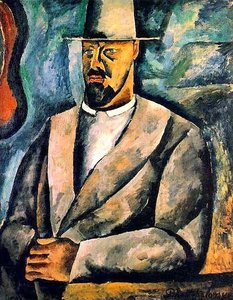
Piotr Konchalovsky
1876 - 1956 , Rússia
Breve Biografia
- Artistic Movement Or Style: Avant-garde, Fauvism, Realismo
- Artists Or Movements Influenced By This Artist:
- Mir Iskusstva
- Jack of Diamonds
- Artists Who Influenced This Artist:
- Cézanne
- Van Gogh
- Date Of Birth: 21/02/1876
- Date Of Death: 02/02/1956
- Full Name: Pyotr Petrovich Konchalovsky
- Nationality: Russo
- Notable Artworks:
- Natureza Morta
- Xaveco
- Retratos
- Place Of Birth: Kharkiv, Rússia