

 Visualizar em escala
 Enviar
 Compartilhar
 Ver detalhes
 Guia de Obras do Aluno

 Baixar imagem
 Semelhantes
 Raio X
 Apresentação de slides
 Estatísticas
Deux Children Sitting,


 Ver mais
Adquira uma imagem digital de alta resolução e aprimorada, muito superior à prévia online.
Cada arquivo é meticulosamente preparado por nossos especialistas internos, utilizando ferramentas avançadas e retoques manuais de alta precisão. Garantimos que cada imagem apresente clareza excepcional, fidelidade de cores e detalhes minuciosos.
O arquivo final é entregue por e-mail em até 72 horas, otimizado para uso imediato em ambientes profissionais, editoriais e de impressão. Esta é a mesma qualidade utilizada por estúdios de design de alto nível, editoras e galerias.
Imagem Digital
Baixe um arquivo de alta resolução para exibição pessoal, impressão e projetos criativos. ( Alternar para Impressão Encomendar reprodução pintada à mão)
Incluído em cada pedido de imagem digital
Entrega Digital Especializada e Garantida
Ao escolher o OriginalUniqueArt.com, você não está apenas adquirindo uma imagem — você está recebendo uma obra de arte digital profissionalmente aprimorada, elaborada com precisão e com garantia de satisfação. Aqui está tudo o que acompanha seu pedido, automaticamente:

Entrega rápida por e-mail
O seu arquivo de imagem digital em alta resolução será enviado por e-mail em até 72 horas após o pedido — pronto para uso imediato.

Arquivo Digital com IA Otimizado
Sua obra de arte é otimizada profissionalmente por meio de ferramentas avançadas de IA e edição manual, garantindo o máximo de detalhes, clareza e precisão de cores.

Reenvio gratuito vitalício
Apagou ou perdeu o seu ficheiro acidentalmente? Não se preocupe – nós reenviamos para si a qualquer momento, gratuitamente.

Sem Taxas de Importação - Sempre
Desfrute da sua obra de arte instantaneamente, sem taxas alfandegárias, impostos ou custos de entrega — downloads digitais são sempre isentos de taxas.

Garantia de Precisão de Cores
Garantimos que sua imagem digital reflita as cores originais com a maior fidelidade possível, utilizando ferramentas profissionais e gerenciamento de cores.

Garantia de satisfação de 100 dias
Se não estiver satisfeito com a sua imagem digital, nós a revisaremos ou reembolsaremos 100% dentro de 100 dias — sem perguntas.

Garantia de Reembolso 100%
Não está satisfeito? Receba o reembolso total em até 100 dias após o recebimento do seu arquivo digital — sem perguntas.

Descontos para pedidos em lote
Compre 3 imagens, economize 10% - Compre 5, economize 15% - Compre 10+, economize 20%. Ideal para projetos criativos, galerias e agências.
The Enigmatic Grace of Pinturicchio: A Renaissance Master
Bernardino di Betto, universally known as Pinturicchio – a nickname affectionately bestowed upon him for his diminutive stature – stands as a captivating figure within the vibrant tapestry of 15th-century Italian art. Born in Perugia in 1454, Pinturicchio’s life unfolded during a period of profound artistic transformation, the High Renaissance blossoming across Italy while he carved out a unique and enduring legacy. Unlike the monumental ambition of giants like Leonardo da Vinci or the dramatic realism of Michelangelo, Pinturicchio cultivated a style defined by refined grace, intricate detail, and a luminous, decorative sensibility – a testament to his exceptional skill in transforming established forms into something uniquely captivating.
His early training remains somewhat shrouded in mystery, likely nurtured within the workshops of lesser-known Perugian painters. However, it’s clear that Pinturicchio absorbed the essence of the Umbrian School of Painting, inheriting its characteristic elegance and a deep appreciation for color. This foundation would later inform his work across various commissions, from the opulent Borgia Apartments in Rome to the serene beauty of the Piccolomini Library in Siena. His career wasn’t one of revolutionary upheaval, but rather a meticulous refinement – a testament to his mastery of technique and his ability to imbue even seemingly simple subjects with profound emotional resonance.
“Deux Children Sitting”: A Study in Innocence and Connection
"Deux Children Sitting" is a captivating depiction of two young children nestled together on the ground, their hands clasped in a gesture of quiet contemplation. Painted in 1513 by Pinturicchio, this work transcends mere representation; it’s an exploration of innocence, vulnerability, and the profound connection between human beings. The scene unfolds with remarkable intimacy – the children are positioned close to one another, bathed in soft light that suggests a timeless serenity. Their nakedness is not presented as provocative but rather as a symbol of purity and unburdened joy, highlighting their inherent beauty and innocence.
The composition itself is remarkably balanced, with the figures occupying the central space and creating a sense of harmonious unity. The surrounding details – the scattered smaller figures, the suggestion of a landscape beyond – contribute to a feeling of quiet contemplation and invite the viewer to share in the children’s peaceful moment. Pinturicchio's masterful use of color—muted earth tones punctuated by subtle highlights—further enhances the work’s sense of tranquility and understated beauty.
A Master at Work: Technique and Context
Pinturicchio was renowned for his meticulous technique, a hallmark of his style. He employed tempera on panel, a medium that allowed him to achieve remarkable detail and luminosity. His brushwork is incredibly delicate, with subtle gradations of color creating a sense of depth and texture. The artist’s attention to anatomical accuracy is evident in the children's forms, yet he avoids the rigid formality often associated with Renaissance portraiture, instead favoring a more fluid and expressive approach.
Furthermore, understanding Pinturicchio requires acknowledging his historical context. He worked during a period of immense artistic innovation, influenced by Perugino, Luca Signorelli, and other masters of the Umbrian School. Yet, he maintained a distinct voice, prioritizing grace and decorative elegance over dramatic grandeur. His work reflects the humanist ideals of the Renaissance, celebrating human beauty and fostering a sense of connection between individuals and the natural world.
Rediscovering Pinturicchio: Reproductions for Today
Today, “Deux Children Sitting” is available as a stunning hand-painted reproduction by OriginalUniqueArt.com, offering art lovers the opportunity to bring this timeless masterpiece into their homes or offices. The meticulous attention to detail and vibrant colors of the original are faithfully reproduced using traditional techniques, ensuring that every piece captures the essence of Pinturicchio’s artistic vision. Whether you're an admirer of Renaissance art, a collector seeking unique pieces, or simply someone who appreciates beauty and tranquility, this reproduction offers a captivating glimpse into the world of one of Italy’s most enigmatic masters.
Perguntas e Respostas
"Deux Children Sitting,", de Pinturicchio, está em domínio público? E por quê?
O status de direitos autorais de "Deux Children Sitting," - em domínio público - seus direitos autorais expiraram - decorre do falecimento do artista em 1513.
Qual tamanho devo imprimir para "Deux Children Sitting," para o meu quarto?
Em um(a) Living Room, sugere-se que "Deux Children Sitting," seja impresso no tamanho Medium.
Qual é a luminosidade de "Deux Children Sitting," de Pinturicchio?
"Deux Children Sitting," de Pinturicchio possui uma luminância Gentle Luminance. A luminância descreve quanta luz as cores parecem refletir.
Biografia do Artista
A Graça Enigmática de Pinturicchio: Um Mestre do Renascimento
Bernardino di Betto, conhecido pelo mundo como Pinturicchio – um apelido carinhosamente atribuído devido à sua estatura diminuta – emergiu do coração artístico de Perugia em 1454. Sua vida desenrolou-se durante um período de imenso fermento cultural, com o Alto Renascimento florescendo por toda a Itália; no entanto, Pinturicidade traçou um caminho único, que fundia a elegância persistente das tradições góticas com as inovaentes descobertas da era. Enquanto gigantes como Leonardo da Vinci e Michelangelo buscavam a perfeição anatômica e o realismo dramático, Pinturicchio cultivou um estilo caracterizado por uma graça refinada, detalhes intrincados e uma sensibilidade decorativa vibrante. Sua jornada não foi de rupturas revolucionárias, mas sim de um requinte primoroso – um testemunho de sua habilidade em transformar formas estabelecidas em algo singularmente cativante.Dos Ateliês Umbros aos Encargos Papais
O treinamento inicial de Pinturicchio permanece, de certa forma, envolto em mistério, embora se acredite que ele tenha aperfeiçoado suas habilidades sob a orientação de mestres perugianos menos conhecidos, como Bonfigli e Fiorenzo di Lorenzo. Um momento crucial surgiu quando ele entrou na órbita de Pietro Perugino, uma figura central da escola umbra. Segundo Giorgio Vasari, Pinturicchio serviu como assistente de Perugino, uma colaboração que indubitavelmente moldou seu desenvolvimento artístico. Essa conexão provou ser fundamental para garantir uma encomenda para a Capela Sistina, em Roma, no início do século XVI. Trabalhando ao lado de alguns dos artistas mais célebres da época – entre eles Botticelli, Ghirlandaio e Signorelli – Pinturicchio contribuiu para este projeto monumental, embora, infelizmente, seus afrescos tenham sido posteriormente destruídos para dar lugar ao Juízo Final de Michelangelo. Esta experiência, contudo, serviu como um degrau essencial, expondo-o a novas influências e consolidando sua reputação.Um Período Prolífico: Roma e os Apartamentos BorgiaLegado e Influência Duradoura
O legado artístico de Pinturicchio é feito de elegância refinada e um artesanato meticuloso. Embora possa não ter possuído o mesmo nível de fama que alguns de seus contemporâneos, sua influência sobre as gerações subsequentes de artistas é inegável. Seu estilo único – uma mistura harmoniosa da graça gótica com a inovação renascentista – ressoou com aqueles que apreciavam a sutileza e o detalhe. Ele demonstrou uma habilidade excepcional em criar composições visualmente deslumbrantes, que eram ao mesmo tempo esteticamente agradáveis e intelectualmente estimulantes. Sua obra na Biblioteca Piccolomini, em Siena, concluída pouco antes de sua morte em 1513, permanece como um testemunho de seu talento duradouro. Os afrescos que retratam cenas da vida do Papa Pio II exibem uma clareza de forma e cor que prefigura o estilo do Alto Renascimento. A arte de Pinturicchio continua a cativar os espectadores hoje, oferecendo um vislumbre de um mundo de beleza, refinamento e maestria artística – um mundo onde o toque delicado de um “pequeno pintor” deixou uma marca indelével na paisagem da arte renascentista italiana.- Obras Notáveis: Afrescos na Capela Sistina (destruídos), Apartamentos Borgia no Vaticano, Biblioteca Piccolomini em Siena.
- Influências: Perugino, Escola de Pintura Umbra, tradições góticas.
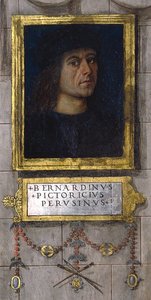
Pinturicchio
1454 - 1513 , Itália
Informações Rápidas
- Artistic Movement Or Style: Renascença
- Artists Who Influenced This Artist:
- Perugino
- Bonfigli
- Fiorenzo di Lorenzo
- Date Of Birth: 1454 Perugia
- Date Of Death: 1513 Siena
- Full Name: Bernardino di Betto
- Nationality: Italian
- Notable Artworks:
- Sistine Chapel
- Borgia Apartments
- Saint Augustine
- Place Of Birth: Perugia Itália