

 Visualizar em escala
 Enviar
 Compartilhar
 Ver detalhes
 Guia de Obras do Aluno

 Baixar imagem
 Semelhantes
 Raio X
 Apresentação de slides
 Estatísticas
A Musical Party
 Oil On Canvas
- WallArt
- Dutch Golden Age
 1675
1675- Early Modern
 106.0 x 137.0 cm
 English Heritage
 Ver mais
Giclée / Impressão de Arte
Impressão giclée ou em tela de qualidade de museu, com produção rápida e opções flexíveis de acabamento. ( Encomendar reprodução pintada à mão Ver Imagem Digital)




P118B $10

P118H $10

P118W $10

P438Z $10

P508JH $12

P508YH $12

P805H $10

P805Z $10

P919BZ $10

P919G $10

P919XJ $10

P959ZH $10

P968JZ $12

W106C $8

W218G $10

W218JH $8

W218Y $10

W307PJ $10

W316G $10

W316PJ $8

W316Y $10

W398PJ $8

W4111J $10

W500HY $15

W500JH $15

W692G $12

W849H $8

W940BG $15

W953PJ $8




Escolha entre os nossos tamanhos pré-definidos que respeitam as proporções originais da obra de arte.

Você pode inserir suas próprias dimensões para se ajustar a uma moldura ou espaço específico. Se o tamanho selecionado não corresponder às proporções da imagem original, iremos recortar a obra de arte ou estender a imagem com uma borda espelhada ou preenchimento sólido. Um mockup digital será enviado para sua aprovação antes do início da produção.
Por favor, observe que a visualização na tela não reflete o recorte ou a extensão real. Apenas o mockup mostrará com precisão a composição final.
Embora tamanhos personalizados estejam disponíveis, recomendamos selecionar uma dimensão da lista predefinida para preservar as proporções originais.
Entrega mundial () em 2 semanas, em vez das 4/5 semanas padrão. (26 Setembro)

Envio expresso gratuito para todo o mundo

Tela de Linho Premium

Seguro de transporte total

Garantia de Reembolso de Impostos Alfandegários

Garantia de Fidelidade de Cor

Política de Devolução em 100 Dias (Apenas para Defeitos)

Garantia de reembolso de 100%

Desconto para múltiplas unidades
 A opção de vidro está disponível apenas para tamanhos inferiores a 110 cm

A Musical Party
Giclée / Impressão de Arte
Dimensões da Reprodução
-


Preço Total
$ 80
The Luminous Heart of Domestic Merriment
To gaze upon this depiction of "A Musical Party" is to step directly into the warm, glowing embrace of the Dutch Golden Age. Pieter de Hooch masterfully captures not merely an event, but a palpable atmosphere—a moment suspended in time where conviviality and artistry intertwine. The scene unfolds within a richly appointed interior, suggesting the comfortable elegance of a prosperous household from 1675. It is a tableau vivant of social grace; one can almost hear the vibrant strains of the violin echoing through the room, mingling with hushed laughter and murmured conversation. De Hooch’s genius lies in his ability to elevate the everyday gathering into something mythic, suggesting that true beauty resides within shared human experience.
Mastery of Light and Domestic Space
Technically, this work is a profound study in light. Pieter de Hooch was renowned for his unparalleled handling of natural illumination, and here it shines through with breathtaking clarity. The light seems to pour in from unseen sources—perhaps an open doorway just beyond the frame—illuminating dust motes dancing in the air and casting those characteristic, gentle shadows that define Dutch genre painting. Notice how the light catches the polished wood of the dining table and reflects softly off the gathered figures. This meticulous attention to naturalism is what makes the scene feel so immediate; it breathes. The composition guides the eye effortlessly across the assembled company—the musicians, the attentive listeners, even the casually placed pets, such as the watchful dogs and the resting cat—all contributing to a sense of ordered, yet joyful, chaos.
A Glimpse into 17th-Century Society
Historically, this painting offers an intimate window into the life of the burgeoning middle class in the Netherlands. These were not scenes of royal excess, but rather celebrations rooted in culture, music, and community—the hallmarks of a society that valued domestic tranquility alongside artistic pursuit. The inclusion of so many figures suggests a gathering of friends or family enjoying leisure time, an activity highly prized during this era. It speaks to a life lived with refinement, where the arts were not mere entertainment, but integral components of social bonding. For the modern admirer, it serves as a poignant reminder of the enduring power of shared cultural moments.
Symbolism and Enduring Warmth
Beyond the surface gaiety, there is a subtle symbolism at play. The music itself acts as the emotional conduit; it binds the disparate individuals into one collective experience. The presence of domestic animals—the dogs and the cat—grounds the lofty celebration in tangible reality, suggesting that life’s greatest joys are often found amidst the familiar comforts of home. When considering this piece for a collector's wall or an interior design focal point, one is not simply acquiring paint on canvas; one is adopting a feeling—a deep, resonant sense of belonging and cultured warmth that transcends the centuries.
Biografia do Artista
primeiros anos e formação
Pieter de Hooch, uma figura proeminente da Idade de Ouro holandesa, nasceu em 20 de dezembro de 1629, em Roterdã, Países Baixos. Ele era o primogênito de cinco filhos de Hendrick Hendricksz de Hooch, um pedreiro, e Annetge Pieters, uma parteira. Pouco se sabe sobre seus primeiros anos, mas acredita-se que tenha trabalhado em Roterdã, Delft e Amsterdã. A formação artística de De Hooch ocorreu em Haarlem, sob a tutela do pintor de paisagens Nicolaes Berchem, ao lado de Jacob Ochtervelt. Este período lançou as bases para o seu futuro sucesso como um mestre em retratar cenas domésticas serenas, frequentemente marcadas pela presença de uma porta aberta que convida o olhar.estilo artístico e temas
A obra de De Hooch é caracterizada por sua atenção meticulosa aos detalhes, pelo naturalismo e pelo uso magistral da luz. Suas pinturas frequentemente celebravam a vida cotidiana, refletindo os valores e as aspções da classe média emergente. Um exemplo notável deste estilo é "o pátio de uma casa em Delft" (1658), que demonstra sua habilidade em capturar os detalhes mais simples do dia a dia. O trabalho de De Hooch também compartilha temas e composições com Emanuel de Witte, mas seu foco nas pessoas e em seus laços afetivos o distingue. Isso fica evidente em obras como "mulher amamentando" (1658) e "mulher com um bebê no colo" (1658), que demonstram seu profundo interesse pelas cenas domésticas.obras notáveis e legado
Algumas das obras mais memoráveis de De Hooch incluem:- "o bebedor alegre" (c. 1650)
- "jogadores de cartas em uma sala iluminada pelo sol" (1658)
- "uma mulher preparando pão e manteiga para um menino" (1661)
museus e coleções
A obra de De Hooch pode ser encontrada em diversos museus, incluindo o Koninklijk Museum voor Schone Kunsten em Antuérpia, Bélgica, que abriga uma vasta coleção de arte europeia do século XV ao XX. Descubra mais sobre Pieter de Hooch e suas obras na OriginalUniqueArt: [https://OriginalUniqueArt.com/@/pieter-de-hooch](https://OriginalUniqueArt.com/@/pieter-de-hooch) /pt/art/show/art-d3b4kt-pt/ (descubra as obras-primas do Koninklijk Museum voor Schone Kunsten, Bélgica)
Pieter de Hooch
1629 - 1694 , Países Baixos
Informações Rápidas
- Artistic Movement Or Style: Século de Ouro Holandês
- Artists Or Movements Influenced By This Artist: ['Johannes Vermeer']
- Artists Who Influenced This Artist:
- Nicolaes Berchem
- Hendrik Sorgh
- Date Of Birth: 20 de novembro de 1629
- Date Of Death: após 1683
- Full Name: Pieter Hendricksz de Hooch
- Nationality: Holandês
- Notable Artworks:
- Pátio de uma casa em Delft
- A Dutch Courtyard
- Place Of Birth: Roterdã, Países Baixos
Artigos Relacionados

Goya: As 25 Obras-Primas que Definem um Mestre da Arte Espanhola | OriginalUniqueArt
Descubra as 25 obras-primas de Francisco Goya, o mestre espanhol do Romantismo. Explore retratos icônicos, gravuras impactantes e a história por trás de 'Saturno Devorando seu Filho' e 'A Majas'. Encontre reproduções de arte exclusivas para decorar sua casa com OriginalUniqueArt.com.

Golden Light & Dutch Skies: The Timeless Magic of Dutch Golden Age Landscapes
Discover the breathtaking beauty of Dutch Golden Age landscapes. Explore the mastery of light, chiaroscuro, and 17th-century realism through an expert art history lens, celebrating the enduring legacy of the Dutch Masters for discerning collectors and art lovers.
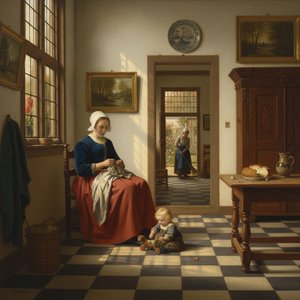
Pieter de Hooch: Illuminating Dutch Domestic Life & Golden Age Charm
Explore the captivating world of Pieter de Hooch, a master of Dutch Golden Age painting. Discover his innovative use of light, intimate domestic scenes, and lasting influence on art history. Learn more at OriginalUniqueArt.

Willem van de Velde the Elder: Master of Maritime Painting & Chronicler of the Dutch Golden Age
Discover the captivating maritime paintings of Willem van de Velde the Elder, a master chronicler of the Dutch Golden Age. Explore his unparalleled realism and lasting influence on naval art history.

A Era de Ouro Holandesa: 10 Mestras-Obras Imperdíveis para Decorar com Arte
Descubra as 10 obras-primas da Era de Ouro Holandesa! Explore a história, técnica e beleza atemporal de Rembrandt, Vermeer e outros mestres. Encontre reproduções de arte exclusivas para decorar sua casa com elegância em OriginalUniqueArt.com.


