
 Visualizar na parede
 Compartilhar
 Compartilhar
 Detalhes
 Guia
Guia

 Baixar imagem
 Semelhantes
 Raio X
 Ver diaporama
 Q&A
Q&A Estatísticas
Musical Trio


 Ler mais
Giclée / Impressão de Arte
Impressão giclée ou em tela de qualidade de museu, com produção rápida e opções flexíveis de acabamento. ( Comprar pintura feita à mão Alternar para Imagem Digital)




































Escolha entre os nossos tamanhos pré-definidos que respeitam as proporções originais da obra de arte.

Insira a largura e a altura desejadas para se ajustarem à sua moldura ou parede. Uma impressão pode ser apenas cortada, nunca ampliada além da imagem original; portanto, um tamanho com proporções diferentes resultará na perda de parte da imagem. Enviamos uma maquete digital para sua aprovação antes de realizarmos a impressão. A imagem exibida nesta página não mostra o corte real — apenas a maquete o faz.
Entrega mundial () em 2 semanas, em vez das 4/5 semanas padrão. (3 Novembro)

Envio expresso gratuito para todo o mundo

Tela de Linho de Alta Qualidade

Seguro de transporte completo

Garantia de Reembolso de Impostos Alfandegários

Garantia de Fidelidade Cromática

Política de Devolução em 100 Dias (Apenas para Defeitos)

Garantia de reembolso de 100%

Oferta de desconto por quantidade
 A opção de vidro está disponível apenas para tamanhos inferiores a 110 cm

Musical Trio
Giclée / Impressão de Arte
Tamanho da Reprodução
-


Preço Total
€ 71
A Moment of Refined Leisure: Pieter de Grebber's "Musical Trio"
Step into a world of quiet elegance and artistic refinement with Pieter de Grebber’s captivating “Musical Trio,” painted in 1623. This exquisite oil on canvas transports us to the intimate setting of a Dutch Golden Age home, where music and intellectual pursuits intertwine. The scene depicts three figures – a woman seated at a desk, a gentleman attentively listening, and a young boy observing with rapt attention – engaged in what appears to be a shared musical experience. De Grebber masterfully captures a fleeting moment of domestic harmony, inviting viewers to contemplate the values and aesthetics of 17th-century Dutch society.Style & Technique: Baroque Realism
De Grebber’s style firmly resides within the Baroque tradition, yet infused with a distinct classicist sensibility influenced by his exposure to Peter Paul Rubens' work. The painting showcases remarkable realism, evident in the meticulous rendering of fabrics – note the delicate lace and intricate embroidery adorning the woman’s attire – and the nuanced expressions on each figure’s face. The artist employs chiaroscuro—the dramatic use of light and shadow—to create depth and three-dimensionality, drawing the eye to the central figures while subtly obscuring the background. This technique not only enhances the realism but also contributes to a sense of intimacy and focused attention within the scene. The brushwork is smooth and controlled, characteristic of Dutch Golden Age painting, allowing for incredible detail without sacrificing overall harmony.Historical Context & Symbolism
Created during the Dutch Golden Age (roughly 1602-1702), a period of unprecedented economic prosperity and cultural flourishing in the Netherlands, "Musical Trio" reflects the era’s emphasis on education, domesticity, and refined leisure. Music was highly valued within Dutch society, often associated with intellectual pursuits and social status. The presence of the open book suggests literacy and learning, further reinforcing the image of a cultured household. The figures' attire—particularly the woman’s elaborate dress—indicates their position within the upper echelons of society. While overt symbolism is subtle, the attentive gaze of the gentleman and boy towards the woman could be interpreted as representing respect for female intellect or perhaps hinting at familial relationships and mentorship. De Grebber's connection to Jan Albertszoon Ban, a priest and musicologist, further underscores the painting’s engagement with musical culture.Emotional Impact & Artistic Legacy
"Musical Trio" evokes a sense of tranquility, intellectual curiosity, and shared enjoyment. The quiet intimacy of the scene invites viewers to step into this world and momentarily share in their experience. De Grebber's ability to capture subtle emotions—the woman’s focused concentration, the gentleman’s attentive listening, the boy’s eager observation—is a testament to his skill as a portraitist and genre painter. As a student of Hendrick Goltzius and influenced by Rubens, de Grebber contributed significantly to the development of Dutch Golden Age painting, leaving behind a legacy of refined realism and evocative depictions of domestic life. His influence can be seen in later artists like Gerbrand van den Eeckhout and his own pupils, solidifying his place as a key figure in 17th-century art.Perguntas e Respostas
A obra "Musical Trio" está disponível para download em alta resolução?
Para obter uma versão digital de "Musical Trio", de Pieter De Grebber, peça download de imagem digital em alta resolução em sua página Imagem Digital de Alta Resolução.
Qual artista e qual estilo estão por trás de "Musical Trio"?
Pieter De Grebber criou "Musical Trio" dentro do movimento Baroque.
Quão harmoniosas são as cores de "Musical Trio" entre si?
"Musical Trio", de Pieter De Grebber apresenta uma harmonia de cores Strong Color Unity.
Biografia do Artista
O Mestre do Classicismo de Haarlem
Na vibrante tapeçaria da Era de Ouro Holandesa, poucos fios são tão elegantemente tecidos quanto aqueles criados por Pieter de Grebber. Nascido em 1600 na histórica cidade de Haarlem, De Grebber emergiu de uma linhagem profundamente enraizada tanto na arte quanto na fé. Como filho primogênito do pintor e bordador Frans Pietersz de Grebber, seu aprendizado começou nos confins íntimos de uma oficina familiar, onde os ritmos do pincel e da agulha faziam parte do cotidismo. Essa imersão precoce em um ambiente artístico católico proporcionou-lhe uma perspectiva cultural única, que mais tarde lhe permitiria navegar tanto pela grandeza pública de encomendas oficiais quanto pelas exigências mais discretas e espirituais das igrejas católicas clandestinas.
A educação de De Grebber estava longe de ser provincial; ele refinou seu ofício sob a orientação do lendário Hendrick Goltzius, absorvendo as sofisticadas tradições maneiristas que precederam o surgimento do classicismo. Sua jornada foi marcada por uma habilidade notável de sintetizar diversas influências em uma visão singular e pessoal. Ele extraiu força do dramático chiaroscuro dos caravaggistas de Utrecht, da energia robusta de Peter Paul Rubens e da profundidade psicológica encontrada nas obras de Rembrandt. Essa síntese permitiu que ele se tornasse um dos principais arquitetos do Classicismo de Haarlem, um movimento caracterizado por uma clareza refinada, composições bem organizadas e um uso delicado de tons claros que sopravam vida em cada tela.
Um Legado de Luz e Composição
A amplitude da obra de De Grebber é um testemunho de sua versatilidade como um contador de histórias através da pintura. Embora fosse um mestre do retrato, capturando a dignidade e o caráter de seus modelos com uma mão firme, foi em suas pinturas históricas e paisagens que sua verdadeira inovação estilística brilhou. Seu trabalho frequentemente se afastava das sombras pesadas de seus predecessores em direção a uma estética mais luminosa e equilibrada. Essa abordagem tornou-o um talento muito requisitado para prestigiados projetos arquitetônções; ele contribuiu significativamente para a decoração do Huis Honselaarsdijk, em Naaldwijk, e trabalhou no Paleis Noordeinde, no Huis ten Bosch, em Haia.
Além de sua maestria com o pincel, De Grebber era um homem de profunda intelectualidade. Seu compromisso com os princípios formais da arte levou-o a escrever o tratado Regulen welcke by... em 1649, uma obra que buscava codificar as regras da pintura para as gerações futuras. Essa busca acadêmica, combinada com seu papel como mestre de alunos notáveis, como Nicolaes Pietersz Berchem e Dirck Helmbreeker, garantiu que sua influência reverberasse pela cena artística holandesa muito tempo após seu falecimento em 1652.
Compreender a essência de Pieter de Grebber é apreciar os seguintes pilares de sua carreira:
- Linhagem Artística: Criado em uma proeminente família artística de Haarlem, aprendendo diretamente com seu pai e com o grande Goltzius.
- Inovação Estilística: Um pioneiro do Classicismo de Haarlem, fundindo o drama do caravaggismo com a graça de Rubens.
- Encomendas Prestigiadas: Confiado pelo Stadholder Frederik Hendrik para decorar importantes residências reais e estatais.
- Contribuição Intelectual: Um teórico realizado que buscou definir os padrões formais de sua era por meio de tratados escritos.
Embora tenha vivido uma vida relativamente tranquila no Béguinage de Haarlem durante seus anos finais, o impacto de suas paisagens luminosas e histórias estruturadas permanece indelével. Ele se posiciona não apenas como um pintor de seu tempo, mas como uma ponte entre a energia turbulenta do início do século XVII e a elegância clássica e equilibrada que definiria o auge da maestria holandesa.

Pieter De Grebber
1600 - 1652 , Países Baixos
Dados Rápidos
- Artistas Que Influenciaram Este Artista:
- Caravaggio
- Rubens
- Maíno
- Hals
- Lan Ying
- Honthorst
- Data De Falecimento: 1652
- Movimento Ou Estilo Artístico: Barroco
- Nome Completo: John Testicle
Artigos Relacionados

Golden Light & Dutch Skies: The Timeless Magic of Dutch Golden Age Landscapes
Discover the breathtaking beauty of Dutch Golden Age landscapes. Explore the mastery of light, chiaroscuro, and 17th-century realism through an expert art history lens, celebrating the enduring legacy of the Dutch Masters for discerning collectors and art lovers.

Chiaroscuro and Character: A Definitive Guide to Light and Shadow in the Dutch Baroque Era
Explore the dramatic mastery of the Dutch Baroque era. Discover how masters like Rembrandt used chiaroscuro to transform everyday life into timeless art. An expert guide for collectors and enthusiasts seeking to understand the profound interplay of light and shadow.

Golden Age Reflections: Dutch Baroque Painting & Cultural Innovation
Explore the Dutch Golden Age of painting! Discover key artists like Vermeer & ter Borch, their innovative techniques, and the rich cultural context behind these Baroque masterpieces. Learn about collecting & appreciating this iconic art period.

A Era de Ouro Holandesa: 10 Mestras-Obras Imperdíveis para Decorar com Arte
Descubra as 10 obras-primas da Era de Ouro Holandesa! Explore a história, técnica e beleza atemporal de Rembrandt, Vermeer e outros mestres. Encontre reproduções de arte exclusivas para decorar sua casa com elegância em OriginalUniqueArt.com.
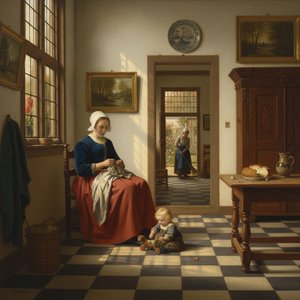
Pieter de Hooch: Illuminating Dutch Domestic Life & Golden Age Charm
Explore the captivating world of Pieter de Hooch, a master of Dutch Golden Age painting. Discover his innovative use of light, intimate domestic scenes, and lasting influence on art history. Learn more at OriginalUniqueArt.