
 Visualizar na parede
 Compartilhar
 Compartilhar
 Detalhes
 Guia
Guia

 Baixar imagem
 Semelhantes
 Raio X
 Ver diaporama
 Perguntas e Respostas
 Estatísticas
Spring, 1565


 Ler mais
Giclée / Impressão de Arte
Impressão giclée ou em tela de qualidade de museu, com produção rápida e opções flexíveis de acabamento. ( Comprar pintura feita à mão Alternar para Imagem Digital)




P118B €10

P118H €10

P118W €10

P438Z €10

P508JH €12

P508YH €12

P805H €10

P805Z €10

P919BZ €10

P919G €10

P919XJ €10

P959ZH €10

P968JZ €12

W106C €8

W218G €10

W218JH €8

W218Y €10

W307PJ €10

W316G €10

W316PJ €8

W316Y €10

W398PJ €8

W4111J €10

W500HY €15

W500JH €15

W692G €12

W849H €8

W940BG €15

W953PJ €8




Escolha entre os nossos tamanhos pré-definidos que respeitam as proporções originais da obra de arte.

Insira a largura e a altura desejadas para se ajustarem à sua moldura ou parede. Uma impressão pode ser apenas cortada, nunca ampliada além da imagem original; portanto, um tamanho com proporções diferentes resultará na perda de parte da imagem. Enviamos uma maquete digital para sua aprovação antes de realizarmos a impressão. A imagem exibida nesta página não mostra o corte real — apenas a maquete o faz.
Entrega mundial () em 2 semanas, em vez das 4/5 semanas padrão. (7 Novembro)

Envio expresso gratuito para todo o mundo

Tela de Linho de Alta Qualidade

Seguro de transporte completo

Garantia de Reembolso de Impostos Alfandegários

Garantia de Fidelidade Cromática

Política de Devolução em 100 Dias (Apenas para Defeitos)

Garantia de reembolso de 100%

Oferta de desconto por quantidade
 A opção de vidro está disponível apenas para tamanhos inferiores a 110 cm

Spring, 1565
Giclée / Impressão de Arte
Tamanho da Reprodução
-


Preço Total
€ 72
A Snapshot of Rural Life: Pieter Bruegel’s “Spring, 1565”
Pieter Bruegel the Elder's "Spring, 1565" isn’t merely a depiction of farm work; it’s a vibrant tapestry woven with threads of observation, social commentary, and the burgeoning spirit of Northern Renaissance art. Painted in 1565, during a period of immense upheaval in Europe – religious conflict, economic shifts, and the rise of urban centers – this remarkable canvas offers a rare glimpse into the rhythms of rural life, capturing not just the physical labor but also the complex relationships between people and their environment.
The scene unfolds with an almost overwhelming sense of activity. Thirteen individuals, rendered with Bruegel’s characteristic earthy realism, are engaged in a multitude of tasks: plowing fields, planting seeds, tending to livestock, and even seemingly idle moments of rest. Cows, strategically placed throughout the landscape – some close to the foreground, others receding into the distance – serve as both practical elements of the farm and symbolic reminders of prosperity and sustenance. A solitary horse adds to the dynamic composition, its presence suggesting movement and the constant cycle of agricultural labor.
The Painter’s Palette: Technique and Style
Bruegel's mastery lies not just in his ability to depict a scene but in his nuanced approach to color and perspective. He employs a muted palette dominated by earthy greens, browns, and ochres, reflecting the natural tones of the countryside. This restrained use of color allows the details – the individual expressions on the workers’ faces, the textures of their clothing, the varied shapes of the animals – to take center stage. The artist's perspective is deliberately flattened, creating a sense of immediacy and drawing the viewer directly into the heart of the action. This technique, characteristic of Northern European painting at the time, prioritized clarity and detail over the illusionistic depth favored by Italian Renaissance masters.
Bruegel’s brushwork is remarkably loose and expressive, particularly in the depiction of the figures. He doesn't strive for photographic realism; instead, he captures the essence of his subjects – their toil, their camaraderie, and their connection to the land. The use of impasto—thickly applied paint—adds a tactile quality to the canvas, inviting us to almost feel the roughness of the soil beneath our feet.
A Window into 16th-Century Society
"Spring, 1565" is more than just a pastoral scene; it’s a subtle commentary on the social and economic realities of its time. The painting reflects the importance of agriculture in Northern Europe, where the vast majority of the population lived and worked on farms. It also hints at the tensions between rural and urban life – the farmers toiling away while the wealthy merchants and artisans prospered in burgeoning cities. The presence of the bowls filled with seeds speaks to the careful planning and foresight required for successful farming, a vital element in a society increasingly reliant on trade and exchange.
Considering Bruegel’s apprenticeship under Pieter Coecke van Aelst, it's clear that he absorbed elements of humanist thought alongside his technical training. However, Bruegel quickly developed a distinctly individual style, one characterized by its earthy realism, social observation, and often satirical undertones. “Spring, 1565” exemplifies this shift – moving beyond idealized representations to offer a grounded and honest portrayal of everyday life.
Capturing the Essence: Reproduction and Beyond
OriginalUniqueArt is proud to offer meticulously crafted hand-painted reproductions of Pieter Bruegel’s “Spring, 1565.” These reproductions strive to capture not only the visual details of the original but also its emotional resonance. Utilizing traditional oil painting techniques and employing a team of skilled artists, we ensure that each reproduction faithfully reflects Bruegel's artistic vision. Whether you are an art collector, interior designer seeking to infuse your space with historical charm, or simply an admirer of this iconic work, our reproductions provide a beautiful and authentic way to experience the enduring power of Pieter Bruegel’s masterpiece.
Perguntas e Respostas
Qual paleta e cor predominante definem "Spring, 1565"?
"Spring, 1565" é definido por uma paleta Neutrals com destaque para Rosy Brown (#d1b48d).
Como faço para baixar a imagem de "Spring, 1565", de Pieter Bruegel o Velho?
A imagem de "Spring, 1565", de Pieter Bruegel o Velho pode ser baixada na página de download da obra: Download download de imagem digital em alta resolução.
Como o movimento e a época se encontram em "Spring, 1565", de Pieter Bruegel o Velho?
"Spring, 1565" pertence ao movimento Northern Renaissance, e seu criador atuou na era Renascimento.
Biografia do Artista
A Vida e a Arte de Pieter Bruegel o Velho
Pieter Bruegel o Velho emergiu durante um período de profunda transformação, uma época em que o cenário artístico europeu estava se deslocando das ideias renascentistas italianas para as complexidades emergentes da expressão europeia do norte. Nascido entre 1525 e 1530, provavelmente em Breda – embora os detalhes sobre sua vida inicial permaneçam um tanto obscuros –, os primeiros anos de Bruegel se desenrolaram em meio a agitações religiosas e uma cultura comercial florescente. Sua jornada artística começou por volta de 1545 como aprendiz de Pieter Coecke van Aelst, um respeitado pintor de Antuérpia conhecido tanto por sua arte quanto por seus projetos para tapeçarias. Essa aprendizagem forneceu a Bruegel uma base sólida nas habilidades técnicas da pintura a óleo e do desenho, mas, acima de tudo, expôs-o às correntes humanistas que estavam começando a permear os círculos intelectuais. O ateliê de Van Aelst não era apenas um lugar de instrução artística; era um crisol onde as técnicas tradicionais encontraram novas ideias, moldando a visão futura de Bruegel.Viagens e a Forja de uma Visão Única
Após sua aprendizagem, Bruegel embarcou em extensas viagens que marcaram profundamente seu desenvolvimento artístico. Entre 1551 e 1553, viajou pela França, Suíça e Itália, esboçando paisagens e imergindo em diversas culturas. Essas não foram apenas viagens de turismo; eram expedições de observação e aprendizado. Enquanto estava na Itália, Bruegel encontrou as obras dos mestres renascentistas, mas sua inclinação artística permaneceu distintamente europeia do norte. Ele não simplesmente adotou estilos italianos, mas sim absorveu-os e os filtrados através de sua própria sensibilidade única. Os Alpes, com suas imponentes montanhas e vales, deixaram uma impressão duradoura, influenciando a estrutura composicional e a perspectiva atmosférica encontradas em muitos de seus paisagens posteriores. Ao retornar a Antuérpia em 1553, foi admitido como mestre livre no Guilda de São Lucas, sinalizando sua independência profissional e estabelecendo-o como um artista reconhecido dentro da vibrante comunidade artística da cidade.Além do Mito e da Religião: Um Novo Foco para a Arte
A verdadeira inovação de Bruegel residiu em seu assunto. Ele ousou abandonar as convenções estabelecidas da pintura renascentista, que frequentemente se concentravam em narrativas religiosas ou mitologia clássica. Em vez disso, voltou sua atenção para a vida cotidiana das pessoas comuns – camponeses trabalhando nos campos, aldeões celebrando festivais, caçadores atravessando paisagens nevadas. Isso não era um rejeitamento de temas tradicionais, mas sim uma elevação do banal ao nível da arte elevada. Seus paisagens não eram meros fundos; eles eram participantes ativos na narrativa, muitas vezes imbuídos de significado simbólico e refletindo um profundo entendimento do poder e da beleza da natureza. *A Ascensão de São Cristóvão* é um exemplo notável, retratando a vida cotidiana com uma precisão e um humor sutilmente críticos. Suas pinturas não eram necessariamente críticas; eram observações realistas, capturando tanto o humor quanto as dificuldades inerentes à existência humana.Influências e Desenvolvimento Artístico
A influência de Bruegel se estende por séculos. Ele lançou as bases para os pintores da Era de Ouro holandesa, inspirando artistas como Isaac van Ostade e Adriaen Brouwer com suas representações realistas da vida camponesa. Sua abordagem inovadora à pintura de paisagem também abriu o caminho para desenvolvimentos posteriores no gênero, influenciando artistas que buscavam capturar a beleza e a grandiosidade do mundo natural. Além disso, sua obra é um testemunho da evolução artística, refletindo as mudanças culturais e intelectuais de seu tempo. Bruegel não permaneceu estático; ele absorveu ideias de diferentes fontes, combinando-as em uma linguagem visual única.Principais Obras e Significado Duradouro
- A Visitação: Uma representação notável da cena bíblica, caracterizada por sua atmosfera serena e atenção aos detalhes.
- O Banquete de Noite: Uma pintura icônica que retrata a vida noturna em uma aldeia flamenga, com uma riqueza de personagens e atividades.
- A Caça ao Soldado: Um exemplo magistral da habilidade de Bruegel em criar composições complexas e dinâmicas.
- O Nascimento de Vênus: Uma interpretação original do mito clássico, com uma atmosfera mística e um uso expressivo da cor.
- A Morte: Uma obra-prima sombria que explora temas de mortalidade e destino, utilizando simbolismo e imaginação vívida.

Pieter Bruegel o Velho
1525 - 1569 , Bélgica
Dados Rápidos
- Artistic Movement Or Style: Renascimento Flamenco
- Artists Or Movements Influenced By This Artist: ['Pintura Holandesa']
- Artists Who Influenced This Artist:
- Jan van Eyck
- Albrecht Dürer
- Date Of Birth: c. 1525
- Date Of Death: 1569
- Full Name: Pieter Bruegel o Velho
- Nationality: Flamengo
- Notable Artworks:
- A Dança dos Mortos
- Campo de Caça
- O Casamento dos Camponeses
- Place Of Birth: Breda, Holanda
Artigos Relacionados

Pieter Bruegel the Elder: A Master of Genre, Landscape & Social Commentary
Explore the life & art of Pieter Bruegel the Elder, a pivotal figure of the Renaissance. Discover his groundbreaking genre scenes, symbolic landscapes, and lasting influence on art history. Learn more at OriginalUniqueArt.

Mastering Detail: A Guide to the Timeless Beauty and Technical Brilliance of Flemish Painting
Explore the exquisite precision of Flemish painting. From Jan van Eyck to Robert Campin, discover the revolutionary oil techniques and rich symbolism that defined the Northern Renaissance and continue to inspire fine art collectors today.

Os 25 Tesouros do Kunsthistorisches Museum: Arte, História e Decoração em Viena
Descubra os 25 tesouros do Kunsthistorisches Museum em Viena! Explore a história de Raphael, Rembrandt, Vermeer e outras obras-primas. Encontre reproduções de arte exclusivas para decorar sua casa com elegância. Explore a coleção completa na OriginalUniqueArt.com.

Mastering Drama and Light: A Definitive Guide to the Flemish Baroque Art Movement
Explore the dramatic brilliance of the Flemish Baroque movement. Discover how masters like Peter Paul Rubens utilized chiaroscuro and dynamic composition to redefine art history through light, shadow, and unparalleled emotion.
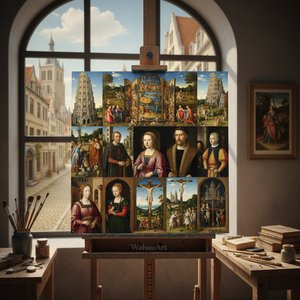
Renascimento Nórdico: 10 Obras-Primas que Moldaram a Arte | OriginalUniqueArt.com
Descubra as 10 obras-primas do Renascimento Nórdico! Explore a história, simbolismo e técnica de artistas como Jan van Eyck e Dürer. Encontre reproduções de arte exclusivas para decorar sua casa com elegância em OriginalUniqueArt.com.


![A Procissão ao Calvário [detalhe]](/media/artworks/images-thumb/32/c5/32c52a8c054c3755b769d95ed8a42796.jpg)

