

 Visualizar em escala
 Enviar
 Compartilhar
 Ver detalhes
 Guia de Obras do Aluno

 Baixar imagem
 Semelhantes
 Raio X
 Apresentação de slides
 Estatísticas
Etching No. 2


 Ver mais
A obra de arte exibida nesta página é protegida por leis de direitos autorais, o que significa que não podemos criar ou vender legalmente uma reprodução idêntica. Esta proteção é aplicada por meio de acordos internacionais, tais como a Convenção de Berna e pelas leis nacionais, incluindo as estabelecidas por Lei de Direitos Autorais dos EUA - Título 17.
Como uma alternativa respeitosa e legal, oferecemos obras de arte personalizadas e pintadas à mão, inspiradas na obra original. Nossos artistas profissionais e experientes estudam cuidadosamente o estilo, a atmosfera e a essência artística da obra original para criar uma peça nova e única que evoque a mesma sensação — permanecendo como uma criação original por direito próprio.
Este método cumpre plenamente as regulamentações de direitos autorais, pois não envolve a cópia ou duplicação da obra protegida. Em vez disso, trata-se de uma reinterpretação criativa — uma nova pintura que é influenciada pela original, mas não idêntica a ela.
Reprodução em Óleo Feita à Mão
Óleo sobre tela pintado à mão no tamanho e moldura de sua escolha, feito sob encomenda pelos nossos artistas. ( Alternar para Impressão Ver Imagem Digital)




P118B €10

P118H €10

P118W €10

P438Z €10

P508JH €12

P508YH €12

P805H €10

P805Z €10

P919BZ €10

P919G €10

P919XJ €10

P959ZH €10

P968JZ €12

W106C €8

W218G €10

W218JH €8

W218Y €10

W307PJ €10

W316G €10

W316PJ €8

W316Y €10

W398PJ €8

W4111J €10

W500HY €15

W500JH €15

W692G €12

W849H €8

W940BG €15

W953PJ €8




Escolha entre os nossos tamanhos pré-definidos que respeitam as proporções originais da obra de arte.

Digite a largura e a altura de que necessita, para se ajustar à sua moldura ou à sua parede. Esta obra é pintada à mão, por isso, para um tamanho com uma proporção diferente, o artista pode pintar um pouco mais ao redor da imagem ou cortar um pouco — você escolhe. Enviamos-lhe uma maquete digital para aprovação antes de a pintura começar. A imagem exibida nesta página não mostra o resultado real — apenas a maquete mostra.
Após o pedido, a equipa OriginalUniqueArt.com enviará um e-mail ao cliente para solicitar instruções e fornecer uma prévia do esboço.
Entrega mundial () em 3 a 4 semanas, em vez das 5 semanas padrão. (22 Outubro). Sem comprometer a qualidade.

Envio expresso gratuito para todo o mundo

Tela de Linho Premium

Seguro de transporte total

Garantia de Reembolso de Impostos Alfandegários

Garantia de Fidelidade de Cor

Política de Devolução em 100 Dias (Apenas para Defeitos)

Garantia de reembolso de 100%

Desconto para múltiplas unidades
 A opção de vidro está disponível apenas para tamanhos inferiores a 110 cm

Etching No. 2
Técnica de Reprodução
Dimensões da Reprodução
-


Preço Total
€ 263
Etching No. 2: A Descent Into Darkness Illuminated by Light
Pierre Soulages’ “Etching No. 2,” created in 1952, stands as a cornerstone of Tachisme – a movement that championed spontaneous gesture and emotional expression over meticulous representation—and embodies Soulages' singular obsession with the transformative power of black. This artwork isn’t merely an image; it’s a visceral exploration of perception and materiality, inviting viewers into a dialogue about how darkness can yield unexpected brilliance.Composition & Technique: Angular Echoes on Paper
The composition is strikingly asymmetrical, prioritizing dynamism over static equilibrium. Bold angular lines intersect across the canvas, generating a complex network that draws the eye relentlessly onward. There’s no central focal point; instead, the artist deliberately disperses visual attention, encouraging contemplation of the interplay between light and shadow—a core principle of Soulages' artistic philosophy. The etching technique itself is crucial to understanding its impact. Soulages meticulously incised lines onto a metal plate (likely zinc), applying ink with considerable freedom before transferring the image onto paper using pressure. This process preserves the textural nuances of the plate, resulting in a surface that feels both rough and luminous—a testament to Soulages’ dedication to capturing the essence of his subject matter. The use of white highlights strategically punctuates the dark expanse, creating tension and emphasizing the contours of the forms.Color Palette & Symbolic Resonance: Red as an Assertion
Despite its predominantly monochrome aesthetic, “Etching No. 2” incorporates a single band of crimson red that traverses horizontally across the canvas. This bold color isn’t merely decorative; it serves as a powerful visual anchor and injects warmth into the otherwise austere palette. The red acts as a counterpoint to the black background, symbolizing passion, energy, and perhaps even defiance—themes frequently explored by Soulages throughout his oeuvre. Its placement suggests an intentional disruption of balance, mirroring the turbulent emotional landscape conveyed by the artwork’s overall form.Historical Context & Artistic Influence: Tachisme's Rebellion Against Representation
Soulages emerged during a period of significant artistic upheaval in France following World War II. Tachisme—meaning “touchism”—rejected traditional academic conventions and championed spontaneous gesture as a means of conveying emotion and experience. Artists like Soulages sought to liberate painting from the constraints of illusionistic realism, prioritizing texture and color over accurate depiction. "Etching No. 2" exemplifies this rebellious spirit, aligning Soulages with fellow pioneers who questioned established artistic norms. Its influence can be seen in subsequent generations of abstract artists who embraced similar approaches to materiality and expressive gesture.Emotional Impact & Legacy: Darkness Illuminated
Ultimately, “Etching No. 2” compels viewers to confront the profound beauty inherent within darkness—a concept Soulages relentlessly pursued throughout his career. The artwork’s unsettling angularity and stark contrasts evoke feelings of tension and unease, yet simultaneously invite contemplation of light's transformative capacity. It’s a piece that lingers in the mind long after viewing, prompting reflection on themes of resilience, vulnerability, and the enduring power of artistic vision. Soulages’ unwavering commitment to exploring this fundamental duality solidified his place as one of France’s most celebrated artists—a legacy rooted in the uncompromising pursuit of authentic expression.Perguntas e Respostas
"Etching No. 2" é uma obra famosa do Abstract Expressionism?
"Etching No. 2" de Pierre Soulages é classificada como Reconhecido e pertence ao movimento Abstract Expressionism.
Qual é a luminosidade de "Etching No. 2" de Pierre Soulages?
A luminância registrada para "Etching No. 2" de Pierre Soulages é Luminosidade Suave.
Quão harmoniosas são as cores de "Etching No. 2" de Pierre Soulages?
As cores de "Etching No. 2" de Pierre Soulages apresentam uma harmonia Paleta discordante. A harmonia descreve como as cores se relacionam entre si.
Biografia do Artista
Pierre Soulages: A Life in Black and Light
Pierre Soulages (1919-2022) was a French abstract painter, engraver, and sculptor. Celebrated as “the world’s greatest living artist” by François Hollande in 2014, Soulages dedicated his life to exploring the depths of black – not as an absence of color, but as a presence brimming with light and texture.
Early Life and Education
Born in Rodez, Aveyron, France, in 1919, Soulages’ artistic journey began with explorations of museums in Paris before World War II. He sought his vocation amidst the masterpieces of the past. Following military service during the war, he established a studio in Paris and debuted his work at the Salon des Indépendants in 1947. He also briefly worked as a stage set designer.
Artistic Development & The ‘Outrenoir’ Style
Soulages' artistic development was marked by a relentless pursuit of expressing light through the medium of black. He wasn’t interested in black for its somber connotations, but rather for its capacity to reflect and absorb light, creating an interplay of shadow and illumination. This led him to develop his signature style, which he termed ‘Outrenoir’ – literally “beyond black.”
He explained that Outrenoir isn't simply about the color black; it represents a different realm altogether, akin to saying "beyond the Channel" for England or "beyond the Rhine" for Germany. It signifies a space beyond conventional understanding of the color itself.
Technique and Materials
Soulages’ technique involved applying paint in thick layers, often manipulating it with tools like spoons, rakes, and rubber implements to create textured surfaces. These textures were crucial for capturing and reflecting light. He employed scraping, digging, and etching movements to achieve smooth or rough effects, disrupting the uniformity of the black surface.
In his later work, he began experimenting with varying pigment densities – mixing matte and glossy blacks – further enhancing the interplay of light and shadow. He often preferred suspending his paintings like walls in the middle of a room, believing they should “look inside of us” rather than acting as windows to another world.
Major Achievements & Recognition
- 1979: Elected as a foreign honorary member of the American Academy of Arts and Letters.
- 1987-1994: Created 104 stained glass windows for the Romanesque Abbey Church Sainte-Foy in Conques, Aveyron – a monumental achievement.
- 2001: First living artist invited to exhibit at the State Hermitage Museum of St. Petersburg and the Tretyakov Gallery of Moscow.
- 2007: Musée Fabre in Montpellier dedicated an entire room to his work, showcasing a significant donation from the artist.
- 2009-2010: A major retrospective held at the Centre National d'Art et de Culture Georges Pompidou in Paris.
- 2014: Musée Soulages opened in Rodez, France – a museum dedicated to permanently displaying his works and hosting contemporary exhibitions. He donated 500 pieces to the museum.
Influences & Legacy
Soulages’ fascination with black stemmed from an early interest in prehistoric art and a desire for purity and primal expression. He saw parallels between his work and the cave paintings of our ancestors, created using charcoal on dark rock surfaces.
His influence extends to numerous contemporary artists who explore abstraction, texture, and the expressive potential of limited color palettes. He left behind a legacy that challenges conventional perceptions of color and light, demonstrating that even in darkness, profound beauty and luminosity can be found. He is considered a pivotal figure in Tachism, an informal style of abstract expressionism.
Historical Significance
Pierre Soulages’ work represents a significant contribution to post-war abstract art. His unwavering dedication to exploring the nuances of black and light established him as a unique and influential voice in the artistic landscape, captivating audiences worldwide for over seven decades.

Pierre Soulages
1919 -
Informações Rápidas
- Name: Pierre Soulages
- Movement: Tachism, Abstract Expressionism, Outrenoir
- Birth Date: 1919
- Death Date: 2022
- Birth Place: Rodez, Aveyron, France
- Nationality: French
- Date Of Birth: 1919
- Notable Works:
- Sainte-Foy stained glass windows
- Polyptyques
Artigos Relacionados

Abstração Geométrica: 10 Obras-Primas que Moldaram a Arte Moderna | OriginalUniqueArt.com
Descubra as 10 obras-primas da Abstração Geométrica que revolucionaram a arte moderna! Explore Kandinsky, Mondrian e outros artistas icônicos. Encontre reproduções de alta qualidade para decorar sua casa com OriginalUniqueArt.com.
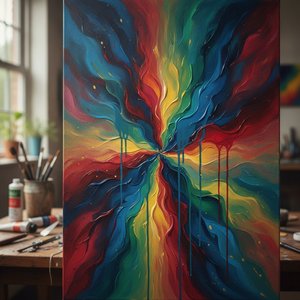
Lyrical Abstraction: The Emotional Power of Color and Form in Modern Art History
Explore the profound emotional depth of Lyrical Abstraction. Discover how masters like Raymond Parker used color and form to bridge Impressionism and Abstract Expressionism. Learn about this pivotal movement through our expert-led art history guide.

Kandinsky: As 25 Obras-Primas que Definem o Abstracionismo | OriginalUniqueArt
Descubra as 25 obras-primas de Wassily Kandinsky, pioneiro da arte abstrata! Explore a história, cores e significado por trás de cada pintura. Encontre reproduções de alta qualidade e inspire sua decoração em OriginalUniqueArt.com.
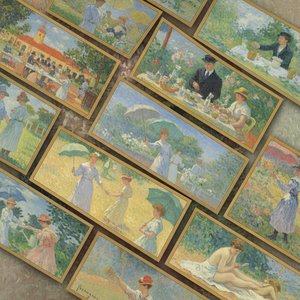
Renoir: As 25 Obras-Primas do Mestre Impressionista | OriginalUniqueArt
Descubra as 25 obras-primas de Renoir, o mestre do Impressionismo! Explore a história, cores vibrantes e emoção por trás de quadros icônicos como 'Bal au moulin de la Galette'. Encontre reproduções de arte exclusivas para decorar sua casa com elegância em OriginalUniqueArt.com.

Top 10 Obras-Primas do Expressionismo Abstrato: Arte para Decorar e Inspirar | OriginalUniqueArt.com
Descubra as 10 obras-primas do Expressionismo Abstrato com Jackson Pollock, Mark Rothko e mais! Explore a história, técnica e emoção por trás de cada pintura. Encontre reproduções de arte exclusivas para decorar sua casa em OriginalUniqueArt.com.

