Baroque
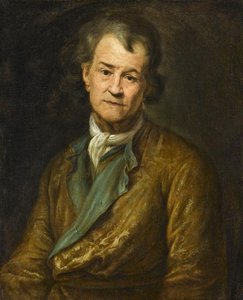
Self portrait Marble (Pierre Puget)
Pierre Puget (1620–1694) criou Self portrait Marble. Pertence ao movimento Baroque. É feito em Stone.
- Stone

 Pintura a Óleo Feita à Mão
 Compartilhar
 Compartilhar
 Ficha técnica


 Baixar imagem
 Semelhantes
 Ver diaporama
 Perguntas e Respostas

 Estatísticas
Self portrait Marble, em resumo
- Título
- Self portrait Marble
- Artista
- Pierre Puget (1620–1694)
- Artista nascido em
- Marselha, França
- Técnica
- Stone
- Movimento
- Baroque
- Período
- Early Modern
- Tema
- portrait, sculpture, elderly, marble, baroque, classicism
O que Self portrait Marble retrata?
Identification of the Self portrait Marble
The Self portrait Marble by Pierre Puget presents a quiet confrontation with the passage of time. This work is a photographic reproduction of a sculpted portrait, capturing the likeness of an older man in the stillness of stone. The subject is a bust, focusing on the head and shoulders to anchor the viewer in a singular, unmoving gaze.
In this representation, the artist Pierre Puget turns the chisel toward his own changing features. The sculpture acts as a vessel for human aging and experience, recording the weight of years through the physical presence of the subject. It is a portrait of a man, stripped of movement, existing only in the permanence of his own likeness.
The image holds a steady, frontal view. It captures a moment of stillness that feels heavy and fixed. The stone carries the memory of the face it once held.
Visual Composition and Subject Matter
The composition centers on the head and shoulders of an elderly man, captured in a black and white bust. A simple frontal view meets the eye, stripped of unnecessary distraction. The perspective remains direct, focusing entirely on the subject's presence. Because of the photographic nature of the image, the depth remains limited, pulling the viewer into a shallow space where only the immediate form exists.
Lines define the topography of the face, tracing the paths of wrinkles and the individual strands of hair. These contours map the history of a life through the texture of the skin. Organic shapes dominate the work, following the natural, soft curves of the human head and its features. The light settles into the hollows, emphasizing the physical reality of the subject.
A shallow depth of field isolates the man, blurring the world beyond his immediate silhouette. This focus sharpens the details of the face, making the texture of the sculpture feel tangible. The subject remains still, a quiet study of aging and the weight of experience. The stone holds a steady, silent gaze.
Technique and Material Properties
The original work is a classical sculpture carved from stone, likely marble. This heavy, pale medium captures the weight of the subject's features. The surface is not smooth; instead, the texture appears rough and uneven. Shading and modeling techniques emphasize this tactile quality, pulling light across the ridges of the face and the deep recesses of the hair. Every line is a physical groove in the stone.
This image is a photographic reproduction of that sculpted form. The lens translates the three-dimensional carving into a two-dimensional plane of light and shadow. The technique relies on the interplay of dark and light to define the contours of the head and shoulders. It is a study of how light meets a hard, unyielding surface. The result is a sense of solemnity. The stone holds its stillness.
Imagens em alta resolução de Self portrait Marble
Pierre Puget, Self portrait Marble. Domínio público.
Perguntas sobre Self portrait Marble respondidas
Qual é a técnica utilizada em "Self portrait Marble", de Pierre Puget?
A técnica de "Self portrait Marble", de Pierre Puget é Stone. As reproduções visam reproduzir a aparência desta técnica.
O que representa "Self portrait Marble"?
Os temas de "Self portrait Marble" são portrait, sculpture, elderly, marble, baroque, classicism, time, memory.
"Self portrait Marble" está em domínio público?
Informação de direitos autorais para "Self portrait Marble", de Pierre Puget: a obra está em em domínio público — seus direitos autorais expiraram. Isso determina se reproduções da imagem podem ser feitas livremente.
Quem é o artista por trás de "Self portrait Marble"?
"Self portrait Marble" é atribuída a Pierre Puget.
A qual movimento artístico pertence "Self portrait Marble", de Pierre Puget?
O movimento associado a "Self portrait Marble", de Pierre Puget é Baroque. Esta classificação situa a obra entre artistas e obras de arte relacionados.
A que fase da trajetória de Pierre Puget "Self portrait Marble" pertence?
"Self portrait Marble" pertence ao Mature Period da carreira de Pierre Puget. Esta classificação relaciona a obra ao desenvolvimento do artista.
Qual é a situação dos direitos autorais de "Self portrait Marble", de Pierre Puget?
"Self portrait Marble", de Pierre Puget está em em domínio público — seus direitos autorais expiraram. O período de direitos autorais conta a partir do falecimento do artista, ocorrido em 1694.
Como "Self portrait Marble" se insere na trajetória artística de Pierre Puget?
Na produção de Pierre Puget, "Self portrait Marble" insere-se no estilo Baroque, acompanhando os temas de classical ideals, roman influence, baroque drama, emotional depth, portraiture tradition, realism, ageing, mortality.
Como "Self portrait Marble" se posiciona entre os temas recorrentes de Pierre Puget?
"Self portrait Marble" retrata portrait, sculpture, elderly, marble, baroque, classicism, time, memory, enquanto os temas recorrentes de Pierre Puget são classical ideals, roman influence, baroque drama, emotional depth, portraiture tradition, realism, ageing, mortality. A comparação entre ambos revela como a obra se relaciona com os temas habituais do artista.
Sobre o artista, Pierre Puget
1620–1694, França
Pierre Puget
Pierre Puget: Uma Vida entre a Arte e a Engenharia Nascimento: Marselha, França (1620) Falecimento: 1694 Juventude e as Influências Italianas Aprendizado: Puget iniciou sua trajetória aos quatorze anos, esculpindo ornamentos para galés construídas em Marselha. Essa exposição precoce ao ofício artesanal lançou os alicerces para suas futuras explorações artísticas. Jornada à Itália (1640): Em busca de novas oportunidades, viajou para a Itália, passando inicialmente por Livorno e depois Florença, onde aperfeiçoou suas habilidades como entalhador e pintor. Roma e Pietro da Cortona: Um momento crucial ocorreu quando foi acolhido por Pietro da Cortona em Roma.
Também de Pierre Puget
 O Encontro de Alexandre, o Grande, e Diógenes1671
 Milo de Crotona1671
 The Meeting of Alexander the Great and Diogenes1671
 Autorretrato1668
Ensaios sobre Self portrait Marble
 Eternal Stone: The History, Artistry, and Mastery of Marble SculptureExplore the profound history and technical mastery of marble sculpture. From Ancient Greek perfection to Baroque drama, discover how master…
 Masterpieces of Hans Baldung Grien: The Top 25 Essential ArtworksExplore 25 iconic works by Hans Baldung Grien. Discover German Renaissance masterpieces on OriginalUniqueArt.com.
 Pierre Puget: 25 Dynamic Sculptures and Paintings of the French Baroque EraExplore 25 iconic Pierre Puget works from the French Baroque. Discover museum-quality art and curated ideas on OriginalUniqueArt.com.