

 Visualizar na parede
 Compartilhar
 Compartilhar
 Detalhes
 Guia
Guia

 Baixar imagem
 Semelhantes
 Raio X
 Ver diaporama
 Estatísticas
André-Marie Ampère


 Ler mais
Giclée / Impressão de Arte
Impressão giclée ou em tela de qualidade de museu, com produção rápida e opções flexíveis de acabamento. ( Comprar pintura feita à mão Alternar para Imagem Digital)




P118B €10

P118H €10

P118W €10

P438Z €10

P508JH €12

P508YH €12

P805H €10

P805Z €10

P919BZ €10

P919G €10

P919XJ €10

P959ZH €10

P968JZ €12

W106C €8

W218G €10

W218JH €8

W218Y €10

W307PJ €10

W316G €10

W316PJ €8

W316Y €10

W398PJ €8

W4111J €10

W500HY €15

W500JH €15

W692G €12

W849H €8

W940BG €15

W953PJ €8




Escolha entre os nossos tamanhos pré-definidos que respeitam as proporções originais da obra de arte.

Insira a largura e a altura desejadas para se ajustarem à sua moldura ou parede. Uma impressão pode ser apenas cortada, nunca ampliada além da imagem original; portanto, um tamanho com proporções diferentes resultará na perda de parte da imagem. Enviamos uma maquete digital para sua aprovação antes de realizarmos a impressão. A imagem exibida nesta página não mostra o corte real — apenas a maquete o faz.
Entrega mundial () em 2 semanas, em vez das 4/5 semanas padrão. (26 Outubro)

Envio expresso gratuito para todo o mundo

Tela de Linho de Alta Qualidade

Seguro de transporte completo

Garantia de Reembolso de Impostos Alfandegários

Garantia de Fidelidade Cromática

Política de Devolução em 100 Dias (Apenas para Defeitos)

Garantia de reembolso de 100%

Oferta de desconto por quantidade
 A opção de vidro está disponível apenas para tamanhos inferiores a 110 cm

André-Marie Ampère
Giclée / Impressão de Arte
Tamanho da Reprodução
-


Preço Total
€ 70
The Enigmatic Face: Pierre-Jean David d’Angers and André-Marie Ampère
Pierre-Jean David d’Angers's portrait of André-Marie Ampère, completed in 1829, is more than a simple likeness; it’s a carefully constructed embodiment of the man behind one of science’s most foundational discoveries. The image, rendered with the meticulous detail characteristic of David d’Angers’s neoclassical style, captures Ampère not merely as a physicist, but as a figure of intellectual authority and quiet contemplation. The bronze coin-like composition—a deliberate choice by the artist—immediately establishes a sense of gravitas, elevating Ampère to the status of a revered scholar and public servant. The subject's severe features, framed by a carefully sculpted wig and a neatly trimmed mustache, project an air of dignified seriousness, reflecting the weight of his groundbreaking work in electromagnetism.
_-_Walters_54847.jpg)
A Scientific Icon: The Life and Times of André-Marie Ampère
Born in Lyon in 1775, André-Marie Ampère was a product of the Enlightenment, nurtured on the works of Buffon, Diderot, and Euler. His father’s radical republicanism, tragically culminating in his execution during the French Revolution, profoundly shaped Ampère's life, instilling within him a deep respect for knowledge and a commitment to rational thought. He pursued his education largely independently, devouring books and mastering mathematics with remarkable self-discipline. This autodidactic approach led him to become a leading figure in the burgeoning field of electromagnetism, building upon the foundational work of Ørsted’s discovery that electric currents create magnetic fields. Ampère's systematic investigations established the laws governing these relationships, forming the bedrock of modern electrical engineering and paving the way for technologies like the telegraph – a testament to his enduring legacy.
Neoclassical Precision: David d’Angers’s Artistic Vision
Pierre-Jean David d’Angers was a prominent sculptor and portraitist during the early 19th century, known for his ability to capture both the physical likeness and the inner character of his subjects. His style is characterized by its meticulous detail, balanced compositions, and a restrained emotionality—a hallmark of neoclassical art. He adopted the name “David d’Angers” as a deliberate assertion of lineage and artistic ambition, distinguishing himself from his celebrated master, Jacques-Louis David. In this portrait, David d’Angers skillfully employs chiaroscuro – the dramatic contrast between light and shadow – to sculpt Ampère's face, emphasizing his features and creating a sense of depth and volume. The coin-like format is not merely stylistic; it subtly elevates Ampère to the status of a revered figure, akin to a precious currency representing the value of knowledge.
Symbolism and Legacy: A Portrait Beyond Representation
The choice of a bronze coin as the medium for this portrait is particularly significant. Bronze, historically associated with antiquity and civic virtue, connects Ampère’s work to the foundations of scientific inquiry. The image itself speaks volumes about the era—a time of burgeoning industrialization, technological innovation, and a growing faith in reason and progress. Ampère's serious expression suggests not just intellectual prowess but also a profound sense of responsibility for his discoveries. This portrait is therefore more than a simple likeness; it’s a symbolic representation of Ampère as the architect of modern electromagnetism—a man whose work continues to shape our world today. It invites us to contemplate the intersection of science, art, and the enduring human quest for understanding.
Perguntas e Respostas
Onde e para qual finalidade é recomendado "André-Marie Ampère"?
As recomendações de uso para "André-Marie Ampère", de Pierre-Jean David D’Angers são (Reflective) e o ambiente (Living Room).
Quantas pessoas visualizam "André-Marie Ampère"?
As estatísticas sobre "André-Marie Ampère", de Pierre-Jean David D’Angers encontram-se na página de Estatísticas da obra: visitas mensais da obra, visitas às obras do artista e o detalhamento por país e idioma dos visitantes recentes.
Que tipo de obra é "André-Marie Ampère"?
"André-Marie Ampère" é uma obra de WallArt.
Biografia do Artista
A Legacy Forged in Stone: The Life and Art of Pierre-Jean David d’Angers
Born in Angers, France, in 1789, Pierre-Jean David embarked on his artistic journey imbued in the republican fervor that would define much of his life and oeuvre. Initially apprenticed to a local wood carver – his father – young David swiftly demonstrated an aptitude for sculpting that propelled him toward greater ambitions. He arrived in Paris in 1808, a city pulsating with both classical tradition and revolutionary spirit, seeking tutelage under Philippe-Laurent Roland at the École des Beaux-Arts. This formative period instilled within him neoclassical principles while simultaneously exposing him to the burgeoning Romantic movement—a duality that would profoundly shape his artistic vision. A pivotal moment arrived in 1809 when he entered the studio of Jacques-Louis David, adopting “David d’Angers” not merely as a professional designation but as a deliberate assertion of lineage and artistic aspiration – a distinction from his revered master. This adoption signaled a desire to forge his own path while acknowledging the monumental influence of the era's foremost painter. Early years in Paris were marked by financial struggles, yet David persevered with unwavering determination, garnering recognition for works like “Othryades” in 1810 and ultimately securing the prestigious Prix de Rome in 1811 for his sculpture "Epaminondas."From Roman Reverie to Neoclassical Mastery
The five years David d’Angers spent in Rome, from 1811 to 1816, constituted a transformative crucible for his artistic maturation. Immersed in the world of classical antiquity and guided by masters such as Antonio Canova—whose idealized sculptures served as an exemplar—his creative sensibilities honed into a distinctly personal idiom. He absorbed the core tenets of Greek sculpture: its unwavering focus on idealized form, heroic narrative, and restrained emotional expression—principles he skillfully integrated into his own artistic practice. This period transcended mere academic study; it was also one of intellectual awakening. The restoration of the Bourbon monarchy in France cast a shadow over his return, prompting a brief sojourn in England where he encountered both admiration and scrutiny due to his association with Jacques-Louis David—a connection that reflected the complex political landscape of the time. Back in Paris, however, David’s talent swiftly gained acclaim. He became renowned for his portrait medallions – exquisitely detailed representations capturing not only physical likeness but also psychological nuance—as well as monumental sculptures celebrating civic virtue and national heroes. His commissions for the Arc de Triomphe and the Louvre showcased an early mastery of large-scale projects, establishing him as a sculptor capable of tackling ambitious undertakings.A Sculptor of Heroes and Ideals
David’s artistic output was remarkably diverse, encompassing statues, bas-reliefs, tombs, and, most notably, portrait medallions. He possessed an extraordinary ability to convey emotion—a skill evident in masterpieces like “Wounded Philopoemen,” housed in the Louvre, which powerfully portrays the tragic fate of the Greek general—and "La Douleur," demonstrating his mastery of expressive sculpture. Yet it was his monumental commissions that truly cemented his reputation. The pediment sculpture for the Pantheon in Paris stands as perhaps his most significant achievement—a sweeping allegorical depiction embodying French patriotism and intellectual heritage. Other notable works include the Gutenberg monument in Strasbourg and the equestrian statue of General Gobert in Père Lachaise Cemetery, both testament to his skill in conveying dynamism through sculpted form. He also created a bust of Goethe for the poet’s library at Weimar—a gesture reflecting his admiration for intellectual brilliance and artistic innovation.A Sculptor Shaped by Republican Spirit
David d’Angers was more than simply a sculptor; he was a product of his era—a witness to revolution, empire, and restoration. His art reflects the political convictions that underpinned his life—his ardent embrace of republican ideals and his unwavering dedication to honoring figures who embodied courage, integrity, and civic responsibility. While firmly rooted in neoclassical tradition, his work foreshadowed the Romantic movement’s emphasis on emotional intensity and dramatic narrative—a stylistic fusion that distinguishes him from many of his contemporaries. His influence extended beyond sculpture itself, inspiring generations of artists and shaping the visual culture of France. Today, David’s works reside in prominent museums across Europe and North America—including The Walters Art Museum in Baltimore and The Metropolitan Museum of Art in New York—preserving his legacy for future scholars and admirers alike. David d’Angers remains a sculptor whose artistic vision transcended stylistic boundaries, securing his place as one of France's most enduring figures—a testament to the transformative power of art and its capacity to embody the spirit of an epoch.
Pierre-Jean David D’Angers
1788 - 1856 , França
Dados Rápidos
- Artistic Movement Or Style: Neoclassicismo
- Artists Who Influenced This Artist:
- Jacques Louis David
- Philippe Laurent Roland
- Date Of Birth: 1789
- Date Of Death: 1856
- Full Name: Pierre Jean David d’Angers
- Nationality: Francês
- Notable Artworks:
- Wounded Philopoemen
- La Douleur
- Epaminondas
- Place Of Birth: Angers, França
Artigos Relacionados

As 10 Obras em Bronze Mais Icônicas que Transformaram a História da Arte | OriginalUniqueArt
Descubra as 10 esculturas em bronze mais influentes da história! Explore a arte de Rodin, Michelangelo e outros mestres. Reproduções de alta qualidade para decorar sua casa com elegância. OriginalUniqueArt.

Timeless Strength: The Ultimate Guide to Bronze Art and Sculpture for the Discerning Collector
Discover the enduring elegance of bronze sculpture. Our expert guide explores lost-wax casting, patina mastery, and professional tips for collecting and commissioning museum-quality bronze art to create a lasting legacy in your private collection.

The Enduring Legacy of Bronze: A Historical & Artistic Exploration for the Collector
Explore the rich history & enduring appeal of bronze sculpture with expert insights for collectors at OriginalUniqueArt. Learn about casting techniques, iconic artists, collecting tips & contemporary interpretations.

The Enduring Legacy of Bronze: History, Technique & Artistic Expression for the Collector
Explore the rich history & enduring appeal of bronze sculpture with expert insights for collectors at OriginalUniqueArt. Learn about casting techniques, iconic artists, and collecting tips.
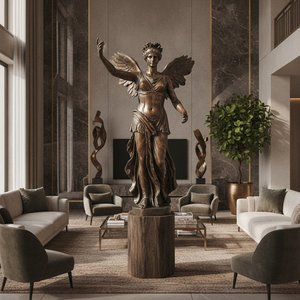
Timeless Bronze Sculptures: Elevate Your Space with Masterful Metal Artworks
Discover the enduring allure of bronze sculptures at OriginalUniqueArt.com. From classical lost-wax casting to modern metal masterpieces, explore museum-quality artworks designed to elevate luxury interiors. Expert curation, authenticity guaranteed, and worldwide shipping for discerning collectors.
