() ·

A painting made for you, by hand

LA FERME

Reprodução em Óleo Feita à Mão

Óleo sobre tela pintado à mão no tamanho e moldura de sua escolha, feito sob encomenda pelos nossos artistas. ( Alternar para Impressão Alternar para Imagem Digital)

Descrição do Item

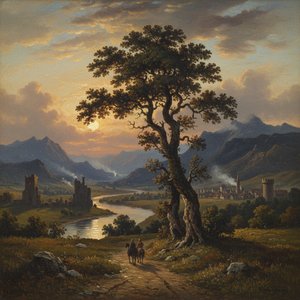
Paul Huet's "La Ferme" captures a serene rural scene with a solitary figure amidst rolling hills and distant mountains, showcasing the Barbizon School’s realism & Romantic spirit.

Biografia do Artista

Paul Huet (1803-1869) foi um pintor de paisagens francês conhecido pelo seu estilo Romântico e influência nos artistas de Barbizon e Impressionistas. Explore as suas evocativas aquarelas e pinturas a óleo.

from ·

Chapter 1

How large should it be?

Slide to change the size; the picture on the left shows the frame at its real width. The proportions of the original are kept.

Tamanho padrão
personalizado
CM
INCH

Escolha entre os nossos tamanhos pré-definidos que respeitam as proporções originais da obra de arte.

largura
altura

Insira a largura e a altura desejadas para se ajustarem à sua moldura ou parede. Como esta obra é pintada à mão, para um tamanho com proporções diferentes, o artista poderá pintar um pouco mais ao redor da imagem ou reduzir ligeiramente a composição — você escolhe. Enviamos uma maquete digital para sua aprovação antes de iniciar a pintura. A imagem exibida nesta página não representa o resultado real — apenas a maquete mostra o resultado final.

Chapter 2

How should it arrive?

Choose the edges of the stretched canvas

Choose your frame

Corner sample of the WhiteWrap canvas edge finish, stretched on madeira maciça bars
White €1
Corner sample of the BlurSideWrap canvas edge finish, stretched on madeira maciça bars
Blurside €1
Corner sample of the ExtendedWrap canvas edge finish, stretched on madeira maciça bars
Extended €1
Corner sample of the P118B picture frame: poliestireno moldado, 5 cm wide and 3 cm thick
P118B €10
Corner sample of the P118H picture frame: poliestireno moldado, 5 cm wide and 3 cm thick
P118H €10
Corner sample of the P118W picture frame: poliestireno moldado, 5 cm wide and 3 cm thick
P118W €10
Corner sample of the P438Z picture frame: poliestireno moldado, 5.5 cm wide and 3.5 cm thick
P438Z €10
Corner sample of the P508JH picture frame: poliestireno moldado, 7 cm wide and 3.5 cm thick
P508JH €12
Corner sample of the P508YH picture frame: poliestireno moldado, 7 cm wide and 3.5 cm thick
P508YH €12
Corner sample of the P805H picture frame: poliestireno moldado, 5 cm wide and 3.5 cm thick
P805H €10
Corner sample of the P805Z picture frame: poliestireno moldado, 5 cm wide and 3.5 cm thick
P805Z €10
Corner sample of the P919BZ picture frame: poliestireno moldado, 7 cm wide and 3.5 cm thick
P919BZ €10
Corner sample of the P919G picture frame: poliestireno moldado, 7 cm wide and 3.5 cm thick
P919G €10
Corner sample of the P919XJ picture frame: poliestireno moldado, 7 cm wide and 3.5 cm thick
P919XJ €10
Corner sample of the P959ZH picture frame: poliestireno moldado, 5 cm wide and 3 cm thick
P959ZH €10
Corner sample of the P968JZ picture frame: poliestireno moldado, 6 cm wide and 4 cm thick
P968JZ €12
Corner sample of the W106C picture frame: madeira maciça, 5 cm wide and 3 cm thick
W106C €8
Corner sample of the W218G picture frame: madeira maciça, 5 cm wide and 3 cm thick
W218G €10
Corner sample of the W218JH picture frame: madeira maciça, 5 cm wide and 3 cm thick
W218JH €8
Corner sample of the W218Y picture frame: madeira maciça, 5 cm wide and 3 cm thick
W218Y €10
Corner sample of the W307PJ picture frame: madeira maciça, 6 cm wide and 3 cm thick
W307PJ €10
Corner sample of the W316G picture frame: madeira maciça, 6 cm wide and 3 cm thick
W316G €10
Corner sample of the W316PJ picture frame: madeira maciça, 6 cm wide and 3 cm thick
W316PJ €8
Corner sample of the W316Y picture frame: madeira maciça, 6 cm wide and 3 cm thick
W316Y €10
Corner sample of the W398PJ picture frame: madeira maciça, 5 cm wide and 3 cm thick
W398PJ €8
Corner sample of the W4111J picture frame: madeira maciça, 6.5 cm wide and 3.5 cm thick
W4111J €10
Corner sample of the W500HY picture frame: madeira maciça, 7 cm wide and 5 cm thick
W500HY €15
Corner sample of the W500JH picture frame: madeira maciça, 7 cm wide and 5 cm thick
W500JH €15
Corner sample of the W692G picture frame: madeira maciça, 8 cm wide and 4 cm thick
W692G €12
Corner sample of the W849H picture frame: madeira maciça, 5 cm wide and 3 cm thick
W849H €8
Corner sample of the W940BG picture frame: madeira maciça, 7.5 cm wide and 4.5 cm thick
W940BG €15
Corner sample of the W953PJ picture frame: madeira maciça, 6 cm wide and 3.5 cm thick
W953PJ €8
Corner sample of the H24-GOLD picture frame: madeira entalhada com gesso, 10 cm wide and 6 cm thick
H24-GOLD €30
Corner sample of the H24-SILVER picture frame: madeira entalhada com gesso, 10 cm wide and 6 cm thick
H24-SILVER €30
Corner sample of the H36-GOLD picture frame: madeira entalhada com gesso, 15 cm wide and 6.5 cm thick
H36-GOLD €45
Corner sample of the H36-SILVER picture frame: madeira entalhada com gesso, 15 cm wide and 6.5 cm thick
H36-SILVER €45
Prévia da moldura
Com moldura

Moulding: . Overall size with the frame: .

Chapter 3

Who paints it, and should anything change?

Examples of what can be changed: Replace face with customer photo; Add pet (e.g., replace cat with dog); Include hidden message in background; Change background landscape or elements.
After order, OriginalUniqueArt.com team will email client for instructions and provide a mockup preview

Entrega mundial () em 3 a 4 semanas, em vez das 5 semanas padrão. (1 Novembro). Sem comprometer a qualidade.

Chapter 4

The finishing touches

A nameplate, as in a museum?

Detalhes da Placa de Bronze Gravada

This elegant plaque features the artist's name and the title of the artwork, finely engraved for a timeless presentation.

It is made from bronze with a refined, elegant finish. The text is precisely laser-engraved for a sharp and permanent result. Measuring 9x2 cm, the plaque is compact yet easy to read. It's built to be durable and scratch-resistant, offering a professional, museum-quality look. Mounting is simple thanks to the included adhesive backing.

Detalhes da Placa de Acrílico Transparente

The plaque includes essential engraved details such as the artist's name, the title of the artwork, the date it was created, the type of media used-like oil on canvas or watercolor-a brief description of the piece, and a QR code that links to the complete artwork information.

It is crafted from clear acrylic, offering a sleek, modern appearance. The text is UV-engraved in black to ensure strong visual contrast. With a size of 10x15 cm, it ensures optimal readability. It comes equipped with two metal hooks for secure wall mounting. The plaque is designed to be weather-resistant, making it suitable for various environments, and it includes interactive features that work seamlessly with smartphone scanning.

Detalhes da Placa de Acrílico Preto

This elegant plaque includes engraved information such as the artist's name, the title of the artwork, the date it was created, the type of media used (like oil on canvas or watercolor), a short description of the artwork, and a QR code for quick access to more information.

The plaque itself is made from refined black acrylic with a premium finish. The text is laser-engraved in white for high contrast and readability. Its size is 10x15 cm, designed to be easy to read. It comes with two metal hooks for professional mounting. The design is sleek and fits any interior style. It is also weather-resistant and durable, with built-in digital integration for mobile compatibility.

A protective varnish?

When do you need it?

Chapter 5

Your painting, as you ordered it

LA FERME

Técnica de Reprodução

Tamanho da Reprodução

-

Artista Sênior de Elite

Mais detalhes, refinamento e tempo de produção adicional

-

Moldura para Reprodução

-

-

Para obras de arte ou reproduções com mais de 105 cm (aproximadamente 41 polegadas) em qualquer um dos lados, a moldura será enviada como um kit desmontado. Este método garante uma entrega segura e evita danos durante o transporte.

Montagem profissional necessária — este não é um produto DIY (faça você mesmo).
O kit deve ser montado e a tela esticada por um profissional de molduraria experiente, utilizando cola de madeira (não inclusa), um alicate de esticar tela e grampos para manter as travessas alinhadas enquanto a cola seca. A montagem incorreta ou a tensão desigual da tela podem danificar permanentemente a obra de arte e não estão cobertas pela nossa garantia.

  • Todas as barras de madeira maciça estão incluídas, precisamente cortadas ao tamanho certo.

  • Montado com os parafusos fornecidos, além de cola para madeira para as junções dos cantos, que não está inclusa e deve ser providenciada pelo seu moldurista.

  • São necessárias ferramentas profissionais não incluídas: um alicate de estiramento de tela (esticador) e grampos para manter as ripas alinhadas enquanto a cola seca.

Importante:
As junções dos cantos requerem cola para madeira, as ripas devem ser mantidas com grampos até que a cola esteja completamente seca, e o estiramento da tela na moldura montada requer um alicate de esticar tela. Nenhum destes itens está incluído no kit. Por favor, certifique-se de contar com um profissional de molduraria experiente antes de encomendar este tamanho.

Etiqueta de identificação

-

-

Verniz de Proteção

Verniz brilhante (realça as cores e protege contra a luz e a umidade)

-

Personalizar minha obra

Exemplos de alterações possíveis: Substituir o rosto por uma foto do cliente; Adicionar um animal de estimação (ex.: substituir gato por cachorro); Incluir uma mensagem oculta no fundo; Alterar a paisagem ou os elementos do fundo.

-

Urgente

Entrega mundial () em 3 a 4 semanas, em vez das 5 semanas padrão. (1 Novembro). Sem comprometer a qualidade.

-

Envio Expresso

Entrega mundial para em 5 semanas. (8 Novembro).

Com envio incluído

Preço Total

€ 267

Preço Total € 267

A opção de vidro está disponível apenas para tamanhos inferiores a 110 cm

Included with every order

  • Envio expresso gratuito para todo o mundo
  • Tela de Linho de Alta Qualidade
  • Seguro de transporte completo
  • Garantia de Reembolso de Impostos Alfandegários
  • Garantia de Fidelidade Cromática
  • Política de Devolução em 100 Dias (Apenas para Defeitos)
  • Garantia de reembolso de 100%
  • Oferta de desconto por quantidade

A Rustic Symphony: Paul Huet’s “La Ferme”

Paul Huet's "La Ferme," painted in 1856, isn’t merely a depiction of a rural landscape; it’s an immersion into the quiet dignity and profound connection between humanity and nature. This oil on canvas, now housed within the Louvre Museum, captures a fleeting moment in the French countryside – a solitary figure traversing a winding path towards distant, hazy mountains. Huet, a pivotal yet often understated figure of the Barbizon School and a significant influence on the nascent Impressionists, masterfully employed light, color, and texture to evoke not just what he saw, but how it *felt* to be present in that space.

The painting’s strength lies in its deliberate rejection of academic formality. Huet, deeply influenced by the English landscape painters like Constable and Turner, moved away from the rigid structures and idealized forms prevalent in earlier French art. Instead, he embraced a more direct observation of nature, prioritizing atmospheric perspective and the subtle shifts in light and shadow. This commitment to truthfulness is immediately apparent; the scene feels utterly authentic, as if captured during a spontaneous moment of contemplation.

Composition and Color – A Dance of Earth Tones

The composition of “La Ferme” is remarkably balanced, guiding the viewer’s eye along the meandering path that dominates the foreground. The solitary figure, positioned slightly off-center, acts as an anchor, drawing us into the scene's quiet drama. To the right, a modest farmhouse – likely a symbol of rural life and sustenance – provides a grounding element, partially obscured by the lush vegetation. The distant mountains, rendered in delicate blues and purples, create a sense of depth and vastness, while the trees and shrubs in the midground offer a tactile richness.

Huet’s color palette is deliberately restrained, dominated by earthy tones – browns, greens, ochres, and muted yellows. These colors aren't vibrant or saturated; rather, they are subtly blended to create a sense of atmospheric depth and realism. The diffused lighting, characteristic of the Barbizon School, further enhances this effect, softening edges and lending an air of tranquility to the scene. Notice how the light catches on the foliage, creating subtle variations in tone that suggest texture and volume.

Technique and Texture – A Painterly Approach

Huet’s technique is distinctly painterly, characterized by visible brushstrokes and a layered approach to application. He didn't strive for smooth, blended surfaces; instead, he embraced the materiality of paint itself, allowing the individual strokes to contribute to the overall image. This creates a sense of immediacy and spontaneity, as if the painting were created in a single, uninterrupted session. The texture is particularly evident in the depiction of the trees – rough bark, uneven branches, and the suggestion of foliage all contribute to a remarkably tactile quality.

The use of atmospheric perspective—the gradual fading of detail and color with distance—is expertly executed. The mountains in the background appear paler and less distinct than those closer to the viewer, creating an illusion of depth and space. This technique, borrowed from the Old Masters, is crucial to the painting’s overall effect, lending it a sense of realism and grandeur.

Symbolism and Emotional Resonance

“La Ferme” transcends a simple landscape depiction; it carries profound symbolic weight. The solitary figure represents humanity's connection to nature, a theme central to Romantic art. The path itself can be interpreted as a journey – both literal and metaphorical – suggesting a search for meaning or perhaps simply the quiet pleasure of being present in the natural world. The farmhouse symbolizes stability and community, while the distant mountains evoke a sense of aspiration and possibility.

Ultimately, “La Ferme” is a painting that invites contemplation. It’s a reminder of the beauty and serenity to be found in the simple things – the warmth of the sun, the scent of the earth, and the quiet dignity of rural life. Huet's masterful use of light, color, and texture creates an emotional resonance that lingers long after the viewer has turned away, offering a glimpse into a timeless connection between humanity and the natural world.

Perguntas e Respostas

Qual é a situação dos direitos autorais de "LA FERME", de Paul Huet?

"LA FERME", de Paul Huet, está em em domínio público — seus direitos autorais expiraram. Os termos de direitos autorais são calculados a partir do falecimento do artista, e Paul Huet faleceu em 1869.

"LA FERME", de Paul Huet está localizado no país de origem do artista?

Sim – a obra de arte encontra-se no país de origem do artista. Paul Huet nasceu em França, e o original de "LA FERME" encontra-se num museu em França.

Qual uso e espaço são recomendados para "LA FERME", de Paul Huet?

As recomendações de uso para "LA FERME", de Paul Huet são (Harmony) e o ambiente (Living Room).

More about this painting

Visualizar na parede Visualizar em RA Alternar para Impressão Alternar para Imagem Digital Compartilhar
Detalhes Guia Adicionar aos favoritos Baixar imagem Semelhantes Raio X Ver diaporama Q&A Estatísticas

In numbers

  • 29frames to choose from
  • standard sizes, in its own proportions
  • 5weeks to paint and deliver it
Paul Huet

Paul Huet

1803 - 1869, França

Quick facts about Paul Huet

  • Artistic Movement Or Style: Paisagem Romântica
  • Artists Or Movements Influenced By This Artist:
    • Escola de Barbizon
    • Impressionistas
  • Artists Who Influenced This Artist:
    • Rembrandt
    • John Constable
    • Eugène Delacroix
  • Date Of Birth: 1803-10-03
  • Date Of Death: 1869-01-08
  • Full Name: Paul Huet
  • Nationality: Francês
  • Notable Artworks:
    • A Villa Near Rome
    • Effet du Soir
    • Sous bois avec un étang
  • Place Of Birth: Paris, França

Biografia do Artista

Paul Huet: Um Pioneiro da Paisagem Romântica

Paul Huet (1803-1869) ergue-se como uma figura fundamental, embora muitas vezes subestimada, na arte francesa do século XIX – um pintor de paisagens que influenciou profundamente tanto a Escola de Barbizon quanto os nascentes Impressionistas. Nascido em Paris, em meio a um clima artístico efervescente, a jornada de Huet foi marcada por uma observação incansável, uma conexão profunda com a natureza e uma rejeição deliberada às tendências neoclássicas predominantes. Sua obra não era meramente uma representação de cenários; era uma tentativa de capturar a própria essência da luz, da atmosfera e da beleza fugaz do mundo natural, uma busca que consolidou seu lugar como um inovador essencial na pintura francesa.

Influências Iniciais e Formação Artística

O desenvolvimento artístico de Huet começou com uma base sólida em técnicas tradicionais. Ele recebeu instruções precoces de Jean-Julien Deltil, antigo aluno de Jacques-Louis David, seguidas por estudos na École des Beaux-Arts sob a tutela de Pierre Guérin e Antoine-Jean Gros. Crucialmente, seu caminho cruzou-se com o de Richard Parkes Bonington, um colega de estúdio de Gros. Este encontro revelou-se transformador. A abordagem de Bonington à pintura plein-air – trabalhando diretamente da natureza – cativou Huet, levando-o a abandonar a rigidez formal do Neoclassicidade para abraçar um estilo mais espontâneo e observacional. As pinturas de paisagem britânicas exibidas no Salão de 1824 serviram como uma revelação; a habilidade de John Constable em renderizar o frescor e a beleza exuberante, sem recorrer a sombras escuras ou artificialismos, ressoou profundamente em Huet, moldando sua própria filosofia artística. Ele descreveu famosamente a obra de Constable como “talvez a primeira vez que se sentiu o frescor, que se viu uma natureza luxuriante e verde, sem negros, crueza ou maneirismo”.

O Estilo de Barbizon e os Mestres Holandeses

O estilo de Huet evoluiu através de uma fascinante síntese de influências. Inicialmente, ele emulou a técnica de aquarela de Bonington, mas sua sensibilidade artística estendeu-se muito além da mera imitação. Ele buscou inspiração nas paisagens atmosféricas de mestres holandeses como Jacob van Ruysdael e Meindert Hobbema, particularmente no uso magistral da luz e da cor para transmitir humor e atmosfera. Essa admiração pelos Antigos Mestres informou sua própria abordagem, resultando em pinturas que possuíam uma dignidade silenciosa e um notável senso de realismo — não fotográfico, mas profundamente sentido. Sua obra durante este período foi caracterizada por uma rejeição deliberada das convenções acadêmicas, favorecendo pinceladas soltas, cores vibrantes e uma ênfase em capturar a impressão imediata da natureza.

Reconhecimento no Salão e Engajamento Político

A carreira artística de Huet ganhou impulso com sua estreia no Salão de 1827, onde uma de suas oito pinturas submetidas foi aceita. Ele continuou a expor regularmente no Salão ao longo das décadas de 1830 e 1840, construindo consistentemente sua reputação entre críticos e colecionadores. Eugène Delacroix, um colega artista e amigo próximo, defendeu o trabalho de Huet, reconhecendo suas qualidades únicas. No entanto, Étienne-Jean Delécluze ofereceu uma perspectiva mais crítica, vendo Huet como excessivamente devotado a Constable e Turner, por vezes negligenciando princípios fundamentais de composição. Além de suas buscas artísticas, Huet foi um participante ativo na Revolução de Julho de 1830 e, posteriormente, envolveu-se na política republicana, refletindo o clima social e político turbulento da França na época. Seu compromisso com esses ideais rendeu-lhe o reconhecimento do Rei Luís Filipe, que lhe presenteou com um par de vasos de porcelana de Sèvres em 1844, além de uma medalha de ouro no Salão de 1848.

Legado e Significância Artística

O impacto de Paul Huet na pintura de paisagem francesa é considerável. Seu uso inovador da aquarela — não apenas para esboços, mas como meio principal para obras acabadas — demonstrou o potencial dessa técnica para alcançar uma profundidade e riqueza notáveis, muitas vezes assemelhando-se a pinturas a óleo. Ele foi um dos primeiros adotantes da pintura plein-air, priorizando a observação direta da natureza em detrimento do trabalho de estúdio. Mais importante ainda, a ênfase de Huet em capturar os efeitos fugazes da luz e da atmosfera influenciou profundamente a Escola de Barbizon e, mais tarde, os Impressionistas. Artistas como Théodore Rousseau e Jean-François Millet, que buscaram pintar diretamente da natureza com foco na vida rural e nas paisagens, devem muito à abordagem pioneira de Huet. Sua obra permanece como um testemunho do poder da observação, da beleza da simplicidade e do apelo duradouro de capturar a essência do mundo natural. Ele faleceu em Paris em 1869, deixando para trás um corpo substancial de obras que continuam a cativar os espectadores com sua atmosfera evocativa e profunda conexão com a natureza.

Informações Rápidas

  • Artist: Paul Huet
  • Movement: Barbizon School
  • Subject or theme: Rural landscape
  • Dimensions: 31.8 x 47cm
  • Notable elements: Atmospheric perspective
  • Year: 1856

Quiz de Arte

Cada pergunta possui apenas uma resposta correta.

Pergunta 1:
What is the primary subject matter depicted in Paul Huet’s ‘LA FERME’?
Pergunta 2:
The painting ‘LA FERME’ is primarily associated with which artistic movement?
Pergunta 3:
What technique does Paul Huet employ to create a sense of depth in ‘LA FERME’?
Pergunta 4:
According to the description, what is the overall mood or feeling conveyed by ‘LA FERME’?
Pergunta 5:
Paul Huet was a significant figure in French art, particularly known for his influence on which later artistic movements?