

 Visualizar na parede
 Compartilhar
 Compartilhar
 Detalhes

 Baixar imagem
 Semelhantes
 Raio X
 Slideshow
 Estatísticas
untitled (1158)

 Ler mais
Adquira uma imagem digital de alta resolução e aprimorada, muito superior à prévia online.
Cada arquivo é meticulosamente preparado por nossos especialistas internos, utilizando ferramentas avançadas e retoques manuais de alta precisão. Garantimos que cada imagem apresente clareza excepcional, fidelidade de cores e detalhes minuciosos.
O arquivo final é entregue por e-mail em até 72 horas, otimizado para uso imediato em ambientes profissionais, editoriais e de impressão. Esta é a mesma qualidade utilizada por estúdios de design de alto nível, editoras e galerias.
Imagem Digital
Baixe um arquivo de alta resolução para exibição pessoal, impressão e projetos criativos. ( Alternar para Impressão Comprar pintura feita à mão)
Incluído em cada compra de imagem digital
Entrega Digital Especializada e Garantida
Ao escolher o OriginalUniqueArt.com, você não está apenas adquirindo uma imagem — você está recebendo uma obra de arte digital profissionalmente aprimorada, elaborada com precisão e com garantia de satisfação. Aqui está tudo o que acompanha seu pedido, automaticamente:

Entrega rápida por e-mail
O seu arquivo de imagem digital em alta resolução será enviado por e-mail em até 72 horas após o pedido — pronto para uso imediato.

Arquivo Digital com IA Otimizado
Sua obra de arte é otimizada profissionalmente por meio de ferramentas avançadas de IA e edição manual, garantindo o máximo de detalhes, clareza e precisão de cores.

Reenvio gratuito vitalício
Apagou ou perdeu o seu ficheiro acidentalmente? Não se preocupe – nós reenviamos para si a qualquer momento, gratuitamente.

Sem Taxas de Importação - Sempre
Desfrute da sua obra de arte instantaneamente, sem taxas alfandegárias, impostos ou custos de entrega — downloads digitais são sempre isentos de taxas.

Garantia de Fidelidade de Cores
Garantimos que sua imagem digital reflita as cores originais com a maior fidelidade possível, utilizando ferramentas profissionais e gerenciamento de cores.

Garantia de Satisfação de 100 Dias
Se não estiver satisfeito com a sua imagem digital, nós a revisaremos ou reembolsaremos 100% dentro de 100 dias — sem perguntas.

Garantia de Reembolso 100%
Não está satisfeito? Receba o reembolso total em até 100 dias após o recebimento do seu arquivo digital — sem perguntas.

Descontos para pedidos em lote
Compre 3 imagens, economize 10% - Compre 5, economize 15% - Compre 10+, economize 20%. Ideal para projetos criativos, galerias e agências.
A Dramatic Landscape Etched in Shadow and Light: Gustave Doré’s “untitled (1158)”
Paul Gustave Doré's "untitled (1158)" stands as a testament to the Romantic spirit—a breathtaking wood engraving that captures a moment of profound visual drama. Executed around 1870, this artwork isn’t merely an image; it’s a carefully crafted narrative rendered in exquisite detail, reflecting Doré's mastery of printmaking and his unwavering dedication to conveying emotion through meticulous observation. The scene depicts a formidable cliff face dominating a turbulent river, against which a lone figure struggles to ascend—a visual metaphor for human ambition confronting insurmountable obstacles.- Subject Matter & Narrative Tension: Doré’s composition immediately establishes a palpable tension between the grandeur of nature and the vulnerability of humanity. The towering cliffs symbolize stability and permanence, yet they are relentlessly eroded by the forceful currents of the river—a powerful visual representation of life's challenges. The solitary figure embodies perseverance, striving upwards despite the daunting environment.
- Style & Technique: Doré’s signature style is characterized by Romantic Realism – a commitment to portraying natural landscapes with uncompromising accuracy while simultaneously imbuing them with psychological depth. He achieved this remarkable feat through the painstaking process of wood engraving. Each line was painstakingly carved into a copper plate, inked, and pressed onto paper, resulting in an image that possesses astonishing textural richness and tonal gradation. The artist skillfully employed hatching and cross-hatching techniques to build up shading, creating a convincing illusion of depth and atmosphere.
- Composition & Perspective: Diagonal lines dominate the scene, guiding the viewer’s eye upwards towards the turbulent river and emphasizing the precarious position of the ascending figure. Linear perspective subtly diminishes the size of distant mountains, reinforcing the sense of scale and conveying an impression of vastness—a deliberate choice to underscore the insignificance of human endeavor against the backdrop of geological time.
- Color Palette & Lighting: Strikingly devoid of color, “untitled (1158)” relies entirely on shades of gray to create a mood of solemn contemplation and heighten dramatic impact. The diffused lighting casts soft shadows across the landscape, enhancing the textural qualities of the cliffs and contributing to an ethereal atmosphere that evokes feelings of awe and vulnerability.
- Symbolism & Emotional Resonance: Beyond its visual splendor, Doré’s engraving resonates with deeper symbolic meanings. The falling figure represents struggle, defeat, yet also embodies resilience—a reminder that even in moments of adversity, hope persists. The immense cliff face serves as a symbol of unwavering determination and the enduring power of nature to shape human destiny.
Historical Context & Doré’s Legacy
The engraving emerged during a period marked by intellectual ferment—the Romantic movement championed emotion, imagination, and individualism as responses to the Enlightenment's emphasis on reason. Doré’s work aligned perfectly with these sensibilities, reflecting a broader cultural preoccupation with sublime landscapes and heroic narratives. His unparalleled skill in printmaking established him as one of the foremost illustrators of his time, securing his place within art history as an artist who transformed literary texts into unforgettable visual experiences—a legacy that continues to inspire artists and collectors alike.Further Exploration & Reproduction Recommendations
To appreciate Doré’s artistic vision fully, consider examining reproductions of “untitled (1158)” alongside original prints housed in museums worldwide. High-quality reproductions offer a remarkable opportunity to experience the textural richness and tonal subtlety of this iconic artwork—a testament to Doré's unparalleled craftsmanship and his enduring ability to communicate profound emotion through visual form. OriginalUniqueArt specializes in offering exceptional reproductions that faithfully capture the essence of Doré’s masterpiece, allowing you to bring its dramatic beauty into your home or studio.Biografia do Artista
A Life Etched in Shadow and Light: The World of Gustave Doré
Paul Gustave Louis Christophe Doré, known to the world as Gustave Doré, was a figure who straddled the worlds of illustration, painting, and sculpture with an astonishing virtuosity. Born in Strasbourg, France, on January 6th, 1832, his life unfolded during a period of immense social and artistic change, a time when Romanticism still held sway but was giving way to new currents of realism and symbolism. Even as a child, Doré displayed a precocious talent, not merely in drawing—which he began at an incredibly young age—but also in a personality that hinted at the dramatic flair which would come to define his work. Stories abound of youthful pranks demonstrating a maturity beyond his years, foreshadowing the complex and often melancholic themes that would permeate his art. He embarked on his professional career remarkably early, at just fifteen years old, as a caricaturist for the French journal *Le Journal pour rire*, honing his skills in observation and composition within the bustling world of Parisian satire.From Caricature to Literary Giants: The Rise of an Illustrator
Doré’s early commissions laid the foundation for his future renown. Works like *Les Travaux d'Hercule* (1847), *Trois artistes incompris et mécontents* (1851), and *Les Dés-agréments d'un voyage d'agrément* (1851) showcased a burgeoning talent for dynamic composition and a masterful use of light and shadow, even in these relatively modest beginnings. He was deeply influenced by the illustrations of J.J. Grandville, whose fantastical imagery and satirical edge resonated with Doré’s own developing style. However, it was through his collaborations with literary giants that Doré truly ascended to prominence. In 1853, he received a commission to illustrate the works of Lord Byron, an undertaking which opened doors to further prestigious projects. The monumental task of illustrating the Bible followed, a project that would cement his reputation and bring his art before a vast international audience. His illustrations for Cervantes’ *Don Quixote* in the 1860s were particularly impactful, profoundly influencing subsequent interpretations of the characters and narrative. He wasn't merely illustrating these stories; he was reimagining them, imbuing them with a dramatic intensity that captured the imagination of readers worldwide. The oversized edition of Edgar Allan Poe’s “The Raven,” completed in 1883, earned him an impressive 30,000 francs from Harper & Brothers, demonstrating the commercial success alongside the artistic acclaim he had achieved. His collaboration with Blanchard Jerrold on *London: A Pilgrimage* (1872) was a particularly poignant and controversial work, depicting the stark realities of Victorian London’s poverty and sparking debate about social conditions.A Master of Technique: Wood Engraving and Romantic Vision
Doré's artistic prowess lay not only in his imaginative vision but also in his technical mastery, particularly in wood engraving. He possessed an extraordinary ability to create incredibly detailed and dramatic images through this medium, a skill that allowed for the mass production and widespread dissemination of his work. His compositions are characterized by their dynamism, strong contrasts between light and shadow—a technique known as chiaroscuro—and a sense of grandeur that often evokes a feeling of awe or even terror. He frequently employed a large team of block-cutters to translate his designs into wood engravings, enabling the efficient production needed to meet the demands of publishers and readers alike. His style is firmly rooted in the Romantic tradition, emphasizing emotion, imagination, and the sublime—a fascination with the overwhelming power of nature and the human condition. He wasn’t merely recording scenes; he was interpreting them through a lens of heightened emotionality and dramatic flair. This approach, while celebrated by many, also drew criticism from some contemporaries who found his work overly theatrical or sensationalized.Notable Works and Lasting Influence
Doré's prolific output spanned a vast range of subjects and styles. His illustrations for Dante’s *Inferno* remain perhaps his most iconic achievement, capturing the terrifying visions of hell with unparalleled intensity. Similarly, his interpretations of Milton’s *Paradise Lost* and Cervantes’ *Don Quixote* are celebrated for their grandeur and dramatic flair. Beyond these monumental projects, Doré produced countless illustrations for popular literature, including works by Balzac, Coleridge, and Poe. His depictions of London—particularly *London: A Pilgrimage*, which offered a stark portrayal of poverty and social injustice—left a lasting impact on the public’s perception of the city. Despite facing some criticism during his lifetime—some found his style overly dramatic or lacking in subtlety—Doré's work is now celebrated for its artistic merit and historical importance. His illustrations continue to shape our understanding of classic literature and Victorian society, offering a powerful visual interpretation of timeless stories and enduring themes. He died on January 23rd, 1883, leaving behind an immense body of work that continues to captivate and inspire. *His art remains a testament to the power of illustration to not only depict but also to interpret and transform the world around us.*Key Characteristics
- Dramatic Composition: Doré’s works are renowned for their dynamic arrangements, often featuring sweeping vistas and figures in dramatic poses.
- Chiaroscuro: His masterful use of light and shadow creates a powerful sense of depth and atmosphere.
- Romantic Intensity: Doré's illustrations are infused with emotion, imagination, and a fascination with the sublime.
- Technical Skill: He was a highly skilled wood engraver, capable of producing incredibly detailed and intricate images.
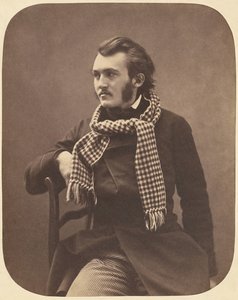
Gustave Doré
1832 - 1883 , França
Breve Biografia
- Artistic Movement Or Style: Romantismo
- Artists Or Movements Influenced By This Artist: ['Van Gogh']
- Artists Who Influenced This Artist: ['Grandville']
- Date Of Birth: 6 jan. 1832
- Date Of Death: 23 jan. 1883
- Full Name: Paul Gustave Doré
- Nationality: Francês
- Notable Artworks:
- Don Quixote
- Inferno
- Paraíso
- Place Of Birth: Estrasburgo, França