Abstract Expressionism · 1956
Red Garden (Patrick Heron, 1956)
Patrick Heron (1920–1999) criou Red Garden. Data de 1956. Pertence ao movimento Abstract Expressionism. É feito em Lithograph. Está conservada no Tate Modern, em Londres, Reino Unido.
- 1956
- Lithograph
- Tate Modern, Londres

 Visualizar na parede

 Pintura a Óleo Feita à Mão
 Compartilhar
 Compartilhar
 Ficha técnica


 Baixar imagem
 Semelhantes
 Raio X
 Ver diaporama
 Perguntas e Respostas

 Estatísticas
Red Garden, em resumo
- Título
- Red Garden
- Artista
- Patrick Heron (1920–1999)
- Artista nascido em
- Leeds, Reino Unido
- Data
- 1956
- Técnica
- Lithograph
- Onde ver
- Tate Modern, Londres, Reino Unido
- Movimento
- Abstract Expressionism
- Período
- Modern
- Tema
- color field painting, geometric forms, organic texture, cornish landscape, red hue, minimalist composition
O que Red Garden retrata?
A Symphony of Crimson and Form
In the realm of British Abstract Expressionism, few works capture the visceral pulse of nature quite like Patrick Heron’s Red Garden. Created in 1956, this masterful lithograph serves as a profound exploration of how color alone can evoke the lush, tangled energy of a living landscape. At first glance, the viewer is met with a rhythmic dance of geometric shapes—rectangles and irregular forms that seem to drift across the paper like sunlight filtering through dense foliage. There is no literal depiction of flora or earth; instead, Heron utilizes a sophisticated visual vocabulary to translate the essence of a garden into a purely non-representational experience. The composition avoids the stillness of traditional landscapes, opting instead for a dynamic asymmetry that guides the eye in a continuous, wandering journey across the surface.
The emotional heartbeat of the piece lies in its striking color palette, dominated by a resonant spectrum of reds. From the most vibrant, electric scarlets to deep, brooding crimsons, these hues command immediate attention, imbuing the work with an undeniable sense of passion and vitality. This warmth is masterfully balanced by darker, grounding tones of black and rich brown, which provide much-needed shadow and structural definition to the overlapping shapes. Intermittent whispers of creamy off-white offer a luminous respite, preventing the intensity of the red from becoming overwhelming. For the discerning collector or interior designer, this interplay of light and dark offers a sophisticated focal point that can anchor a room with both warmth and modern elegance.
Technique and the Spirit of Modernism
Heron’s approach to Red Garden reflects his deep fascination with the geological textures of Cornwall, particularly the striking red sandstone found within the landscape. Through the meticulous process of layered lithography, he achieves a sense of spatial recession that defies the flat nature of the medium. By layering shapes and varying the density of pigment, Heron creates an illusion of depth, where certain forms appear to float forward while others recede into a shadowy background. This technique allows the artwork to breathe, suggesting a complex, multi-dimensional space that mirrors the layered complexity of a real garden.
Beyond its technical brilliance, the work stands as a testament to a pivotal moment in mid-century modernism. As an artist who was both a creator and a formidable critic, Heron understood how to bridge the gap between spontaneous emotional expression and rigorous color theory. Red Garden is not merely a decorative arrangement; it is a deliberate study of how pigment interacts with surface and sight. For those seeking to infuse their spaces with a sense of historical significance and avant-garde spirit, this reproduction offers an invitation to contemplate the eternal dance between chaos and order, and the enduring power of color to stir the human soul.
Em qual museu se encontra Red Garden?
Tate Modern
Londres, Reino Unido
A História e as Origens da Tate Modern A presença da Tate Modern em Londres, Reino Unido, está profundamente enraizada na história industrial do horizonte de Southwark. O local foi originalmente ocupado pela Bankside Power Station, uma estrutura que funcionou durante três décadas antes do seu eventual desativamento. Mudanças económicas, especificamente a subida dos preços do petróleo, levaram ao encerramento da central a 31 de outubro de 1981.


Imagens em alta resolução de Red Garden

Protected by copyright: these files are for personal reference, not a licence to republish.
Patrick Heron, Red Garden (1956), Tate Modern.
Perguntas sobre Red Garden respondidas
Onde posso ver a obra original "Red Garden", de Patrick Heron?
"Red Garden", de Patrick Heron está em exibição no Tate Modern, Londres, Reino Unido. A referência ao museu diz respeito à obra original, não a reproduções.
Em que ano foi criado "Red Garden"?
"Red Garden", de Patrick Heron foi criado em 1956.
Qual é a técnica utilizada em "Red Garden", de Patrick Heron?
"Red Garden" é executada em Lithograph.
O que representa "Red Garden"?
"Red Garden", de Patrick Heron retrata: color field painting, geometric forms, organic texture, cornish landscape, red hue, minimalist composition, visual rhythm.
A imagem de "Red Garden", de Patrick Heron pode ser reproduzida livremente?
"Red Garden", de Patrick Heron está em ainda protegido por direitos autorais. Este status determina como a imagem da obra pode ser reproduzida.
Quem criou "Red Garden"?
"Red Garden" é atribuída a Patrick Heron.
A qual movimento artístico "Red Garden", de Patrick Heron pertence?
O movimento associado a "Red Garden", de Patrick Heron é Abstract Expressionism. Esta classificação situa a obra entre artistas e obras de arte relacionados.
A que período da carreira de Patrick Heron pertence "Red Garden"?
"Red Garden" representa o Mature Period de Patrick Heron.
Qual era a idade de Patrick Heron ao criar "Red Garden" em 1956?
Quando "Red Garden" foi criada em 1956, Patrick Heron — nascido(a) em 1920 — tinha 36 anos.
Sobre o artista, Patrick Heron

1920–1999, Reino Unido
Patrick Heron
Uma Vida Imersa em Cor e Luz Patrick Heron, uma figura fundamental na arte britânica do século XX, não era meramente um pintor; ele era um poeta visual, traduzindo a vibração do mundo para a tela com uma linguagem intensamente pessoal. Nascido em Headingley, Leeds, em 1920, sua jornada artística não começou nos salões sagrados da academia, mas entre as practicalidades de um negócio familiar e a beleza florescente da paisagem de Cornualha. Seu pai, um fabricante de roupas e pacifista convicto, promoveu um ambiente onde a criatividade podia prosperar, permitindo que o jovem Patrick desenhasse padrões de tecidos ainda na adolescência – um indício precoce de sua sensibilidade inata à cor e à forma. Este período formativo, que culminou em uma mudança para a Cornualha em 1925, provou ser crucial; a luz dramática e o cenário rústico tornariam-se temas duradouros ao longo de sua carreira, informando sutilmente suas explorações abstratas por décadas.
Também de Patrick Heron
 Azalea Garden May 19561956
 Market Place (Half Church Tower) St Ives 19501950
 Standing Figure, Rachel1950
 10 11 July 19921992
Ensaios sobre Red Garden
 Abstração Geométrica: 10 Obras-Primas que Moldaram a Arte Moderna | OriginalUniqueArt.comDescubra as 10 obras-primas da Abstração Geométrica que revolucionaram a arte moderna! Explore Kandinsky, Mondrian e outros artistas icônic…
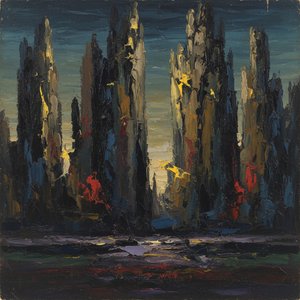 Clyfford Still's Abstract Expressionism: A Study of Color, Form & the Existential LandscapeExplore the profound world of Clyfford Still's Abstract Expressionism with OriginalUniqueArt. Discover his unique style, existential themes…
 Sculpting Space: The Structural Interplay of Impasto and Atmospheric Perspective in Modern ArtExplore the expert interplay of impasto texture and aerial perspective in modern art. Discover how depth is sculpted on canvas.