Menu

() ·

A painting made for you, by hand

Pietà

Reprodução em Óleo Feita à Mão

Óleo sobre tela pintado à mão no tamanho e moldura de sua escolha, feito sob encomenda pelos nossos artistas. ( Alternar para Impressão Alternar para Imagem Digital)

Descrição do Item

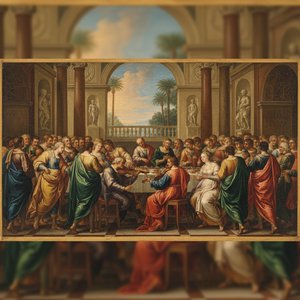
Experience the emotional power of Paolo Veronese’s 'Pietà,' a Baroque masterpiece depicting Mary cradling Jesus. This stunning oil painting, created in 1581, showcases exquisite detail and dramatic light – now available as a handmade reproduction.

Biografia do Artista

Paolo Veronese (1528-1588): Mestre veneziano da Renascença, famoso por cores vibrantes, cenas grandiosas de festas e arquitetura exuberante. Explore sua obra!

from ·

Chapter 1

How large should it be?

Slide to change the size; the picture on the left shows the frame at its real width. The proportions of the original are kept.

Tamanho padrão
personalizado
CM
INCH

Escolha entre os nossos tamanhos pré-definidos que respeitam as proporções originais da obra de arte.

largura
altura

Insira a largura e a altura desejadas para se ajustarem à sua moldura ou parede. Como esta obra é pintada à mão, para um tamanho com proporções diferentes, o artista poderá pintar um pouco mais ao redor da imagem ou reduzir ligeiramente a composição — você escolhe. Enviamos uma maquete digital para sua aprovação antes de iniciar a pintura. A imagem exibida nesta página não representa o resultado real — apenas a maquete mostra o resultado final.

Chapter 2

How should it arrive?

Choose the edges of the stretched canvas

Choose your frame

Corner sample of the WhiteWrap canvas edge finish, stretched on madeira maciça bars
White €1
Corner sample of the BlurSideWrap canvas edge finish, stretched on madeira maciça bars
Blurside €1
Corner sample of the ExtendedWrap canvas edge finish, stretched on madeira maciça bars
Extended €1
Corner sample of the P118B picture frame: poliestireno moldado, 5 cm wide and 3 cm thick
P118B €10
Corner sample of the P118H picture frame: poliestireno moldado, 5 cm wide and 3 cm thick
P118H €10
Corner sample of the P118W picture frame: poliestireno moldado, 5 cm wide and 3 cm thick
P118W €10
Corner sample of the P438Z picture frame: poliestireno moldado, 5.5 cm wide and 3.5 cm thick
P438Z €10
Corner sample of the P508JH picture frame: poliestireno moldado, 7 cm wide and 3.5 cm thick
P508JH €12
Corner sample of the P508YH picture frame: poliestireno moldado, 7 cm wide and 3.5 cm thick
P508YH €12
Corner sample of the P805H picture frame: poliestireno moldado, 5 cm wide and 3.5 cm thick
P805H €10
Corner sample of the P805Z picture frame: poliestireno moldado, 5 cm wide and 3.5 cm thick
P805Z €10
Corner sample of the P919BZ picture frame: poliestireno moldado, 7 cm wide and 3.5 cm thick
P919BZ €10
Corner sample of the P919G picture frame: poliestireno moldado, 7 cm wide and 3.5 cm thick
P919G €10
Corner sample of the P919XJ picture frame: poliestireno moldado, 7 cm wide and 3.5 cm thick
P919XJ €10
Corner sample of the P959ZH picture frame: poliestireno moldado, 5 cm wide and 3 cm thick
P959ZH €10
Corner sample of the P968JZ picture frame: poliestireno moldado, 6 cm wide and 4 cm thick
P968JZ €12
Corner sample of the W106C picture frame: madeira maciça, 5 cm wide and 3 cm thick
W106C €8
Corner sample of the W218G picture frame: madeira maciça, 5 cm wide and 3 cm thick
W218G €10
Corner sample of the W218JH picture frame: madeira maciça, 5 cm wide and 3 cm thick
W218JH €8
Corner sample of the W218Y picture frame: madeira maciça, 5 cm wide and 3 cm thick
W218Y €10
Corner sample of the W307PJ picture frame: madeira maciça, 6 cm wide and 3 cm thick
W307PJ €10
Corner sample of the W316G picture frame: madeira maciça, 6 cm wide and 3 cm thick
W316G €10
Corner sample of the W316PJ picture frame: madeira maciça, 6 cm wide and 3 cm thick
W316PJ €8
Corner sample of the W316Y picture frame: madeira maciça, 6 cm wide and 3 cm thick
W316Y €10
Corner sample of the W398PJ picture frame: madeira maciça, 5 cm wide and 3 cm thick
W398PJ €8
Corner sample of the W4111J picture frame: madeira maciça, 6.5 cm wide and 3.5 cm thick
W4111J €10
Corner sample of the W500HY picture frame: madeira maciça, 7 cm wide and 5 cm thick
W500HY €15
Corner sample of the W500JH picture frame: madeira maciça, 7 cm wide and 5 cm thick
W500JH €15
Corner sample of the W692G picture frame: madeira maciça, 8 cm wide and 4 cm thick
W692G €12
Corner sample of the W849H picture frame: madeira maciça, 5 cm wide and 3 cm thick
W849H €8
Corner sample of the W940BG picture frame: madeira maciça, 7.5 cm wide and 4.5 cm thick
W940BG €15
Corner sample of the W953PJ picture frame: madeira maciça, 6 cm wide and 3.5 cm thick
W953PJ €8
Corner sample of the H24-GOLD picture frame: madeira entalhada com gesso, 10 cm wide and 6 cm thick
H24-GOLD €30
Corner sample of the H24-SILVER picture frame: madeira entalhada com gesso, 10 cm wide and 6 cm thick
H24-SILVER €30
Corner sample of the H36-GOLD picture frame: madeira entalhada com gesso, 15 cm wide and 6.5 cm thick
H36-GOLD €45
Corner sample of the H36-SILVER picture frame: madeira entalhada com gesso, 15 cm wide and 6.5 cm thick
H36-SILVER €45
Prévia da moldura
Com moldura

Moulding: . Overall size with the frame: .

Chapter 3

Who paints it, and should anything change?

Examples of what can be changed: Replace face with customer photo; Add pet (e.g., replace cat with dog); Include hidden message in background; Change background landscape or elements.
After order, OriginalUniqueArt.com team will email client for instructions and provide a mockup preview

Entrega mundial () em 3 a 4 semanas, em vez das 5 semanas padrão. (30 Outubro). Sem comprometer a qualidade.

Chapter 4

The finishing touches

A nameplate, as in a museum?

Detalhes da Placa de Bronze Gravada

This elegant plaque features the artist's name and the title of the artwork, finely engraved for a timeless presentation.

It is made from bronze with a refined, elegant finish. The text is precisely laser-engraved for a sharp and permanent result. Measuring 9x2 cm, the plaque is compact yet easy to read. It's built to be durable and scratch-resistant, offering a professional, museum-quality look. Mounting is simple thanks to the included adhesive backing.

Detalhes da Placa de Acrílico Transparente

The plaque includes essential engraved details such as the artist's name, the title of the artwork, the date it was created, the type of media used-like oil on canvas or watercolor-a brief description of the piece, and a QR code that links to the complete artwork information.

It is crafted from clear acrylic, offering a sleek, modern appearance. The text is UV-engraved in black to ensure strong visual contrast. With a size of 10x15 cm, it ensures optimal readability. It comes equipped with two metal hooks for secure wall mounting. The plaque is designed to be weather-resistant, making it suitable for various environments, and it includes interactive features that work seamlessly with smartphone scanning.

Detalhes da Placa de Acrílico Preto

This elegant plaque includes engraved information such as the artist's name, the title of the artwork, the date it was created, the type of media used (like oil on canvas or watercolor), a short description of the artwork, and a QR code for quick access to more information.

The plaque itself is made from refined black acrylic with a premium finish. The text is laser-engraved in white for high contrast and readability. Its size is 10x15 cm, designed to be easy to read. It comes with two metal hooks for professional mounting. The design is sleek and fits any interior style. It is also weather-resistant and durable, with built-in digital integration for mobile compatibility.

A protective varnish?

When do you need it?

Chapter 5

Your painting, as you ordered it

Pietà

Técnica de Reprodução

Tamanho da Reprodução

-

Artista Sênior de Elite

Mais detalhes, refinamento e tempo de produção adicional

-

Moldura para Reprodução

-

-

Para obras de arte ou reproduções com mais de 105 cm (aproximadamente 41 polegadas) em qualquer um dos lados, a moldura será enviada como um kit desmontado. Este método garante uma entrega segura e evita danos durante o transporte.

Montagem profissional necessária — este não é um produto DIY (faça você mesmo).
O kit deve ser montado e a tela esticada por um profissional de molduraria experiente, utilizando cola de madeira (não inclusa), um alicate de esticar tela e grampos para manter as travessas alinhadas enquanto a cola seca. A montagem incorreta ou a tensão desigual da tela podem danificar permanentemente a obra de arte e não estão cobertas pela nossa garantia.

  • Todas as barras de madeira maciça estão incluídas, precisamente cortadas ao tamanho certo.

  • Montado com os parafusos fornecidos, além de cola para madeira para as junções dos cantos, que não está inclusa e deve ser providenciada pelo seu moldurista.

  • São necessárias ferramentas profissionais não incluídas: um alicate de estiramento de tela (esticador) e grampos para manter as ripas alinhadas enquanto a cola seca.

Importante:
As junções dos cantos requerem cola para madeira, as ripas devem ser mantidas com grampos até que a cola esteja completamente seca, e o estiramento da tela na moldura montada requer um alicate de esticar tela. Nenhum destes itens está incluído no kit. Por favor, certifique-se de contar com um profissional de molduraria experiente antes de encomendar este tamanho.

Etiqueta de identificação

-

-

Verniz de Proteção

Verniz brilhante (realça as cores e protege contra a luz e a umidade)

-

Personalizar minha obra

Exemplos de alterações possíveis: Substituir o rosto por uma foto do cliente; Adicionar um animal de estimação (ex.: substituir gato por cachorro); Incluir uma mensagem oculta no fundo; Alterar a paisagem ou os elementos do fundo.

-

Urgente

Entrega mundial () em 3 a 4 semanas, em vez das 5 semanas padrão. (30 Outubro). Sem comprometer a qualidade.

-

Envio Expresso

Entrega mundial para em 5 semanas. (6 Novembro).

Com envio incluído

Preço Total

€ 266

Preço Total € 266

A opção de vidro está disponível apenas para tamanhos inferiores a 110 cm

Included with every order

  • Envio expresso gratuito para todo o mundo
  • Tela de Linho de Alta Qualidade
  • Seguro de transporte completo
  • Garantia de Reembolso de Impostos Alfandegários
  • Garantia de Fidelidade Cromática
  • Política de Devolução em 100 Dias (Apenas para Defeitos)
  • Garantia de reembolso de 100%
  • Oferta de desconto por quantidade

A Symphony of Color and Faith: Exploring Paolo Veronese’s Pietà

Paolo Caliari, universally known as Paolo Veronese (1528-1588), stands as a titan amongst Venetian Renaissance artists—a visionary who redefined artistic expression through an unparalleled mastery of color, composition, and theatrical grandeur. Born in Verona amidst the burgeoning humanist fervor of his time, Veronese’s formative years instilled within him a profound appreciation for classical ideals interwoven with the vibrant spirit of his region's artistic heritage. His initial apprenticeship under Antonio Badile and Giovanni Francesco Caroto honed foundational skills in traditional painting methods, yet it was his relocation to Venice in the 1550s that irrevocably propelled him toward unparalleled creative heights. The city itself became Veronese’s unwavering muse—its bustling marketplaces, opulent palaces, and shimmering canals fueling the monumental scale and dramatic narrative power of his oeuvre. He swiftly assimilated the stylistic innovations championed by Titian, whose masterful use of color served as a crucial catalyst for Veronese's distinctive palette – one characterized by luminous hues and subtle gradations that captured the very essence of Venetian light. Simultaneously, he cultivated an independent artistic voice, forging a style distinct from his contemporaries yet firmly rooted in Venetian tradition.

The Baroque Embrace: Style and Technique

Veronese’s Pietà (1581), housed within Basilica dei Santi Giovanni e Paolo in Bologna, exemplifies this masterful blend of influences. Painted during the High Renaissance's waning years and transitioning into the Baroque era, it represents a pivotal moment in Venetian art history. Unlike the serene piety characteristic of earlier devotional paintings, Veronese’s Pietà bursts forth with vibrant color—a deliberate departure from prevailing artistic conventions—demonstrating his embrace of Baroque theatricality. The artist employed oil paint on canvas, utilizing layering techniques and meticulous glazing to achieve an astonishing level of realism and luminosity. Notice the masterful manipulation of light; it cascades across Mary's drapery, illuminating Jesus’s lifeless body with a poignant glow – a technique perfected by Veronese and his followers that would become synonymous with Baroque painting. The artist’s attention to detail extends beyond mere visual representation; he meticulously rendered textures—the folds of Mary’s robe, the smoothness of Jesus’s skin—creating an immersive experience for the viewer.

Historical Context: Venetian Patronage and Artistic Innovation

The Pietà emerged from a period marked by significant artistic patronage within Venice – a city that actively fostered innovation and celebrated artistic achievement. Commissioned by Cardinal Giovanni Battista Castelli, Veronese's undertaking was ambitious in scope—a monumental altarpiece intended to dominate the basilica’s interior space and inspire devotion amongst its worshippers. This commission underscored Venice’s position as Europe’s foremost cultural center and fueled a competitive spirit among artists striving for recognition. Furthermore, Veronese’s work reflects broader intellectual currents of the time – particularly humanist ideals emphasizing human dignity and emotion alongside religious contemplation. He skillfully incorporated classical motifs—such as pyramidal composition—into his narrative scenes, demonstrating an awareness of artistic precedents while simultaneously forging a new visual language.

Symbolism: Grief, Compassion, and Divine Grace

The Pietà transcends mere depiction; it embodies profound symbolic meaning rooted in Christian theology. Mary’s sorrowful posture conveys universal grief – the anguish experienced by mothers upon losing their children—yet her serene countenance speaks to an inner fortitude underpinned by faith and divine grace. Jesus’s lifeless body symbolizes humanity's vulnerability before death, while Mary’s embrace represents compassion and maternal love—a testament to God’s mercy and redemption. The positioning of Mary and Jesus within the pyramidal composition reinforces the centrality of Christ’s sacrifice as the cornerstone of Christian belief. Veronese’s masterful use of color – predominantly blues and reds – further amplifies these symbolic resonances, conveying feelings of solemnity and spiritual intensity.

Emotional Impact: A Moment Frozen in Time

Ultimately, Veronese's Pietà achieves its enduring power through its ability to evoke profound emotional responses from the viewer. The luminous colors, combined with meticulous detail and dramatic lighting, transport us back to the moment of Jesus’s deposition—capturing the palpable grief of Mary and conveying a sense of sublime beauty amidst sorrow. It is a painting that compels contemplation – prompting viewers to grapple with questions of faith, mortality, and compassion. More than simply representing an iconic biblical scene, Veronese's Pietà serves as a timeless meditation on human suffering and divine grace—a masterpiece that continues to inspire awe and reverence centuries after its creation.

Perguntas e Respostas

De que forma o estilo de "Pietà" se relaciona com a época de seu criador?

"Pietà", de Paolo Veronese insere-se no movimento Baroque Splendor, dentro da era Renascimento de seu criador.

"Pietà" é uma das obras mais populares de Paolo Veronese?

"Pietà" é classificada como Iconic.

Qual é a intensidade do contraste em "Pietà", de Paolo Veronese?

O contraste entre claro e escuro de "Pietà" é registrado como Bold. O contraste descreve a intensidade da diferença entre as áreas claras e escuras.

More about this painting

Visualizar na parede Visualizar em RA Alternar para Impressão Alternar para Imagem Digital Compartilhar
Detalhes Guia Adicionar aos favoritos Baixar imagem Semelhantes Raio X Ver diaporama Q&A Estatísticas

In numbers

  • 1581the year it was painted
  • 29frames to choose from
  • standard sizes, in its own proportions
  • 5weeks to paint and deliver it
Paolo Veronese

Paolo Veronese

1528 - 1588, Itália

Quick facts about Paolo Veronese

  • Artistic Movement Or Style: Renascimento, Maneirismo
  • Artists Or Movements Influenced By This Artist: ['Rubens']
  • Artists Who Influenced This Artist: ['Titian']
  • Date Of Birth: 1528
  • Date Of Death: 1588
  • Full Name: Paolo Caliari Veronese
  • Nationality: Italiano
  • Notable Artworks:
    • Cana
    • Casa Levi
  • Place Of Birth: Verona, Itália

Biografia do Artista

A Venetian Visionary: The Life and Art of Paolo Veronese

Paolo Caliari, conhecido mundialmente como Paolo Veronese, emergiu do vibrante cenário artístico da Veneza do século XVI como mestre em cor, composição e espetáculo opulento. Nascido em Verona em 1528, filho de um pedreiro, sua vida inicial foi imersa na riqueza visual de seu entorno – a arquitetura clássica, as formas esculpidas e os ideais humanistas emergentes que caracterizavam a região. Seu treinamento inicial com Antonio Badile e Giovanni Francesco Caroto lançou uma base em técnicas tradicionais, mas foi sua mudança para Veneza nos anos 50 que realmente acendeu seu gênio artístico. A própria cidade se tornou sua musa, seus mercados movimentados, palácios imponentes e canais cintilantes influenciando a escala e o drama de seu trabalho. Rapidamente absorveu as influências de mestres venezianos estabelecidos como Titian, cujo domínio da cor impactou profundamente a paleta de Veronese, mas forjou um estilo distinto caracterizado por uma sensação incomparável de teatralidade e grandiosidade.

O Pintor das Festas e Narrativas Grandiosas

A reputação de Veronese repousa em suas monumentais pinturas, particularmente aquelas que retratam banquetes luxuosos e cenas bíblicas transformadas em displays deslumbrantes da vida veneziana. *A Barmácia de Cana*, concluída em 1563 para o mosteiro beneditino de San Giorgio Maggiore, é um testemunho de sua habilidade. Essa tela colossal não é meramente uma ilustração do milagre; é um panorama vibrante da sociedade do século XVI, repleto de figuras elegantemente vestidas, músicos e detalhes arquitetônicos renderizados com precisão impressionante. A pintura não é apenas sobre o que aconteceu em Cana, mas *como* teria acontecido se tivesse ocorrido em Veneza durante o tempo de Veronese. Da mesma forma, *O Banquete na Casa de Levi*, originalmente intitulado *A Última Ceia*, causou controvérsia com a Inquisição devido à inclusão de figuras contemporâneas e a uma atmosfera aparentemente irreverente. Veronese defendeu seu licenciamento artístico, afirmando que os pintores tinham o mesmo direito à liberdade criativa dos poetas e trovadores – uma declaração ousada que refletia sua crença no poder da arte para interpretar e reimaginar narrativas sagradas. Essas obras não eram simplesmente representações religiosas; eram celebrações da vida, riqueza e do esplendor de Veneza em si. Ele não estava interessado em espiritualidade austera, mas sim em capturar a alegria e a abundância da existência.

Influências e Desenvolvimento Artístico

Embora a influência de Titian sobre a paleta de Veronese seja inegável, seu desenvolvimento artístico foi um complexo jogo de influências diversas. A precisão arquitetônica que ele trouxe para suas composições deve muito à tradição clássica prevalecente em Verona durante seus anos formativos, particularmente o trabalho de arquitetos como Michele Sanmicheli. Ele também absorveu elementos de mestres italianos centrais como Rafael e Parmigianino, evidentes nas linhas elegantes e na harmonia das disposições dentro de suas pinturas. No entanto, Veronese não simplesmente imitou essas influências; sintetizou-as em um estilo veneziano único caracterizado por seu uso dramático da luz, paletas de cores vibrantes e atenção meticulosa aos detalhes. Ele se destacou na criação de ilusões de espaço e profundidade, empregando técnicas de perspectiva para atrair os espectadores para o coração de suas elaboradas cenas. **Sua maestria em pintura a óleo permitiu que ele alcançasse uma luminosidade e riqueza de textura incomparáveis.** Ele também dirigiu um grande ateliê, com contribuições de seu irmão Benedetto e filhos Gabriele e Carlo, garantindo que seu estilo continuasse a prosperar mesmo após sua morte em 1588.

Principais Conquistas e Legado Histórico

O legado de Paolo Veronese se estende muito além do reino da arte renascentista. Sua obra ressoou através dos séculos, inspirando artistas em diversas disciplinas. Seus composições dramáticas e paletas de cores vibrantes têm sido citadas como influências desde a pintura barroca até o cinema moderno – até mesmo encontrando ecos na estética visual dos westerns italianos. Ele fazia parte do “grande trio” de pintores venezianos—ao lado de Titian e Tintoretto—cada um contribuindo de forma única para o legado artístico da cidade, mas Veronese frequentemente se destaca por sua exuberância pura e celebração dos prazeres terrenos. Suas pinturas continuam a cativar o público com sua grandiosidade e espetáculo, oferecendo um vislumbre do mundo opulento do século XVI em Veneza.
  • Ele redefiniu a pintura histórica ao imbui-la com vida contemporânea.
  • Sua paleta de cores permanece influente para artistas hoje.
  • Sua obra encarna o espírito do humanismo renascentista e da celebração da beleza terrena.
Veronese’s legacy is a testament to his artistic genius, his ability to capture the essence of an era, and his enduring contribution to the history of art.

Informações Rápidas

  • Artist: Paolo Veronese
  • Movement: Baroque
  • Notable elements or techniques: Dramatic lighting; opulent drapery
  • Title: Pietà
  • Dimensions: 112 x 147 cm
  • Location: San Paolo Maggiore

Quiz de Arte

Cada pergunta possui apenas uma resposta correta.

Pergunta 1:
What artistic movement is Paolo Veronese’s ‘Pietà’ primarily associated with?
Pergunta 2:
The painting depicts Mary holding Jesus after his crucifixion. What is the significance of this depiction within Christian iconography?
Pergunta 3:
Veronese employed a technique known as chiaroscuro, which emphasizes dramatic contrasts between light and dark. What is the purpose of this technique in creating an emotional impact?
Pergunta 4:
The image description mentions a chair placed near the center of the scene. Why is this detail important?
Pergunta 5:
Paolo Veronese's 'Pietà' is considered a masterpiece due to its masterful use of color. What characteristic of Veronese’s palette contributes to the painting’s luminous quality?