
 Visualizar em escala
 Enviar
 Compartilhar
 Ver detalhes
 Guia de Obras do Aluno

 Baixar imagem
 Semelhantes
 Raio X
 Apresentação de slides
 Estatísticas
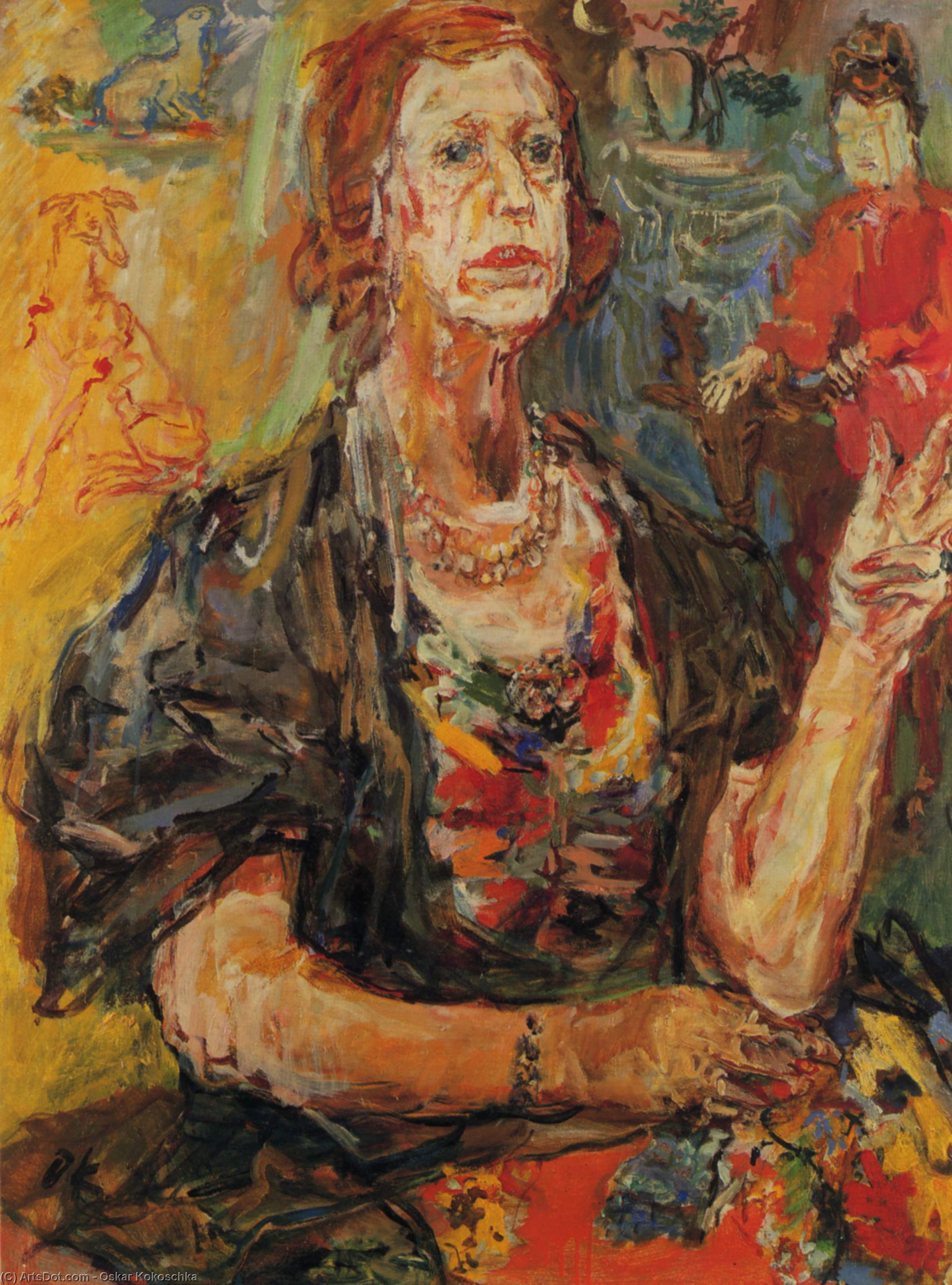
Kathleen, comtesse de Drogheda, Kathleen, countess of Drogheda, Huile sur Toile,
 Oil On Canvas
- WallArt
- Expressionism
 Modern
 102.0 x 76.0 cm
 Ver mais
Giclée / Impressão de Arte
Impressão giclée ou em tela de qualidade de museu, com produção rápida e opções flexíveis de acabamento. ( Encomendar reprodução pintada à mão Ver Imagem Digital)




P118B $10

P118H $10

P118W $10

P438Z $10

P508JH $12

P508YH $12

P805H $10

P805Z $10

P919BZ $10

P919G $10

P919XJ $10

P959ZH $10

P968JZ $12

W106C $8

W218G $10

W218JH $8

W218Y $10

W307PJ $10

W316G $10

W316PJ $8

W316Y $10

W398PJ $8

W4111J $10

W500HY $15

W500JH $15

W692G $12

W849H $8

W940BG $15

W953PJ $8




Escolha entre os nossos tamanhos pré-definidos que respeitam as proporções originais da obra de arte.

Você pode inserir suas próprias dimensões para se ajustar a uma moldura ou espaço específico. Se o tamanho selecionado não corresponder às proporções da imagem original, iremos recortar a obra de arte ou estender a imagem com uma borda espelhada ou preenchimento sólido. Um mockup digital será enviado para sua aprovação antes do início da produção.
Por favor, observe que a visualização na tela não reflete o recorte ou a extensão real. Apenas o mockup mostrará com precisão a composição final.
Embora tamanhos personalizados estejam disponíveis, recomendamos selecionar uma dimensão da lista predefinida para preservar as proporções originais.
Entrega mundial () em 2 semanas, em vez das 4/5 semanas padrão. (26 Setembro)

Envio expresso gratuito para todo o mundo

Tela de Linho Premium

Seguro de transporte total

Garantia de Reembolso de Impostos Alfandegários

Garantia de Fidelidade de Cor

Política de Devolução em 100 Dias (Apenas para Defeitos)

Garantia de reembolso de 100%

Desconto para múltiplas unidades
 A opção de vidro está disponível apenas para tamanhos inferiores a 110 cm

Kathleen, comtesse de Drogheda, Kathleen, countess of Drogheda, Huile sur Toile,
Giclée / Impressão de Arte
Dimensões da Reprodução
-


Preço Total
$ 80
Kathleen, Countess of Drogheda by Oskar Kokoschka: A Portrait of Resilience Amidst Uncertainty
Oskar Kokoschka’s “Kathleen, Countess of Drogheda,” completed in 1947, stands as a testament to the artist's unwavering dedication to capturing psychological truth—a hallmark of his Expressionist style. More than just a likeness of Kathleen Moore Pelham Burn, the subject of this portrait, it’s an exploration of inner turmoil and quiet defiance rendered with remarkable textural detail and vibrant color palettes.
Historical Context: Painted during World War II, the artwork reflects the anxieties and uncertainties prevalent in Europe at the time. Kokoschka himself experienced considerable upheaval during his lifetime, marked by personal tragedies and artistic struggles—factors undoubtedly informing the painting’s melancholic mood. The Countess herself was a woman of remarkable fortitude, having navigated divorce and bravely faced challenges like volunteering during the war effort.
Style & Technique: Kokoschka's approach to portraiture prioritized emotional resonance over photographic accuracy. He employed loose brushstrokes—a signature technique—to convey movement and dynamism within the frame. Thick impasto application of paint creates a palpable surface texture, emphasizing the contours of the face and clothing and lending an almost sculptural quality to the composition. The artist’s masterful use of color contributes significantly to the painting's expressive power; radiant reds dominate, juxtaposed with cooler tones that heighten the sense of drama.
Composition & Symbolism: The portrait’s central figure occupies most of the canvas, surrounded by swirling background elements—a deliberate stylistic choice designed to amplify the subject’s psychological intensity. Kokoschka skillfully utilizes perspective, albeit flattened and distorted, creating an intimate yet claustrophobic atmosphere. The Countess's gaze is direct and unwavering, conveying a profound inner life despite her outwardly serene demeanor. Subtle details like her necklace and handbag serve as symbolic elements—hints of mystery and perhaps unspoken anxieties.
Emotional Impact: “Kathleen, Countess of Drogheda” transcends mere representation; it’s an invitation to contemplate themes of aging, memory, and psychological resilience. Kokoschka's ability to convey profound emotion through visual language is undeniable—a feat achieved with unparalleled sensitivity and artistic vision. The painting continues to captivate viewers today, offering a glimpse into the complexities of human experience and demonstrating Kokoschka’s enduring legacy as one of Expressionism’s most influential figures.
Comparison: Kokoschka's oeuvre includes works like “Vieux Monsieur” (Old Man) and “Fillette à la poupée” (Little Girl with Doll), which similarly explore psychological depth and confront viewers with uncomfortable truths. These paintings exemplify Kokoschka’s unwavering commitment to portraying the human condition in its rawest form—a stylistic hallmark that distinguishes him from many of his contemporaries.
Further Exploration: For those interested in delving deeper into Kokoschka's artistic journey, a visit to The Museum Menard Art Museum in Japan offers an impressive collection of modern and contemporary art, showcasing masterpieces by Renoir and Picasso.
Biografia do Artista
A Life Etched in Expression: The World of Oskar Kokoschka
Oskar Kokoschka, born on March 1, 1886, in Pöchlarn, Austria, was a figurehead of early Expressionism, an artist whose work pulsed with the anxieties and passions of a rapidly changing world. His life, marked by both intense personal drama and historical upheaval, became inextricably woven into the fabric of his art. From humble beginnings as the son of a goldsmith and a mother who fostered his artistic inclinations, Kokoschka’s path diverged from conventional expectations. He rejected a scientific career to pursue his calling at the Kunstgewerbeschule in Vienna, a decision that set him on a course toward becoming one of the most psychologically penetrating portraitists of his time. Even as a young student, he displayed an unusual sensitivity and a willingness to challenge artistic norms, traits that would define his entire oeuvre. His early education was steeped in the atmosphere of fin-de-siècle Vienna, a city brimming with intellectual ferment and artistic innovation, yet also shadowed by a growing sense of unease. This duality – beauty and anxiety, tradition and modernity – became a central theme in Kokoschka’s work.
Kokoschka's early life was shaped by financial instability and personal tragedy. His father, a goldsmith, faced bankruptcy, forcing the family to relocate several times. The death of his elder brother at a young age profoundly affected him, instilling a sense of vulnerability and melancholy that would permeate much of his art. Despite these hardships, Kokoschka’s mother recognized his artistic talent and encouraged his pursuit of painting. He initially considered a career in chemistry but quickly realized his true calling lay in the visual arts. He enrolled at the Kunstgewerbeschule in Vienna, where he received instruction in various crafts alongside traditional drawing techniques. This environment exposed him to the innovative ideas circulating within the Viennese art scene, including those of Gustav Klimt and other Secessionist artists.
The Viennese Years: Portraits and Passion
Kokoschka quickly established himself as a daring portraitist within the vibrant artistic community of Vienna. He didn't aim for mere likeness; instead, he sought to capture the inner turmoil and psychological complexity of his sitters. His portraits were often unsettling, even confrontational, revealing vulnerabilities and hidden depths. This approach resonated with an audience increasingly fascinated by the burgeoning field of psychoanalysis pioneered by Sigmund Freud. The influence of Freud is palpable in Kokoschka’s work, as he delved into the subconscious and explored themes of desire, alienation, and identity. A pivotal moment in his life – and art – was his passionate affair with Alma Mahler, the widow of composer Gustav Mahler. This tumultuous relationship inspired some of his most iconic works, including The Bride of the Wind (The Tempest), a monumental canvas that is both a tribute to Alma and a haunting depiction of their fraught connection. The painting’s swirling forms and intense colors convey a sense of emotional turbulence and impending doom, reflecting the instability of their love affair. It stands as a testament to Kokoschka's ability to translate personal experience into universal themes.
War, Exile, and Artistic Evolution
The outbreak of World War I dramatically altered Kokoschka’s life. He volunteered for service in the Austrian army, experiencing firsthand the horrors of trench warfare. Severely wounded in 1915, his experiences on the front lines left an indelible mark on his psyche and informed his later work. The war years saw a shift in his style, with landscapes becoming increasingly prominent alongside portraits. These landscapes were not idyllic depictions of nature but rather expressions of alienation and despair, reflecting the trauma he had endured. As political tensions escalated in Europe during the 1930s, Kokoschka found himself targeted by the Nazi regime due to his outspoken opposition to fascism and his association with avant-garde movements deemed “degenerate.” Forced into exile, he fled Austria in 1934, eventually settling in England in 1938. This period of displacement and uncertainty further deepened his sense of isolation but also fueled his artistic creativity. He became a British citizen in 1946, continuing to paint and exhibit internationally while remaining deeply committed to social justice and human rights.
Kokoschka’s Enduring Influence
The impact of Kokoschka extends beyond his own artistic output, influencing subsequent generations of artists. Suzanne Sternberg, for example, directly studied under him, absorbing his expressive techniques and philosophical approach to art. His emphasis on emotional honesty and psychological insight resonated with Abstract Expressionists in the mid-20th century and later Neo-Expressionists. Kokoschka’s willingness to confront uncomfortable truths and challenge artistic conventions continues to inspire artists today. He demonstrated that art could be a powerful tool for social commentary, personal expression, and ultimately, a deeper understanding of ourselves and the world around us. His work remains a powerful testament to the enduring power of art to confront difficult truths and illuminate the depths of the human soul.

Oskar Kokoschka
1886 - 1980 , Áustria
Informações Rápidas
- Artistic Movement Or Style: Expressionismo
- Artists Or Movements Influenced By This Artist: ['Neo-Expressionistas']
- Date Of Birth: 1 Mar 1886
- Date Of Death: 22 Feb 1980
- Full Name: Oskar Kokoschka
- Nationality: Austríaco, Britânico
- Notable Artworks:
- A Bride Wind
- Autorretrato
- Place Of Birth: Pöchlarn, Austria
Artigos Relacionados

Expressionismo Alemão: 10 Obras-Primas que Moldaram a Arte Moderna | OriginalUniqueArt
Descubra as 10 obras-primas do Expressionismo Alemão que revolucionaram a arte moderna. Explore a paixão de Munch, Kirchner e Kandinsky! Reproduções de museu em OriginalUniqueArt.com. Explore a coleção online.
As 10 Obras Mais Famosas Dominadas pelo Preto Marsala: Arte e Decoração
Descubra as 10 pinturas mais icônicas dominadas pelo preto marsala! Explore a história, artistas e técnicas por trás de obras-primas do barroco ao expressionismo. Encontre reproduções de arte exclusivas para decorar seu lar com elegância em OriginalUniqueArt.com.

As 10 Pinturas Mais Famosas Dominadas pelo Preto: Arte, História e Decoração
Descubra as 10 pinturas mais icônicas dominadas pelo preto! Explore a história, técnica e emoção por trás de obras-primas do Romantismo, Realismo e Expressionismo. Encontre reproduções de arte exclusivas na OriginalUniqueArt.com.

Mark Rothko: As 25 Obras-Primas que Definem um Ícone da Arte Abstrata | OriginalUniqueArt
Descubra as 25 obras-primas de Mark Rothko, ícone do expressionismo abstrato. Explore a história, cores e emoção por trás de cada tela. Reproduções de arte exclusivas para sua casa em OriginalUniqueArt.com.

Crimson Threads of Narrative: Exploring Symbolism & Representation in Artworks Featuring the Red Dress
Explore the rich symbolism of the red dress in art history! From ancient power displays to iconic portraits like Cézanne’s 'Madame Cezanne', discover the cultural and artistic significance behind this captivating color. Expert analysis & insights.


