

 Visualizar em escala
 Enviar
 Compartilhar
 Ver detalhes
 Guia de Obras do Aluno

 Baixar imagem
 Semelhantes
 Raio X
 Apresentação de slides
 Estatísticas
Study to ''Book of Wisdom''


 Ver mais
Reprodução em Óleo Feita à Mão
Óleo sobre tela pintado à mão no tamanho e moldura de sua escolha, feito sob encomenda pelos nossos artistas. ( Alternar para Impressão Ver Imagem Digital)




P118B $10

P118H $10

P118W $10

P438Z $10

P508JH $12

P508YH $12

P805H $10

P805Z $10

P919BZ $10

P919G $10

P919XJ $10

P959ZH $10

P968JZ $12

W106C $8

W218G $10

W218JH $8

W218Y $10

W307PJ $10

W316G $10

W316PJ $8

W316Y $10

W398PJ $8

W4111J $10

W500HY $15

W500JH $15

W692G $12

W849H $8

W940BG $15

W953PJ $8




Escolha entre os nossos tamanhos pré-definidos que respeitam as proporções originais da obra de arte.

Pode inserir as suas próprias dimensões para se adequar a uma moldura ou espaço específico. Se o tamanho selecionado não corresponder às proporções da imagem original, iremos cortar a obra de arte ou estender a pintura com elementos adicionais pintados à mão. Um esboço digital será enviado para sua aprovação antes do início da produção.
Tenha em atenção que a pré-visualização no ecrã não reflete o corte ou extensão real. Apenas o esboço mostrará com precisão a composição final.
Embora tamanhos personalizados estejam disponíveis, recomendamos selecionar uma dimensão da lista predefinida para preservar as proporções originais.
Após o pedido, a equipa OriginalUniqueArt.com enviará um e-mail ao cliente para solicitar instruções e fornecer uma prévia do esboço.
Entrega mundial () em 3 a 4 semanas, em vez das 5 semanas padrão. (26 Setembro). Sem comprometer a qualidade.

Envio expresso gratuito para todo o mundo

Tela de Linho Premium

Seguro de transporte total

Garantia de Reembolso de Impostos Alfandegários

Garantia de Fidelidade de Cor

Política de Devolução em 100 Dias (Apenas para Defeitos)

Garantia de reembolso de 100%

Desconto para múltiplas unidades
 A opção de vidro está disponível apenas para tamanhos inferiores a 110 cm

Study to ''Book of Wisdom''
Técnica de Reprodução
Dimensões da Reprodução
-


Preço Total
$ 300
A Vision of Spiritual Ascent: Decoding Roerich’s “Study to ‘Book of Wisdom’”
Nicholas Roerich's "Study to 'Book of Wisdom'," painted in 1929, is more than just a landscape; it’s a visual poem steeped in symbolism and spiritual yearning. The painting depicts a majestic mountain range, its peaks dusted with snow that gleam under a serene blue sky. This isn’t a literal representation of a specific place, but rather an archetypal vista – a sacred space inviting contemplation. Several figures populate the scene, some standing on rocky outcrops, others seated near water, all seemingly engaged in quiet reflection. The inclusion of two birds—one soaring high above and another closer to earth—adds layers of meaning relating to aspiration and groundedness.Style & Technique: Echoes of Symbolism and the Russian Landscape Tradition
Roerich’s style is deeply rooted in Russian Symbolism, a movement that flourished at the turn of the 20th century, emphasizing emotional depth, mysticism, and spiritual themes. This influence is evident in the painting's atmospheric quality and its rejection of purely representational depiction. While his earlier work showed influences from archaeological studies and stage design, by 1929 Roerich had developed a distinctive style characterized by bold compositions, vibrant color palettes (though this piece leans towards more muted tones evoking serenity), and a sense of monumental scale. The technique employed appears to be oil on canvas, with visible brushstrokes that contribute to the painting’s textural richness and dynamic energy. He masterfully uses light and shadow to create depth and draw the viewer's eye toward the distant peaks – symbols of enlightenment or higher consciousness.Historical Context & Roerich’s Philosophical Journey
Painted during a period of intense personal and artistic exploration for Roerich, “Study to ‘Book of Wisdom’” reflects his growing interest in Eastern philosophies and esoteric teachings. The 1920s saw Roerich embarking on extensive travels throughout Central Asia, particularly the Himalayas, seeking spiritual knowledge and documenting ancient cultures. This journey profoundly impacted his art, imbuing it with a sense of reverence for nature and a belief in the interconnectedness of all things. The title itself – referencing a “Book of Wisdom” – suggests an attempt to visually articulate profound philosophical concepts. It’s important to note that Roerich was also deeply involved in promoting cultural preservation and international cooperation, themes which resonate within his artistic output. The painting can be seen as a visual manifestation of his belief in the power of art to inspire spiritual growth and foster understanding between cultures.Symbolism & Emotional Resonance
The symbolism within “Study to ‘Book of Wisdom’” is rich and multi-layered. Mountains traditionally represent challenges, obstacles, but also aspiration and transcendence. The figures engaged in contemplation suggest a search for inner peace and enlightenment. Water often symbolizes the subconscious or the flow of life. The birds, as mentioned earlier, embody the duality of spirit and matter – one reaching for the heavens, the other remaining connected to the earth. The overall emotional impact is one of tranquility, awe, and a sense of profound connection to something larger than oneself. The painting invites viewers to pause, reflect, and contemplate their own spiritual journey. It’s a work that speaks not just to the intellect but also to the soul, offering a moment of respite from the chaos of modern life.Biografia do Artista
A Life Immersed in Art and Spirit
Nicholas Roerich, born October 9, 1874, in the vibrant cultural heart of Saint Petersburg, Russia, was a figure whose life transcended the boundaries of artistic expression. He wasn’t merely a painter; he was an archaeologist, a writer, a philosopher, and a tireless advocate for peace and cultural preservation. His upbringing, steeped in both intellectual rigor – his father was a notary public – and artistic appreciation thanks to his mother, laid the foundation for a remarkably multifaceted career. Roerich simultaneously pursued studies in law and art at St. Petersburg University and the Imperial Academy of Arts beginning in 1893, demonstrating an early commitment to a broad understanding of the world. This dual path wasn’t contradictory for him; rather, it reflected a belief that artistic vision needed grounding in historical context and intellectual discipline. He received his artist designation in 1897 and completed his law degree the following year, setting the stage for a life dedicated to both creative exploration and reasoned action.The Allure of Symbolism and Theatrical Innovation
Roerich’s artistic development was profoundly shaped by the currents of Russian Symbolism, a movement that sought to evoke emotional and spiritual depths through evocative imagery and suggestive forms. He quickly became involved with Sergei Diaghilev's influential “World of Art” society, eventually assuming its presidency from 1910 to 1916. This association proved pivotal, exposing him to a network of innovative artists, composers, and thinkers who were redefining the landscape of Russian art. His early work revealed a fascination with archaeology and stage design, leading to groundbreaking collaborations with Diaghilev’s Ballets Russes. Roerich's designs for productions like Alexander Borodin's *Prince Igor* (1909) and, most famously, Igor Stravinsky’s revolutionary *The Rite of Spring* (1913), were not simply backdrops; they were integral components of the theatrical experience. He blended meticulous historical research with a bold imaginative vision, creating visually stunning environments that amplified the emotional power of the music and choreography. These designs weren't merely decorative; they were attempts to evoke primordial forces and ancient rituals, reflecting the Symbolist interest in myth and spirituality. His work was also influenced by apocrypha and medieval sectarian writings like the Dove Book, adding layers of esoteric meaning to his artistic creations.A Journey Towards Mysticism and Himalayan Visions
As Roerich’s career progressed, his paintings underwent a significant transformation, increasingly embracing mystical and spiritual themes. This shift was fueled by his growing interest in Theosophy and Eastern religions, philosophies that emphasized the interconnectedness of all things and the pursuit of inner wisdom. His *Architectural Studies* series (1904–1905) showcased not only his architectural skill but also a deep commitment to preserving cultural heritage, foreshadowing his later advocacy for protecting art during times of conflict. Recurring motifs began to emerge in his work: majestic landscapes, ancient cities shrouded in mystery, and figures imbued with spiritual significance like St. Panteleimon and Kuan Yin. He embarked on extensive travels throughout Central Asia, conducting archaeological research and documenting ancient cultures, experiences that deeply informed his artistic vision and reinforced his belief in the importance of cultural understanding. The Himalayas became a central subject in his paintings, representing not just a geographical location but a realm of profound spiritual power and enlightenment – a place he considered to be the source of all creative energy.Key Works & Continuing Relevance
- Saint Nicholas: A detailed monochrome mural showcasing medieval art and heraldic symbolism.
- City: Evocative depictions of ancient urban landscapes, reflecting his archaeological interests.
- Lake of the Nagas: A tempera painting blending symbolism and nature, exemplifying his unique artistic vision.
A Pioneer in Cultural Preservation
Beyond his artistic achievements, Nicholas Roerich was a passionate advocate for the protection of cultural treasures. Recognizing the devastating impact of war on art and architecture, he dedicated much of his life to raising awareness about this threat and promoting international cooperation to safeguard these invaluable legacies. His tireless efforts culminated in the creation of the Roerich Pact in 1935 – an unprecedented agreement among nations aimed at preventing the destruction of cultural property during armed conflicts. This initiative demonstrated his profound commitment to humanity and earned him multiple nominations for the Nobel Peace Prize, solidifying his place as a true humanitarian figure. His work serves as a powerful reminder that art is not merely aesthetic pleasure but also a vital link to our past and a crucial element in building a more peaceful future.
Nicolás Roerich
1874 - 1947 , Rússia
Informações Rápidas
- Artistic Movement Or Style: Simbolismo, Arte Espiritual
- Artists Or Movements Influenced By This Artist: ['Simbolismo Russo']
- Artists Who Influenced This Artist: ['Diaghilev']
- Date Of Birth: 9 de Outubro de 1874
- Date Of Death: 13 de Dezembro de 1947
- Full Name: Nicholas Roerich
- Nationality: Russo
- Notable Artworks:
- Saint Nicholas
- Cidade
- Lago dos Nagas
- Place Of Birth: São Petersburgo, Rússia
Artigos Relacionados
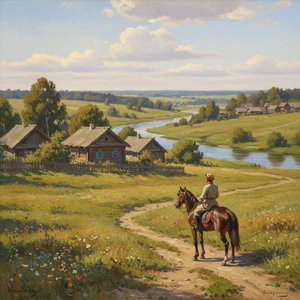
Vasily Polenov: A Pioneer of Landscape Impressionism & Russian National Identity
Explore the captivating landscapes of Vasily Polenov, a pivotal figure in Russian art history. Discover his lyrical realism, biblical series & influence on Impressionism. Learn about the 'Knight of Beauty' and his enduring legacy.

Nicholas Roerich: Mysticism, Mountains & the Search for Ageless Wisdom in Art
Explore the captivating art of Nicholas Roerich – a visionary painter whose Himalayan landscapes blend spiritual mysticism with cultural preservation. Discover his legacy & symbolism.
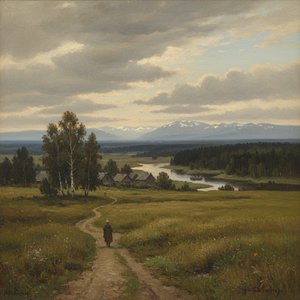
Fyodor Vasilyev: A Poetic Vision of Russian Landscape – Life, Legacy, and the Transience of Nature
Explore the captivating world of Fyodor Vasilyev, a pioneering Russian landscape painter. Discover his lyrical style, influential works like 'Clouds' & lasting legacy. Learn about his life, artistic journey & impact on Russian art history.

Os 10 Mestres da Paisagem Romântica: Arte para Inspirar a Sua Casa
Descubra os 10 quadros mais emblemáticos da Paisagem Romântica! Explore a história de Turner, Friedrich e outros mestres. Encontre reproduções de arte exclusivas para inspirar sua decoração em OriginalUniqueArt.com.

Evocations of Place: A Historical Journey Through Landscape Art
Explore the rich history of landscape art with OriginalUniqueArt. Discover renowned artists, movements like Impressionism & Romanticism, and expert guidance for collecting timeless pieces. Find your perfect serene escape today!


