

 Visualizar na parede
 Compartilhar
 Compartilhar
 Detalhes
 Guia
Guia

 Baixar imagem
 Semelhantes
 Raio X
 Ver diaporama
 Estatísticas
Polícrates


 Ler mais
Obtenha um arquivo pronto para impressão que vai muito além da visualização na web. Cada imagem digital que vendemos provém de um arquivo mestre de alta resolução em nosso banco de dados — geralmente entre 5.000 e 15.000 pixels de largura — para que você possa imprimir em grandes formatos, realizar cortes precisos ou reproduzir detalhes minuciosos com total confiança.
Nenhum arquivo sai do nosso estúdio sem passar por um cuidadoso processo de revisão. Um especialista digital verifica as cores em relação à pintura original e as corrige se necessário, aumentando então a clareza e o detalhe com ferramentas profissionais de retoque — sempre mantendo a fidelidade às pinceladas e ao estilo do artista. O resultado é uma imagem que se assemelha à pintura, e não a um scan com filtros.
Você aprova antes de finalizar: nosso especialista envia a imagem por e-mail em até 72 horas para sua revisão. Não ficou satisfeito? Peça melhorias ou correções, ou solicite um reembolso caso a qualidade não atenda às expectativas.
Esta é a qualidade em que confiam editoras, estúdios de design, galerias e gráficas.
Imagem Digital
Baixe um arquivo de alta resolução para exibição pessoal, impressão e projetos criativos. ( Alternar para Impressão Comprar pintura feita à mão)
Incluído em cada compra de imagem digital
Entrega Digital Especializada e Garantida
Ao escolher o OriginalUniqueArt.com, você não está apenas adquirindo uma imagem — você está recebendo uma obra de arte digital profissionalmente aprimorada, elaborada com precisão e com garantia de satisfação. Aqui está tudo o que acompanha seu pedido, automaticamente:

Entrega rápida por e-mail
O seu arquivo de imagem digital em alta resolução será enviado por e-mail em até 72 horas após o pedido — pronto para uso imediato.

Arquivo Digital com IA Otimizado
Sua obra de arte é otimizada profissionalmente por meio de ferramentas avançadas de IA e edição manual, garantindo o máximo de detalhes, clareza e precisão de cores.

Reenvio gratuito vitalício
Apagou ou perdeu o seu ficheiro acidentalmente? Não se preocupe – nós reenviamos para si a qualquer momento, gratuitamente.

Sem Taxas de Importação - Sempre
Desfrute da sua obra de arte instantaneamente, sem taxas alfandegárias, impostos ou custos de entrega — downloads digitais são sempre isentos de taxas.

Garantia de Fidelidade de Cores
Garantimos que sua imagem digital reflita as cores originais com a maior fidelidade possível, utilizando ferramentas profissionais e gerenciamento de cores.

Garantia de satisfação de 100 dias
Se não estiver satisfeito com a sua imagem digital, nós a revisaremos ou reembolsaremos 100% dentro de 100 dias — sem perguntas.

Garantia de Reembolso 100%
Não está satisfeito? Receba o reembolso total em até 100 dias após o recebimento do seu arquivo digital — sem perguntas.

Descontos para pedidos em lote
Compre 3 imagens, economize 10% - Compre 5, economize 15% - Compre 10+, economize 20%. Ideal para projetos criativos, galerias e agências.
Polycrates: A Titan’s Struggle Embodied in Marble
The sculpture of Polycrates by Mikhail Kozlovsky, created in 1790, stands as a testament to the Romantic spirit of its time—a period obsessed with heroic narratives and dramatic emotion. Executed in alabaster (likely gypsum), this monumental piece captures a moment of profound physicality and psychological intensity, reflecting Kozlovsky’s fascination with portraying human suffering and resilience. It's housed within the State Russian Museum in St. Petersburg, where it continues to inspire awe and contemplation.- Subject Matter: The sculpture depicts Polycrates, King of Samos, a figure renowned for his ambition, military prowess, and opulent lifestyle—a ruler who defied convention and embraced both grandeur and ruthlessness. Herodotus’s chronicle recounts Polycrates's audacious siege of Eritrea, demonstrating his unwavering determination to achieve his goals regardless of cost.
- Style: Kozlovsky adheres firmly to Neoclassical principles, prioritizing idealized human form and restrained emotion. Unlike the exuberant Baroque style that preceded it, Neoclassicism sought inspiration from ancient Greece and Rome, emphasizing clarity, balance, and rational composition. This stylistic choice underscores Kozlovsky’s belief in moral virtue and intellectual contemplation.
- Technique: The sculptor skillfully employs alabaster—a relatively soft stone known for its translucency—to achieve remarkable detail and texture. Kozlovsky's meticulous carving process involved painstakingly removing material to reveal the underlying musculature and drapery, resulting in a surface that possesses an almost palpable sense of weight and movement. The use of shading and modeling creates a convincing illusion of three-dimensionality, capturing the dynamism inherent in Polycrates’s posture.
Symbolism: Death and Triumph Intertwined
The sculpture's dramatic pose—a nude male figure reaching upwards with one arm while his body twists downwards—is laden with symbolic significance. The upward thrust represents aspiration, ambition, and the pursuit of divine favor – mirroring Polycrates’s relentless quest for power and glory. Simultaneously, the downward slump embodies defeat, vulnerability, and mortality. This juxtaposition powerfully conveys the inescapable reality that even the most triumphant figures are ultimately subject to death's dominion. Kozlovsky deliberately employs this duality to explore themes of heroism and suffering—a cornerstone of Romantic art.- Color Palette: The sculpture’s monochromatic grayscale palette enhances its dramatic impact, emphasizing form and texture rather than coloristic illusion. This deliberate restraint aligns with Neoclassical ideals of clarity and objectivity, prioritizing the depiction of anatomical detail over decorative embellishment.
- Lighting: Stark directional lighting casts strong shadows that accentuate the contours of Polycrates’s body and drapery, creating a theatrical atmosphere reminiscent of classical sculpture reliefs. Kozlovsky skillfully manipulates light to heighten emotional intensity and convey a sense of grandeur.
Emotional Resonance: A Portrait of Human Vulnerability
Despite its monumental scale, Polycrates exudes an aura of profound vulnerability—a poignant reminder that even the most formidable rulers are susceptible to human frailty. Kozlovsky’s masterful rendering captures not merely physical strength but also psychological torment—the palpable tension between aspiration and despair. The sculpture invites viewers to contemplate the complexities of human experience, prompting reflection on themes of mortality, ambition, and the enduring struggle for meaning. It's a timeless masterpiece that continues to resonate with audiences today, embodying the Romantic preoccupation with emotion and dramatic narrative.Legacy: Inspiration from Antiquity
Kozlovsky’s Polycrates stands as an exemplar of Neoclassical sculpture—a genre deeply rooted in the artistic traditions of ancient Greece and Rome. The sculptor's unwavering commitment to anatomical accuracy, combined with his masterful use of shading and modeling, exemplifies the pursuit of idealized beauty and rational composition. As Herodotus recounts, Kozlovsky’s vision was informed by the Greek inscription “No one is happy until alive”—a sentiment that encapsulates the sculpture’s core message: a celebration of human resilience in the face of inevitable suffering. This enduring legacy ensures Polycrates's place as an unforgettable symbol of artistic excellence and philosophical contemplation.Perguntas e Respostas
O que retrata "Polícrates" e qual é a sua atmosfera?
"Polícrates", de Mikhail Ivanovich Kozlovsky retrata classical sculpture, greek mythology, human anatomy, dynamic pose, marble material, roman influence, dramatic lighting, em uma atmosfera Dramático. O tema e a ambientação descrevem, juntos, a obra.
Quão harmoniosas são as cores de "Polícrates" entre si?
As cores de "Polícrates", de Mikhail Ivanovich Kozlovsky apresentam uma harmonia Paleta Unificada. A harmonia descreve como as cores se relacionam entre si.
Em qual museu se encontra a obra original de "Polícrates"?
A obra original "Polícrates", de Mikhail Ivanovich Kozlovsky encontra-se no Museu Russo, São Petersburgo, Rússia. Uma reprodução permite que a obra seja exibida em sua casa.
Biografia do Artista
The Sculptor of Enlightenment Ideals
Mikhail Ivanovich Kozlovsky stands as a preeminent figure in the landscape of Russian Neoclassical sculpture, a master whose hands shaped the very essence of the Age of Enlightenment. Born in Saint Petersburg, Russia, his artistic journey began within the prestigious halls of the Imperial Academy of Arts. Under the tutelage of Anton Losenko, Kozlovsky embarked on a path that would eventually lead him far beyond the borders of his homeland, seeking inspiration in the great art capitals of Europe. His travels to Rome and Paris were not merely educational excursions but transformative odysseys that allowed him to absorb the burgeoning Neoclassical spirit sweeping through the continent.
The evolution of Kozlovsky’s style is a fascinating study in artistic maturation. His earliest endeavors retained a lingering connection to the dramatic, emotive sensibilities of the Baroque period. However, as he matured, his work underwent a profound metamorphosis, shedding ornamental excess in favor of Neoclassical monumentality and clarity. This transition saw him embracing the ideals of reason, order, and anatomical precision, mirroring the intellectual shifts of his era. By the time he returned to Paris in 1788 to supervise Russian students abroad, he had emerged as a sculptor capable of translating complex mythological narratives into enduring, dignified forms.
Mastery of Form and Mythological Narrative
Kozlovsky’s oeuvre is characterized by an extraordinary ability to breathe life into bronze and marble, capturing both the physical prowess of heroes and the ethereal grace of the divine. His works often serve as profound emblems of classical mythology, utilized to convey contemporary values of strength and wisdom. In pieces such as Hercules on Horseback, one observes a masterclass in realism; the meticulous rendering of equine and human musculature creates a sense of dynamic vitality that draws the viewer into the heart of the legend. His use of composition, often employing powerful diagonal thrusts, directs the eye through scenes of intense action and heroic struggle.
Beyond the depiction of raw power, Kozlovsky possessed a delicate touch for allegorical subjects. His sculpture Minerva and the Genius of the Arts, commissioned during the reign of Catherine II, exemplifies his ability to embody Enlightenment thought. Through the figures of the Roman goddess of wisdom and her artistic companion, he sculpted more than just myth; he captured the very aspiration of human intellect toward higher truth and order. His technical repertoire was equally diverse, ranging from the dramatic, gilded bronze of Samson Rending the Lion's Jaws—a centerpiece for the Grand Cascade at Peterhof Palace—to the expressive, martial character of the Suvorov Monument.
Legacy and Artistic Significance
The historical significance of Mikhail Kozlovsky lies in his role as a bridge between eras and a foundational pillar of Russian sculptural tradition. As a professor at the Academy of Arts, he played a crucial role in shaping the next generation of sculptors, ensuring that the principles of Neoclassicism would flourish in Saint Petersburg long after his passing. His contributions to the decorative splendor of imperial sites like Pavlovsk and Peterhof helped define the visual identity of the Russian Empire during a period of immense cultural growth.
His life's work remains a testament to the power of classical influence when wedded to technical mastery. Through his ability to adapt his manner from Baroque sensibility to Neoclassical grandeur, Kozlovsky achieved a level of permanence that transcends time. His sculptures continue to be celebrated for their:
- Anatomical Precision: A remarkable skill in rendering the complexities of human and animal forms with photographic realism.
- Symbolic Depth: The use of mythological figures to represent the enduring ideals of heroism, wisdom, and national triumph.
- Technical Versatility: An expert command over diverse media, including bronze casting and marble carving.
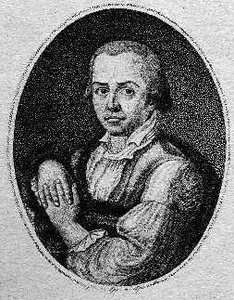
Mikhail Ivanovich Kozlovsky
1753 - 1802 , Rússia