
 Visualizar na parede
 Compartilhar
 Compartilhar
 Detalhes

 Baixar imagem
 Semelhantes
 Raio X
 Apresentação de slides
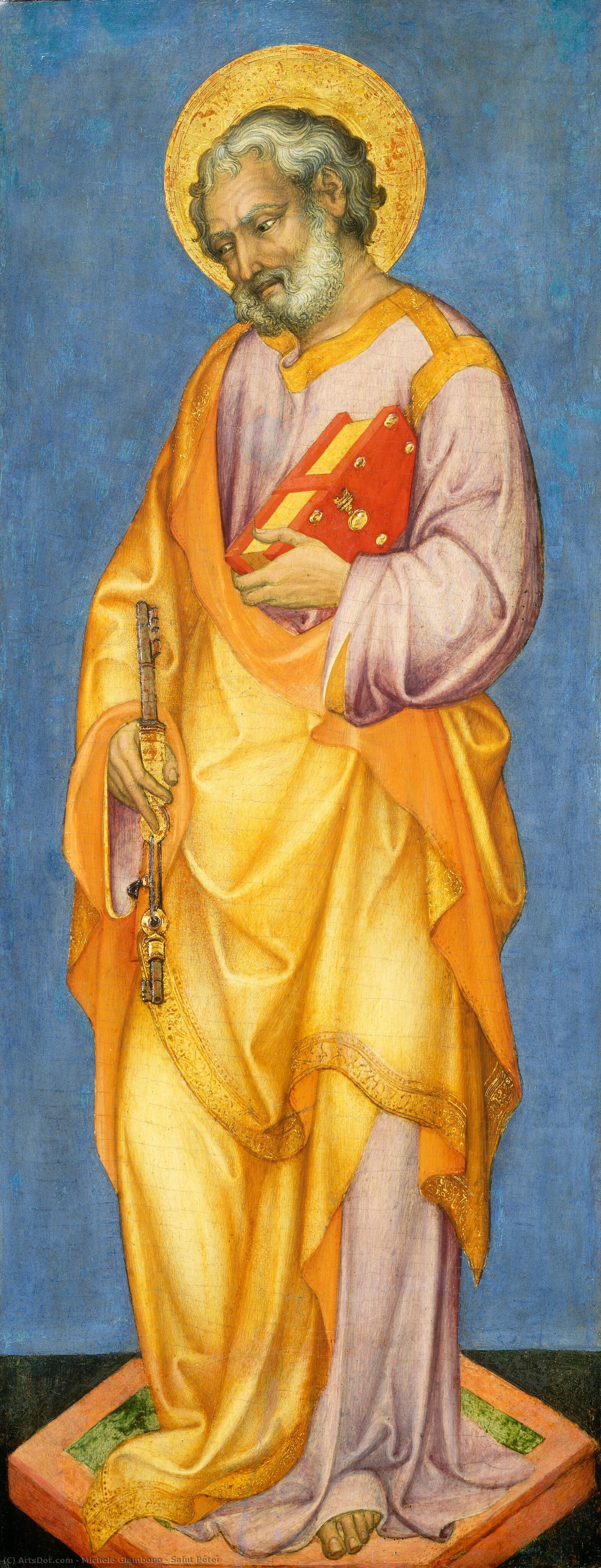
Saint Peter
 1450
1450 88.0 x 36.0 cm
 Ler mais
Giclê / Impressão de Arte
Impressão giclée ou em tela de qualidade de museu, com produção rápida e opções flexíveis de acabamento. ( Encomendar reprodução pintada à mão Alternar para Imagem)




































Escolha entre os nossos tamanhos pré-definidos que respeitam as proporções originais da obra de arte.

Você pode inserir suas próprias dimensões para se ajustar a uma moldura ou espaço específico. Se o tamanho selecionado não corresponder às proporções da imagem original, iremos recortar a obra de arte ou estender a imagem com uma borda espelhada ou preenchimento sólido. Um mockup digital será enviado para sua aprovação antes do início da produção.
Por favor, observe que a visualização na tela não reflete o recorte ou a extensão real. Apenas o mockup mostrará com precisão a composição final.
Embora tamanhos personalizados estejam disponíveis, recomendamos selecionar uma dimensão da lista predefinida para preservar as proporções originais.
Entrega mundial () em 2 semanas, em vez das 4/5 semanas padrão. (5 Agosto)

Envio Expresso Gratuito para todo o Mundo

Tela de Linho de Alta Qualidade

Seguro de transporte completo

Garantia de Reembolso de Impostos Alfandegários

Garantia de Fidelidade Cromática

Política de Devolução de 60 Dias (Apenas para Defeitos)

Garantia de reembolso de 100%

Oferta de desconto por quantidade
 A opção de vidro está disponível apenas para tamanhos inferiores a 110 cm

Saint Peter
Giclê / Impressão de Arte
Tamanho da Reprodução
-


Preço Total
$ 80
Biografia do Artista
The Golden Splendor of Michele Giambono
In the heart of fifteenth-century Venice, a city defined by its shimmering lagoons and unparalleled maritime wealth, the artistry of Michele Giambono emerged as a luminous bridge between the medieval past and the dawning Renaissance. Born around 1400 into a lineage of painters, Giambono was destined to become a master of the International Gothic style, an aesthetic characterized by courtly elegance, intricate ornamentation, and a profound sense of spiritual devotion. His life and work reflect the opulent atmosphere of a Venice that sought to manifest divine glory through gold, pigment, and mosaic, creating a visual language that remains as captivating today as it was during the Quattrocento.
The development of Giamblustre’s technique was deeply rooted in the Venetian tradition of craftsmanship. As a follower of luminaries such as Jacobello del Fiore and Gentile da Fabriano, Giambono inherited a fascination with delicate line work and the use of precious materials to evoke the celestial realm. His training likely involved the rigorous mastery of tempera on wood panels and the complex, architectural demands of mosaic application. This dual expertise allowed him to navigate both the intimate scale of devotional panel paintings and the monumental requirements of ecclesiastical decorations, ensuring that his artistic voice could resonate within the quiet corners of private chapels and the vast, echoing naves of great basilicas alike.
Mastery of Light and Devotion
Giambono’s oeuvre is a testament to the power of symbolic storytelling through color and light. His most significant contributions to the Venetian landscape can be found in his monumental mosaic commissions within the San Marco Basilica, specifically the decoration of the Birth of the Virgin and Presentation in the Temple chapels. In these works, he utilized the reflective properties of glass and gold leaf to create a sense of spatial illusion, where the flickering light of candles would breathe life into the sacred narratives. This mastery of mosaic artistry allowed him to transform stone and glass into ethereal visions of divine grace.
Beyond the mosaics, his panel paintings offer a more intimate glimpse into his stylistic nuances. In works such as Virgin and Child, Giambono employs a striking palette—often utilizing elegant black and white motifs set against radiant gold backgrounds—to focus the viewer's attention on the sanctity of the figures. His ability to balance the heavy, decorative traditions of the Gothic era with an emerging interest in more naturalistic detail is evident in masterpieces like Madonna and Child Enthroned and the detailed Coronation of the Virgin. These paintings are not merely religious icons but are sophisticated compositions where every fold of drapery and every gilded accent serves to elevate the soul.
Legacy within the Venetian Renaissance
The historical significance of Michele Giambono lies in his role as a custodian of beauty during a period of profound cultural transition. While the broader Renaissance would eventually move toward the anatomical realism and linear perspective of masters like Bellini, Giambono’s dedication to the International Gothic aesthetic provided the essential foundation of splendor upon which later Venetian art was built. He captured a specific moment in history where the decorative and the divine were indistinguishable.
To study Giambono is to encounter the very essence of Venetian elegance. His legacy survives through:
- The preservation of the International Gothic spirit: Maintaining the intricate, courtly beauty that defined early 15th-century Europe.
- Architectural integration: His ability to harmonize large-scale mosaic works with the complex liturgical spaces of Venice.
- Iconographic influence: Establishing enduring visual templates for themes such as the Man of Sorrows and the Coronation of the Virgin that would inspire generations of Italian painters.

Michele Giambono
1400 - 1462 , Italy
Dados Rápidos
- Artistic Movement Or Style: International Gothic
- Artists Or Movements Influenced By This Artist: ['Renaissance']
- Artists Who Influenced This Artist:
- Jacobello del Fiore
- Gentile da Fabriano
- Date Of Birth: c. 1400 Venice
- Date Of Death: c. 1462 Venice
- Full Name: Michele Taddeo di Giovanni Bono
- Nationality: Italian
- Notable Artworks:
- Man of Sorrows
- St. Peter
- Birth of the Virgin
- The Visitation
- Place Of Birth: Venice, Italy


