

 Visualizar em escala
 Enviar
 Compartilhar
 Ver detalhes
 Guia de Obras do Aluno

 Baixar imagem
 Semelhantes
 Raio X
 Apresentação de slides
 Estatísticas
Cafeteira
 Acrílico sobre tela
- Arte de Parede
- Art Deco Style
 Biennale Internazionale dell'Antiquariato di Firenze
 Ver mais
A obra de arte exibida nesta página é protegida por leis de direitos autorais, o que significa que não podemos criar ou vender legalmente uma reprodução idêntica. Esta proteção é aplicada por meio de acordos internacionais, tais como a Convenção de Berna e pelas leis nacionais, incluindo as estabelecidas por Lei de Direitos Autorais dos EUA - Título 17.
Como uma alternativa respeitosa e legal, oferecemos obras de arte personalizadas e pintadas à mão, inspiradas na obra original. Nossos artistas profissionais e experientes estudam cuidadosamente o estilo, a atmosfera e a essência artística da obra original para criar uma peça nova e única que evoque a mesma sensação — permanecendo como uma criação original por direito próprio.
Este método cumpre plenamente as regulamentações de direitos autorais, pois não envolve a cópia ou duplicação da obra protegida. Em vez disso, trata-se de uma reinterpretação criativa — uma nova pintura que é influenciada pela original, mas não idêntica a ela.
Reprodução em Óleo Feita à Mão
Óleo sobre tela pintado à mão no tamanho e moldura de sua escolha, feito sob encomenda pelos nossos artistas. ( Alternar para Impressão Ver Imagem Digital)




P118B €10

P118H €10

P118W €10

P438Z €10

P508JH €12

P508YH €12

P805H €10

P805Z €10

P919BZ €10

P919G €10

P919XJ €10

P959ZH €10

P968JZ €12

W106C €8

W218G €10

W218JH €8

W218Y €10

W307PJ €10

W316G €10

W316PJ €8

W316Y €10

W398PJ €8

W4111J €10

W500HY €15

W500JH €15

W692G €12

W849H €8

W940BG €15

W953PJ €8




Escolha entre os nossos tamanhos pré-definidos que respeitam as proporções originais da obra de arte.

Digite a largura e a altura de que necessita, para se ajustar à sua moldura ou à sua parede. Esta obra é pintada à mão, por isso, para um tamanho com uma proporção diferente, o artista pode pintar um pouco mais ao redor da imagem ou cortar um pouco — você escolhe. Enviamos-lhe uma maquete digital para aprovação antes de a pintura começar. A imagem exibida nesta página não mostra o resultado real — apenas a maquete mostra.
Após o pedido, a equipa OriginalUniqueArt.com enviará um e-mail ao cliente para solicitar instruções e fornecer uma prévia do esboço.
Entrega mundial () em 3 a 4 semanas, em vez das 5 semanas padrão. (22 Outubro). Sem comprometer a qualidade.

Envio expresso gratuito para todo o mundo

Tela de Linho Premium

Seguro de transporte total

Garantia de Reembolso de Impostos Alfandegários

Garantia de Fidelidade de Cor

Política de Devolução em 100 Dias (Apenas para Defeitos)

Garantia de reembolso de 100%

Desconto para múltiplas unidades
 A opção de vidro está disponível apenas para tamanhos inferiores a 110 cm

Cafeteira
Técnica de Reprodução
Dimensões da Reprodução
-


Preço Total
€ 262
Uma Ode à Elegância Geométrica: O Café Pot de Michael Graves
O mundo do design contemporâneo testemunhou uma revolução estética liderada por figuras como Michael Graves, cuja visão ousada desafiou as convenções da arquitetura moderna e abraçou a beleza da história e da ornamentação. Sua obra mais emblemática, o café pot criado em colaboração com a renomada empresa Graves & Associates, exemplifica essa abordagem inovadora e permanece um ícone de estilo e funcionalidade.
- Artista: Michael Graves (1934 – 2015)
- Nascimento: Indianapolis, Estados Unidos da América
- Biografia Breve: Graves iniciou sua carreira como arquiteto em Cincinnati e Harvard, onde absorveu os princípios do modernismo. Contudo, logo se apaixonou pela riqueza das tradições arquitetônicas e pela capacidade de construir espaços que inspirassem emoções e conectassem pessoas à cultura e à memória coletiva.
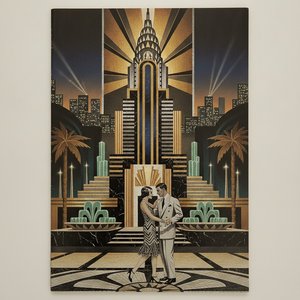
O café pot é uma obra-prima da estética Art Deco, um movimento artístico que floresceu entre as décadas de 1920 e 1930 e caracterizou-se pela influência das formas geométricas simplificadas, pela simetria impecável e pelo uso de materiais luxuosos como o prata e o cristal. Graves incorporou esses elementos clássicos em uma composição surpreendentemente moderna, criando um objeto que celebra tanto a beleza quanto a funcionalidade.
- Estilo: Art Deco – Uma homenagem à geometria e à simetria
- Material Principal: Prata (ou prata en तामeada) – Refletindo o brilho da época dourada
- Detalhes Técnicos: Superfície polida para maximizar o brilho, tratamento térmico especial para garantir a segurança e durabilidade do produto.
A escolha das cores e materiais pelo artista reflete uma profunda compreensão dos princípios da psicologia das cores e da importância da estética na experiência humana. O branco puro do fundo proporciona equilíbrio visual e destaca o contraste entre o prata frio e azul vibrante dos elementos decorativos, criando uma atmosfera elegante e convidativa.
- Simbolismo: Os elementos geométricos evocam ordem e racionalidade, enquanto o azul simboliza calma e confiança.
- Emoção Transmitida: O café pot transmite uma sensação de conforto, sofisticação e nostalgia pela estética dos anos 1930 – um convite à contemplação e à apreciação da beleza em objetos cotidianos.
Mais do que apenas um utensílio para preparar café, o trabalho de Graves é uma declaração artística sobre como podemos encontrar inspiração na história e na cultura para criar espaços e objetos que enriquecem nossas vidas. O café pot permanece uma referência constante no universo do design contemporâneo, demonstrando que a beleza pode residir em soluções simples e elegantes.
Perguntas e Respostas
"Cafeteira" está disponível como uma impressão fine art?
Para obter uma impressão de "Cafeteira" de Michael Graves, basta encomendá-la na sua página de Impressão Fine Art: uma impressão fine art em tela de algodão ou papel canvas de arquivo.
Como faço para baixar a imagem de "Cafeteira" de Michael Graves?
Um download está disponível para "Cafeteira": a página de Baixar da obra oferece download de imagem digital em alta resolução.
Que sensação as cores de "Cafeteira" de Michael Graves transmitem?
A paleta Tons neutros de "Cafeteira" de Michael Graves harmoniza-se com seu tom emocional Serenidade. A cor é uma das formas pelas quais uma obra transmite sentimento.
Biografia do Artista
A Playful Rebellion: The Life and Vision of Michael Graves
Michael Graves, born in Indianapolis in 1934, emerged as a pivotal figure in late 20th and early 21st-century design—an architect who dared to challenge the austere dogma of modernism with a vibrant, often whimsical aesthetic. His journey wasn’t one of immediate rebellion, but rather a gradual evolution fueled by a growing dissatisfaction with the perceived rigidity and historical detachment of the prevailing architectural style. Initially steeped in modernist principles during his education at the University of Cincinnati and Harvard, Graves found himself increasingly drawn to the power of history, symbolism, and ornamentation—elements largely banished from the modernist lexicon. This shift wasn’t simply an aesthetic preference; it was a fundamental questioning of architecture's purpose: should buildings merely function, or should they also delight, communicate, and connect with people on a more emotional level? The seeds of this inquiry were sown during his time at the American Academy in Rome as a recipient of the prestigious Rome Prize, where he immersed himself in the rich tapestry of classical architecture. It was an experience that profoundly shaped his understanding of form, proportion, and the enduring power of architectural language.From The New York Five to Postmodern Iconoclasm
Graves’s ascent coincided with a period of significant experimentation within the architectural world. He became a key member of *The New York Five*, a group of architects—alongside Peter Eisenman, Charles Gwathmey, Richard Meier, and Robert A.M. Stern—who actively challenged modernist orthodoxy in the late 1960s and early 70s. Their work, characterized by formal complexity and a rejection of simplistic functionalism, laid the groundwork for the burgeoning postmodern movement. However, Graves’s vision extended beyond architectural boundaries. His involvement with *The Memphis Group* in the 1980s—an Italian design collective known for its boldly colored, playfully shaped furniture and objects—brought his designs to an even wider audience. This collaboration was a watershed moment, demonstrating that good design wasn't limited to buildings; it could permeate everyday life through accessible, aesthetically engaging products. It was a deliberate democratization of design, bringing artistry into the home. The influence of Robert Venturi and Denise Scott Brown’s seminal work, *Complexity and Contradiction in Architecture*, cannot be overstated. Their critique of modernist simplicity resonated deeply with Graves, encouraging him to embrace ambiguity, irony, and historical references—qualities that would become hallmarks of his style.Landmark Buildings and the Democratization of Design
Graves’s architectural portfolio is remarkably diverse, reflecting his willingness to adapt his distinctive aesthetic to a wide range of contexts. The Portland Building (1982) in Oregon remains perhaps his most iconic—and controversial—creation. Its colorful facade, adorned with oversized classical ornamentation, sparked intense debate, challenging conventional notions of what a civic building should look like. Similarly, the Humana Building in Louisville, Kentucky, is a playful and whimsical structure that incorporates exaggerated decorative elements, creating a sense of theatricality. Beyond these landmark projects, Graves demonstrated his versatility with works such as the Ministry of Culture in The Hague, Netherlands, and the Denver Public Library expansion—each showcasing his commitment to public spaces and thoughtful design solutions. But perhaps his most significant contribution was his ability to bridge the gap between high art and mass production. His collaborations with companies like Alessi resulted in iconic designs such as the 9093 Kettle, transforming a mundane kitchen object into a work of art. Further extending this philosophy, Graves partnered with Target and J.C. Penney to create affordable product lines, making stylish and well-designed items accessible to a broader audience—a truly revolutionary act that challenged the elitism often associated with design.A Legacy of Accessibility and Humanistic Design
In 2003, a life-altering event profoundly impacted Graves’s work: he suffered a partial paralysis that confined him to a wheelchair. This personal experience ignited a passionate advocacy for universal design—the principle of creating products and environments usable by all people, regardless of age, ability, or status. He recognized firsthand the challenges faced by individuals with disabilities and dedicated himself to improving healthcare environments, ensuring they were not only functional but also dignified and supportive. His later work reflected this commitment, prioritizing accessibility, comfort, and a humanistic approach to design. Throughout his illustrious career, Michael Graves received numerous accolades, including fellowships from the American Institute of Architects, the AIA Gold Medal, the National Medal of Arts, and the Driehaus Architecture Prize—testaments to his enduring influence and significant contributions to the field. He left behind a legacy that extends far beyond bricks and mortar or product designs; he challenged conventions, embraced playfulness, and championed a more inclusive and human-centered approach to design—a vision that continues to inspire generations of architects and designers today.
Michael Graves
1934 - 2015 , United States of America
Informações Rápidas
- Full Name: Michael Graves
- Nationality: American
- Date Of Birth: 1934
- Date Of Death: 2015
- Place Of Birth: Indianapolis, United States of America
- Notable Artworks:
- 9093 Kettle
- Coffee pot
- Portland Building
- Humana Building
- Artistic Movement Or Style: Postmodernism
- Artists Who Influenced This Artist:
- Robert Venturi
- Denise Scott Brown
- Artists Or Movements Influenced By This Artist:
- Postmodern architecture
- New Urbanism
Artigos Relacionados

Art Deco Masterpieces: Exploring the Era of Geometric Elegance and Modernist Luxury
Delve into the era of geometric elegance with our expert exploration of Art Deco masterpieces. Discover the history, iconic artists, and architectural marvels of this luxurious movement, and find museum-quality hand-painted oil reproductions to elevate your collection.
Art Deco Defined: The Glamour, Geometry, and Enduring Legacy of a Modern Icon
Explore the sophisticated world of Art Deco. Discover the history, geometric precision, and enduring glamour of this iconic 20th-century movement through an expert art-historical lens.

The Gilded Age Reimagined: Exploring the Aesthetic Principles & Enduring Legacy of Art Deco
Explore the captivating world of Art Deco! Discover its origins, defining features, cultural impact & enduring legacy. Expert insights for collectors and design enthusiasts. Shop handmade reproductions at OriginalUniqueArt.

The Architecture of Glamour: Unveiling the Timeless Geometric Elegance of Art Deco Masterpieces
Immerse yourself in the golden age of glamour. From the sleek lines of Tamara de Lempicka to the geometric soul of Erté, explore the enduring legacy of Art Deco. Discover the artistry that defined an era of luxury and modern sophistication through our expert art history guide.

The Glamour of Erté: Discovering the Art Deco Elegance and Geometric Mastery of Romain de Tirtoff
Step into a realm of perpetual elegance. Discover the visionary world of Erté, the high priest of Art Deco, and explore how his mastery of line and symmetry defined an era of unparalleled glamour and fashion sophistication through expert art history insights.
