Symbolism
Redemptive Death (Max Klinger)
Max Klinger (1857–1920) criou Redemptive Death. Pertence ao movimento Symbolism.

 Visualizar na parede

 Pintura a Óleo Feita à Mão
 Compartilhar
 Compartilhar
 Ficha técnica


 Baixar imagem
 Semelhantes
 Raio X
 Ver diaporama
 Perguntas e Respostas

 Estatísticas
Redemptive Death, em resumo
- Título
- Redemptive Death
- Artista
- Max Klinger (1857–1920)
- Artista nascido em
- Leipzig, Alemanha
- Movimento
- Symbolism
- Tema
- grief and mourning, death & mortality, classical imagery, monochrome art, symbolic scene, renaissance influence
Imagens em alta resolução de Redemptive Death
Max Klinger, Redemptive Death. Domínio público.
Perguntas sobre Redemptive Death respondidas
Quais temas aparecem em "Redemptive Death", de Max Klinger?
Os temas de "Redemptive Death" são grief and mourning, death & mortality, classical imagery, monochrome art, symbolic scene, renaissance influence, emotional depth.
"Redemptive Death" está em domínio público?
"Redemptive Death", de Max Klinger está em em domínio público — seus direitos autorais expiraram. Este status determina como a imagem da obra pode ser reproduzida.
Quem criou "Redemptive Death"?
"Redemptive Death" foi criado por Max Klinger. As informações nesta página descrevem a obra original de Max Klinger.
A qual movimento artístico pertence "Redemptive Death", de Max Klinger?
"Redemptive Death", de Max Klinger pertence ao movimento Symbolism. Este movimento fornece o contexto estilístico da obra.
A que fase da trajetória de Max Klinger "Redemptive Death" pertence?
Dentro da trajetória de Max Klinger, "Redemptive Death" pertence ao período Mature Period. Esta fase permite compará-la com outras obras do artista.
"Redemptive Death", de Max Klinger, está em domínio público? E por quê?
O status de direitos autorais de "Redemptive Death" - em domínio público — seus direitos autorais expiraram - decorre do falecimento do artista em 1920.
O que "Redemptive Death" compartilha com o restante da obra de Max Klinger?
"Redemptive Death" integra a produção Symbolism de Max Klinger, cujos temas recorrentes incluem renaissance & baroque echoes, classical grief narrative, symbolist psychological depth, german morality & loss, critique of bourgeois values, exploring human suffering, bridge to social commentary, key symbolist engraving".
"Redemptive Death" é típico do que Max Klinger costumava criar?
"Redemptive Death" retrata grief and mourning, death & mortality, classical imagery, monochrome art, symbolic scene, renaissance influence, emotional depth, enquanto os temas recorrentes de Max Klinger são renaissance & baroque echoes, classical grief narrative, symbolist psychological depth, german morality & loss, critique of bourgeois values, exploring human suffering, bridge to social commentary, key symbolist engraving". A comparação entre ambos revela como a obra se relaciona com os temas habituais do artista.
Sobre o artista, Max Klinger

1857–1920, Alemanha
Max Klinger
The Shadowed World of Max Klinger: A Pioneer of Symbolism Max Klinger, born in Leipzig in 1857, emerged as a pivotal figure bridging the gap between Realism and the burgeoning world of Symbolism. His artistic journey wasn’t one of immediate recognition but rather a gradual unfolding of a unique vision—a descent into the psychological depths that would profoundly influence modern art. Klinger's early training at the Academy of Fine Arts in Karlsruhe, under Karl Gussow, provided him with a solid foundation in traditional techniques, yet it was his fascination with the etchings of artists like Menzel and Goya that truly ignited his imagination. These masters demonstrated the power of printmaking to convey not merely visual representation but also narrative complexity and emotional intensity—qualities Klinger would masterfully employ throughout his career.
Também de Max Klinger
 The death peeing
 The Isle of the Dead
 Presa
 Y sin embargo!
Ensaios sobre Redemptive Death
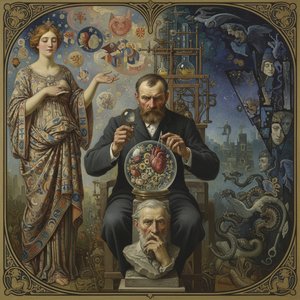 Max Klinger: Symbolism, Science & the Subconscious – A German Master's LegacyExplore the captivating world of Max Klinger, a pivotal German Symbolist artist. Discover his groundbreaking prints, psychological themes, …
 Beyond Reality: Exploring Symbolism's Influence on Modern Art & Psychological ExpressionExplore the captivating world of Symbolism! Discover key artists, psychological themes & its lasting impact on modern art. Expert insights …
 Os 10 Ícones do Simbolismo: Obras que Transformaram a Arte e Decoram sua CasaDescubra os 10 quadros icônicos do Simbolismo! Explore a história de Klimt, Munch e Redon. Encontre reproduções de arte de alta qualidade p…