Surrealist Expressionism · 1927
The Forest (Max Ernst, 1927)
Max Ernst (1891–1976) criou The Forest. Data de 1927. Pertence ao movimento Surrealist Expressionism. É feito em Acrylic On Canvas. Está conservada no Tel Aviv Museum of Art, em Tel Aviv, Israel. Mede 25 × 36 cm.
- 1927
- Acrylic On Canvas
- 25 × 36 cm
- Tel Aviv Museum of Art

 Visualizar na parede

 Pintura a Óleo Feita à Mão
 Compartilhar
 Compartilhar
 Ficha técnica


 Baixar imagem
 Semelhantes
 Raio X
 Ver diaporama
 Perguntas e Respostas

 Estatísticas
The Forest, em resumo
- Título
- The Forest
- Artista
- Max Ernst (1891–1976)
- Artista nascido em
- Brühl, Alemanha
- Data
- 1927
- Técnica
- Acrylic On Canvas
- Dimensões
- 25 × 36 cm
- Onde ver
- Tel Aviv Museum of Art, Tel Aviv, Israel
- Movimento
- Surrealist Expressionism
- Período
- Early Modern
- Tema
- moonlit cityscape, surreal forest, urban night, max ernst, german art, 1927 painting
O que The Forest retrata?
A Nocturne of Dreams: Max Ernst’s “The Forest”
Max Ernst's "The Forest," painted in 1927, isn’t merely a depiction of a landscape; it’s an immersion into the subconscious, a carefully constructed dreamscape rendered with the unsettling beauty characteristic of the artist’s early Surrealist explorations. This intimate canvas – measuring just 25 x 36 cm – holds within its borders a potent collision of natural and urban elements, inviting viewers to contemplate the anxieties and aspirations simmering beneath the surface of modern life. The painting immediately draws the eye upward to a luminous moon dominating the sky, casting an ethereal glow upon the sprawling cityscape below. Buildings rise from the darkness, not as symbols of progress or order, but as strangely distorted monoliths, hinting at a world both familiar and profoundly alien.
Ernst’s technique is deliberately evocative, employing a layered approach that anticipates techniques he would later refine in his collage work. He utilizes loose, expressive brushstrokes, building up the forms of trees and buildings with a sense of urgency and movement. The color palette leans heavily into cool blues and greens, punctuated by the stark white of the moon and the muted tones of the city lights – colors that contribute to the painting’s nocturnal atmosphere and imbue it with a feeling of quiet mystery. Notice how he doesn't meticulously render detail; instead, he favors suggestion and mood, allowing the viewer’s imagination to fill in the gaps.
The Seeds of Surrealism: Ernst’s Intellectual Landscape
Understanding “The Forest” requires acknowledging Max Ernst’s unique artistic trajectory. Born in Brühl, Germany, in 1891, Ernst wasn't a traditional painter; his path was forged through rigorous academic study – philosophy, art history, literature, psychology, and psychiatry at the University of Bonn. This intellectual grounding profoundly shaped his approach to art, moving him beyond mere representation towards exploring the realm of dreams, memory, and the irrational. His father, a teacher of the deaf, instilled in him a sensitivity to the world and a rebellious spirit – qualities that would become central to Ernst’s artistic vision. He was deeply influenced by thinkers like Freud and Jung, particularly their theories on the unconscious mind, which he sought to translate into visual form.
The year 1927 is crucial within this context. It represents a pivotal moment in Ernst's development as a Surrealist, a period marked by experimentation with automatism – a technique of spontaneous creation designed to bypass conscious control and tap directly into the subconscious. "The Forest," therefore, can be seen as a product of this process, a visual manifestation of his inner world.
Symbolic Echoes: Nature Versus Urbanity
The juxtaposition of the forest and the city is laden with symbolic weight. The forest, traditionally associated with nature, instinct, and the primal, stands in stark contrast to the rigid geometry and artificial light of the urban landscape. This isn’t a harmonious blend; rather, it's a tension – a suggestion that the encroachment of modernity threatens to overwhelm the natural world. The moon itself is a potent symbol, often linked to cycles, intuition, and the hidden realms of the unconscious. Its presence elevates the scene beyond a simple cityscape, transforming it into a dreamlike tableau.
Furthermore, consider the distorted forms of the buildings. They aren’t simply architectural structures; they seem to lean inward, almost collapsing under their own weight, mirroring perhaps a sense of unease or anxiety about the future. The trees, though present, are somewhat obscured by the city's glow, hinting at a diminishing connection with nature.
A Timeless Resonance: Reproduction and Artistic Legacy
"The Forest" continues to resonate with viewers today because it taps into fundamental human experiences – the longing for escape, the anxieties of urban life, and the enduring power of the subconscious. OriginalUniqueArt’s meticulously crafted hand-painted reproductions capture not only the visual details of Ernst's original but also its emotional depth and atmospheric quality. Each reproduction is created with the same attention to texture and color as the original, ensuring a faithful representation of this iconic Surrealist masterpiece. Whether you are an art collector seeking to expand your collection or an interior designer searching for a unique piece to elevate a space, a OriginalUniqueArt reproduction of “The Forest” offers a captivating glimpse into the mind of one of 20th-century’s most visionary artists.
Em qual museu se encontra The Forest?
Tel Aviv Museum of Art
Tel Aviv, Israel
Um Farol de Criatividade na Costa do Mediterrâneo Aninhado no coração vibrante de Tel Aviv, uma cidade que pulsa com energia artística e significado histórico, ergue-se o Museu de Arte de Tel Aviv —um verdadeiro testemunho da florescente paisagem cultural de Israel. Mais do que um simples repositório de obras-primas, o TAMA, como é carinhosamente conhecido, sopra vida na arte, promovendo o diálogo, inspirando gerações e servindo como um elo vital entre o passado da nação e o seu presente dinâmico. Sua história não começa em grandes salões, mas dentro das paredes modestas da casa do primeiro prefeito de Tel Aviv, um espaço imbuído dos ecos de uma nação forjando sua identidade.


Imagens em alta resolução de The Forest

Protegido por direitos de autor: estes ficheiros são para referência pessoal e não constituem uma licença de republicação.
Max Ernst, The Forest (1927), Tel Aviv Museum of Art.
Perguntas sobre The Forest respondidas
Onde "The Forest", de Max Ernst está em exibição hoje?
A obra original "The Forest" pode ser vista no Tel Aviv Museum of Art, Tel Aviv, Israel.
Em que ano foi criada a obra "The Forest", de Max Ernst?
"The Forest", de Max Ernst foi criado em 1927.
De que técnica é feita a obra "The Forest"?
Max Ernst utilizou a técnica de Acrylic On Canvas para "The Forest". A técnica define a natureza material da obra original.
Quais são as dimensões da obra original "The Forest", de Max Ernst?
As dimensões registradas de "The Forest", de Max Ernst são 25 x 36 cm. Reproduções podem ser encomendadas em outros tamanhos, mantendo as mesmas proporções.
O que representa "The Forest"?
Os temas presentes em "The Forest", de Max Ernst incluem moonlit cityscape, surreal forest, urban night, max ernst, german art, 1927 painting, dreamlike scene. Juntos, eles sintetizam o assunto da obra.
A imagem de "The Forest", de Max Ernst pode ser reproduzida livremente?
Quanto aos direitos autorais, "The Forest" está em ainda protegido por direitos autorais.
Quem é o artista por trás de "The Forest"?
"The Forest" é atribuída a Max Ernst.
A qual estilo pertence "The Forest"?
O movimento associado a "The Forest", de Max Ernst é Surrealist Expressionism. Esta classificação situa a obra entre artistas e obras de arte relacionados.
A que período da carreira de Max Ernst pertence "The Forest"?
Dentro da trajetória de Max Ernst, "The Forest" pertence ao período Early Surrealism. Esta fase permite compará-la com outras obras do artista.
Sobre o artista, Max Ernst

1891–1976, Alemanha
Max Ernst
A Vida e as Origens de Max Ernst Max Ernst chegou ao mundo em 2 de abril de 1891, em Brühl, na Alemanha. Criado no seio de uma família católica de classe média, ele era o terceiro de nove irmãos. Sua infância foi moldada pela atmosfera tranquila e disciplinada de seu lar, onde seu pai, Philipp, atuava como professor de surdos. Philipp era também um pintor amador e foi através dele que o jovem teve seu primeiro contato com as ferramentas e a prática da criação artística.
Também de Max Ernst
 Celebes ou Elefante Celebes1921
 O Elefante Celebes1921
 Europa Depois da Chuva II1942
 De Este os Homens Não Saberão1923
Ensaios sobre The Forest
 Symphony of Sunlight: The Luminous Legacy of Pine Tree Landscapes in Art HistoryExplore the luminous history of pine landscapes through Sorolla and Shishkin. Discover the magic of forest art today.
 Unlocking the Unconscious: The Top 25 Surrealist Masterpieces by Max ErnstStep into the dreamscapes of Max Ernst. Explore 25 iconic Surrealist masterpieces, from pioneering collages to haunting landscapes. Find in…
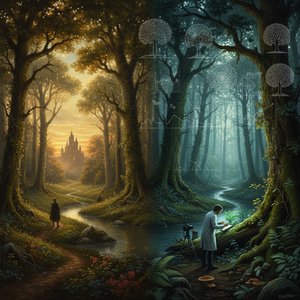 The Enchanted Canopy: Exploring Forests in Art History – From Romantic Idealization to Ecological ConsciousnessExplore the rich history of forests in art! Discover Romantic masterpieces by Friedrich & Monet, Symbolist depths, and contemporary visions…