

 Visualizar na parede
 Compartilhar
 Compartilhar
 Detalhes
 Guia
Guia

 Baixar imagem
 Semelhantes
 Raio X
 Ver diaporama
 Estatísticas
Land


 Ler mais
A obra de arte exibida nesta página é protegida por leis de direitos autorais, o que significa que não podemos criar ou vender legalmente uma reprodução idêntica. Esta proteção é aplicada por meio de acordos internacionais, tais como a Convenção de Berna e pelas leis nacionais, incluindo as estabelecidas por Lei de Direitos Autorais dos EUA - Título 17.
Este método cumpre plenamente as regulamentações de direitos autorais, pois não envolve a cópia ou duplicação da obra protegida. Em vez disso, trata-se de uma reinterpretação criativa — uma nova pintura que é influenciada pela original, mas não idêntica a ela.
Giclée / Impressão de Arte
Impressão giclée ou em tela de qualidade de museu, com produção rápida e opções flexíveis de acabamento. ( Comprar pintura feita à mão Alternar para Imagem Digital)




P118B €10

P118H €10

P118W €10

P438Z €10

P508JH €12

P508YH €12

P805H €10

P805Z €10

P919BZ €10

P919G €10

P919XJ €10

P959ZH €10

P968JZ €12

W106C €8

W218G €10

W218JH €8

W218Y €10

W307PJ €10

W316G €10

W316PJ €8

W316Y €10

W398PJ €8

W4111J €10

W500HY €15

W500JH €15

W692G €12

W849H €8

W940BG €15

W953PJ €8




Escolha entre os nossos tamanhos pré-definidos que respeitam as proporções originais da obra de arte.

Insira a largura e a altura desejadas para se ajustarem à sua moldura ou parede. Uma impressão pode ser apenas cortada, nunca ampliada além da imagem original; portanto, um tamanho com proporções diferentes resultará na perda de parte da imagem. Enviamos uma maquete digital para sua aprovação antes de realizarmos a impressão. A imagem exibida nesta página não mostra o corte real — apenas a maquete o faz.
Entrega mundial () em 2 semanas, em vez das 4/5 semanas padrão. (27 Outubro)

Envio expresso gratuito para todo o mundo

Tela de Linho de Alta Qualidade

Seguro de transporte completo

Garantia de Reembolso de Impostos Alfandegários

Garantia de Fidelidade Cromática

Política de Devolução em 100 Dias (Apenas para Defeitos)

Garantia de reembolso de 100%

Oferta de desconto por quantidade
 A opção de vidro está disponível apenas para tamanhos inferiores a 110 cm

Land
Giclée / Impressão de Arte
Tamanho da Reprodução
-


Preço Total
€ 70
A Symphony of Light and Earth
In the evocative masterpiece Land, created in 1969, the legendary Martiros Saryan invites us into a world where the boundaries between the terrestrial and the celestial dissolve into a warm, golden embrace. This breathtaking landscape captures a sunset over a majestic mountain range, a moment frozen in time where the sky becomes a canvas of radiant hues. The composition is masterfully balanced, leading the eye from the tranquil, reflective surface of a foreground lake or river toward the rugged, distant peaks that pierce the horizon. As the sunlight dances upon the water, it creates a sense of profound depth and luminosity, making the viewer feel as though they are standing on the very edge of this serene wilderness.
The painting is not merely a depiction of nature, but an emotional experience. Within this vast expanse, two solitary figures are nestled—one near the center-left and another toward the right—serving as quiet witnesses to the grandeur of the setting sun. Their presence adds a poignant layer of human connection to the scene, suggesting a shared moment of contemplation and awe. This subtle inclusion of humanity transforms the landscape from a wild, untamed space into a sanctuary of peace, where the soul can find respite in the rhythmic beauty of the natural world.
The Vibrant Legacy of Martiros Saryan
To understand the brilliance of Land, one must look to the spirit of its creator. Martiros Saryan, a pioneer of modern Armenian art, possessed an unparalleled ability to translate the vibrant essence of his homeland into color and form. His technique is characterized by a bold, expressive use of palette, where colors are not merely applied but are used to breathe life into the landscape. In this late work from 1969, we see the culmination of a lifetime spent observing the interplay of light and shadow across the Armenian highlands. The warmth of the sunset is achieved through a sophisticated layering of tones that evoke the heat of the day fading into the cool stillness of twilight.
For collectors and interior designers alike, this piece offers more than just aesthetic beauty; it offers an atmosphere of timelessness. The painting’s ability to harmonize warm, energetic colors with tranquil, reflective elements makes it a versatile centerpiece for any sophisticated space. Whether placed in a sun-drenched gallery or a quiet study, Land acts as a window into a serene reality, providing a sense of calm and inspiration. Owning a high-quality reproduction of this work allows one to bring the enduring soul of Saryan’s vision into their own environment, celebrating the eternal beauty of the earth and the light that illuminates it.
Perguntas e Respostas
Qual cor mais se destaca em "Land"?
Driftwood (#a38a6c) é a cor predominante de "Land", de Martiros Saryan.
Qual era a idade de Martiros Saryan quando "Land" foi criada?
Martiros Saryan tinha 89 anos quando criou "Land" em 1969. A idade é calculada a partir do ano de nascimento do artista, 1880.
O que "Land", de Martiros Saryan retrata e qual é a sua atmosfera?
"Land", de Martiros Saryan combina landscape, sunset, mountains, nature, water, armenian art, serene com uma atmosfera Serene.
Biografia do Artista
Martiros Saryan: A Voice of Armenia’s Soul
Martiros Saryan, a name inextricably linked to the vibrant spirit and enduring beauty of Armenian landscape and portraiture, transcends the simple label of “artist.” He was, in essence, a conduit—a profound channel through which the soul of his nation flowed onto canvas. Born in 1880 within the contested region of Nakhichevan-on-Don (now part of Russia), Saryan’s life unfolded as an extraordinary journey: from humble beginnings steeped in artistic apprenticeship to rigorous formal training, international exploration, and ultimately, a lifelong dedication to capturing the essence of Armenia. His work stands not merely as depictions of scenery, but as intimate portraits of a people, their traditions, and the indomitable spirit that has weathered centuries of hardship.
Saryan’s formative years were shaped by an unusually rich artistic upbringing. Raised in a small village, he initially received instruction from his elder brother, Hovhannes Saryan—a skilled teacher who instilled within him a deep love for drawing and painting. This foundational training, supplemented by studies at the prestigious Moscow School of Arts – including workshops led by the esteemed Valentin Serov and Konstantin Korovin – provided him with a solid technical base while simultaneously exposing him to the burgeoning currents of Post-Impressionism. The evocative styles of Paul Gauguin and Henri Matisse proved particularly influential, shaping his approach to color, composition, and the expressive potential inherent in brushwork. These encounters weren’t merely academic; they ignited within Saryan a desire to imbue his art with emotion and immediacy – a yearning to capture not just what he saw, but how it *felt*.
The pivotal moment in Saryan's artistic trajectory arrived in 1901 with his first journey to Armenia. This visit wasn’t simply a sightseeing trip; it was a homecoming—a profound reconnection with his roots that irrevocably altered the course of his life and work. He spent considerable time traversing the diverse landscapes of Armenia – from the rugged, majestic peaks of Lori to the fertile plains of Shirak, the ancient monasteries of Echmiadzin and Haghpat, and the serene shores of Lake Sevan – meticulously documenting their beauty through a series of evocative paintings. These early works—"Makravank" (1902), "Aragats" (1902), and “Buffalo at Sevan” (1903)—quickly garnered recognition for their vibrant colors, dynamic brushstrokes, and the palpable sense of place they conveyed. They weren’t merely representations of scenery; they were imbued with a deep emotional resonance, reflecting Saryan's profound connection to his heritage.
Following this initial immersion in Armenia, Saryan embarked on a period of extensive travel throughout Turkey, Egypt, and Iran during the early 1910s. These journeys broadened his artistic horizons, exposing him to diverse cultural influences and enriching his visual vocabulary. However, it was his return to Armenia in 1915—a time marked by the horrific Armenian Genocide—that proved to be a transformative experience. Witnessing firsthand the suffering and displacement of his people fueled an even greater urgency within him to document and preserve the memory of Armenia through his art. He dedicated himself to assisting refugees, providing solace through his paintings, and creating works that served as poignant reminders of their lost homeland. This period yielded some of his most deeply moving creations—"Burning Heat with a Dog Running" (1916), “Evening in the Garden” (1903) – each imbued with an intense emotional charge.
The tumultuous years following World War I saw Saryan navigating the complexities of Soviet Armenia. Despite facing political restrictions and challenges, he remained steadfast in his artistic pursuits, continuing to paint landscapes, portraits, and scenes from Armenian life. He played a crucial role in establishing the Society of Armenian Artists in Tiflis (now Tbilisi), fostering a new generation of artists and promoting Armenian art on an international stage. His design work for the Armenian State Theatre’s curtain stands as a testament to his versatility and artistic vision. In 1926, seeking inspiration, he traveled to Paris, but tragedy struck when a fire destroyed much of his Parisian studio and many of his paintings. Undeterred, he returned to Armenia, where he continued to work prolifically until his death in 1972. Today, Martiros Saryan’s legacy endures through the Saryan Museum in Yerevan, which houses an extensive collection of his works—offering visitors a profound opportunity to connect with the heart and soul of Armenia.
Key Characteristics & Artistic Style
Saryan's distinctive style is characterized by a vibrant palette, bold brushstrokes, and an expressive use of color. He frequently employed techniques reminiscent of Post-Impressionism, particularly the work of Gauguin and Matisse, incorporating elements of Fauvism into his landscapes. His paintings are often imbued with a sense of movement and energy, achieved through dynamic compositions and loose, gestural brushwork. He favored depicting scenes from rural Armenian life – shepherds tending their flocks, villagers engaged in daily activities, and the majestic beauty of the Armenian countryside – capturing not just the visual appearance but also the emotional atmosphere of these settings.
His portraits are equally compelling, revealing a deep understanding of human character. He skillfully captured the essence of his subjects through expressive eyes and subtle gestures, conveying their inner lives with remarkable sensitivity. A recurring motif in his work is the use of light – often warm and golden – which illuminates his scenes and imbues them with a sense of warmth and vitality.
Major Works & Recognition
Among Saryan’s most celebrated works are:
- “Makravank” (1902): A vibrant depiction of the Makravank monastery, showcasing his mastery of color and composition.
- “Aragats” (1902): An iconic image of Mount Aragats, Armenia’s highest peak, symbolizing strength and resilience.
- “Buffalo at Sevan” (1903): A dynamic landscape capturing the beauty of Lake Sevan and its surrounding scenery.
- “Evening in the Garden” (1903): A serene portrayal of an Armenian village garden bathed in the golden light of dusk.
- “In the Armenian Village” (1903): A charming depiction of daily life in a traditional Armenian village.
Saryan’s artistic achievements were widely recognized throughout his career. He was awarded the title of “People’s Artist of the USSR” in 1960 and received numerous accolades, including the Lenin Prize and the Order of Lenin. His work has been exhibited extensively both within Armenia and internationally, solidifying his place as a leading figure in Armenian art.
Historical Significance & Legacy
Martiros Saryan’s contribution to Armenian art is profound and multifaceted. He played a pivotal role in establishing a distinctively Armenian style of painting, moving beyond traditional academic approaches and embracing a more expressive and emotionally resonant form of artistic expression. His work served as a powerful symbol of national identity during a period of significant political and social upheaval, capturing the spirit of Armenia and its people.
His dedication to portraying the beauty of his homeland, particularly in the face of adversity, has made him an enduring icon of Armenian culture. The Saryan Museum in Yerevan stands as a testament to his legacy, offering visitors a chance to immerse themselves in his world and appreciate the depth and richness of his artistic vision. Saryan’s influence continues to be felt by artists today, inspiring them to explore their own cultural heritage and create works that reflect the beauty and complexity of their respective nations.
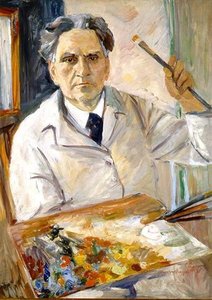
Martiros Saryan
1880 - 1972 , Rússia
Dados Rápidos
- Artistic Movement Or Style: Fovismo
- Artists Or Movements Influenced By This Artist: ['Голубая роза']
- Artists Who Influenced This Artist:
- Paul Gauguin
- Henri Matisse
- Date Of Birth: 28 fevereiro 1880
- Date Of Death: 5 maio 1972
- Full Name: Martiros Saryan
- Nationality: Armênio
- Notable Artworks:
- Makravank
- Aragats
- Buffalo
- Place Of Birth: Novaya Nakhichevan, Rússia
Artigos Relacionados
Serene Visions: Exploring Themes of Tranquility in Art History & Contemporary Practice
Explore the history of serene landscape art & discover artists who evoke tranquility. Find the perfect calming artwork for your home with expert guidance from OriginalUniqueArt.

Evocations of Place: A Historical Journey Through Landscape Art
Explore the rich history of landscape art with OriginalUniqueArt. Discover renowned artists, movements like Impressionism & Romanticism, and expert guidance for collecting timeless pieces. Find your perfect serene escape today!

John Constable: As 25 Obras-Primas que Definem o Mestre da Paisagem Inglesa | OriginalUniqueArt
Descubra as 25 obras-primas de John Constable, o mestre da paisagem inglesa! Explore a arte romântica, cores vibrantes e histórias fascinantes por trás de 'Hay Wain' e outras pinturas icônicas. Encontre reproduções de alta qualidade para decorar sua casa com OriginalUniqueArt.com.

Os 10 Mestres da Paisagem Romântica: Arte para Inspirar a Sua Casa
Descubra os 10 quadros mais emblemáticos da Paisagem Romântica! Explore a história de Turner, Friedrich e outros mestres. Encontre reproduções de arte exclusivas para inspirar sua decoração em OriginalUniqueArt.com.

Katsushika Hokusai: As 25 Obras-Primas que Definem um Mestre da Arte Japonesa
Descubra as 25 obras-primas de Katsushika Hokusai, o mestre do ukiyo-e! Explore a história por trás de 'A Grande Onda' e outras gravuras japonesas icônicas. Encontre reproduções de arte exclusivas para decorar sua casa com elegância em OriginalUniqueArt.com.