Color Field
Horizontal Vision (Mark Rothko)
Mark Rothko (1903–1970) criou Horizontal Vision. Pertence ao movimento Color Field. É feito em Oil On Canvas.
- Oil On Canvas

 Visualizar na parede

 Pintura a Óleo Feita à Mão
 Compartilhar
 Compartilhar
 Ficha técnica


 Baixar imagem
 Semelhantes
 Raio X
 Ver diaporama
 Perguntas e Respostas

 Estatísticas
Horizontal Vision, em resumo
- Título
- Horizontal Vision
- Artista
- Mark Rothko (1903–1970)
- Artista nascido em
- Daugavpils, Letónia
- Técnica
- Oil On Canvas
- Movimento
- Color Field
- Período
- Modern
- Tema
- color blocks, geometric shapes, red hue, minimalism, emotional resonance, bowl composition
O que Horizontal Vision retrata?
A Symphony of Crimson and Light
To stand before Mark Rothko’s “Horizontal Vision” is to step away from the clamor of the physical world and enter a sanctuary of pure, unadulterated emotion. Painted in 1946, this masterpiece serves as a profound cornerstone of the Abstract Expressionist movement, a period when artists sought to strip away the superficiality of representation to uncover the raw essence of the human condition. The canvas does not present a landscape or a figure; instead, it offers a meditative expanse where color itself becomes the protagonist. Through its layered, luminous rectangles, the work invites a silent dialogue between the viewer and the infinite, making it an unparalleled centerpiece for any collection dedicated to contemplative beauty.
The composition is deceptively simple, yet its complexity lies in the subtle vibrations of its palette. Rothko utilizes a mesmerizing arrangement of horizontal bands—deep crimsons, warm oranges, and muted yellows—that seem to float upon one another. There are no hard edges here; rather, the boundaries between colors are soft and atmospheric, achieved through his signature technique of “gypsy staining.” By applying thin, translucent washes of pigment, Rothko allowed each layer to bleed into the next, creating a sense of breathing depth. This meticulous layering produces a hazy, ethereal glow, as if the light is emanating from within the canvas itself rather than reflecting off its surface.
The Architecture of Emotion and Spirit
Beyond its visual splendor, “Horizontal Vision” is steeped in the spiritual and historical tensions of the post-World War II era. Emerging from a period of global trauma, Rothko sought to bypass the rational mind and speak directly to the primal soul. Influenced by the meditative stillness of Zen Buddhism, his work functions as a visual prayer. The tension between the warm, advancing reds and the receding shadows creates a rhythmic pulse, a visual heartbeat that draws the eye into a state of deep reflection. For the collector or interior designer, this painting offers more than mere decoration; it provides an emotional anchor, a way to infuse a space with a sense of profound stillness and intellectual weight.
For those seeking to integrate such a powerful work into a modern environment, a high-quality reproduction allows the transformative power of Rothko’s vision to become a permanent fixture of the home. Whether placed in a minimalist gallery-style living room or a quiet study, the painting acts as a window into an internal landscape. It challenges the viewer to look past the surface and find meaning in the absence of form, proving that even in the lack of recognizable imagery, there is a wealth of narrative, history, and soul to be discovered.
Imagens em alta resolução de Horizontal Vision
Protected by copyright: these files are for personal reference, not a licence to republish.
Mark Rothko, Horizontal Vision.
Perguntas sobre Horizontal Vision respondidas
Qual técnica foi utilizada em "Horizontal Vision", de Mark Rothko?
Mark Rothko utilizou a técnica de Oil On Canvas para "Horizontal Vision". A técnica define a natureza material da obra original.
O que "Horizontal Vision", de Mark Rothko retrata?
"Horizontal Vision", de Mark Rothko retrata: color blocks, geometric shapes, red hue, minimalism, emotional resonance, bowl composition, rothko style.
"Horizontal Vision" está em domínio público?
Informação de direitos autorais para "Horizontal Vision", de Mark Rothko: a obra está em ainda protegido por direitos autorais. Isso determina se reproduções da imagem podem ser feitas livremente.
A qual artista "Horizontal Vision" é atribuída?
"Horizontal Vision" é atribuída a Mark Rothko.
A qual movimento artístico pertence "Horizontal Vision", de Mark Rothko?
O movimento associado a "Horizontal Vision", de Mark Rothko é Color Field. Esta classificação situa a obra entre artistas e obras de arte relacionados.
A que fase da trajetória de Mark Rothko "Horizontal Vision" pertence?
"Horizontal Vision" representa o Mature de Mark Rothko.
Por que o status de direitos autorais de "Horizontal Vision" é como é?
"Horizontal Vision", de Mark Rothko está em ainda protegido por direitos autorais. O período de direitos autorais conta a partir do falecimento do artista, ocorrido em 1970.
O que "Horizontal Vision" compartilha com o restante da obra de Mark Rothko?
Na produção de Mark Rothko, "Horizontal Vision" insere-se no estilo Color Field, acompanhando os temas de color field expression, existential minimalism, emotional depth exploration, rothko’s formal legacy, central composition motif.
"Horizontal Vision" é típico do que Mark Rothko costumava criar?
"Horizontal Vision" retrata color blocks, geometric shapes, red hue, minimalism, emotional resonance, bowl composition, rothko style, enquanto os temas recorrentes de Mark Rothko são color field expression, existential minimalism, emotional depth exploration, rothko’s formal legacy, central composition motif. A comparação entre ambos revela como a obra se relaciona com os temas habituais do artista.
Sobre o artista, Mark Rothko

1903–1970, Letónia
Mark Rothko
Os Primeiros Anos de Mark Rothko Mark Rothko nasceu como Markus Yakovlevich Rothkowitz em 1903. Ele nasceu em Dvinsk, na Rússia, em um lugar hoje conhecido como Daugavpils, na Letônia. Sua família vivia dentro da "Pale of Settlement", uma região marcada pela agitação política e pela sombra constante dos pogroms. Essa atmosfera de instabilidade acompanhou a família quando emigraram para os Estados Unidos em 1913.
Também de Mark Rothko
 Centro Branco1950
 No.1
 Nº 61 (Ferrugem e Azul)1953
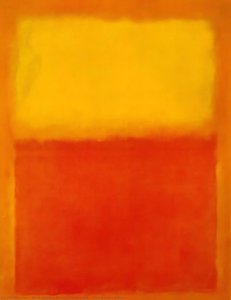 Laranja e amarelo1956
Ensaios sobre Horizontal Vision
 The Architecture of Emotion: A Connoisseur’s Guide to the Chromatic Sublimity of Mark RothkoExplore the profound emotional landscapes of Mark Rothko. An expert editorial on Color Field painting, decoding the spiritual depth, techni…
 Beyond the Canvas: A Definitive Guide to Abstract Expressionism, Action Painting, and Color Field MastersExplore the profound history of Abstract Expressionism, from the visceral energy of Action Painting to the serene depth of Color Field mast…
 Color & Emotion: The Top 25 Masterpieces by Mark RothkoImmerse yourself in the profound emotion of Mark Rothko's greatest works. Explore 25 iconic Abstract Expressionist masterpieces, from color…