

 Visualizar em escala
 Enviar
 Compartilhar
 Ver detalhes
 Guia de Obras do Aluno

 Baixar imagem
 Semelhantes
 Raio X
 Apresentação de slides
 Estatísticas
The student


 Ver mais
A obra de arte exibida nesta página é protegida por leis de direitos autorais, o que significa que não podemos criar ou vender legalmente uma reprodução idêntica. Esta proteção é aplicada por meio de acordos internacionais, tais como a Convenção de Berna e pelas leis nacionais, incluindo as estabelecidas por Lei de Direitos Autorais dos EUA - Título 17.
Este método cumpre plenamente as regulamentações de direitos autorais, pois não envolve a cópia ou duplicação da obra protegida. Em vez disso, trata-se de uma reinterpretação criativa — uma nova pintura que é influenciada pela original, mas não idêntica a ela.
Giclée / Impressão de Arte
Impressão giclée ou em tela de qualidade de museu, com produção rápida e opções flexíveis de acabamento. ( Encomendar reprodução pintada à mão Ver Imagem Digital)




P118B €10

P118H €10

P118W €10

P438Z €10

P508JH €12

P508YH €12

P805H €10

P805Z €10

P919BZ €10

P919G €10

P919XJ €10

P959ZH €10

P968JZ €12

W106C €8

W218G €10

W218JH €8

W218Y €10

W307PJ €10

W316G €10

W316PJ €8

W316Y €10

W398PJ €8

W4111J €10

W500HY €15

W500JH €15

W692G €12

W849H €8

W940BG €15

W953PJ €8




Escolha entre os nossos tamanhos pré-definidos que respeitam as proporções originais da obra de arte.

Digite a largura e a altura de que necessita, para se ajustar à sua moldura ou à sua parede. Uma impressão só pode ser cortada, nunca ampliada além da imagem original, pelo que um tamanho com uma proporção diferente perderá parte da imagem. Enviamos-lhe uma maquete digital para aprovação antes de imprimirmos qualquer coisa. A imagem apresentada nesta página não mostra o corte real — apenas a maquete o faz.
Entrega mundial () em 2 semanas, em vez das 4/5 semanas padrão. (25 Outubro)

Envio expresso gratuito para todo o mundo

Tela de Linho Premium

Seguro de transporte total

Garantia de Reembolso de Impostos Alfandegários

Garantia de Fidelidade de Cor

Política de Devolução em 100 Dias (Apenas para Defeitos)

Garantia de reembolso de 100%

Desconto para múltiplas unidades
 A opção de vidro está disponível apenas para tamanhos inferiores a 110 cm

The student
Giclée / Impressão de Arte
Dimensões da Reprodução
-


Preço Total
€ 70
A Quiet Introspection: The Soul of Mario Sironi’s The Student
In the quiet corners of art history, certain works possess the power to halt time, inviting the viewer into a sanctuary of thought and stillness. The Student, a masterful creation by the Italian maestro Mario Sironi, is one such masterpiece. This evocative portrait captures a woman lost in a moment of profound introspection, seated at a table that serves as an altar to intellect and solitude. Clad in somber black attire, her dark hair framing a face of contemplative depth, she sits before a mirror—a classic symbol of self-reflection and the duality of identity. The scene is not merely a depiction of a person, but an invitation into a private, cerebral world where the boundaries between the physical room and the internal mind begin to blur.
The composition is rich with an atmosphere of scholarly elegance. Surrounding the central figure is a curated landscape of artistic and intellectual artifacts: statues that stand like silent sentin Riens, vases that anchor the space with classical grace, and a single book resting near her hand, suggesting a life dedicated to the pursuit of knowledge. The presence of these objects transforms the setting from a simple room into an atelier of the soul. For the discerning collector or interior designer, this painting offers more than just visual beauty; it provides a focal point of sophisticated gravity, making it an ideal centerpiece for spaces dedicated to study, libraries, or refined living areas where conversation and thought are encouraged.
Technique and the Luminosity of Divisionism
To understand the emotional weight of The Student, one must look closely at Sironi’s early mastery of Divisionism. Before his later shifts toward more monumental and architectural styles, Sironi utilized this technique to breathe life into his subjects through a delicate interplay of light. Rather than blending colors on the palette, he applied small, distinct strokes of pigment that, when viewed from a distance, coalesce in the eye of the beholder to create a shimmering, luminous effect. This method allows the shadows in the woman's black clothing to feel deep and velvety, while simultaneously capturing the subtle glints of light reflecting off the porcelain vases and the smooth surfaces of the surrounding sculptures.
This meticulous approach to color and light creates a sense of vibrating stillness. The technique lends a dreamlike quality to the scene, where the air itself feels heavy with the scent of old paper and the quiet dust of a sunlit studio. For those seeking a high-quality reproduction, this complexity of texture is what makes a hand-painted version so captivating; the physical layering of paint recreates the rhythmic energy of Sironi’s brushwork, ensuring that the light seems to dance across the canvas just as it does in the original work.
A Legacy of Intellectual Elegance
Mario Sironi’s journey from a student of engineering to a titan of modern Italian art is reflected in the structural integrity of this piece. There is an architectural precision to how he places the statues and objects within the frame, creating a balanced, harmonious environment that feels both grounded and ethereal. The Student serves as a bridge between the classical traditions of his heritage and the burgeoning modernism of the early 20th century. It captures a moment of transition—much like the subject herself—between the external world of objects and the internal world of ideas.
Integrating a reproduction of this caliber into a contemporary interior allows for a profound connection to the history of European modernism. It is a piece that speaks to the timelessness of human curiosity and the beauty found in solitude. Whether placed in a sun-drenched gallery or a moody, dark-toned study, The Student brings with it an aura of prestige and a deep, resonant emotional intelligence that continues to inspire art lovers and decorators across the globe.
Perguntas e Respostas
As cores de "The student" de Mario Sironi são vibrantes ou suaves?
As cores de "The student" de Mario Sironi apresentam uma saturação Muted com uma intensidade Monochromatic.
Como faço para baixar a imagem de "The student" de Mario Sironi?
Um download está disponível para "The student": a página de Baixar da obra oferece download de imagem digital em alta resolução.
Que tema e atmosfera combinam em "The student" de Mario Sironi?
"The student" apresenta woman, black clothing, mirror, statues, vases, book, table, e o seu estado de espírito registrado é Classic.
Biografia do Artista
Mario Sironi: Uma Vida na Arte Moderna Italiana
Primeiros Anos e Formação
- Nasceu em 12 de maio de 1885, em Sassari, Sardenha, Itália.
- Seu pai era engenheiro e seu avô materno, Ignazio Villa, era um respeitado arquitelo e escultor – o que proporcionou uma precoce exposição ao universo das artes visuais.
- Inicialmente, estudou engenharia na Universidade de Roma, mas abandonou os estudos em 1903 após um colapso nervoso, um momento que marcou sua virada definitiva para a arte.
- Iniciou sua formação artística formal na Scuola Libera del Nudo da Accademia di Belle Arti di Roma, onde conheceu seu primeiro mestre significativo, Giacomo Balla.
Desenvolvimento Artístico e Influências
- Seus primeiros trabalhos foram profundamente influenciados pelo Divisionismo, uma técnica que enfatiza a separação das cores para criar luminosidade, como exemplificado em obras como “O Estudante”.
- Por volta de 1914, experimentou brevemente com o Futurismo, expondo na Galleria Sprovieri, em Roma; no entanto, ele rapidamente se afastou do foco excessivo na velocidade e no dinamismo típicos do movimento.
- Uma mudança crucial ocorreu após a Primeira Guerra Mundial, com o desenvolvimento de um estilo caracterizado por formas massivas e imóveis e formas geométricas, influenciado por suas experiências de guerra e por um crescente sentimento de isolamento.
- Suas principais influências incluíram Giacomo Balla (em sua formação inicial), Giorgio de Chirico e Carlo Carrà (pelo impacto da pintura metafísica na forma), além de elementos do Neoclassicismo e do Classicismo Primitivista.
O Novecento Italiano e o Estilo Maduro
- Em 1922, Sironi tornou-se um membro fundador do movimento Novecento Italiano – um retorno à ordem na arte europeia do pós-guerra, enfatizando a cleloza e a tradição.
- Seu estilo maduro é marcado por:
- Ênfase em formas geométricas e estruturas simplificadas.
- Uma estética deliberadamente desajeitada em suas obras tardias.
- Temas de solidão, alienação e a condição humana.
- A exploração de paisagens industriais e da vida da classe trabalhadora.
- Obras notáveis deste período incluem “Venere” (1921-1923) e “Solitudine” (“Solidão”, 1925).
Afiliações Políticas e Vida Posterior
- Sironi foi um apoiador de Benito Mussolini e contribuiu extensivamente para publicações fascistas com mais de 1700 caricaturas.
- Ele acreditava na integração entre arte e arquitetura, buscando criar obras monumentais para espaços públicos – refletindo os ideais do regime fascista.
- Após a Segunda Guerra Mundial, sua associação com o Fascismo levou ao declínio de sua popularidade e reconhecimento crítico.
- Ele se retirou amplamente da vida pública, continuando a pintar em relativo isolamento até sua morte.
Grandes Conquistas e Significado Histórico
- A obra de Sironi representa uma contribuidade significativa para o Modernismo Italiano, servindo como ponte entre o Futurismo e os desenvolvimentos artísticos posteriores.
- Sua exploração de temas como a solidão e a alienação ressoou com as ansiedades do século XX.
- Apesar das controvérsias em torno de suas afiliações políticas, sua arte foi apresentada em grandes exposições internacionais, incluindo o Centre Georges Pompidou (1981) e a Royal Academy, em Londres (1989).
- Faleceu em 13 de agosto de 1961, em Milão.
- Seu legado reside em sua síntese estilística única e em suas poderosas representações da condição humana dentro de um mundo em rápida transformação.

Mario Sironi
1885 - 1961 , Itália
Informações Rápidas
- Artistic Movement Or Style: Modernismo
- Artists Or Movements Influenced By This Artist: ['Futurismo']
- Artists Who Influenced This Artist: ['Giacomo Balla']
- Date Of Birth: 1885-05-12
- Date Of Death: 1961-08-13
- Full Name: Mario Sironi
- Nationality: Italiano
- Notable Artworks:
- La Lampada
- Venere
- Solitudine
- Place Of Birth: Sassari, Itália
Artigos Relacionados
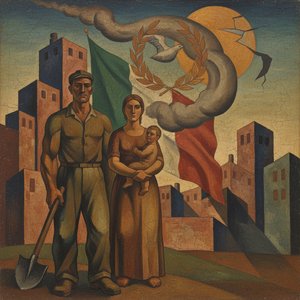
Mario Sironi: A Poetic of Modern Italian Identity Through Symbolism & Social Commentary
Explore the profound works of Mario Sironi, a key figure in Italian Modernism. Discover his evolution from Futurism to Metaphysical painting and his powerful social commentary. Learn about his legacy at OriginalUniqueArt.
Reflections of Reality: Exploring the Metaphysical Power of Mirror Images in Fine Art
Explore the profound symbolism of mirror images in fine art. From Surrealist distortions to classical self-portraits, discover how masters use reflections to explore reality, identity, and the infinite through a sophisticated art-historical lens.
Reflections of Reality: The Metaphysical Power of Mirrors in Fine Art History
Explore the profound symbolism of mirrors in fine art history. From Surrealist distortions to Vanitas themes, discover how masters use reflections to capture reality and the metaphysical soul.
The Mirror Stage of Art History: Exploring Reflection & Identity in Painting
Explore the captivating history of reflection in art! Discover symbolism, technique & psychological depth in masterpieces from Renaissance self-portraits to modern works. Expert insights for discerning collectors.

Mirroring the Soul: A Curated Exploration of Reflection and Self-Perception in Art History
Embark on a sophisticated journey through art history's most captivating masterpieces of reflection. Explore how legendary artists used mirrors to explore identity, surrealism, and the soul through expert art historical analysis.
