
 Visualizar na parede
 Compartilhar
 Compartilhar
 Detalhes
 Guia
Guia

 Baixar imagem
 Semelhantes
 Raio X
 Ver diaporama
 Perguntas e Respostas
 Estatísticas
Self-Portrait


 Ler mais
Giclée / Impressão de Arte
Impressão giclée ou em tela de qualidade de museu, com produção rápida e opções flexíveis de acabamento. ( Comprar pintura feita à mão Alternar para Imagem Digital)




P118B €10

P118H €10

P118W €10

P438Z €10

P508JH €12

P508YH €12

P805H €10

P805Z €10

P919BZ €10

P919G €10

P919XJ €10

P959ZH €10

P968JZ €12

W106C €8

W218G €10

W218JH €8

W218Y €10

W307PJ €10

W316G €10

W316PJ €8

W316Y €10

W398PJ €8

W4111J €10

W500HY €15

W500JH €15

W692G €12

W849H €8

W940BG €15

W953PJ €8




Escolha entre os nossos tamanhos pré-definidos que respeitam as proporções originais da obra de arte.

Insira a largura e a altura desejadas para se ajustarem à sua moldura ou parede. Uma impressão pode ser apenas cortada, nunca ampliada além da imagem original; portanto, um tamanho com proporções diferentes resultará na perda de parte da imagem. Enviamos uma maquete digital para sua aprovação antes de realizarmos a impressão. A imagem exibida nesta página não mostra o corte real — apenas a maquete o faz.
Entrega mundial () em 2 semanas, em vez das 4/5 semanas padrão. (10 Novembro)

Envio expresso gratuito para todo o mundo

Tela de Linho de Alta Qualidade

Seguro de transporte completo

Garantia de Reembolso de Impostos Alfandegários

Garantia de Fidelidade Cromática

Política de Devolução em 100 Dias (Apenas para Defeitos)

Garantia de reembolso de 100%

Oferta de desconto por quantidade
 A opção de vidro está disponível apenas para tamanhos inferiores a 110 cm

Self-Portrait
Giclée / Impressão de Arte
Tamanho da Reprodução
-


Preço Total
€ 72
The Quiet Resonance of Genius: A Portrait of Marietta Robusti
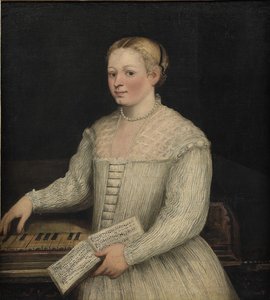
To stand before this depiction of Marietta Robusti is to encounter not merely a likeness, but a moment suspended in the rich, vibrant tapestry of late Renaissance Venice. The air around her seems thick with the scent of aged varnish and the ghost notes of music yet unplayed. She is captured in an intimate, three-quarter pose, seated before the elegant expanse of a harpsichord. Her gaze, though directed slightly away from the viewer, possesses an undeniable intelligence—a quiet dignity that speaks volumes of her intellect and artistic immersion. The composition itself guides the eye with masterful subtlety; the gentle diagonal sweep created by her posture and the instrument anchors the scene, while the dark, undifferentiated background serves to heighten the luminosity emanating solely from her figure.
Technique and Material Mastery
The artist, working in a style deeply rooted in Venetian portraiture, demonstrates an exquisite command of oil paint. One can almost feel the meticulous layering that gives depth to the textures presented. Observe the contrast between the smooth, porcelain quality of her skin—highlighted by soft, diffused light catching her cheekbone—and the crisp articulation of the lace at her collar. The handling of fabric is particularly noteworthy; the woven texture of her gown and the delicate folds suggest a painter who understood how light interacts with different materials. The inclusion of sheet music adds another layer of technical brilliance, requiring fine, precise lines to delineate the paper's edges against the polished wood of the keyboard. This attention to varied surface quality elevates the piece beyond simple representation into a study of material existence.
A Window into Venetian Culture and Ambition
This portrait is more than just a depiction of a musician; it is a cultural artifact from 1580 Venice. Marietta, daughter of the celebrated Tintoretto, lived within an environment where artistic genius was both nurtured and constrained by social expectation. The presence of the instrument and music serves as potent symbolism: it speaks to her cultivated talent, perhaps hinting at patronage or the intellectual life afforded to women of means. Her attire subtly communicates her standing within Venetian society. It is a portrait steeped in the gravity of an era where art was inextricably linked to status, making her quiet composure feel like a declaration of self-worth.
Emotional Echoes for the Modern Collector
For the contemporary collector or designer seeking pieces that breathe history into modern interiors, this reproduction offers profound emotional resonance. The mood is one of contemplative beauty—a sense of focused artistry and enduring grace. It invites quiet reflection, suggesting that true genius often resides not in grand pronouncements, but in moments of deep concentration. Owning a piece like this allows one to curate an atmosphere steeped in the romance of the Renaissance masters, bringing home a tangible echo of Venetian brilliance.
Perguntas e Respostas
Qual é a intensidade das cores de "Self-Portrait", de Marietta Robusti?
"Self-Portrait", de Marietta Robusti apresenta uma intensidade de cor Monochromatic.
Qual é o tom emocional de "Self-Portrait", de Marietta Robusti?
O tom emocional registrado para "Self-Portrait", de Marietta Robusti é Reflective. Ele resume o sentimento que a obra expressa.
A que período da carreira de Marietta Robusti pertence "Self-Portrait"?
Dentro da trajetória de Marietta Robusti, "Self-Portrait" pertence ao período Renaissance. Esta fase permite compará-la com outras obras do artista.
Biografia do Artista
Marietta Robusti: O Pincel de uma Filha Veneziana
O mundo da Veneza do século XVI, um cadinho de inovação artística e restrições sociais, deu à luz uma figura extraordinária – Marietta Robusti, frequentemente conhecida como “la Tintoretta”. Filha do célebre mestre Jacopo Robusti, mais reconhecido como Tintoretto, ela navegou por um cenário desafiador para as mulheres artistas, deixando um legado de brilho sutil e uma história comovente de ambição, família e uma morte prematura. Sua vida, envolta em certo mistério devido à escassez de fontes primárias, oferece um vislumbre fascinante da dinâmica da produção artística veneziana durante uma era crucial.
Nascida por volta de 1560 – embora o ano exato permaneça debatido entre 1555 e 1560 – a infância de Marietta estava intrinentemente ligada ao ateliê de seu pai. O estúdio de Tintoretto não era meramente um local de trabalho; era um ambiente vibrante e colaborativo, onde as técnicas artísticas eram refinadas através da experiência compartilhada. Embora a natureza precisa de seu treinamento permaneça algo elusiva, acredita-se que ela contribuiu significativamente para os projetos de Tintoretto, executando principalmente fundos e delineando figuras – tarefas tipicamente atribuídas às mulheres dentro da hierarquia estabelecida do ateliê. Isso não era simplesmente um trabalho braçal; era um elemento crucial no processo de criação, permitindo que ela absorvesse as técnicas do mestre e desenvolvesse sua própria sensibilidade artística.
O Aprendizado de uma Filha e a Identidade Artística
O apelido de Marietta, “la Tintoretta”, reflete tanto sua linhagem quanto seu estilo distinto. Traduz-se como "pequena tintureira", uma referência à profissão de seu avô – um tintore, ou tintureiro – e alude sutilmente às cores vibrantes que caracterizavam a obra de Tintoretto. Sua história familiar era complexa; seu pai havia se casado com Faustina Episcopi, que faleceu posteriormente, e ele se casou novamente, adicionando três meio-irmãos à sua família imediata. Essa estrutura familiar mista sem dúvida influenciou a criação de Marietta.
Curiosamente, relatos da época revelam que Marietta adotou uma aparência masculina – vestindo-se como um menino – durante seus primeiros anos com Tintoretto. Essa escolha não convencional não era apenas um capricho infantil; era uma estratégia deliberada para ganhar acesso ao ateliê e participar mais plenamente do processo artístico, desafiando as expectativas sociais impostas às mulheres na época. Carlo Ridolfi, o biógrafo de Tintoretto, descreve vividamente esse período, destacando o vínculo estreito de Marietta com seu pai e o evidente afeto dele por ela.
Obras Notáveis e Estilo Artístico
Apesar das limitações impostas às artistas mulheres, Marietta Robusti conseguiu deixar uma marca perceptível na arte veneziana. Embora não tenha recebido encomendas independentes para grandes obras religiosas, como retábulos – um caminho comum para os pintores homens – suas contribuições são, no entanto, significativas. A atribuição mais amplamente aceita é de sua “Mulher Veneziana” (cerca de 1580), atualmente guardada na Galeria Uffizi, em Florença. Este retrato, rico em cores opulentas e detalhes elegantes, demonstra sua habilidade em capturar a semelhança e transmitir uma sensação de compostura digna.
Além disso, ela auxiliou seu pai em diversas pinturas notáveis, incluindo o “Retrato de Ottavio Strada” (1567), demonstrando sua compreensão da técnica de chiaroscuro característica de Tintoretto – o uso dramático de luz e sombra que define seu estilo. Seu trabalho frequentemente envolvia a criação de fundos atmosféricos e o modelado sutil de figuras dentro de uma composição, contribuindo para a harmonia e o dinamismo geral das pinturas.
Um Fim Trágico e um Legado Duradouro
A vida de Marietta foi tragicamente interrompida em 1590, aos trinta anos. Ela faleceu durante o parto, um destino comum para as mulheres daquela era. Sua morte afetou profundamente Tintoretto, que, segundo relatos, criou um retrato póstumo comovente dela em seu leito de morte – uma imagem que diz muito sobre a conexão profunda e duradoura entre ambos.
Após seu falecimento, as conquistas artísticas de Marietta foram, em grande parte, ofuscadas pelas de seu pai. No entanto, nas últimas décadas, estudiosos começaram a reconhecer a importância de suas contribuições e a desafiar a narrativa tradicional que a relegou a uma nota de rodapé na história da arte veneziana. Sua história serve como um poderoso lembrete dos obstáculos enfrentados pelas mulheres artistas durante o Renascimento e do legado duradouro de uma mulher talentosa que desafiou as convenções através de sua habilidade, determinação e laços familiares.
Exploração Adicional
- Marietta Robusti (1554 - 1590) - OriginalUniqueArt.com: Explore sua biografia e obras em OriginalUniqueArt.com
- Retrato de Ottavio Strada: Descubra esta obra-prima em OriginalUniqueArt.com
- Mulher Veneziana (atribuída): Veja a ‘Mulher Veneziana’ em OriginalUniqueArt.com
- Wikipedia - Marietta Robusti: Leia mais sobre sua vida e obra na Wikipedia
Marietta Robusti
1554 - 1590 , Itália
Dados Rápidos
- Artistic Movement Or Style: Renascimento
- Artists Or Movements Influenced By This Artist: ['Tintoretto']
- Artists Who Influenced This Artist: ['Tintoretto']
- Date Of Birth: 1554
- Date Of Death: 1590
- Full Name: Marietta Robusti
- Nationality: Italiana
- Notable Artworks:
- Autorretrato
- Retrato de Ottavio Strada
- Place Of Birth: Veneza, Itália
Artigos Relacionados

The Inner Landscape: Exploring Themes of Introspection in Visual Art Across Movements & Eras
Explore the captivating world of introspective art! Discover how artists across eras – from Rembrandt to Kahlo – used self-portraiture to reveal their inner worlds and emotional depths. A journey through art history & psychology.

Jacopo Tintoretto: As 25 Obras-Primas do Mestre da Luz e Drama | OriginalUniqueArt
Descubra as 25 obras-primas de Jacopo Tintoretto, o mestre veneziano do Renascimento! Explore a história, técnica e emoção por trás de pinturas icônicas como 'O Milagre de São Marcos'. Encontre reproduções de arte exclusivas para decorar sua casa com OriginalUniqueArt.com.

The Echo of Self: Reflectivity as a Core Theme in Art History & Contemporary Practice
Explore the rich history of self-representation in art, from Renaissance masters to modern innovators. Discover how artists use portraiture to reveal identity, emotion & the depths of the human psyche. Expert insights for collectors.

The Enduring Legacy of Formal Portraiture: Power, Identity & Artistic Exploration
Explore the rich history of formal portraiture & its enduring power to capture identity and shape perception. Discover investment-worthy artworks, expert appraisals, and custom reproduction services at OriginalUniqueArt.
Reflecting the Self: A History of Portraiture & Psychological Insight
Explore the fascinating history of self-portraiture from Renaissance masters like Dürer & Rembrandt to modern interpretations. Discover the psychological insights and artistic techniques behind these iconic works. Expert analysis for art enthusiasts.