

 Visualizar em escala
 Enviar
 Compartilhar
 Ver detalhes
 Guia de Obras do Aluno

 Baixar imagem
 Semelhantes
 Raio X
 Apresentação de slides
 Estatísticas
Print sample
 Acrylic On Canvas
- WallArt
- Fortuny Aesthetic
 1907
1907- 19th Century
 49.0 x 34.0 cm
 Palazzo Fortuny
 Ver mais
Reprodução em Óleo Feita à Mão
Óleo sobre tela pintado à mão no tamanho e moldura de sua escolha, feito sob encomenda pelos nossos artistas. ( Alternar para Impressão Ver Imagem Digital)




P118B €10

P118H €10

P118W €10

P438Z €10

P508JH €12

P508YH €12

P805H €10

P805Z €10

P919BZ €10

P919G €10

P919XJ €10

P959ZH €10

P968JZ €12

W106C €8

W218G €10

W218JH €8

W218Y €10

W307PJ €10

W316G €10

W316PJ €8

W316Y €10

W398PJ €8

W4111J €10

W500HY €15

W500JH €15

W692G €12

W849H €8

W940BG €15

W953PJ €8




Escolha entre os nossos tamanhos pré-definidos que respeitam as proporções originais da obra de arte.

Digite a largura e a altura de que necessita, para se ajustar à sua moldura ou à sua parede. Esta obra é pintada à mão, por isso, para um tamanho com uma proporção diferente, o artista pode pintar um pouco mais ao redor da imagem ou cortar um pouco — você escolhe. Enviamos-lhe uma maquete digital para aprovação antes de a pintura começar. A imagem exibida nesta página não mostra o resultado real — apenas a maquete mostra.
Após o pedido, a equipa OriginalUniqueArt.com enviará um e-mail ao cliente para solicitar instruções e fornecer uma prévia do esboço.
Entrega mundial () em 3 a 4 semanas, em vez das 5 semanas padrão. (22 Outubro). Sem comprometer a qualidade.

Envio expresso gratuito para todo o mundo

Tela de Linho Premium

Seguro de transporte total

Garantia de Reembolso de Impostos Alfandegários

Garantia de Fidelidade de Cor

Política de Devolução em 100 Dias (Apenas para Defeitos)

Garantia de reembolso de 100%

Desconto para múltiplas unidades
 A opção de vidro está disponível apenas para tamanhos inferiores a 110 cm

Print sample
Técnica de Reprodução
Dimensões da Reprodução
-


Preço Total
€ 262
A Study in Color and Illusion: Mariano Fortuny’s “Print Sample”
This captivating artwork, titled "Print sample," offers an intimate glimpse into the revolutionary world of Mariano Fortuny – a figure as adept at theatrical innovation as he was at painting. Measuring 49 x 34 cm, this 1907 print embodies Fortuny’s meticulous approach to light and color, a cornerstone of his artistic legacy. The composition itself is deceptively simple: a square canvas dominated by a rich red background, punctuated by four overlapping circles of varying blues. Yet, within this apparent restraint lies a profound exploration of visual perception and the techniques that would define Fortuny's enduring fame.
The Genius of the Fortuny Cyclorama
Mariano Fortuny’s genius wasn’t confined to easel painting; it extended into the realm of theatrical design. Born in Reus, Spain, in 1871, he inherited a passion for art from his father, a genre painter who tragically died when Mariano was just three years old. This early loss propelled the family to Paris, where Mariano’s mother exposed him to the luxurious world of textiles and fabrics – an influence that would profoundly shape his artistic vocabulary. Fortuny's most significant contribution came with the development of the “cyclorama dome,” a semi-hemispherical structure designed to bathe theatrical scenes in indirect light, creating an illusion of vastness and seamlessly blending painted backdrops with the actual stage. This technique, detailed in his treatise "Eclairage Scenique," was born from his meticulous study of reflected light – a concept that he applied equally to his still-life paintings.
Technique and Materiality
Created using print media in 1907, “Print sample” demonstrates Fortuny’s mastery of color mixing and layering. The varying shades of blue within the circles aren't simply painted; they are achieved through a sophisticated understanding of how light interacts with different surfaces – a principle he meticulously documented. The use of multiple layers, characteristic of his technique, creates a shimmering depth that draws the viewer into the artwork. The slight overlap of the circles isn’t merely an aesthetic choice; it's a deliberate manipulation of perspective, echoing Fortuny’s broader interest in creating illusions and challenging traditional notions of representation. The piece speaks to his innovative approach to materials, utilizing print media to achieve effects previously only attainable through oil paint.
Symbolism and Emotional Resonance
"Print sample" can be interpreted as a meditation on the nature of perception itself. Fortuny’s relentless pursuit of creating believable illusions – whether in theatrical settings or paintings – suggests a fascination with the power of the mind to construct reality. The circles, seemingly simple forms, become imbued with a sense of mystery and contemplation. Displayed at the Palazzo Fortuny in Venice, this artwork serves as a tangible link to a visionary artist who fundamentally altered the landscape of both art and theatre. It’s a testament to his dedication to innovation and his profound understanding of how light, color, and form can evoke powerful emotions.
Perguntas e Respostas
Como "Print sample" equilibra luz e sombra?
"Print sample" possui brilliant de brilho geral, e sua luminância é Luminous.
Qual é o formato de "Print sample"?
O formato de "Print sample" é Portrait. Isso é útil ao planejar onde uma reprodução será colocada.
Em qual movimento e em qual época se insere "Print sample" de Mariano Fortuny?
Em "Print sample" de Mariano Fortuny, o movimento Fortuny Aesthetic encontra a era Era Moderna.
Biografia do Artista
Early Life and Inspiration
Mariano Fortuny, a name synonymous with theatrical innovation and opulent textiles, was born on May 11, 1871, in Granada, Spain – a city steeped in history and artistic tradition. His early life was profoundly shaped by the sudden loss of his father, Mariano Fortuny y Marsal, a respected genre painter, when the young boy was just three years old. This tragic event propelled his family to Paris, France, where his mother, Cecilia de Madrazo, exposed him to the vibrant world of Parisian fashion and textiles. It was within this environment that Fortuny’s artistic sensibilities truly began to blossom, nurtured by a diverse collection of fabrics and materials – a legacy inherited from his father's own passion for collecting. From a remarkably young age, Fortuny demonstrated an extraordinary aptitude for various art forms: painting, photography, sculpting, architecture, etching, and even theatrical stage lighting design. His innate curiosity and inventive spirit quickly led him to experiment with new techniques and materials, foreshadowing the revolutionary contributions he would later make to the world of theatre. The influence of his mother’s textile collection proved particularly formative, sparking a lifelong fascination with patterns, textures, and the interplay of light and color – elements that would become central to his artistic vision.Artistic Talents and Revolutionary Inventions
Fortuny's artistic talents weren’t confined to traditional painting; he was a true polymath, driven by an insatiable desire to innovate and push the boundaries of creative expression. He quickly established himself as a skilled craftsman and inventor, developing over twenty patented inventions between 1901 and 1934 – a testament to his remarkable ingenuity. Perhaps his most significant invention was the “fortuny cyclorama dome,” a quarter-dome structure constructed from plaster or cloth designed to create seamless transitions between scenes in theatrical productions. This ingenious device utilized indirect lighting, manipulating reflected light off various surfaces to dramatically alter color, intensity, and overall effect – a groundbreaking technique that fundamentally changed the way stage sets were illuminated. Fortuny’s treatise, “Eclairage Scenique” (1904), meticulously documented his discoveries regarding the properties of light, detailing how it could be harnessed and transformed to achieve unprecedented visual depth and realism on stage. This work established him as a pioneer in theatrical lighting design, earning him international recognition within the artistic community. Beyond the cyclorama dome, Fortuny’s inventive mind produced numerous other innovations, including specialized fabrics, lighting fixtures, and even a unique suction fan system for maintaining the tautness of his domes – demonstrating a relentless pursuit of technological advancement to serve his artistic goals.Notable Collaborations and Artistic Influences
Fortuny's work quickly gained widespread acclaim in the 1920s, attracting the attention of influential figures across Europe and America. He forged significant collaborations with prominent artists and cultural icons, including Richard Wagner, the renowned German composer, whose operas deeply inspired Fortuny’s dramatic stage designs. His contributions to the premiere of Wagner's *Tristan und Isolde* at the Scala opera house in Milan were particularly noteworthy, as he adapted his dome system for the theater’s vast space and devised a clever suction fan mechanism to maintain its structural integrity – a testament to his engineering prowess. Fortuny also worked closely with the celebrated Italian opera singer Eleonora Duse, designing elaborate sets and costumes for her performances, further solidifying his reputation as a visionary artist. His designs were coveted by leading figures in the theatre world, including Isadora Duncan and Ellen Terry, demonstrating the broad appeal of his innovative aesthetic. The influence of Fortuny extended beyond the stage; he was deeply inspired by the art and culture of ancient civilizations, particularly those of Egypt, Greece, and Persia – a fascination that informed his use of rich colors, intricate patterns, and dramatic compositions.Legacy and Lasting Influence
Mariano Fortuny passed away on May 3, 1949, in Venice, Italy, leaving behind a remarkable legacy that continues to resonate today. His work profoundly influenced the French novelist Marcel Proust, who drew inspiration from Fortuny’s artistic vision and his exploration of memory and sensory experience in *In Search of Lost Time*. Fortuny's life story was also depicted in Pere Gimferrer’s novel *Fortuny*, further cementing his place in literary history. Despite his untimely death, Fortuny’s impact on the world of theatrical design remains undeniable. His innovations revolutionized stage lighting and set construction, setting new standards for visual spectacle and immersive storytelling. Today, his designs continue to be studied and admired by artists, designers, and theatre professionals worldwide – a testament to the enduring power of his creative genius. Explore more about Mariano Fortuny's inventions and designs at OriginalUniqueArt’s collection. Discover the impact of his work on theatrical lighting in the museum destroyed by fire (united states), a story of an unfortunate event that shaped american art history, available at OriginalUniqueArt’s blog.
Mariano Fortuny
1871 - 1949 , Espanha
Informações Rápidas
- Artistic Movement Or Style: Orientalismo art
- Artists Or Movements Influenced By This Artist: ['Marcel Proust']
- Artists Who Influenced This Artist: ['Richard Wagner']
- Date Of Birth: 11 de junho de 1871
- Date Of Death: 3 de maio de 1949
- Full Name: Mariano Fortuny y Marsal
- Nationality: Espanhol
- Notable Artworks:
- La vicaría
- La batalla Tetuan
- Place Of Birth: Granada, Espanha
Artigos Relacionados
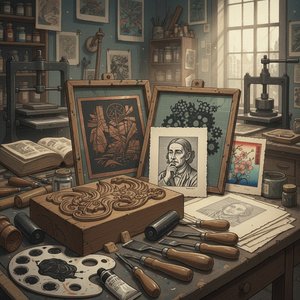
The Enduring Legacy of Printmaking: Techniques, Themes & Artistic Innovation Across Centuries
Explore the rich history of printmaking with OriginalUniqueArt. Discover techniques from intaglio to lithography, learn about collecting valuable prints & find museum-quality reproductions. Expert insights for art enthusiasts and collectors.

Giclée Prints: Archival Quality & Aesthetic Nuances for the Discerning Collector
Explore the world of giclée prints with OriginalUniqueArt. Learn about archival quality, aesthetic nuances & investment potential. Expert guidance for discerning art collectors seeking museum-quality reproductions and lasting value.

The Enduring Legacy of Fine Art Prints: Technique, History & Aesthetic Impact
Explore the rich history & techniques of fine art prints. Discover investment potential, assess authenticity, and learn how to preserve your collection with expert guidance. Trusted insights for discerning collectors.

Mariano Fortuny: A Fusion of Art, Fashion & Design – Exploring a Venetian Innovator's Legacy
Explore the captivating world of Mariano Fortuny – artist, designer & innovator. Discover his revolutionary textiles, iconic Delphos gown, and lasting influence on art, fashion & interiors. A collector's guide to a Venetian master.

Echoes of Time: Exploring the Enduring Appeal & Historical Context of Vintage Art Prints
Explore the captivating world of vintage art prints! Discover their history, collecting tips & enduring appeal. Expert insights on chromolithography and building a legacy collection with OriginalUniqueArt.
