

 Visualizar na parede
 Compartilhar
 Compartilhar
 Detalhes
 Guia
Guia

 Baixar imagem
 Semelhantes
 Raio X
 Ver diaporama
 Estatísticas
Tu m'

 Ler mais
Obtenha um arquivo pronto para impressão que vai muito além da visualização na web. Cada imagem digital que vendemos provém de um arquivo mestre de alta resolução em nosso banco de dados — geralmente entre 5.000 e 15.000 pixels de largura — para que você possa imprimir em grandes formatos, realizar cortes precisos ou reproduzir detalhes minuciosos com total confiança.
Nenhum arquivo sai do nosso estúdio sem passar por um cuidadoso processo de revisão. Um especialista digital verifica as cores em relação à pintura original e as corrige se necessário, aumentando então a clareza e o detalhe com ferramentas profissionais de retoque — sempre mantendo a fidelidade às pinceladas e ao estilo do artista. O resultado é uma imagem que se assemelha à pintura, e não a um scan com filtros.
Você aprova antes de finalizar: nosso especialista envia a imagem por e-mail em até 72 horas para sua revisão. Não ficou satisfeito? Peça melhorias ou correções, ou solicite um reembolso caso a qualidade não atenda às expectativas.
Esta é a qualidade em que confiam editoras, estúdios de design, galerias e gráficas.
Imagem Digital
Baixe um arquivo de alta resolução para exibição pessoal, impressão e projetos criativos. ( Alternar para Impressão Comprar pintura feita à mão)
Incluído em cada compra de imagem digital
Entrega Digital Especializada e Garantida
Ao escolher o OriginalUniqueArt.com, você não está apenas adquirindo uma imagem — você está recebendo uma obra de arte digital profissionalmente aprimorada, elaborada com precisão e com garantia de satisfação. Aqui está tudo o que acompanha seu pedido, automaticamente:

Entrega rápida por e-mail
O seu arquivo de imagem digital em alta resolução será enviado por e-mail em até 72 horas após o pedido — pronto para uso imediato.

Arquivo Digital com IA Otimizado
Sua obra de arte é otimizada profissionalmente por meio de ferramentas avançadas de IA e edição manual, garantindo o máximo de detalhes, clareza e precisão de cores.

Reenvio gratuito vitalício
Apagou ou perdeu o seu ficheiro acidentalmente? Não se preocupe – nós reenviamos para si a qualquer momento, gratuitamente.

Sem Taxas de Importação - Sempre
Desfrute da sua obra de arte instantaneamente, sem taxas alfandegárias, impostos ou custos de entrega — downloads digitais são sempre isentos de taxas.

Garantia de Fidelidade de Cores
Garantimos que sua imagem digital reflita as cores originais com a maior fidelidade possível, utilizando ferramentas profissionais e gerenciamento de cores.

Garantia de satisfação de 100 dias
Se não estiver satisfeito com a sua imagem digital, nós a revisaremos ou reembolsaremos 100% dentro de 100 dias — sem perguntas.

Garantia de Reembolso 100%
Não está satisfeito? Receba o reembolso total em até 100 dias após o recebimento do seu arquivo digital — sem perguntas.

Descontos para pedidos em lote
Compre 3 imagens, economize 10% - Compre 5, economize 15% - Compre 10+, economize 20%. Ideal para projetos criativos, galerias e agências.
Introduction to Marcel Duchamp and the Dada Movement
Marcel Duchamp (1887-1968) was a French painter, sculptor, chess player, and writer whose work is associated with the Dada movement. Born in Normandy, France, Duchamp spent much of his life traveling between Europe and the United States. He is considered one of the most influential artists of the 20th century, having rejected traditional modes of artistic production in favor of irony, satire, and chance operations. The Dada movement emerged during World War I as a reaction to the horrors of war and the disillusionment with society that followed. It was characterized by nonsensical, provocative works that challenged conventional notions of art, culture, and society. Duchamp's work is emblematic of this revolutionary spirit.
Marcel Duchamp's 'Tu m': A Fusion of Painting and Readymade
Commissioned by artist, collector, and educator Katherine Dreier in 1918, Tu m' is Marcel Duchamp's last painting on canvas and a prime example of his innovative approach to art. The work measures 27 1/2 × 119 5/16 in. (69.8 × 303 cm) framed, making it an unusual length and frieze-like shape for a painting. This unique format was specifically designed to be hung over a bookcase in Dreier's library. Tu m' combines elements of painting, trompe l'oeil, and readymade objects. The canvas features cast shadows that refer to three "ready-mades": a bicycle wheel, a corkscrew, and a hat rack. Additionally, real objects such as a bottle brush, a bolt, and safety pins are incorporated into the work. These elements challenge traditional notions of painting by merging art and everyday objects, creating a new form of artistic expression.
Symbolism and Meaning in 'Tu m'
The title Tu m' is believed to be short for the French "tu m'emmerdes" (you annoy me) or "tu m'ennuies" (you bore me). This sarcastic tone reflects Duchamp's attitude toward painting as he was casting it aside. The work can be seen as a commentary on the futility of traditional art forms, as well as an exploration of new possibilities in artistic expression. Tu m' also features several illusionistic objects, such as a painted hand with a pointed finger in the lower center. These elements contrast with the real objects and cast shadows, creating a dynamic interplay between reality and illusion. The work invites viewers to question their perceptions of art and encourages them to engage with the piece on a deeper level.
Conclusion
Marcel Duchamp's Tu m' is a groundbreaking masterpiece that exemplifies the spirit of the Dada movement. By merging painting, trompe l'oeil, and readymade objects, Duchamp created a new form of artistic expression that challenges conventional notions of art. The work remains an important contribution to modern art and continues to inspire artists today. To learn more about Marcel Duchamp and his other works, visit Marcel Duchamp: Self-Portrait in Profile on OriginalUniqueArt.com. Tu m' is part of the Yale University Art Gallery's collection and can be viewed at Yale University Art Gallery. To learn more about this painting, visit its dedicated page on the museum's website. Tu m' is also featured in MoMA's audio collection: Marcel Duchamp. Tu m'. 1918 | MoMA. This resource provides valuable insights into the work and its historical context. Tu m' is a testament to Marcel Duchamp's innovative spirit and his contribution to modern art. By merging painting, trompe l'oeil, and readymade objects, Duchamp created a new form of artistic expression that continues to inspire artists today.
Perguntas e Respostas
"Tu m'" é uma obra famosa do Dadaism?
"Tu m'", de Marcel Duchamp é classificada como Iconic e pertence ao movimento Dadaism.
"Tu m'", de Marcel Duchamp está em domínio público?
Quanto aos direitos autorais, "Tu m'" está em ainda protegido por direitos autorais.
Qual tamanho de impressão devo escolher para "Tu m'" no meu quarto?
A combinação recomendada para "Tu m'", de Marcel Duchamp: uma impressão de Large em um(a) Living Room.
Biografia do Artista
Um Espírito Revolucionário: A Vida e a Arte de Marcel Duchamp
Marcel Duchamp, nascido Henri-Robert-Marcel Duchamp em 1887, em Blainville-Crevon, Normandia, foi muito mais do que um artista; ele foi um provocador filosófico que alterou fundamentalmente o curso da arte moderna. Sua vida inicial, embora aparentemente convencional – nutrida no seio de uma família que apreciava a expressão artística, com ambos os irmãos seguindo carreiras bem-sucedidas como artistas – prenunciava o iconoclasmo que estava por vir. Duchamp buscou inicialmente uma formação formal, dominando técnicas tradicionais e experimentando estilos pós-impressionistas. No entanto, essa base acadêmica não serviu como um fim em si mesma, mas como um trampolim para questionar a própria natureza da arte, seu propósito e sua definição. Ele não se contentava apenas em retratar o mundo; ele buscava desafiar a forma como o percebemos e o que constitui o valor artístico. Essa curiosidade intelectual inquieta tornaria-se a característica definidora de sua carreira prolífica.Do Cubismo ao Dadaísmo: Uma Rejeição à Convenção
A jornada artística de Duchamp foi marcada por uma evolução constante, um desprendimento deliberado das normas estabelecidas. Seu envolvimento inicial com o Cubismo, evidente em obras como Retrato de Jogadores de Xadrez (1911), demonstrou um interesse por formas fragmentadas e múltiplas perspectivas – um afastamento da representação tradicional. Contudo, ele rapidamente foi além das preocupações puramente estéticas, reconhecendo que simplesmente reorganizar elementos visuais não era suficiente para abordar as questões mais profundas que o inquietavam. Os horrores da Primeira Guerra Mundial alimentaram esse descontentamento, levando Duchamp a abraçar o Dadaísmo, um movimento nascido do desilusão e de uma rejeição à lógica, à razão e aos valores artísticos tradicionais. Foi dentro da estrutura dadaísta que Duchamp verdadeiramente começou a desmantelar as noções convencionais de arte. Ele não estava interessado em criar objetos belos; ele queria provocar o pensamento, desafiar suposições e expor a arbitrariedade do julgamento estético. Este período testemunhou o nascimento de sua inovação mais radical: o "readymade".Os Readymades e a Subversão da Arte
A introdução dos readymades – objetos manufaturados comuns, selecionados e apresentados como arte – foi a contribuição mais significativa de Duchamp para o século XX. Estes não eram simplesmente objetos encontrados; eram atos deliberados de subversão artística. Ao pegar um item cotidiano, como um urinol (Fonte, 1917), assiná-lo como “R. Mutt” e submetê-lo a uma exposição de arte, Duchamp desafiou a própria definição de habilidade e autoria artística. Seria a mão do artista que criava a obra, ou seria a ideia do artista? Esta questão tornou-se central em sua prática e lançou as bases para a Arte Conceitual. Outros readymades notáveis, como L.H.O.O.Q. (1919), uma reprodução em cartão-postal da Mona Lisa desfigurada com um bigode e cavanhaque, foram críticas lúdicas, porém incisivas, da história da arte e dos ícones culturais estabelecidos. Estas obras não tinham o intuito de serem admiradas por suas qualidades estéticas; elas pretendiam provocar debates e forçar os espectadores a reconsiderarem suas noções preconcebidas sobre o que constitui a arte. Duchamp acreditava que a arte deveria residir na mente, e não meramente no olhar.Legado e Influência Duradoura
O impacto de Marcel Duchamp nas gerações subsequentes de artistas é imensurável. Ele alterou fundamentalmente nossa compreensão da arte, abrindo caminho para movimentos como a Arte Conceitual, o Minimalismo, a Pop Art e tantos outros. Sua ênfase na ideia do artista – o conceito por trás da obra – sobre suas qualidades estéticas continua a inspirar artistas hoje.- Cubismo: Exploração inicial de formas fraturadas e representação espacial.
- Dadaísmo: Rejeição da lógica, da razão e dos valores artísticos tradicionais em resposta à Primeira Guerra Mundial.
- Arte Conceitual: Ênfase na ideia por trás da obra de arte em vez de suas qualidades estéticas.
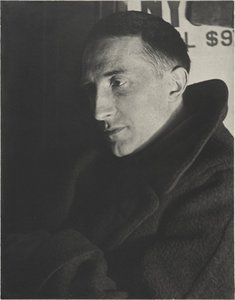
Marcel Duchamp
1887 - 1968 , França
Breve Biografia
- Artistic Movement Or Style:
- Cubismo
- Dadaísmo
- Artists Or Movements Influenced By This Artist: ['Minimalismo']
- Date Of Birth: 28 Jul 1887 Blainville
- Date Of Death: 2 Oct 1968
- Full Name: Marcel Duchamp Henri-Robert-Marcel
- Nationality: Francês-Americano
- Notable Artworks:
- Fonte
- L.H.O.O.Q.
- Grande Cristal
- Place Of Birth: Normandia França