Dada Art Movement
Trap (Marcel Duchamp)
Marcel Duchamp (1887–1968) criou Trap. Pertence ao movimento Dada Art Movement. É feito em Wood.
- Wood

 Pintura a Óleo Feita à Mão
 Compartilhar
 Compartilhar
 Ficha técnica


 Baixar imagem
 Semelhantes
 Ver diaporama
 Perguntas e Respostas

 Estatísticas
Trap, em resumo
- Título
- Trap
- Artista
- Marcel Duchamp (1887–1968)
- Artista nascido em
- Blainville-Crevon, França
- Técnica
- Wood
- Movimento
- Dada Art Movement
- Tema
- readymade, duchamp, coat rack, minimalism, art object, conceptual art
O que Trap retrata?
Introduction to Marcel Duchamp and the Dada Art Movement
Marcel Duchamp (1887-1968), a pioneering artist of the early 20th century, was instrumental in shaping modern art through his provocative works. As a leading figure of the Dada movement, Duchamp sought to challenge traditional notions of art and culture by creating pieces that defied conventional expectations (The Dada Art Movement Introduction).'Trap': A Readymade Masterpiece
Among Duchamp's most notable contributions is 'Trap' (1917), a readymade artwork consisting of a wooden and metal coatrack. The artist submitted it to a show at the Bourgeois Art Gallery, requesting that it be placed near the entryway. During the exhibition, 'Trap' went largely unnoticed as an art piece, which was precisely Duchamp's intention (Painting by 'Marcel Duchamp' | Marcel Duchamp:Trap).The Readymade Concept and the Demise of Artistic Tradition
Duchamp's readymades, including 'Trap', were designed to question the very nature of art. By selecting ordinary objects and presenting them as works of art, Duchamp aimed to challenge the notion that artistic value is inherently tied to an object's aesthetic qualities or craftsmanship (Art Movements 1/2).Duchamp's Legacy and Influence on Contemporary Art
Marcel Duchamp's groundbreaking approach to art has had a lasting impact on contemporary artists, who continue to explore the boundaries of artistic expression. His work serves as a reminder that art can be found in the most unexpected places, and that its value lies not only in its physical form but also in the ideas it represents (Art Movements 1/2). To learn more about Marcel Duchamp's life and work, visit Marcel Duchamp's page on OriginalUniqueArt.com. Additionally, explore our extensive collection of art movements and artists to deepen your understanding of the evolution of art throughout history (A Journey Through Art History with OriginalUniqueArt’s Extensive Collection). Note: This article is intended for informational purposes only. For a more comprehensive understanding of Marcel Duchamp and his work, consider consulting scholarly resources or enrolling in an art history course.Imagens em alta resolução de Trap
Protected by copyright: these files are for personal reference, not a licence to republish.
Marcel Duchamp, Trap.
Perguntas sobre Trap respondidas
De que técnica é feita a obra "Trap"?
"Trap" é executada em Wood.
Quais temas aparecem em "Trap", de Marcel Duchamp?
Os temas presentes em "Trap", de Marcel Duchamp incluem readymade, duchamp, coat rack, minimalism, art object, conceptual art, questioning art. Juntos, eles sintetizam o assunto da obra.
"Trap", de Marcel Duchamp está em domínio público?
Quanto aos direitos autorais, "Trap" está em ainda protegido por direitos autorais.
Quem criou "Trap"?
O artista por trás de "Trap" é Marcel Duchamp. A obra está catalogada sob o nome de Marcel Duchamp.
A qual movimento artístico "Trap", de Marcel Duchamp pertence?
"Trap" é uma obra do Dada Art Movement. O movimento indica a tradição artística da qual a obra faz parte.
A que fase da trajetória de Marcel Duchamp "Trap" pertence?
Dentro da trajetória de Marcel Duchamp, "Trap" pertence ao período Dada Era. Esta fase permite compará-la com outras obras do artista.
"Trap", de Marcel Duchamp, está em domínio público? E por quê?
"Trap", de Marcel Duchamp está em ainda protegido por direitos autorais. O período de direitos autorais conta a partir do falecimento do artista, ocorrido em 1968.
O que "Trap" compartilha com o restante da obra de Marcel Duchamp?
"Trap" compartilha com as outras obras de Marcel Duchamp o seu estilo Dada Art Movement e os temas recorrentes: challenging artistic conventions, questioning established values, anti-art, anti-rationality stance, provoking viewer engagement, foundation for modern art.
De que forma o tema de "Trap" se relaciona com os temas habituais de Marcel Duchamp?
Os temas recorrentes de Marcel Duchamp incluem challenging artistic conventions, questioning established values, anti-art, anti-rationality stance, provoking viewer engagement, foundation for modern art; "Trap" foca em readymade, duchamp, coat rack, minimalism, art object, conceptual art, questioning art.
Sobre o artista, Marcel Duchamp
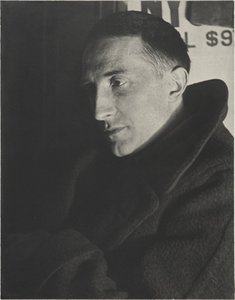
1887–1968, França
Marcel Duchamp
A Vida e a Arte de Marcel Duchamp Nascido em 28 de julho de 1887, em Blainville, na Normandia, França, Marcel Duchamp entrou em um mundo onde o impulso de criar estava profundamente enraizado em seu próprio sangue. Ele era o quarto de sete filhos de Eugene e Lucie Duchamp. Aquele era um lar de criadores e pensadores; seus irmãos compartilhavam essa inquietação criativa, como seus irmãos Jacques Villon e Raymond Duchamp-Villon, além de sua irmã Suzanne Duchamp-Crotti, todos dedicados às artes. Embora tenha se tornado, eventualmente, uma figura franco-americana de imensa complexidade, suas origens permaneceram enraizadas na quietude da Normandia.
Também de Marcel Duchamp
 Nude Descending a Staircase, No.21912
 O jovem triste num comboio1911
 Dado: 1. A Cascata, 2. O Gás de Iluminação1966
 Fontein1917
Ensaios sobre Trap
 Dadaism Explained: The Radical Anti-Art Movement That Redefined ModernityExplore the radical origins of Dadaism. Discover how this anti-art movement emerged from WWI chaos to challenge logic and redefine modern a…
 Marcel Duchamp: The Top 25 Masterpieces That Redefined Modern ArtExplore 25 iconic Marcel Duchamp masterpieces that redefined Dadaism. Discover the full collection online at OriginalUniqueArt.com.
 25 Masterpieces by Édouard Manet: The Rebel Who Redefined Modern ArtStep into the revolutionary world of Édouard Manet. Explore 25 iconic Impressionist masterpieces, from scandalous classics to timeless port…