
 Visualizar na parede
 Compartilhar
 Compartilhar
 Detalhes
 Guia
Guia

 Baixar imagem
 Semelhantes
 Raio X
 Ver diaporama
 Perguntas e Respostas
 Estatísticas
Transição da Virgem para a Noiva

- 59.0 x 53.0 cm


 Ler mais
A obra de arte exibida nesta página é protegida por leis de direitos autorais, o que significa que não podemos criar ou vender legalmente uma reprodução idêntica. Esta proteção é aplicada por meio de acordos internacionais, tais como a Convenção de Berna e pelas leis nacionais, incluindo as estabelecidas por Lei de Direitos Autorais dos EUA - Título 17.
Este método cumpre plenamente as regulamentações de direitos autorais, pois não envolve a cópia ou duplicação da obra protegida. Em vez disso, trata-se de uma reinterpretação criativa — uma nova pintura que é influenciada pela original, mas não idêntica a ela.
Giclée / Impressão de Arte
Impressão giclée ou em tela de qualidade de museu, com produção rápida e opções flexíveis de acabamento. ( Comprar pintura feita à mão Alternar para Imagem Digital)




P118B €10

P118H €10

P118W €10

P438Z €10

P508JH €12

P508YH €12

P805H €10

P805Z €10

P919BZ €10

P919G €10

P919XJ €10

P959ZH €10

P968JZ €12

W106C €8

W218G €10

W218JH €8

W218Y €10

W307PJ €10

W316G €10

W316PJ €8

W316Y €10

W398PJ €8

W4111J €10

W500HY €15

W500JH €15

W692G €12

W849H €8

W940BG €15

W953PJ €8




Escolha entre os nossos tamanhos pré-definidos que respeitam as proporções originais da obra de arte.

Insira a largura e a altura desejadas para se ajustarem à sua moldura ou parede. Uma impressão pode ser apenas cortada, nunca ampliada além da imagem original; portanto, um tamanho com proporções diferentes resultará na perda de parte da imagem. Enviamos uma maquete digital para sua aprovação antes de realizarmos a impressão. A imagem exibida nesta página não mostra o corte real — apenas a maquete o faz.
Entrega mundial () em 2 semanas, em vez das 4/5 semanas padrão. (5 Novembro)

Envio expresso gratuito para todo o mundo

Tela de Linho de Alta Qualidade

Seguro de transporte completo

Garantia de Reembolso de Impostos Alfandegários

Garantia de Fidelidade Cromática

Política de Devolução em 100 Dias (Apenas para Defeitos)

Garantia de reembolso de 100%

Oferta de desconto por quantidade
 A opção de vidro está disponível apenas para tamanhos inferiores a 110 cm

Transição da Virgem para a Noiva
Giclée / Impressão de Arte
Tamanho da Reprodução
-


Preço Total
€ 72
Transition of Virgin into a Bride: A Cubist Revelation
Marcel Duchamp’s “Transition of Virgin into a Bride,” born in 1912, isn't merely a painting; it’s a meticulously constructed puzzle of the psyche, a daring exploration of transformation rendered with the sharp angles and fragmented perspectives that defined the nascent Cubist movement. Measuring a modest 59 x 53 centimeters, this oil on canvas invites us into a world where traditional notions of representation dissolve, replaced by a dynamic interplay of shapes, colors, and symbolic elements. Duchamp, already a provocateur in the art world, here presents a work that challenges our very perception of beauty and form, hinting at the anxieties and shifting identities of early 20th-century society. The painting’s muted palette – dominated by earthy browns, ochres, and greys – creates an atmosphere of contemplative stillness, drawing the viewer into its complex composition.The Genesis of a Fragmented Reality
The context surrounding “Transition of Virgin into a Bride” is crucial to understanding Duchamp's revolutionary approach. The early 20th century was a period of seismic shifts in art and thought. Movements like Cubism, spearheaded by Picasso and Braque, were dismantling the established conventions of Western painting—the illusion of depth, the single viewpoint—and proposing new ways of seeing and depicting reality. Simultaneously, Dada, born out of the disillusionment following World War I, rejected logic and reason, embracing absurdity and challenging traditional values. Duchamp’s work sits squarely at the intersection of these movements, reflecting a desire to capture not just what *is*, but also how we *perceive* it—a fractured, subjective experience. The painting's genesis can be traced back to Duchamp’s fascination with the concept of transition – specifically, the profound and often unsettling shift from innocence to maturity, symbolized here by the passage from virginity to marriage. This theme resonated deeply within the broader cultural anxieties of the time, a period marked by rapid social change and uncertainty.A Symphony of Geometric Forms and Symbolic Weight
The composition itself is a masterclass in Cubist technique. The central figure – a woman’s face – isn't rendered with realistic detail but rather broken down into a series of interlocking geometric planes. These planes, arranged within a carefully constructed space, create an illusion of depth without relying on traditional perspective. Scattered throughout the canvas are several chairs, each positioned at varying angles and distances from the central figure. These aren’t simply decorative elements; they represent the various roles and stages one might experience during this period of transition – stability versus movement, comfort versus challenge. The artist deliberately disrupts our expectations of spatial relationships, forcing us to actively engage with the painting and reconstruct its meaning. Duchamp's use of color is equally deliberate, contributing to the overall mood and symbolism. The earthy tones evoke a sense of grounding and introspection, while their subtle variations suggest the complexities and ambiguities inherent in the theme of transformation.The Bride as Symbol: Innocence and the Threshold
The woman’s face, though fragmented, retains an undeniable beauty—a poignant representation of innocence poised on the threshold of adulthood. Her expression is enigmatic, hinting at both vulnerability and strength. The painting isn't a literal depiction of marriage; rather, it’s a symbolic exploration of the emotional and psychological landscape surrounding this significant life event. Duchamp was deeply interested in exploring themes of identity, sexuality, and societal expectations—all of which were central to his artistic vision. “Transition of Virgin into a Bride” can be interpreted as a meditation on the loss of innocence, the challenges of navigating social norms, and the complexities of self-discovery. The painting’s enduring power lies in its ability to evoke these universal themes through a uniquely innovative and unsettling visual language.A Legacy of Innovation: Duchamp's Enduring Influence
Marcel Duchamp was not merely an artist; he was a revolutionary who fundamentally altered the course of modern art. His work paved the way for subsequent movements like Surrealism and Conceptual Art, demonstrating the transformative potential of artistic experimentation. “Transition of Virgin into a Bride” stands as a testament to his genius—a bold and challenging masterpiece that continues to fascinate and inspire viewers today. Reproductions of this iconic painting offer a remarkable opportunity to bring Duchamp’s visionary aesthetic into your home or studio, allowing you to contemplate the complexities of human experience alongside one of art history's most influential figures. OriginalUniqueArt.com offers meticulously crafted oil painting reproductions that faithfully capture the essence and spirit of this groundbreaking work.Perguntas e Respostas
Qual paleta e cor predominante definem "Transição da Virgem para a Noiva"?
A identidade cromática de "Transição da Virgem para a Noiva", de Marcel Duchamp: uma paleta Tons escuros, dominada por Noz (#705236).
Qual é a tonalidade predominante que percorre "Transição da Virgem para a Noiva", de Marcel Duchamp?
"Transição da Virgem para a Noiva" inclina-se para um tom Do ocre ao sépia.
Que sentimento "Transição da Virgem para a Noiva", de Marcel Duchamp expressa dentro de Cubist Movement?
A emoção Romântico de "Transição da Virgem para a Noiva" acompanha seu estilo Cubist Movement.
Biografia do Artista
Um Espírito Revolucionário: A Vida e a Arte de Marcel Duchamp
Marcel Duchamp, nascido Henri-Robert-Marcel Duchamp em 1887, em Blainville-Crevon, Normandia, foi muito mais do que um artista; ele foi um provocador filosófico que alterou fundamentalmente o curso da arte moderna. Sua vida inicial, embora aparentemente convencional – nutrida no seio de uma família que apreciava a expressão artística, com ambos os irmãos seguindo carreiras bem-sucedidas como artistas – prenunciava o iconoclasmo que estava por vir. Duchamp buscou inicialmente uma formação formal, dominando técnicas tradicionais e experimentando estilos pós-impressionistas. No entanto, essa base acadêmica não serviu como um fim em si mesma, mas como um trampolim para questionar a própria natureza da arte, seu propósito e sua definição. Ele não se contentava apenas em retratar o mundo; ele buscava desafiar a forma como o percebemos e o que constitui o valor artístico. Essa curiosidade intelectual inquieta tornaria-se a característica definidora de sua carreira prolífica.Do Cubismo ao Dadaísmo: Uma Rejeição à Convenção
A jornada artística de Duchamp foi marcada por uma evolução constante, um desprendimento deliberado das normas estabelecidas. Seu envolvimento inicial com o Cubismo, evidente em obras como Retrato de Jogadores de Xadrez (1911), demonstrou um interesse por formas fragmentadas e múltiplas perspectivas – um afastamento da representação tradicional. Contudo, ele rapidamente foi além das preocupações puramente estéticas, reconhecendo que simplesmente reorganizar elementos visuais não era suficiente para abordar as questões mais profundas que o inquietavam. Os horrores da Primeira Guerra Mundial alimentaram esse descontentamento, levando Duchamp a abraçar o Dadaísmo, um movimento nascido do desilusão e de uma rejeição à lógica, à razão e aos valores artísticos tradicionais. Foi dentro da estrutura dadaísta que Duchamp verdadeiramente começou a desmantelar as noções convencionais de arte. Ele não estava interessado em criar objetos belos; ele queria provocar o pensamento, desafiar suposições e expor a arbitrariedade do julgamento estético. Este período testemunhou o nascimento de sua inovação mais radical: o "readymade".Os Readymades e a Subversão da Arte
A introdução dos readymades – objetos manufaturados comuns, selecionados e apresentados como arte – foi a contribuição mais significativa de Duchamp para o século XX. Estes não eram simplesmente objetos encontrados; eram atos deliberados de subversão artística. Ao pegar um item cotidiano, como um urinol (Fonte, 1917), assiná-lo como “R. Mutt” e submetê-lo a uma exposição de arte, Duchamp desafiou a própria definição de habilidade e autoria artística. Seria a mão do artista que criava a obra, ou seria a ideia do artista? Esta questão tornou-se central em sua prática e lançou as bases para a Arte Conceitual. Outros readymades notáveis, como L.H.O.O.Q. (1919), uma reprodução em cartão-postal da Mona Lisa desfigurada com um bigode e cavanhaque, foram críticas lúdicas, porém incisivas, da história da arte e dos ícones culturais estabelecidos. Estas obras não tinham o intuito de serem admiradas por suas qualidades estéticas; elas pretendiam provocar debates e forçar os espectadores a reconsiderarem suas noções preconcebidas sobre o que constitui a arte. Duchamp acreditava que a arte deveria residir na mente, e não meramente no olhar.Legado e Influência Duradoura
O impacto de Marcel Duchamp nas gerações subsequentes de artistas é imensurável. Ele alterou fundamentalmente nossa compreensão da arte, abrindo caminho para movimentos como a Arte Conceitual, o Minimalismo, a Pop Art e tantos outros. Sua ênfase na ideia do artista – o conceito por trás da obra – sobre suas qualidades estéticas continua a inspirar artistas hoje.- Cubismo: Exploração inicial de formas fraturadas e representação espacial.
- Dadaísmo: Rejeição da lógica, da razão e dos valores artísticos tradicionais em resposta à Primeira Guerra Mundial.
- Arte Conceitual: Ênfase na ideia por trás da obra de arte em vez de suas qualidades estéticas.
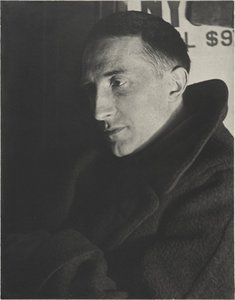
Marcel Duchamp
1887 - 1968 , França
Dados Rápidos
- Artistic Movement Or Style:
- Cubismo
- Dadaísmo
- Artists Or Movements Influenced By This Artist: ['Minimalismo']
- Date Of Birth: 28 Jul 1887 Blainville
- Date Of Death: 2 Oct 1968
- Full Name: Marcel Duchamp Henri-Robert-Marcel
- Nationality: Francês-Americano
- Notable Artworks:
- Fonte
- L.H.O.O.Q.
- Grande Cristal
- Place Of Birth: Normandia França
Artigos Relacionados
Marcel Duchamp: Challenging Conventions & Redefining Art in the 20th Century
Explore the revolutionary art of Marcel Duchamp! Discover how his Dadaist readymades challenged artistic conventions & redefined modern art. A deep dive into 'Fountain', conceptual shifts, and his lasting impact.

Paul Cézanne: As 25 Obras-Primas que Definiram um Gênio da Arte Moderna | OriginalUniqueArt
Descubra as 25 obras-primas de Paul Cézanne, o mestre do pós-impressionismo! Explore a história, técnica e cores vibrantes por trás de quadros icônicos como 'Les Baigneurs' e 'Mont Sainte-Victoire'. Encontre reproduções de arte exclusivas para decorar sua casa com elegância em OriginalUniqueArt.com.

Deconstructing Reality: Cubism's Evolution, Impact & Enduring Legacy
Explore the revolutionary world of Cubism with expert insights from OriginalUniqueArt. Discover Picasso & Braque's groundbreaking techniques, its philosophical roots, and lasting impact on modern art. Expert appraisal & custom reproductions available.
Deconstructing Reality: A Comprehensive Exploration of Synthetic Cubism's Evolution & Impact
Explore the revolutionary world of Synthetic Cubism! Discover its origins, key artists like Picasso & Braque, techniques, and lasting impact on modern art. A comprehensive guide for enthusiasts.
Deconstructing Reality: Cubism's Revolutionary Impact on 20th-Century Art
Explore the revolutionary world of Cubism with OriginalUniqueArt. Discover Picasso & Braque's groundbreaking techniques, its philosophical roots, and lasting impact on modern art. Expert insights for collectors.


