

 Visualizar em escala
 Enviar
 Compartilhar
 Ver detalhes
 Guia de Obras do Aluno

 Baixar imagem
 Semelhantes
 Raio X
 Apresentação de slides
 Estatísticas
Chocolate Grinder No.2


 Ver mais
A obra de arte exibida nesta página é protegida por leis de direitos autorais, o que significa que não podemos criar ou vender legalmente uma reprodução idêntica. Esta proteção é aplicada por meio de acordos internacionais, tais como a Convenção de Berna e pelas leis nacionais, incluindo as estabelecidas por Lei de Direitos Autorais dos EUA - Título 17.
Este método cumpre plenamente as regulamentações de direitos autorais, pois não envolve a cópia ou duplicação da obra protegida. Em vez disso, trata-se de uma reinterpretação criativa — uma nova pintura que é influenciada pela original, mas não idêntica a ela.
Giclée / Impressão de Arte
Impressão giclée ou em tela de qualidade de museu, com produção rápida e opções flexíveis de acabamento. ( Encomendar reprodução pintada à mão Ver Imagem Digital)




P118B €10

P118H €10

P118W €10

P438Z €10

P508JH €12

P508YH €12

P805H €10

P805Z €10

P919BZ €10

P919G €10

P919XJ €10

P959ZH €10

P968JZ €12

W106C €8

W218G €10

W218JH €8

W218Y €10

W307PJ €10

W316G €10

W316PJ €8

W316Y €10

W398PJ €8

W4111J €10

W500HY €15

W500JH €15

W692G €12

W849H €8

W940BG €15

W953PJ €8




Escolha entre os nossos tamanhos pré-definidos que respeitam as proporções originais da obra de arte.

Digite a largura e a altura de que necessita, para se ajustar à sua moldura ou à sua parede. Uma impressão só pode ser cortada, nunca ampliada além da imagem original, pelo que um tamanho com uma proporção diferente perderá parte da imagem. Enviamos-lhe uma maquete digital para aprovação antes de imprimirmos qualquer coisa. A imagem apresentada nesta página não mostra o corte real — apenas a maquete o faz.
Entrega mundial () em 2 semanas, em vez das 4/5 semanas padrão. (22 Outubro)

Envio expresso gratuito para todo o mundo

Tela de Linho Premium

Seguro de transporte total

Garantia de Reembolso de Impostos Alfandegários

Garantia de Fidelidade de Cor

Política de Devolução em 100 Dias (Apenas para Defeitos)

Garantia de reembolso de 100%

Desconto para múltiplas unidades
 A opção de vidro está disponível apenas para tamanhos inferiores a 110 cm

Chocolate Grinder No.2
Giclée / Impressão de Arte
Dimensões da Reprodução
-


Preço Total
€ 70
A Radical Gesture of Everyday Art
Marcel Duchamp’s “Chocolate Grinder No.2,” created in 1914, stands as a cornerstone of Dada and Conceptual Art—a defiant challenge to the conventions of artistic expression that continues to resonate today. More than just a depiction of an ordinary object, it embodies Duchamp's profound interrogation of what constitutes art itself, marking him as one of the most influential figures in 20th-century visual culture.Conceptual Framework: Beyond Representation
Duchamp’s artistic trajectory was deeply intertwined with movements like Cubism and Dada, reflecting his restless intellectual curiosity and rejection of traditional aesthetic ideals. He famously declared that he wanted to “destroy art,” not by attacking its form but by questioning its very essence—a sentiment powerfully articulated in the artwork's conceptual underpinning. The piece utilizes the readymade concept – elevating a commonplace item like a chocolate grinder, mounted upside down on a wooden stool – into an artistic statement through deliberate selection and presentation. This act deliberately disrupts established hierarchies of value, prompting viewers to reconsider their assumptions about beauty and originality.Artistic Style and Technique: Geometric Precision Meets Industrial Aesthetic
The painting’s visual language is characterized by geometric forms—primarily circles—arranged in a meticulously planned composition that echoes the influence of Cubism's fragmentation of perspective. However, unlike Cubist explorations of spatial illusion, Duchamp prioritizes structural clarity and precision, mirroring the aesthetic sensibilities of industrial design. The subdued color palette contributes to an atmosphere of understated elegance, emphasizing the materiality of the canvas and thread used in its execution. As seen in other seminal works like “Transition of Virgin into a Bride_Le Passage de la Vierge à la Mariée,” Duchamp blends Cubist fragmentation with Expressionist emotional intensity—a stylistic fusion that creates a captivating visual experience.Historical Context: Dada’s Rebellion Against Tradition
“Chocolate Grinder No.2” emerged during the turbulent period of Dadaism, a movement born from disillusionment with the horrors of World War I and fueled by an uncompromising rejection of artistic conventions. Duchamp's embrace of chance and his appropriation of found objects—such as the urinal “Fountain”—were central to Dada’s ethos—a deliberate provocation aimed at dismantling accepted norms and questioning the role of art in society. The artwork’s placement within the Philadelphia Museum of Art underscores its significance as a pivotal moment in the evolution of modern art, inspiring subsequent movements like Pop Art and Minimalism.Legacy and Impact: An Enduring Influence
“Chocolate Grinder No.2” cemented Duchamp's reputation as an innovator—a figure who fundamentally altered the landscape of artistic thought. Its influence extends far beyond its immediate stylistic context, serving as a catalyst for debates about authorship, originality, and the definition of art itself. As noted in “The Greatest most famous Paintings of all time,” Duchamp’s pioneering approach continues to inspire artists today—demonstrating the enduring power of conceptual art to challenge perceptions and provoke critical reflection.Perguntas e Respostas
Que técnica e estilo caracterizam "Chocolate Grinder No.2" de Marcel Duchamp?
"Chocolate Grinder No.2" é feita em Acrílico sobre tela, no estilo A obra de Marcel Duchamp está profundamente influe.
Que humor e emoção "Chocolate Grinder No.2" de Marcel Duchamp expressa?
"Chocolate Grinder No.2" de Marcel Duchamp transmite um sentimento Reflexivo dentro de uma atmosfera geral Industrial.
"Chocolate Grinder No.2" de Marcel Duchamp é uma pintura, um desenho ou uma gravura?
No catálogo, "Chocolate Grinder No.2" de Marcel Duchamp está registrado como Arte de Parede. A categoria ajuda a encontrar obras semelhantes.
Biografia do Artista
Um Espírito Revolucionário: A Vida e a Arte de Marcel Duchamp
Marcel Duchamp, nascido Henri-Robert-Marcel Duchamp em 1887, em Blainville-Crevon, Normandia, foi muito mais do que um artista; ele foi um provocador filosófico que alterou fundamentalmente o curso da arte moderna. Sua vida inicial, embora aparentemente convencional – nutrida no seio de uma família que apreciava a expressão artística, com ambos os irmãos seguindo carreiras bem-sucedidas como artistas – prenunciava o iconoclasmo que estava por vir. Duchamp buscou inicialmente uma formação formal, dominando técnicas tradicionais e experimentando estilos pós-impressionistas. No entanto, essa base acadêmica não serviu como um fim em si mesma, mas como um trampolim para questionar a própria natureza da arte, seu propósito e sua definição. Ele não se contentava apenas em retratar o mundo; ele buscava desafiar a forma como o percebemos e o que constitui o valor artístico. Essa curiosidade intelectual inquieta tornaria-se a característica definidora de sua carreira prolífica.Do Cubismo ao Dadaísmo: Uma Rejeição à Convenção
A jornada artística de Duchamp foi marcada por uma evolução constante, um desprendimento deliberado das normas estabelecidas. Seu envolvimento inicial com o Cubismo, evidente em obras como Retrato de Jogadores de Xadrez (1911), demonstrou um interesse por formas fragmentadas e múltiplas perspectivas – um afastamento da representação tradicional. Contudo, ele rapidamente foi além das preocupações puramente estéticas, reconhecendo que simplesmente reorganizar elementos visuais não era suficiente para abordar as questões mais profundas que o inquietavam. Os horrores da Primeira Guerra Mundial alimentaram esse descontentamento, levando Duchamp a abraçar o Dadaísmo, um movimento nascido do desilusão e de uma rejeição à lógica, à razão e aos valores artísticos tradicionais. Foi dentro da estrutura dadaísta que Duchamp verdadeiramente começou a desmantelar as noções convencionais de arte. Ele não estava interessado em criar objetos belos; ele queria provocar o pensamento, desafiar suposições e expor a arbitrariedade do julgamento estético. Este período testemunhou o nascimento de sua inovação mais radical: o "readymade".Os Readymades e a Subversão da Arte
A introdução dos readymades – objetos manufaturados comuns, selecionados e apresentados como arte – foi a contribuição mais significativa de Duchamp para o século XX. Estes não eram simplesmente objetos encontrados; eram atos deliberados de subversão artística. Ao pegar um item cotidiano, como um urinol (Fonte, 1917), assiná-lo como “R. Mutt” e submetê-lo a uma exposição de arte, Duchamp desafiou a própria definição de habilidade e autoria artística. Seria a mão do artista que criava a obra, ou seria a ideia do artista? Esta questão tornou-se central em sua prática e lançou as bases para a Arte Conceitual. Outros readymades notáveis, como L.H.O.O.Q. (1919), uma reprodução em cartão-postal da Mona Lisa desfigurada com um bigode e cavanhaque, foram críticas lúdicas, porém incisivas, da história da arte e dos ícones culturais estabelecidos. Estas obras não tinham o intuito de serem admiradas por suas qualidades estéticas; elas pretendiam provocar debates e forçar os espectadores a reconsiderarem suas noções preconcebidas sobre o que constitui a arte. Duchamp acreditava que a arte deveria residir na mente, e não meramente no olhar.Legado e Influência Duradoura
O impacto de Marcel Duchamp nas gerações subsequentes de artistas é imensurável. Ele alterou fundamentalmente nossa compreensão da arte, abrindo caminho para movimentos como a Arte Conceitual, o Minimalismo, a Pop Art e tantos outros. Sua ênfase na ideia do artista – o conceito por trás da obra – sobre suas qualidades estéticas continua a inspirar artistas hoje.- Cubismo: Exploração inicial de formas fraturadas e representação espacial.
- Dadaísmo: Rejeição da lógica, da razão e dos valores artísticos tradicionais em resposta à Primeira Guerra Mundial.
- Arte Conceitual: Ênfase na ideia por trás da obra de arte em vez de suas qualidades estéticas.
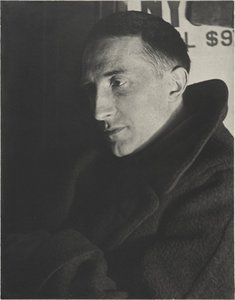
Marcel Duchamp
1887 - 1968 , França
Informações Rápidas
- Artistic Movement Or Style:
- Cubismo
- Dadaísmo
- Artists Or Movements Influenced By This Artist: ['Minimalismo']
- Date Of Birth: 28 Jul 1887 Blainville
- Date Of Death: 2 Oct 1968
- Full Name: Marcel Duchamp Henri-Robert-Marcel
- Nationality: Francês-Americano
- Notable Artworks:
- Fonte
- L.H.O.O.Q.
- Grande Cristal
- Place Of Birth: Normandia França
Artigos Relacionados

Beyond Form & Color: Geometric Abstraction's Evolution in 20th/21st Century Art
Explore the evolution of geometric abstraction from Cubism to contemporary art. Discover key artists like Malevich & Mondrian, investment insights, and expert collecting advice at OriginalUniqueArt.

Neo-Abstract Art: The High-Impact Evolution of Modern Visual Energy and Geometric Sophistication
Discover the power of Neo-Abstract art. Explore how bold geometric forms and high-impact visual energy are redefining modern design. Learn to curate sophisticated, high-energy spaces with the latest trends in contemporary abstraction and structural color.

Abstração Geométrica: 10 Obras-Primas que Moldaram a Arte Moderna | OriginalUniqueArt.com
Descubra as 10 obras-primas da Abstração Geométrica que revolucionaram a arte moderna! Explore Kandinsky, Mondrian e outros artistas icônicos. Encontre reproduções de alta qualidade para decorar sua casa com OriginalUniqueArt.com.
Fernand Léger: As 25 Obras-Primas que Definem um Ícone da Arte Moderna | OriginalUniqueArt
Descubra as 25 obras-primas de Fernand Léger, pioneiro do tubismo e da arte moderna. Explore a história, cores vibrantes e técnicas inovadoras por trás de seus quadros icônicos. Encontre reproduções de alta qualidade para decorar sua casa com estilo em OriginalUniqueArt.com.

Beyond Form & Color: Geometric Abstraction's Enduring Legacy in Art History
Explore the captivating world of geometric abstraction! Discover its origins, key artists like Malevich & Mondrian, and why this movement remains highly valued by art collectors today. Expert insights at OriginalUniqueArt.


