() ·

A painting made for you, by hand

Chess Game

Reprodução em Óleo Feita à Mão

Óleo sobre tela pintado à mão no tamanho e moldura de sua escolha, feito sob encomenda pelos nossos artistas. ( Alternar para Impressão Alternar para Imagem Digital)

Descrição do Item

Experience Marcel Duchamp's 'The Chess Game,' a captivating post-impressionist oil painting from 1910. Explore themes of boredom, social constraints & Cubism at OriginalUniqueArt.com.

Biografia do Artista

Marcel Duchamp: Artista revolucionário que desafiou a definição de arte com o Dadaísmo e readymades como 'Fountain'. Explore suas obras icônicas e seu impacto filosófico.

from ·

Chapter 1

How large should it be?

Slide to change the size; the picture on the left shows the frame at its real width. The proportions of the original are kept.

Tamanho padrão
personalizado
CM
INCH

Escolha entre os nossos tamanhos pré-definidos que respeitam as proporções originais da obra de arte.

largura
altura

Insira a largura e a altura desejadas para se ajustarem à sua moldura ou parede. Como esta obra é pintada à mão, para um tamanho com proporções diferentes, o artista poderá pintar um pouco mais ao redor da imagem ou reduzir ligeiramente a composição — você escolhe. Enviamos uma maquete digital para sua aprovação antes de iniciar a pintura. A imagem exibida nesta página não representa o resultado real — apenas a maquete mostra o resultado final.

Chapter 2

How should it arrive?

Choose the edges of the stretched canvas

Choose your frame

Corner sample of the WhiteWrap canvas edge finish, stretched on madeira maciça bars
White €1
Corner sample of the BlurSideWrap canvas edge finish, stretched on madeira maciça bars
Blurside €1
Corner sample of the ExtendedWrap canvas edge finish, stretched on madeira maciça bars
Extended €1
Corner sample of the P118B picture frame: poliestireno moldado, 5 cm wide and 3 cm thick
P118B €10
Corner sample of the P118H picture frame: poliestireno moldado, 5 cm wide and 3 cm thick
P118H €10
Corner sample of the P118W picture frame: poliestireno moldado, 5 cm wide and 3 cm thick
P118W €10
Corner sample of the P438Z picture frame: poliestireno moldado, 5.5 cm wide and 3.5 cm thick
P438Z €10
Corner sample of the P508JH picture frame: poliestireno moldado, 7 cm wide and 3.5 cm thick
P508JH €12
Corner sample of the P508YH picture frame: poliestireno moldado, 7 cm wide and 3.5 cm thick
P508YH €12
Corner sample of the P805H picture frame: poliestireno moldado, 5 cm wide and 3.5 cm thick
P805H €10
Corner sample of the P805Z picture frame: poliestireno moldado, 5 cm wide and 3.5 cm thick
P805Z €10
Corner sample of the P919BZ picture frame: poliestireno moldado, 7 cm wide and 3.5 cm thick
P919BZ €10
Corner sample of the P919G picture frame: poliestireno moldado, 7 cm wide and 3.5 cm thick
P919G €10
Corner sample of the P919XJ picture frame: poliestireno moldado, 7 cm wide and 3.5 cm thick
P919XJ €10
Corner sample of the P959ZH picture frame: poliestireno moldado, 5 cm wide and 3 cm thick
P959ZH €10
Corner sample of the P968JZ picture frame: poliestireno moldado, 6 cm wide and 4 cm thick
P968JZ €12
Corner sample of the W106C picture frame: madeira maciça, 5 cm wide and 3 cm thick
W106C €8
Corner sample of the W218G picture frame: madeira maciça, 5 cm wide and 3 cm thick
W218G €10
Corner sample of the W218JH picture frame: madeira maciça, 5 cm wide and 3 cm thick
W218JH €8
Corner sample of the W218Y picture frame: madeira maciça, 5 cm wide and 3 cm thick
W218Y €10
Corner sample of the W307PJ picture frame: madeira maciça, 6 cm wide and 3 cm thick
W307PJ €10
Corner sample of the W316G picture frame: madeira maciça, 6 cm wide and 3 cm thick
W316G €10
Corner sample of the W316PJ picture frame: madeira maciça, 6 cm wide and 3 cm thick
W316PJ €8
Corner sample of the W316Y picture frame: madeira maciça, 6 cm wide and 3 cm thick
W316Y €10
Corner sample of the W398PJ picture frame: madeira maciça, 5 cm wide and 3 cm thick
W398PJ €8
Corner sample of the W4111J picture frame: madeira maciça, 6.5 cm wide and 3.5 cm thick
W4111J €10
Corner sample of the W500HY picture frame: madeira maciça, 7 cm wide and 5 cm thick
W500HY €15
Corner sample of the W500JH picture frame: madeira maciça, 7 cm wide and 5 cm thick
W500JH €15
Corner sample of the W692G picture frame: madeira maciça, 8 cm wide and 4 cm thick
W692G €12
Corner sample of the W849H picture frame: madeira maciça, 5 cm wide and 3 cm thick
W849H €8
Corner sample of the W940BG picture frame: madeira maciça, 7.5 cm wide and 4.5 cm thick
W940BG €15
Corner sample of the W953PJ picture frame: madeira maciça, 6 cm wide and 3.5 cm thick
W953PJ €8
Corner sample of the H24-GOLD picture frame: madeira entalhada com gesso, 10 cm wide and 6 cm thick
H24-GOLD €30
Corner sample of the H24-SILVER picture frame: madeira entalhada com gesso, 10 cm wide and 6 cm thick
H24-SILVER €30
Corner sample of the H36-GOLD picture frame: madeira entalhada com gesso, 15 cm wide and 6.5 cm thick
H36-GOLD €45
Corner sample of the H36-SILVER picture frame: madeira entalhada com gesso, 15 cm wide and 6.5 cm thick
H36-SILVER €45
Prévia da moldura
Com moldura

Moulding: . Overall size with the frame: .

Chapter 3

Who paints it, and should anything change?

Examples of what can be changed: Replace face with customer photo; Add pet (e.g., replace cat with dog); Include hidden message in background; Change background landscape or elements.
After order, OriginalUniqueArt.com team will email client for instructions and provide a mockup preview

Entrega mundial () em 3 a 4 semanas, em vez das 5 semanas padrão. (1 Novembro). Sem comprometer a qualidade.

Chapter 4

The finishing touches

A nameplate, as in a museum?

Detalhes da Placa de Bronze Gravada

This elegant plaque features the artist's name and the title of the artwork, finely engraved for a timeless presentation.

It is made from bronze with a refined, elegant finish. The text is precisely laser-engraved for a sharp and permanent result. Measuring 9x2 cm, the plaque is compact yet easy to read. It's built to be durable and scratch-resistant, offering a professional, museum-quality look. Mounting is simple thanks to the included adhesive backing.

Detalhes da Placa de Acrílico Transparente

The plaque includes essential engraved details such as the artist's name, the title of the artwork, the date it was created, the type of media used-like oil on canvas or watercolor-a brief description of the piece, and a QR code that links to the complete artwork information.

It is crafted from clear acrylic, offering a sleek, modern appearance. The text is UV-engraved in black to ensure strong visual contrast. With a size of 10x15 cm, it ensures optimal readability. It comes equipped with two metal hooks for secure wall mounting. The plaque is designed to be weather-resistant, making it suitable for various environments, and it includes interactive features that work seamlessly with smartphone scanning.

Detalhes da Placa de Acrílico Preto

This elegant plaque includes engraved information such as the artist's name, the title of the artwork, the date it was created, the type of media used (like oil on canvas or watercolor), a short description of the artwork, and a QR code for quick access to more information.

The plaque itself is made from refined black acrylic with a premium finish. The text is laser-engraved in white for high contrast and readability. Its size is 10x15 cm, designed to be easy to read. It comes with two metal hooks for professional mounting. The design is sleek and fits any interior style. It is also weather-resistant and durable, with built-in digital integration for mobile compatibility.

A protective varnish?

When do you need it?

Chapter 5

Your painting, as you ordered it

Chess Game

Técnica de Reprodução

Tamanho da Reprodução

-

Artista Sênior de Elite

Mais detalhes, refinamento e tempo de produção adicional

-

Moldura para Reprodução

-

-

Para obras de arte ou reproduções com mais de 105 cm (aproximadamente 41 polegadas) em qualquer um dos lados, a moldura será enviada como um kit desmontado. Este método garante uma entrega segura e evita danos durante o transporte.

Montagem profissional necessária — este não é um produto DIY (faça você mesmo).
O kit deve ser montado e a tela esticada por um profissional de molduraria experiente, utilizando cola de madeira (não inclusa), um alicate de esticar tela e grampos para manter as travessas alinhadas enquanto a cola seca. A montagem incorreta ou a tensão desigual da tela podem danificar permanentemente a obra de arte e não estão cobertas pela nossa garantia.

  • Todas as barras de madeira maciça estão incluídas, precisamente cortadas ao tamanho certo.

  • Montado com os parafusos fornecidos, além de cola para madeira para as junções dos cantos, que não está inclusa e deve ser providenciada pelo seu moldurista.

  • São necessárias ferramentas profissionais não incluídas: um alicate de estiramento de tela (esticador) e grampos para manter as ripas alinhadas enquanto a cola seca.

Importante:
As junções dos cantos requerem cola para madeira, as ripas devem ser mantidas com grampos até que a cola esteja completamente seca, e o estiramento da tela na moldura montada requer um alicate de esticar tela. Nenhum destes itens está incluído no kit. Por favor, certifique-se de contar com um profissional de molduraria experiente antes de encomendar este tamanho.

Etiqueta de identificação

-

-

Verniz de Proteção

Verniz brilhante (realça as cores e protege contra a luz e a umidade)

-

Personalizar minha obra

Exemplos de alterações possíveis: Substituir o rosto por uma foto do cliente; Adicionar um animal de estimação (ex.: substituir gato por cachorro); Incluir uma mensagem oculta no fundo; Alterar a paisagem ou os elementos do fundo.

-

Urgente

Entrega mundial () em 3 a 4 semanas, em vez das 5 semanas padrão. (1 Novembro). Sem comprometer a qualidade.

-

Envio Expresso

Entrega mundial para em 5 semanas. (8 Novembro).

Com envio incluído

Preço Total

€ 267

Preço Total € 267

A opção de vidro está disponível apenas para tamanhos inferiores a 110 cm

Included with every order

  • Envio expresso gratuito para todo o mundo
  • Tela de Linho de Alta Qualidade
  • Seguro de transporte completo
  • Garantia de Reembolso de Impostos Alfandegários
  • Garantia de Fidelidade Cromática
  • Política de Devolução em 100 Dias (Apenas para Defeitos)
  • Garantia de reembolso de 100%
  • Oferta de desconto por quantidade

A Game of Shadows: Marcel Duchamp’s “The Chess Game”

Marcel Duchamp's "The Chess Game," painted in 1910, isn’t merely a depiction of a game; it’s a meticulously crafted tableau of ennui, social constraint, and the burgeoning anxieties of modern life. Housed within the walls of the Philadelphia Museum of Art, this oil on canvas invites viewers into a world where strategic decisions collide with unspoken tensions, all rendered in Duchamp's signature post-impressionist style – a deliberate departure from the naturalistic focus of his predecessors. The painting’s power lies not just in its visual elements but in the complex web of symbolism it weaves, reflecting the intellectual currents of early 20th-century Europe and hinting at Duchamp’s revolutionary approach to art itself.

Duchamp's artistic journey leading up to "The Chess Game" was marked by a restless experimentation. Initially drawn to Cubism – evident in his earlier work, *Portrait of Chess Players* – he soon found himself increasingly dissatisfied with the purely formal concerns of the movement. He sought to capture not just the appearance of objects but their underlying essence, their emotional weight. This pursuit led him toward Dadaism and ultimately, Conceptual Art, where the idea behind a work often superseded its physical form. “The Chess Game” embodies this shift, prioritizing atmosphere and psychological suggestion over straightforward representation.

  • Post-Impressionist Influence: Duchamp’s use of bold colors – particularly the muted greens and browns that dominate the scene – is characteristic of post-impressionism. However, he employs these colors not to faithfully reproduce reality but to evoke a specific mood: one of quiet desperation and stifled energy.
  • Gustave Flaubert's Echoes: The painting’s pervasive sense of boredom and restlessness directly reflects the themes explored by Gustave Flaubert in *Madame Bovary*. Duchamp, deeply influenced by Flaubert’s exploration of female dissatisfaction and the limitations imposed upon women in 19th-century society, uses the chess game as a metaphor for life itself – a strategic battle fought within restrictive social boundaries.
  • Brotherly Portraiture: The inclusion of Duchamp's brothers, Raymond and Jacques Villon, alongside their wives, Yvonne and Gaby, is particularly significant. Their postures—hunched over the chessboard, Yvonne reclining languidly on the grass, Gaby nervously fiddling with a tea set—suggest a subtle power dynamic. The exclusion of the women from the game underscores the societal constraints placed upon them at the time, highlighting their limited roles and unspoken frustrations.

The Scene Unfolds: A Garden of Contemplation

The setting itself is crucial to understanding the painting’s emotional impact. It's a meticulously rendered garden scene, yet one devoid of warmth or vitality. The furniture—a table laden with cups, bowls, and spoons—suggests a comfortable domesticity, but it’s juxtaposed against the palpable sense of unease. The chessboard, positioned at the center of the composition, becomes a potent symbol: a battlefield where men engage in intellectual warfare while women are relegated to the periphery. The careful arrangement of objects – the strategically placed cups and bowls, the precise positioning of the chairs – creates a visual rhythm that mirrors the strategic thinking required for success in chess, yet simultaneously underscores the artificiality of the situation.

Symbolism and the Chessboard as Metaphor

Beyond its immediate depiction, “The Chess Game” is rich with symbolic meaning. The chessboard itself represents life’s complexities – a series of choices, strategies, and potential outcomes. The players, engrossed in their game, are trapped within this metaphorical landscape, navigating challenges and making decisions that shape their destinies. Duchamp's brothers, as the dominant figures at the table, embody the masculine ideals of the era—intellectual prowess, strategic thinking, and a perceived control over their own lives. The exclusion of the women suggests a critique of patriarchal structures and the limited opportunities available to women in that society. Yvonne’s semi-recumbent position speaks to a sense of passive acceptance, while Gaby's nervous fidgeting hints at suppressed anxieties.

Artistic Significance and Reproduction

“The Chess Game” stands as a pivotal work in Duchamp’s artistic development, demonstrating his early experimentation with post-impressionism and foreshadowing his later embrace of Cubism and Conceptual Art. It's a remarkably prescient painting, capturing the anxieties and social tensions of its time while simultaneously anticipating the radical shifts that would transform the art world in the 20th century. OriginalUniqueArt.com offers meticulously crafted oil painting reproductions of this captivating masterpiece, ensuring that every detail—from the subtle nuances of color to the intricate textures of the furniture—is faithfully recreated. These handmade reproductions provide a tangible connection to Duchamp’s revolutionary vision, allowing art enthusiasts and collectors alike to experience the power and beauty of “The Chess Game” in their own homes.
  • High-Quality Reproduction: Our skilled artists use traditional oil painting techniques to meticulously recreate Duchamp's original work, capturing its unique atmosphere and emotional depth.
  • Authentic Materials: We employ only the finest pigments and canvases to ensure that our reproductions are durable and visually stunning.
  • A Window into Modernity: Own a piece of art history and gain a deeper understanding of Duchamp’s artistic vision.

Explore more post-impressionist masterpieces and discover the beauty of handmade art at Marcel Duchamp: Chess Game and The Chess Game on OriginalUniqueArt.com.

Perguntas e Respostas

Como "Chess Game" se posiciona entre os temas recorrentes de Marcel Duchamp?

Entre os temas recorrentes de Marcel Duchamp — post-impressionism, flaubert’s ennui, cubist elements, distorted forms, early experimentation, chess game series, dada precursors, exploring modern life — "Chess Game" traz seu próprio foco em chess, game, boredom, women, exclusion, flaubert, garden, strategy.

Qual tamanho de reprodução é sugerido para "Chess Game", de Marcel Duchamp?

O tamanho de impressão recomendado para "Chess Game", de Marcel Duchamp é Medium.

Qual é o formato de "Chess Game"?

"Chess Game", de Marcel Duchamp é uma composição em Landscape. Vale a pena conferir as proporções antes de escolher o tamanho da impressão.

More about this painting

Visualizar na parede Visualizar em RA Alternar para Impressão Alternar para Imagem Digital Compartilhar
Detalhes Guia Adicionar aos favoritos Baixar imagem Semelhantes Raio X Ver diaporama Q&A Estatísticas

In numbers

  • 1910the year it was painted
  • 29frames to choose from
  • standard sizes, in its own proportions
  • 5weeks to paint and deliver it

About the original

Dimensões
114.0 x 146.0 cm
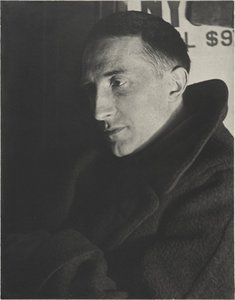
Marcel Duchamp

Marcel Duchamp

1887 - 1968, França

Quick facts about Marcel Duchamp

  • Artistic Movement Or Style:
    • Cubismo
    • Dadaísmo
  • Artists Or Movements Influenced By This Artist: ['Minimalismo']
  • Date Of Birth: 28 Jul 1887 Blainville
  • Date Of Death: 2 Oct 1968
  • Full Name: Marcel Duchamp Henri-Robert-Marcel
  • Nationality: Francês-Americano
  • Notable Artworks:
    • Fonte
    • L.H.O.O.Q.
    • Grande Cristal
  • Place Of Birth: Normandia França

Biografia do Artista

Um Espírito Revolucionário: A Vida e a Arte de Marcel Duchamp

Marcel Duchamp, nascido Henri-Robert-Marcel Duchamp em 1887, em Blainville-Crevon, Normandia, foi muito mais do que um artista; ele foi um provocador filosófico que alterou fundamentalmente o curso da arte moderna. Sua vida inicial, embora aparentemente convencional – nutrida no seio de uma família que apreciava a expressão artística, com ambos os irmãos seguindo carreiras bem-sucedidas como artistas – prenunciava o iconoclasmo que estava por vir. Duchamp buscou inicialmente uma formação formal, dominando técnicas tradicionais e experimentando estilos pós-impressionistas. No entanto, essa base acadêmica não serviu como um fim em si mesma, mas como um trampolim para questionar a própria natureza da arte, seu propósito e sua definição. Ele não se contentava apenas em retratar o mundo; ele buscava desafiar a forma como o percebemos e o que constitui o valor artístico. Essa curiosidade intelectual inquieta tornaria-se a característica definidora de sua carreira prolífica.

Do Cubismo ao Dadaísmo: Uma Rejeição à Convenção

A jornada artística de Duchamp foi marcada por uma evolução constante, um desprendimento deliberado das normas estabelecidas. Seu envolvimento inicial com o Cubismo, evidente em obras como Retrato de Jogadores de Xadrez (1911), demonstrou um interesse por formas fragmentadas e múltiplas perspectivas – um afastamento da representação tradicional. Contudo, ele rapidamente foi além das preocupações puramente estéticas, reconhecendo que simplesmente reorganizar elementos visuais não era suficiente para abordar as questões mais profundas que o inquietavam. Os horrores da Primeira Guerra Mundial alimentaram esse descontentamento, levando Duchamp a abraçar o Dadaísmo, um movimento nascido do desilusão e de uma rejeição à lógica, à razão e aos valores artísticos tradicionais. Foi dentro da estrutura dadaísta que Duchamp verdadeiramente começou a desmantelar as noções convencionais de arte. Ele não estava interessado em criar objetos belos; ele queria provocar o pensamento, desafiar suposições e expor a arbitrariedade do julgamento estético. Este período testemunhou o nascimento de sua inovação mais radical: o "readymade".

Os Readymades e a Subversão da Arte

A introdução dos readymades – objetos manufaturados comuns, selecionados e apresentados como arte – foi a contribuição mais significativa de Duchamp para o século XX. Estes não eram simplesmente objetos encontrados; eram atos deliberados de subversão artística. Ao pegar um item cotidiano, como um urinol (Fonte, 1917), assiná-lo como “R. Mutt” e submetê-lo a uma exposição de arte, Duchamp desafiou a própria definição de habilidade e autoria artística. Seria a mão do artista que criava a obra, ou seria a ideia do artista? Esta questão tornou-se central em sua prática e lançou as bases para a Arte Conceitual. Outros readymades notáveis, como L.H.O.O.Q. (1919), uma reprodução em cartão-postal da Mona Lisa desfigurada com um bigode e cavanhaque, foram críticas lúdicas, porém incisivas, da história da arte e dos ícones culturais estabelecidos. Estas obras não tinham o intuito de serem admiradas por suas qualidades estéticas; elas pretendiam provocar debates e forçar os espectadores a reconsiderarem suas noções preconcebidas sobre o que constitui a arte. Duchamp acreditava que a arte deveria residir na mente, e não meramente no olhar.

Legado e Influência Duradoura

O impacto de Marcel Duchamp nas gerações subsequentes de artistas é imensurável. Ele alterou fundamentalmente nossa compreensão da arte, abrindo caminho para movimentos como a Arte Conceitual, o Minimalismo, a Pop Art e tantos outros. Sua ênfase na ideia do artista – o conceito por trás da obra – sobre suas qualidades estéticas continua a inspirar artistas hoje.
  • Cubismo: Exploração inicial de formas fraturadas e representação espacial.
  • Dadaísmo: Rejeição da lógica, da razão e dos valores artísticos tradicionais em resposta à Primeira Guerra Mundial.
  • Arte Conceitual: Ênfase na ideia por trás da obra de arte em vez de suas qualidades estéticas.
Sua obra continua a provocar debates e a desafiar os espectadores a reconsiderarem suas suposições sobre criatividade e expressão artística. Duchamp não era simplesmente um artista; ele era um filósofo, um provocador e um revolucionário que ousou questionar tudo. Ele permanece como uma figura central nas discussões sobre a natureza da arte e seu papel na sociedade, com seu legado ressoando poderosamente no mundo da arte contemporânea. O Grande Vidro (1915-1923), com seu simbolismo complexo e imagens enigmáticas, ergue-se como um testemunho de seu rigor intelectual e influência duradoura. A obra de Duchamp não trata de fornecer respostas; trata-se de fazer perguntas – perguntas que continuam a nos desafiar e a nos inspirar hoje.

Informações Rápidas

  • Dimensions: 114 x 146 cm
  • Artistic style: Cubist influence
  • Year: 1910
  • Influences: Flaubert
  • Location: Philadelphia Museum
  • Movement: Post-Impressionism

Quiz de Arte

Cada pergunta possui apenas uma resposta correta.

Pergunta 1:
What artistic movement is Marcel Duchamp primarily associated with in this painting?
Pergunta 2:
The scene depicted in 'The Chess Game' primarily reflects which theme?
Pergunta 3:
Which literary work heavily influenced Duchamp's interpretation of the scene in 'The Chess Game'?
Pergunta 4:
What is the significance of the exclusion of Yvonne and Gaby from the chess game in the painting?
Pergunta 5:
The chessboard itself serves as a metaphor for what concept within the painting?