

 Visualizar em escala
 Enviar
 Compartilhar
 Ver detalhes

 Baixar
 Semelhantes
 Raio X
 Apresentação de slides
bicyclewheel001

 Ver mais
Adquira uma imagem digital de alta resolução e aprimorada, muito superior à prévia online.
Cada arquivo é meticulosamente preparado por nossos especialistas internos, utilizando ferramentas avançadas e retoques manuais de alta precisão. Garantimos que cada imagem apresente clareza excepcional, fidelidade de cores e detalhes minuciosos.
O arquivo final é entregue por e-mail em até 72 horas, otimizado para uso imediato em ambientes profissionais, editoriais e de impressão. Esta é a mesma qualidade utilizada por estúdios de design de alto nível, editoras e galerias.
Imagem Digital
Baixe um arquivo de alta resolução para exibição pessoal, impressão e projetos criativos. ( Encomendar impressão Encomendar reprodução pintada à mão)
Incluído em cada pedido de imagem digital
Entrega Digital Especializada e Garantida
Ao escolher o OriginalUniqueArt.com, você não está apenas adquirindo uma imagem — você está recebendo uma obra de arte digital profissionalmente aprimorada, elaborada com precisão e com garantia de satisfação. Aqui está tudo o que acompanha seu pedido, automaticamente:

Entrega rápida por e-mail
O seu arquivo de imagem digital em alta resolução será enviado por e-mail em até 72 horas após o pedido — pronto para uso imediato.

Arquivo Digital com IA Otimizado
Sua obra de arte é otimizada profissionalmente por meio de ferramentas avançadas de IA e edição manual, garantindo o máximo de detalhes, clareza e precisão de cores.

Reenvio gratuito vitalício
Apagou ou perdeu o seu ficheiro acidentalmente? Não se preocupe – nós reenviamos para si a qualquer momento, gratuitamente.

Sem Taxas de Importação - Sempre
Desfrute da sua obra de arte instantaneamente, sem taxas alfandegárias, impostos ou custos de entrega — downloads digitais são sempre isentos de taxas.

Garantia de Precisão de Cores
Garantimos que sua imagem digital reflita as cores originais com a maior fidelidade possível, utilizando ferramentas profissionais e gerenciamento de cores.

Garantia de Satisfação de 60 Dias
Se você não estiver satisfeito com sua imagem digital, nós a revisaremos ou reembolsaremos 100% dentro de 60 dias — sem perguntas.

Garantia de Reembolso 100%
Não está satisfeito? Receba o reembolso total em até 60 dias após o recebimento do seu arquivo digital — sem perguntas.

Descontos para pedidos em lote
Compre 3 imagens, economize 10% - Compre 5, economize 15% - Compre 10+, economize 20%. Ideal para projetos criativos, galerias e agências.
Descrição do Colecionável
A Radical Gesture: Exploring Marcel Duchamp’s Bicyclewheel001
Marcel Duchamp's 'Bicyclewheel001', more than just an image, is a declaration—a defiant challenge to the conventions of artistic representation that continues to resonate with audiences today. Created in 1913 during the turbulent period of Dadaism, this deceptively simple artwork embodies the movement’s core ethos: questioning established norms and embracing absurdity as a pathway to truth. Duchamp himself famously dismissed any notion of purposeful creation, stating he merely “mounted” the bicycle wheel onto a stool—a deliberate act designed not to produce beauty but to provoke contemplation about what constitutes art itself.The Dadaist Context: Rejecting Reason’s Grip
Dada emerged from Zurich in response to the horrors of World War I, rejecting the optimism and intellectual certainty that characterized much of European culture at the time. Artists like Tristan Tzara, Hugo Ball, and Hans Arp sought to dismantle logic and rationality, favoring instead spontaneous gesture and irrational association. Dadaists viewed bourgeois society as corrupt and oppressive, believing it stifled creativity and genuine emotion. Duchamp’s embrace of this rebellious spirit is palpable in ‘Bicyclewheel001’, where the mundane object—a bicycle wheel and stool—is elevated to artistic significance through conceptual intervention. It's a deliberate antithesis to the meticulous realism championed by Impressionism and Post-Impressionism, signaling a profound shift in artistic priorities.A Study in Minimalism: Technique and Composition
The painting’s execution is remarkably understated. Duchamp employed oil paint on canvas—a technique familiar to him from his earlier explorations of Cubist influences—but applied it with minimal fuss. The black bicycle wheel dominates the composition, positioned upside down atop a white stool. This deliberate inversion disrupts our visual expectations and forces us to reconsider the object’s inherent qualities. The simplicity of the palette and the restrained brushstrokes contribute to the artwork's contemplative mood, mirroring the Dadaist preoccupation with rejecting decorative embellishment in favor of confronting fundamental questions about art’s role in society.Symbolism Beyond Appearances: Challenging Artistic Definitions
While seemingly devoid of overt symbolism, ‘Bicyclewheel001’ operates on a deeper level. The bicycle wheel itself represents movement—a rejection of static representation and an embrace of dynamism. Its upside-down orientation symbolizes inversion, questioning accepted hierarchies and challenging conventional notions of beauty. Duchamp's refusal to ascribe intention to the artwork underscores his belief that art should exist independently of the artist’s conscious effort, prompting viewers to consider whether a work can be considered “art” simply by its presence.Emotional Resonance: A Reflection on Perception
Ultimately, ‘Bicyclewheel001’ invites us to engage in an emotional dialogue with the artwork. It's not about eliciting pleasure or conveying narrative; rather, it encourages introspection and prompts us to confront our own assumptions about art and aesthetics. Duchamp’s masterpiece serves as a powerful reminder that art can be transformative—capable of disrupting complacency and fostering critical engagement with the world around us. Its enduring legacy lies in its unwavering commitment to questioning established conventions and prioritizing conceptual thought over visual spectacle.- Consider commissioning a high-quality reproduction from OriginalUniqueArt.com for your home or gallery.
Biografia do Artista
Marcel Duchamp, A Revolutionary Spirit: The Life and Art of Marcel Duchamp
Marcel Duchamp, born Henri-Robert-Marcel Duchamp in 1887 in Blainville-Crevon, Normandy, was more than an artist; he was a philosophical provocateur who fundamentally altered the course of modern art. His early life, though seemingly conventional – nurtured within a family that appreciated artistic expression with both brothers pursuing successful careers as artists – hinted at the iconoclasm to come. Duchamp initially pursued formal training, mastering traditional techniques and experimenting with post-impressionist styles. However, this academic foundation served not as an end in itself, but as a springboard for questioning the very nature of art, its purpose, and its definition. He wasn’t content merely to depict the world; he sought to challenge how we perceive it, and what constitutes artistic value. This restless intellectual curiosity would become the defining characteristic of his prolific career.Early Artistic Explorations: Cubism and Impressionism
Duchamp's initial foray into art began with a grounding in traditional techniques—primarily painting—influenced by Impressionism and Post-Impressionism. He honed his skills studying under Gustave Moreau at École Supérieure des Beaux-Arts in Paris, absorbing the stylistic innovations of artists like Cézanne and Picasso. His early canvases demonstrate an aptitude for capturing light and color, reflecting a sensitivity to visual aesthetics. However, Duchamp quickly recognized that mere imitation wasn’t sufficient to express his profound ideas about art and its role in society. The devastating impact of World War I profoundly affected him, fueling disillusionment with the prevailing artistic conventions of the time. This experience spurred him toward a radical rethinking of artistic practice—a rejection of established norms and a determination to disrupt accepted notions of beauty.The Dadaist Rebellion: Challenging Artistic Conventions
Duchamp’s engagement with Dadaism marked a decisive turning point in his artistic trajectory. Emerging from the disillusionment following World War I, Dada rejected logic, reason, and traditional artistic values—a defiant stance against the perceived hypocrisy of bourgeois society. Artists like Tristan Tzara, Hugo Ball, and Hans Arp embraced absurdity and chance as creative tools, producing performances and collages that deliberately undermined conventional aesthetic standards. Duchamp’s contribution to Dada was particularly significant: he championed the concept of “readymade”—ordinary manufactured objects presented as art—a provocative gesture designed to dismantle hierarchies within the art world. His most famous readymade, *Fountain* (1917), consisted of a porcelain urinal signed "R. Mutt," submitted anonymously to Marcel Duchamp’s own exhibition in New York City. This audacious act challenged the very definition of artistic skill and authorship—was it the artist's hand that created the work, or was it merely the artist’s conceptual intervention?The Readymades: Conceptual Art Takes Root
Duchamp’s exploration of readymades solidified his position as a pioneer of Conceptual Art. He argued that the essence of art resided not in its visual appearance but in its underlying idea—a notion that fundamentally shifted the focus from craftsmanship to intellectual inquiry. Other notable readymades included *L.H.O.O.Q.* (1919), a reproduction of Leonardo da Vinci’s Mona Lisa overlaid with a mustache and goatee, and *The Large Glass* (1915–1923), an ambitious multi-faceted artwork incorporating glass panels, mirrors, and intricate engravings—a testament to Duchamp's meticulous attention to detail and his unwavering commitment to challenging artistic conventions. These works weren’t intended to elicit admiration for their aesthetic qualities; they were designed to provoke contemplation and confront viewers with uncomfortable questions about art history and cultural values.Legacy and Enduring Influence
Marcel Duchamp’s influence on subsequent generations of artists is undeniable. He irrevocably transformed our understanding of art, establishing Conceptual Art as a dominant force in the latter half of the 20th century. His insistence that the artist's concept superseded visual form continues to inspire creativity today—artists grapple with questions of authorship, originality, and the role of intention in artistic creation. Duchamp’s unwavering belief in intellectual rigor and his willingness to disrupt established norms cemented his place as one of the most important figures in modern art history. His legacy persists, urging artists to question assumptions and embrace radical experimentation—a challenge that resonates powerfully within contemporary artistic discourse. He remains a symbol of artistic freedom and intellectual provocation, demonstrating that true innovation lies not merely in mastering technique but in confronting fundamental questions about what constitutes art itself.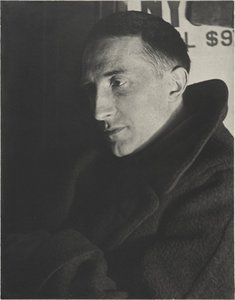
Marcel Duchamp
1887 - 1968 , França
Informações Rápidas
- Artistic Movement Or Style:
- Cubismo
- Dadaísmo
- Artists Or Movements Influenced By This Artist: ['Minimalismo']
- Date Of Birth: 28 Jul 1887 Blainville
- Date Of Death: 2 Oct 1968
- Full Name: Marcel Duchamp Henri-Robert-Marcel
- Nationality: Francês-Americano
- Notable Artworks:
- Fonte
- L.H.O.O.Q.
- Grande Cristal
- Place Of Birth: Normandia França

