

 Visualizar na parede
 Compartilhar
 Compartilhar
 Detalhes

 Baixar imagem
 Semelhantes
 Raio X
 Slideshow
 Estatísticas
The birds


 Ler mais
Reprodução em Óleo Feita à Mão
Óleo sobre tela pintado à mão no tamanho e moldura de sua escolha, feito sob encomenda pelos nossos artistas. ( Alternar para Impressão Alternar para Imagem Digital)




P118B $10

P118H $10

P118W $10

P438Z $10

P508JH $12

P508YH $12

P805H $10

P805Z $10

P919BZ $10

P919G $10

P919XJ $10

P959ZH $10

P968JZ $12

W106C $8

W218G $10

W218JH $8

W218Y $10

W307PJ $10

W316G $10

W316PJ $8

W316Y $10

W398PJ $8

W4111J $10

W500HY $15

W500JH $15

W692G $12

W849H $8

W940BG $15

W953PJ $8




Escolha entre os nossos tamanhos pré-definidos que respeitam as proporções originais da obra de arte.

Pode inserir as suas próprias dimensões para se adequar a uma moldura ou espaço específico. Se o tamanho selecionado não corresponder às proporções da imagem original, iremos cortar a obra de arte ou estender a pintura com elementos adicionais pintados à mão. Um esboço digital será enviado para sua aprovação antes do início da produção.
Tenha em atenção que a pré-visualização no ecrã não reflete o corte ou extensão real. Apenas o esboço mostrará com precisão a composição final.
Embora tamanhos personalizados estejam disponíveis, recomendamos selecionar uma dimensão da lista predefinida para preservar as proporções originais.
Após o pedido, a equipa OriginalUniqueArt.com enviará um e-mail ao cliente para solicitar instruções e fornecer uma prévia do esboço.
Entrega mundial () em 3 a 4 semanas, em vez das 5 semanas padrão. (10 Setembro). Sem comprometer a qualidade.

Envio expresso gratuito para todo o mundo

Tela de Linho de Alta Qualidade

Seguro de transporte completo

Garantia de Reembolso de Impostos Alfandegários

Garantia de Fidelidade Cromática

Política de Devolução de 100 Dias (Apenas Defeitos)

Garantia de reembolso de 100%

Oferta de desconto por quantidade
 A opção de vidro está disponível apenas para tamanhos inferiores a 110 cm

The birds
Técnica de Reprodução
Tamanho da Reprodução
-


Preço Total
$ 325
A Dreamscape of Flight and Emotion: Unpacking Marc Chagall’s “The Birds”
Marc Chagall's "The Birds," painted in 1957, isn’t merely a depiction of avian life; it’s an immersion into the artist’s deeply personal mythology. Born Moishe Shagal in Vitebsk, Belarus, Chagall carried within him the echoes of his Jewish heritage—a potent blend of folklore, spirituality, and a profound yearning for escape. This painting embodies that spirit, transforming a simple subject matter – birds – into a swirling vortex of symbolic meaning and emotional resonance. It’s a work that invites prolonged contemplation, revealing layers of interpretation with each viewing.
The composition immediately establishes an atmosphere of both serenity and impending unease. Two female figures dominate the canvas, their forms rendered in Chagall's signature fluid lines—a characteristic born from his early training as a sign painter. They stand poised on the edge of a world that feels simultaneously familiar and utterly surreal. The upper section, bathed in a hazy light, features a woman holding a bouquet, her posture suggesting both vulnerability and quiet strength. Below, another figure reclines, seemingly lost in contemplation, while a single bird circles overhead, a visual anchor to the painting’s central theme. This duality—the grounded presence of human figures juxtaposed with the ethereal flight of birds—creates a dynamic tension that is at the heart of the work's power.
Lithography and the Language of Line
Chagall masterfully employs lithography, a technique renowned for its ability to capture subtle tonal variations and create intricate textures. The process involved meticulously transferring ink from a stone or metal plate onto paper, allowing him to build up layers of color and detail with remarkable precision. Notice the deliberate hatching and cross-hatching used to define the foliage, creating a sense of depth and movement that contrasts sharply with the smoother rendering of the figures. This technique isn’t simply about replicating visual reality; it's about conveying feeling—the rustle of leaves, the weight of branches, the fleeting presence of birds in flight.
The flattened perspective further contributes to the painting’s dreamlike quality. Chagall deliberately eschews traditional notions of depth and spatial relationships, opting instead for a more symbolic representation of space. This flattening effect emphasizes the two-dimensionality of the canvas, drawing attention to the interplay of lines and colors. The lack of strong shadows or vibrant hues reinforces this sense of detachment from reality, inviting the viewer to enter into Chagall’s subjective world.
Symbolism: Flight, Memory, and the Unconscious
“The Birds” is rich in symbolic imagery, drawing heavily on Chagall's personal mythology and Jewish folklore. Birds have long been associated with themes of freedom, spirituality, and the soul’s journey—a potent metaphor for the human desire to transcend earthly limitations. The presence of two women, often interpreted as representations of the artist’s mother and wife, adds another layer of meaning. Their connection to nature and their contemplative gazes suggest a longing for a simpler, more authentic existence.
The painting can also be viewed through the lens of memory and loss. Chagall's early life in Vitebsk was marked by displacement and upheaval—a constant struggle against political oppression and cultural erasure. The birds, with their ability to soar above earthly concerns, may represent a yearning for escape from these hardships and a return to a lost paradise. The painting’s overall mood evokes a sense of melancholy and nostalgia, reflecting Chagall's own complex relationship with his past.
A Legacy of Dreamlike Vision
“The Birds” stands as a testament to Marc Chagall’s extraordinary artistic vision—a synthesis of Cubism, Expressionism, and Symbolism that continues to captivate viewers today. Its enduring appeal lies in its ability to evoke powerful emotions and invite multiple interpretations. Reproductions of this iconic work capture the essence of Chagall's dreamlike style, offering a glimpse into the artist’s deeply personal world. Whether displayed as a centerpiece in a grand salon or a cherished addition to a smaller space, “The Birds” remains a potent symbol of human longing, artistic innovation, and the enduring power of imagination.
Biografia do Artista
A Life Painted in Dreams: The World of Marc Chagall
Marc Chagall, born Moishe Shagal in 1887 in the small Belarussian town of Liozna near Vitebsk, wasn’t merely a painter; he was a poet of color, a weaver of dreams, and a chronicler of memory. His life, spanning nearly a century, mirrored the tumultuous currents of the 20th century, yet his art remained steadfastly rooted in a deeply personal vision—one infused with the folklore of his Hasidic Jewish upbringing and an unwavering belief in the power of imagination. Vitebsk itself was more than just a birthplace; it became the emotional core of his artistic universe, a recurring motif populated by flying figures, whimsical animals, and the vibrant hues of remembered landscapes. The town’s unique blend of cultures—Russian Orthodox churches alongside bustling Jewish marketplaces—forged an aesthetic sensibility that would defy easy categorization throughout his long career. Though he sought formal training first with a local sign painter and later in St. Petersburg under Léon Bakst, and then in Paris at the Académie de la Grande Chaumière, Chagall never fully embraced any single artistic movement. He absorbed elements of Cubism, Symbolism, and Fauvism, but always filtered them through his own intensely personal lens, creating a style that was uniquely, unmistakably Chagall.Early Influences and Artistic Beginnings
Chagall’s formative years were marked by the traditions of Vitebsk’s Jewish community—a vibrant tapestry woven with religious rituals, folk tales, and ancestral memories. These influences profoundly shaped his artistic sensibility, informing his use of symbolism and his fascination with biblical narratives. His initial training encompassed practical skills honed in the craft of sign painting, followed by a more structured education at St. Petersburg Academy of Art under Léon Bakst, where he encountered the avant-garde spirit of Russian Symbolism. However, Chagall’s artistic path diverged from conventional academic pursuits. He prioritized experimentation and intuition over technical precision, rejecting rigid stylistic constraints in favor of expressive freedom. Paintings like I and the Village (1911) exemplify this approach—a deliberate departure from realistic representation that prioritizes emotional resonance and evocative imagery. The fragmented composition captures not just a landscape but also the artist’s subjective experience of place and time, foreshadowing his signature style.The Symbolist Vision: Color and Emotion
Chagall's artistic language quickly developed into one characterized by bold color palettes and emotionally charged imagery. He eschewed naturalistic hues in favor of vibrant shades—deep blues, fiery reds, luminous yellows—that conveyed feeling rather than factual accuracy. Figures appear to float or dance across the canvas, defying gravity and logic, creating a dreamlike atmosphere that invites viewers into his inner world. This stylistic technique wasn’t merely decorative; it was integral to Chagall's artistic philosophy—a conviction that art should transcend mere imitation of reality and capture the essence of human experience. Recurring motifs—flying figures, musical instruments, animals—became emblems of Chagall’s worldview, reflecting his spiritual beliefs and his fascination with folklore. These symbols weren’t presented in a didactic manner but rather interwoven into complex compositions that demanded contemplation and interpretation.The Revolution and Vitebsk Revisited
The Russian Revolution dramatically altered Chagall's life trajectory, returning him to Vitebsk—the town that had nurtured his artistic imagination since childhood. During this period, he actively participated in cultural initiatives aimed at revitalizing Jewish identity and fostering artistic creativity. He established an art school alongside Aleksandr Rodchenko, attracting young artists from across Russia who embraced the avant-garde spirit of the era. However, Chagall’s engagement with Soviet culture was fraught with tensions—a clash between his artistic vision and the ideological imperatives of the regime. Despite these challenges, he continued to produce groundbreaking works that explored themes of exile, faith, and human dignity.International Recognition and Artistic Legacy
Chagall's reputation soared internationally after World War II, attracting commissions from prominent patrons and securing exhibitions in major museums around the globe. He relocated to Paris in 1940, where he remained until his death in 1985—a period marked by prolific artistic output and profound personal reflection. His monumental stained glass windows for the Hadassah Hebrew University Medical Center synagogue in Jerusalem stand as a testament to his enduring influence on Jewish culture and spirituality. Furthermore, his paintings like Over Vitebsk (1920-1922) and White Crucifixion (1938) continue to resonate with audiences worldwide—powerful expressions of emotion and imagination that transcend cultural boundaries. Chagall’s legacy extends beyond his artistic creations; it resides in the enduring power of his vision—a vision that celebrates love, memory, and the boundless possibilities of the human spirit. He left behind a body of work that is both deeply personal and universally accessible, inviting viewers to lose themselves in a world painted with dreams and illuminated by hope.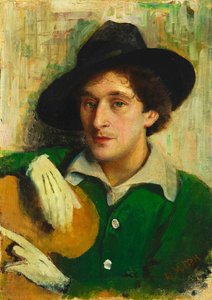
Marc Chagall
1887 - 1985 , Belarus
Dados Rápidos
- Artistic Movement Or Style: Cubismo, Surrealismo
- Artists Or Movements Influenced By This Artist:
- Surrealismo
- Modern artistas
- Artists Who Influenced This Artist:
- Bakst
- Delaunay
- Borovikovsky
- Date Of Birth: 6 julho 1887
- Date Of Death: 28 março 1985
- Full Name: Marc Chagall
- Nationality: Russo-Francês
- Notable Artworks:
- I e a Vila
- Sobre Vitebsk
- Place Of Birth: Liozna, Bielorrússia
Artigos Relacionados
Dreamscapes & Disrupted Realities: Exploring Surrealism's Enduring Influence
Explore the fascinating world of Surrealism! Discover its origins, key artists like Dalí & Magritte, and enduring influence on art & culture. Expert insights & high-quality reproductions at OriginalUniqueArt.
Pop Surrealism Unveiled: The Sophisticated Intersection of Vibrant Pop Art and Dreamlike Subconscious Landscapes
Explore the captivating world of Pop Surrealism. Discover how vibrant Pop Art meets dreamlike subconscious imagery through the works of masters like Jeff Soto and Ryan Heshka. An expert guide for discerning collectors seeking to understand this profound contemporary art movement.

Feathered Masterpieces: The Enchanting World of Impressionist Bird Art
Discover the ethereal beauty of Impressionist bird art. Explore how masters like Monet and Renoir captured light and motion through feathered subjects. Perfect for collectors seeking soulful, hand-painted inspirations for a serene home sanctuary.
Feathered Visions: A Historical & Artistic Exploration of Birds in Painting
Explore the rich history of birds in painting! Discover symbolism, artistic movements & master artists like Audubon. High-quality reproductions available at OriginalUniqueArt.
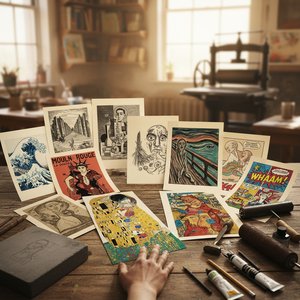
10 Obras-Primas da Litografia que Revolucionaram a Arte | OriginalUniqueArt
Descubra 10 obras-primas da litografia que revolucionaram a arte! Explore a história de Toulouse-Lautrec, Munch e Picasso. Encontre reproduções de alta qualidade para decorar sua casa com estilo em OriginalUniqueArt.com.


