Visualizar na parede
 Compartilhar
 Compartilhar
 Detalhes
 Guia
Guia

 Baixar imagem
 Semelhantes
 Raio X
 Ver diaporama
 Q&A
Q&A Estatísticas
Os Jogadores
 Óleo sobre tela
- Arte de Parede
- Surrealism
 1968
1968- Modernismo
 150.0 x 160.0 cm
 Ler mais
A obra de arte exibida nesta página é protegida por leis de direitos autorais, o que significa que não podemos criar ou vender legalmente uma reprodução idêntica. Esta proteção é aplicada por meio de acordos internacionais, tais como a Convenção de Berna e pelas leis nacionais, incluindo as estabelecidas por Lei de Direitos Autorais dos EUA - Título 17.
Este método cumpre plenamente as regulamentações de direitos autorais, pois não envolve a cópia ou duplicação da obra protegida. Em vez disso, trata-se de uma reinterpretação criativa — uma nova pintura que é influenciada pela original, mas não idêntica a ela.
Giclée / Impressão de Arte
Impressão giclée ou em tela de qualidade de museu, com produção rápida e opções flexíveis de acabamento. ( Comprar pintura feita à mão Alternar para Imagem Digital)




P118B €10

P118H €10

P118W €10

P438Z €10

P508JH €12

P508YH €12

P805H €10

P805Z €10

P919BZ €10

P919G €10

P919XJ €10

P959ZH €10

P968JZ €12

W106C €8

W218G €10

W218JH €8

W218Y €10

W307PJ €10

W316G €10

W316PJ €8

W316Y €10

W398PJ €8

W4111J €10

W500HY €15

W500JH €15

W692G €12

W849H €8

W940BG €15

W953PJ €8




Escolha entre os nossos tamanhos pré-definidos que respeitam as proporções originais da obra de arte.

Insira a largura e a altura desejadas para se ajustarem à sua moldura ou parede. Uma impressão pode ser apenas cortada, nunca ampliada além da imagem original; portanto, um tamanho com proporções diferentes resultará na perda de parte da imagem. Enviamos uma maquete digital para sua aprovação antes de realizarmos a impressão. A imagem exibida nesta página não mostra o corte real — apenas a maquete o faz.
Entrega mundial () em 2 semanas, em vez das 4/5 semanas padrão. (31 Outubro)

Envio expresso gratuito para todo o mundo

Tela de Linho de Alta Qualidade

Seguro de transporte completo

Garantia de Reembolso de Impostos Alfandegários

Garantia de Fidelidade Cromática

Política de Devolução em 100 Dias (Apenas para Defeitos)

Garantia de reembolso de 100%

Oferta de desconto por quantidade
 A opção de vidro está disponível apenas para tamanhos inferiores a 110 cm

Os Jogadores
Giclée / Impressão de Arte
Tamanho da Reprodução
-


Preço Total
€ 71
Um Palco de Sonhos: Revelando ‘Os Jogadores’ de Marc Chagall
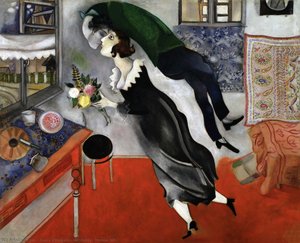
A tela de óleo de 1968, *Os Jogadores* de Marc Chagall, é uma jornada cativante ao mundo autêntico do artista – um onde memória, fantasia e folclore se entrelaçam. Com as dimensões de 150 x 160 cm, esta obra não é apenas uma pintura; é um poema visual, repleto de ressonância simbólica e profundidade emocional.Assunto e Composição: Um Ensemble Surreal
A composição apresenta uma cena aparentemente caótica, mas harmoniosamente equilibrada, povoada por figuras enigmáticas. Uma figura central, distinguida por uma máscara vermelha marcante, segura um violino – uma convite imediato para considerar temas de música, performance e identidade oculta. Ao seu redor, outros personagens estão envolvidos em seus próprios mundos privados: um absorto em um livro, pássaros em voo ou pousados perto, e outro músico perdido em sua arte na borda direita da tela. A disposição não é realista; as figuras se sobrepõem, recuam para o espaço nebuloso e existem dentro de uma paisagem abstrata, criando uma qualidade onírica que atrai o espectador para o mundo interior de Chagall.Estilo e Técnica: Uma Fusão entre Surrealismo e Expressionismo
*Os Jogadores* exemplifica a mistura estilística única de Chagall. Embora frequentemente categorizado como Surrealista – enfatizando o subconsciente e o irracional – seu trabalho também carrega fortes correntes de Expressionismo, particularmente em sua paleta de cores ousada e pinceladas emotivas. A aplicação da tinta é solta e gestual, com impasto visível adicionando textura e profundidade. As cores não são usadas para replicar a realidade, mas para evocar sentimentos; tons vibrantes de vermelho, azul e verde dominam, contribuindo para a atmosfera fantástica da pintura. Essa técnica imbuí a cena com um senso de movimento e energia, como se estivesse presa em um momento fugaz de performance ou reverência.Contexto Histórico e a Obra de Chagall
Criada no final de sua carreira prolífica, *Os Jogadores* reflete motivos recorrentes encontrados ao longo da obra de Chagall. Nascido na Bielorrússia e posteriormente florescendo na França, Chagall se baseou fortemente em sua herança judaica, memórias pessoais e um profundo amor pelo folclore. Suas pinturas frequentemente apresentam figuras de contos de fadas russos, cenas bíblicas e momentos íntimos de sua própria vida – todos reimaginados através de uma lente de abstração poética. Obras como *O Galo Apaixonado*, *Canção de Salmos I (9)* e *A Virgem da Aldeia* demonstram essa exploração consistente de imagens simbólicas e narrativas oníricas.Simbolismo e Interpretação: Um Palco para a Alma
O simbolismo dentro de *Os Jogadores* é rico e aberto à interpretação. O violino frequentemente representa a música como uma linguagem universal, capaz de expressar emoções profundas. Máscaras sugerem identidades ocultas ou papéis assumidos na performance da vida. Pássaros frequentemente simbolizam liberdade, espiritualidade ou mensageiros entre mundos. O livro pode representar conhecimento, narrativa ou o peso da história. A obra de Chagall também brinca com *Transautomatismo*, um estilo que incentiva os espectadores a projetar suas próprias fantasias e interpretações na obra de arte, tornando cada encontro unicamente pessoal.Impacto Emocional e Legado Duradouro
*Os Jogadores* evoca uma sensação de nostalgia melancólica, mistério lúdico e ressonância emocional profunda. É uma pintura que convida à contemplação – nos incentivando a considerar nossos próprios papéis na grande performance da vida, as máscaras que usamos e as histórias que contamos a nós mesmos. A capacidade de Chagall de transformar experiência pessoal em temas universais é o que torna seu trabalho tão cativante e duradouro. Esta pintura não é apenas um espetáculo visual; é um convite para explorar as profundezas do espírito humano.Perguntas e Respostas
A que período histórico pertence "Os Jogadores", de Marc Chagall?
"Os Jogadores" pertence ao período Modernismo.
Posso usar realidade aumentada para ver "Os Jogadores", de Marc Chagall no meu ambiente?
Visualize "Os Jogadores", de Marc Chagall na sua própria parede através da página de Prévia em RA da obra, utilizando realidade aumentada em um dispositivo compatível.
Quais são as dimensões de "Os Jogadores", de Marc Chagall na vida real?
"Os Jogadores" mede 150 x 160 cm em sua forma original. As dimensões originais são uma referência útil ao escolher o tamanho de uma reprodução.
Biografia do Artista
A Life Painted in Dreams: The World of Marc Chagall
Marc Chagall, born Moishe Shagal in 1887 in the small Belarussian town of Liozna near Vitebsk, wasn’t merely a painter; he was a poet of color, a weaver of dreams, and a chronicler of memory. His life, spanning nearly a century, mirrored the tumultuous currents of the 20th century, yet his art remained steadfastly rooted in a deeply personal vision—one infused with the folklore of his Hasidic Jewish upbringing and an unwavering belief in the power of imagination. Vitebsk itself was more than just a birthplace; it became the emotional core of his artistic universe, a recurring motif populated by flying figures, whimsical animals, and the vibrant hues of remembered landscapes. The town’s unique blend of cultures—Russian Orthodox churches alongside bustling Jewish marketplaces—forged an aesthetic sensibility that would defy easy categorization throughout his long career. Though he sought formal training first with a local sign painter and later in St. Petersburg under Léon Bakst, and then in Paris at the Académie de la Grande Chaumière, Chagall never fully embraced any single artistic movement. He absorbed elements of Cubism, Symbolism, and Fauvism, but always filtered them through his own intensely personal lens, creating a style that was uniquely, unmistakably Chagall.Early Influences and Artistic Beginnings
Chagall’s formative years were marked by the traditions of Vitebsk’s Jewish community—a vibrant tapestry woven with religious rituals, folk tales, and ancestral memories. These influences profoundly shaped his artistic sensibility, informing his use of symbolism and his fascination with biblical narratives. His initial training encompassed practical skills honed in the craft of sign painting, followed by a more structured education at St. Petersburg Academy of Art under Léon Bakst, where he encountered the avant-garde spirit of Russian Symbolism. However, Chagall’s artistic path diverged from conventional academic pursuits. He prioritized experimentation and intuition over technical precision, rejecting rigid stylistic constraints in favor of expressive freedom. Paintings like I and the Village (1911) exemplify this approach—a deliberate departure from realistic representation that prioritizes emotional resonance and evocative imagery. The fragmented composition captures not just a landscape but also the artist’s subjective experience of place and time, foreshadowing his signature style.The Symbolist Vision: Color and Emotion
Chagall's artistic language quickly developed into one characterized by bold color palettes and emotionally charged imagery. He eschewed naturalistic hues in favor of vibrant shades—deep blues, fiery reds, luminous yellows—that conveyed feeling rather than factual accuracy. Figures appear to float or dance across the canvas, defying gravity and logic, creating a dreamlike atmosphere that invites viewers into his inner world. This stylistic technique wasn’t merely decorative; it was integral to Chagall's artistic philosophy—a conviction that art should transcend mere imitation of reality and capture the essence of human experience. Recurring motifs—flying figures, musical instruments, animals—became emblems of Chagall’s worldview, reflecting his spiritual beliefs and his fascination with folklore. These symbols weren’t presented in a didactic manner but rather interwoven into complex compositions that demanded contemplation and interpretation.The Revolution and Vitebsk Revisited
The Russian Revolution dramatically altered Chagall's life trajectory, returning him to Vitebsk—the town that had nurtured his artistic imagination since childhood. During this period, he actively participated in cultural initiatives aimed at revitalizing Jewish identity and fostering artistic creativity. He established an art school alongside Aleksandr Rodchenko, attracting young artists from across Russia who embraced the avant-garde spirit of the era. However, Chagall’s engagement with Soviet culture was fraught with tensions—a clash between his artistic vision and the ideological imperatives of the regime. Despite these challenges, he continued to produce groundbreaking works that explored themes of exile, faith, and human dignity.International Recognition and Artistic Legacy
Chagall's reputation soared internationally after World War II, attracting commissions from prominent patrons and securing exhibitions in major museums around the globe. He relocated to Paris in 1940, where he remained until his death in 1985—a period marked by prolific artistic output and profound personal reflection. His monumental stained glass windows for the Hadassah Hebrew University Medical Center synagogue in Jerusalem stand as a testament to his enduring influence on Jewish culture and spirituality. Furthermore, his paintings like Over Vitebsk (1920-1922) and White Crucifixion (1938) continue to resonate with audiences worldwide—powerful expressions of emotion and imagination that transcend cultural boundaries. Chagall’s legacy extends beyond his artistic creations; it resides in the enduring power of his vision—a vision that celebrates love, memory, and the boundless possibilities of the human spirit. He left behind a body of work that is both deeply personal and universally accessible, inviting viewers to lose themselves in a world painted with dreams and illuminated by hope.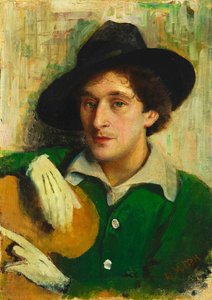
Marc Chagall
1887 - 1985 , Belarus
Dados Rápidos
- Artistic Movement Or Style: Cubismo, Surrealismo
- Artists Or Movements Influenced By This Artist:
- Surrealismo
- Modern artistas
- Artists Who Influenced This Artist:
- Bakst
- Delaunay
- Borovikovsky
- Date Of Birth: 6 julho 1887
- Date Of Death: 28 março 1985
- Full Name: Marc Chagall
- Nationality: Russo-Francês
- Notable Artworks:
- I e a Vila
- Sobre Vitebsk
- Place Of Birth: Liozna, Bielorrússia
Artigos Relacionados
From Imagination to Canvas: Commissioning Bespoke Fantasy Art with Traditional Oil Painting Techniques
Commission breathtaking bespoke fantasy art with skilled oil painters. Explore techniques, artist selection & preservation tips. Invest in a unique masterpiece today!
Top 10 Obras-Primas em Óleo que Revolucionaram a História da Arte | OriginalUniqueArt
Descubra as 10 obras primas em óleo que moldaram a história da arte! Explore Van Gogh, Monet, Da Vinci e outros mestres. Reproduções de alta qualidade para sua decoração. Explore a coleção completa na OriginalUniqueArt.com

O Legado Duradouro da Pintura a Óleo sobre Tela: Técnica, História e Prática Contemporânea
Explore a história e as técnicas da pintura a óleo com especialistas. Descubra os mestres, materiais essenciais e o futuro desta arte atemporal. Reproduções de qualidade museológica.

Oil on Canvas: A Historical & Technical Exploration of a Timeless Artistic Medium
Explore the rich history & enduring techniques of oil painting on canvas. Discover the science behind its longevity, conservation practices, and contemporary relevance. Expert insights for art enthusiasts.

The Enduring Legacy of Oil on Canvas: Technique, History & Aesthetic Impact
Explore the rich history & techniques of oil painting – from Renaissance masters to Impressionism. Discover pigments, layering methods, and why this timeless medium endures. Expert insights for artists & art enthusiasts.