

 Visualizar em escala
 Enviar
 Compartilhar
 Ver detalhes
 Guia de Obras do Aluno

 Baixar imagem
 Semelhantes
 Raio X
 Apresentação de slides
 Estatísticas
La Création de l'homme
 Óleo
Óleo- Arte de Parede
- Naïve Art
 1958
1958- Moderno
 43.0 x 27.0 cm
 Ver mais
A obra de arte exibida nesta página é protegida por leis de direitos autorais, o que significa que não podemos criar ou vender legalmente uma reprodução idêntica. Esta proteção é aplicada por meio de acordos internacionais, tais como a Convenção de Berna e pelas leis nacionais, incluindo as estabelecidas por Lei de Direitos Autorais dos EUA - Título 17.
Este método cumpre plenamente as regulamentações de direitos autorais, pois não envolve a cópia ou duplicação da obra protegida. Em vez disso, trata-se de uma reinterpretação criativa — uma nova pintura que é influenciada pela original, mas não idêntica a ela.
Giclée / Impressão de Arte
Impressão giclée ou em tela de qualidade de museu, com produção rápida e opções flexíveis de acabamento. ( Encomendar reprodução pintada à mão Ver Imagem Digital)




P118B €10

P118H €10

P118W €10

P438Z €10

P508JH €12

P508YH €12

P805H €10

P805Z €10

P919BZ €10

P919G €10

P919XJ €10

P959ZH €10

P968JZ €12

W106C €8

W218G €10

W218JH €8

W218Y €10

W307PJ €10

W316G €10

W316PJ €8

W316Y €10

W398PJ €8

W4111J €10

W500HY €15

W500JH €15

W692G €12

W849H €8

W940BG €15

W953PJ €8




Escolha entre os nossos tamanhos pré-definidos que respeitam as proporções originais da obra de arte.

Digite a largura e a altura de que necessita, para se ajustar à sua moldura ou à sua parede. Uma impressão só pode ser cortada, nunca ampliada além da imagem original, pelo que um tamanho com uma proporção diferente perderá parte da imagem. Enviamos-lhe uma maquete digital para aprovação antes de imprimirmos qualquer coisa. A imagem apresentada nesta página não mostra o corte real — apenas a maquete o faz.
Entrega mundial () em 2 semanas, em vez das 4/5 semanas padrão. (23 Outubro)

Envio expresso gratuito para todo o mundo

Tela de Linho Premium

Seguro de transporte total

Garantia de Reembolso de Impostos Alfandegários

Garantia de Fidelidade de Cor

Política de Devolução em 100 Dias (Apenas para Defeitos)

Garantia de reembolso de 100%

Desconto para múltiplas unidades
 A opção de vidro está disponível apenas para tamanhos inferiores a 110 cm

La Création de l'homme
Giclée / Impressão de Arte
Dimensões da Reprodução
-


Preço Total
€ 70
The Creation of Man: A Journey Through Chagall’s Dreamscape
Marc Chagall’s *The Creation of Man*, painted in 1958, isn’t merely a depiction of the biblical narrative; it’s an immersive journey into the artist’s deeply personal and profoundly symbolic world. This vibrant pastel masterpiece, executed in the style of Naïve Art – a movement characterized by its directness, emotional intensity, and rejection of academic conventions – immediately captivates with its swirling colors and fantastical imagery. It's a testament to Chagall’s ability to distill complex religious themes into a powerfully emotive visual language, drawing on his Jewish heritage and lifelong fascination with folklore and dreams. The painting pulsates with life, inviting the viewer to step into a world where earthly concerns dissolve amidst a celestial dance of figures and symbols. The composition itself is remarkably dynamic. At its heart stands a winged man, an embodiment of Adam, reaching towards a radiant sun – a potent symbol of divine light and creative energy. This central figure isn’t depicted as a stoic patriarch but rather as a joyous participant in the act of creation, his posture suggesting both vulnerability and exhilaration. Surrounding him is a constellation of figures: a woman representing Eve, a scattering of birds symbolizing freedom and spirituality, musicians playing violins – an echo of Chagall’s own love for music and its ability to transcend earthly boundaries, and even a miniature representation of the artist himself, gazing out from within the scene. These aren’t simply illustrations of biblical events; they are fragments of Chagall’s memory, his emotions, and his deeply held beliefs woven together into a single, unified vision. The use of flattened perspective and simplified forms, hallmarks of Naïve Art, further enhances this sense of immediacy and emotional resonance. Chagall’s embrace of Naïve Art wasn’t simply an aesthetic choice; it was a deliberate rejection of the formal constraints of academic painting. He sought to bypass intellectual analysis and tap directly into the wellspring of intuition and emotion. This approach is evident in the painting’s bold color palette – yellows, blues, reds, and greens swirling together in a joyous, almost hallucinatory manner. These colors aren’t used realistically; instead, they are employed expressively, conveying mood and atmosphere with remarkable power. The loose brushstrokes contribute to this sense of movement and spontaneity, mirroring the feeling of a dream unfolding before the viewer’s eyes. The influence of Delaunay’s Orphism is subtly present in the use of color fields and the blurring of boundaries, adding another layer of complexity to the painting's visual language. Born in 1887 in Liozna, Belarus – a region steeped in Jewish history and folklore – Chagall’s artistic vision was profoundly shaped by his childhood experiences. Vitebsk, his birthplace, provided a rich tapestry of cultural influences: the vibrant marketplace, the imposing churches, and the close-knit community of Jews and Christians coexisting alongside one another. This environment fueled his imagination and informed his distinctive style, which often drew upon Jewish mythology, biblical stories, and personal memories. *The Creation of Man* is therefore not just a representation of Genesis; it’s a deeply rooted expression of Chagall’s own cultural identity and spiritual journey. His association with Expressionism, Cubism, and Surrealism further demonstrates his willingness to experiment with new forms and techniques while retaining his unique artistic voice. ## Symbolic Layers: Unpacking the Visual Language The painting is rich in symbolism, inviting multiple interpretations. The winged man represents not just Adam but also humanity’s aspiration towards transcendence – a yearning for connection with the divine. The sun, as a source of light and life, symbolizes God’s creative power. The birds, often associated with freedom and spirituality, suggest the possibility of spiritual liberation through faith. The musical instruments represent the harmony between earthly existence and the realm of the divine. Even the inclusion of Chagall himself within the scene underscores the artist’s role as both creator and observer, inviting us to contemplate our own place in the grand scheme of things. The use of a circular composition further reinforces this sense of unity and interconnectedness, suggesting that all elements are part of a single, harmonious whole. ## A Legacy of Emotion: Chagall's Enduring Influence Marc Chagall’s *The Creation of Man* stands as a powerful testament to the enduring power of art to evoke emotion, stimulate imagination, and explore profound spiritual themes. His distinctive style – characterized by its simplicity, directness, and vibrant color palette – continues to inspire artists today. His work transcends stylistic boundaries, blending elements of Naïve Art with influences from Expressionism, Cubism, and Surrealism. Chagall's legacy extends far beyond the canvas; his art has touched countless lives and remains a source of wonder and inspiration for generations to come. His exploration of Jewish identity, folklore, and religious themes offers a unique perspective on universal human experiences. ## Experience the Magic: Reproductions Available OriginalUniqueArt is proud to offer meticulously crafted hand-painted reproductions of Marc Chagall’s *The Creation of Man*. Each reproduction captures the painting's vibrant colors, dynamic composition, and emotional intensity with exceptional detail and fidelity. Available in a range of sizes and mediums – from luxurious oil on canvas to high-quality giclee prints – these reproductions provide an accessible way to bring this masterpiece into your home or office. View the 5” reproduction here, or explore our other sizes and options at [OriginalUniqueArt Website Link]. Let Chagall’s *The Creation of Man* illuminate your space with its timeless beauty and profound symbolism.Perguntas e Respostas
A qual estilo pertence "La Création de l'homme"?
O movimento associado a "La Création de l'homme" de Marc Chagall é Naïve Art. Esta classificação situa a obra entre artistas e obras de arte relacionados.
"La Création de l'homme" possui uma prévia em realidade aumentada?
A página de Visualização em RA de "La Création de l'homme" de Marc Chagall utiliza realidade aumentada para mostrar a obra em seu próprio espaço, em um dispositivo compatível.
A imagem de "La Création de l'homme" de Marc Chagall pode ser reproduzida livremente?
A informação de direitos autorais para "La Création de l'homme" de Marc Chagall: a obra está em ainda protegido por direitos autorais. Isso determina se reproduções da imagem podem ser feitas livremente.
Biografia do Artista
A Life Painted in Dreams: The World of Marc Chagall
Marc Chagall, born Moishe Shagal in 1887 in the small Belarussian town of Liozna near Vitebsk, wasn’t merely a painter; he was a poet of color, a weaver of dreams, and a chronicler of memory. His life, spanning nearly a century, mirrored the tumultuous currents of the 20th century, yet his art remained steadfastly rooted in a deeply personal vision—one infused with the folklore of his Hasidic Jewish upbringing and an unwavering belief in the power of imagination. Vitebsk itself was more than just a birthplace; it became the emotional core of his artistic universe, a recurring motif populated by flying figures, whimsical animals, and the vibrant hues of remembered landscapes. The town’s unique blend of cultures—Russian Orthodox churches alongside bustling Jewish marketplaces—forged an aesthetic sensibility that would defy easy categorization throughout his long career. Though he sought formal training first with a local sign painter and later in St. Petersburg under Léon Bakst, and then in Paris at the Académie de la Grande Chaumière, Chagall never fully embraced any single artistic movement. He absorbed elements of Cubism, Symbolism, and Fauvism, but always filtered them through his own intensely personal lens, creating a style that was uniquely, unmistakably Chagall.Early Influences and Artistic Beginnings
Chagall’s formative years were marked by the traditions of Vitebsk’s Jewish community—a vibrant tapestry woven with religious rituals, folk tales, and ancestral memories. These influences profoundly shaped his artistic sensibility, informing his use of symbolism and his fascination with biblical narratives. His initial training encompassed practical skills honed in the craft of sign painting, followed by a more structured education at St. Petersburg Academy of Art under Léon Bakst, where he encountered the avant-garde spirit of Russian Symbolism. However, Chagall’s artistic path diverged from conventional academic pursuits. He prioritized experimentation and intuition over technical precision, rejecting rigid stylistic constraints in favor of expressive freedom. Paintings like I and the Village (1911) exemplify this approach—a deliberate departure from realistic representation that prioritizes emotional resonance and evocative imagery. The fragmented composition captures not just a landscape but also the artist’s subjective experience of place and time, foreshadowing his signature style.The Symbolist Vision: Color and Emotion
Chagall's artistic language quickly developed into one characterized by bold color palettes and emotionally charged imagery. He eschewed naturalistic hues in favor of vibrant shades—deep blues, fiery reds, luminous yellows—that conveyed feeling rather than factual accuracy. Figures appear to float or dance across the canvas, defying gravity and logic, creating a dreamlike atmosphere that invites viewers into his inner world. This stylistic technique wasn’t merely decorative; it was integral to Chagall's artistic philosophy—a conviction that art should transcend mere imitation of reality and capture the essence of human experience. Recurring motifs—flying figures, musical instruments, animals—became emblems of Chagall’s worldview, reflecting his spiritual beliefs and his fascination with folklore. These symbols weren’t presented in a didactic manner but rather interwoven into complex compositions that demanded contemplation and interpretation.The Revolution and Vitebsk Revisited
The Russian Revolution dramatically altered Chagall's life trajectory, returning him to Vitebsk—the town that had nurtured his artistic imagination since childhood. During this period, he actively participated in cultural initiatives aimed at revitalizing Jewish identity and fostering artistic creativity. He established an art school alongside Aleksandr Rodchenko, attracting young artists from across Russia who embraced the avant-garde spirit of the era. However, Chagall’s engagement with Soviet culture was fraught with tensions—a clash between his artistic vision and the ideological imperatives of the regime. Despite these challenges, he continued to produce groundbreaking works that explored themes of exile, faith, and human dignity.International Recognition and Artistic Legacy
Chagall's reputation soared internationally after World War II, attracting commissions from prominent patrons and securing exhibitions in major museums around the globe. He relocated to Paris in 1940, where he remained until his death in 1985—a period marked by prolific artistic output and profound personal reflection. His monumental stained glass windows for the Hadassah Hebrew University Medical Center synagogue in Jerusalem stand as a testament to his enduring influence on Jewish culture and spirituality. Furthermore, his paintings like Over Vitebsk (1920-1922) and White Crucifixion (1938) continue to resonate with audiences worldwide—powerful expressions of emotion and imagination that transcend cultural boundaries. Chagall’s legacy extends beyond his artistic creations; it resides in the enduring power of his vision—a vision that celebrates love, memory, and the boundless possibilities of the human spirit. He left behind a body of work that is both deeply personal and universally accessible, inviting viewers to lose themselves in a world painted with dreams and illuminated by hope.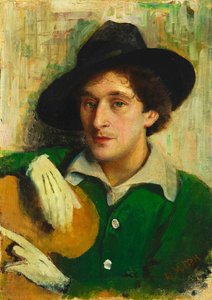
Marc Chagall
1887 - 1985 , Belarus
Informações Rápidas
- Artistic Movement Or Style: Cubismo, Surrealismo
- Artists Or Movements Influenced By This Artist:
- Surrealismo
- Modern artistas
- Artists Who Influenced This Artist:
- Bakst
- Delaunay
- Borovikovsky
- Date Of Birth: 6 julho 1887
- Date Of Death: 28 março 1985
- Full Name: Marc Chagall
- Nationality: Russo-Francês
- Notable Artworks:
- I e a Vila
- Sobre Vitebsk
- Place Of Birth: Liozna, Bielorrússia
Artigos Relacionados

The Subdued Radiance of Pastel: Exploring Nuance & Emotion in Art
Explore the nuanced world of pastel art! Discover its history, techniques & emotional power with expert insights from OriginalUniqueArt.com. Find museum-quality reproductions and learn about collecting this delicate medium.
The Magic of Pastel Art: A Guide to Soft Colors and Velvately Textures in Impressionist Masterpieces
Explore the ethereal beauty of pastel art. Discover how Impressionist masters used soft hues and velvety textures to capture light. A professional guide for art enthusiasts seeking to understand, collect, and appreciate the delicate magic of this timeless medium.

Soft Light & Velvet Touch: The Ethereal Magic of Pastel Artistry in Impressionist Masterpieces
Discover the ethereal beauty of pastel art through an Impressionist lens. Explore how masters like Monet and Renoir captured light and velvet textures, and learn to curate a collection of luminous, museum-quality masterpieces for your home.
The Subtleties of Pastel: A Comprehensive Exploration of Technique, History & Emotional Resonance
Explore the captivating world of pastel art! Discover its rich history, Impressionistic masters like Degas, emotional power & unique techniques. Find museum-quality reproductions at OriginalUniqueArt.

The Soft Power of Pastel: A Connoisseur's Guide to History, Technique, and the Art of Texture
Explore the ethereal beauty of pastel art. From Renaissance origins to Impressionist mastery, discover the history, technique, and velvety textures that define this luminous medium in our expert guide for art connoisseurs.


