Cubism · 1914
Blue Lovers (Marc Chagall, 1914)
Marc Chagall (1887–1985) criou Blue Lovers. Data de 1914. Pertence ao movimento Cubism. É feito em Oil. Mede 49 × 44 cm.
- 1914
- Oil
- 49 × 44 cm

 Visualizar na parede

 Pintura a Óleo Feita à Mão
 Compartilhar
 Compartilhar
 Ficha técnica


 Baixar imagem
 Semelhantes
 Raio X
 Ver diaporama
 Perguntas e Respostas

 Estatísticas
Blue Lovers, em resumo
- Título
- Blue Lovers
- Artista
- Marc Chagall (1887–1985)
- Artista nascido em
- Liozna, Bielorrússia
- Data
- 1914
- Técnica
- Oil
- Dimensões
- 49 × 44 cm
- Movimento
- Cubism
- Período
- Modern
- Tema
- love, embrace, blue sky, couple, gesture, surrealism
O que Blue Lovers retrata?
Blue Lovers: A Symphony of Color and Emotion
Marc Chagall’s “Blue Lovers,” completed in 1914 during his formative years as a Cubist innovator, transcends mere visual representation; it embodies the very essence of romantic connection. Measuring 49 x 44 cm, this oil painting stands as a cornerstone of Cubism—a stylistic choice that Chagall skillfully employed to convey his profound personal vision and artistic exploration.
- Style: Cubism – Chagall’s embrace of this revolutionary movement distinguishes him from many contemporaries. Unlike Impressionists who sought to capture fleeting moments of light, Cubism dissected objects into geometric fragments, presenting multiple perspectives simultaneously—a technique that challenged conventional artistic norms and paved the way for Surrealist experimentation.
- Technique: Chagall’s masterful brushwork contributes significantly to the painting's emotive power. Thick impasto creates textural surfaces that capture the physicality of the figures and imbue them with palpable warmth. The artist meticulously blended blues—ranging from serene cerulean to deep indigo—to establish a dominant color palette symbolizing tranquility, timelessness, and transcendence.
The Significance of Blue
Chagall’s unwavering fascination with blue is documented throughout his oeuvre, reflecting his belief in its ability to evoke spiritual contemplation. As he famously stated, “Blue symbolizes a space devoid of mass and time,” mirroring the idealized realm where earthly constraints dissolve and lovers merge into one harmonious entity. This sentimentality resonates deeply with Chagall's own relationship with Bella Rosenfield—a tumultuous romance that fueled his artistic creativity until her passing in 1994.
Historical Context: Vitebsk’s Influence
The painting’s genesis occurred in Vitebsk, Belarus—a city brimming with cultural diversity shaped by Orthodox Christianity and Jewish traditions. Chagall's upbringing instilled within him a distinctive aesthetic sensibility characterized by fantastical imagery and vibrant hues—elements that would permeate his subsequent works. The depiction of the couple’s faces pressed together underscores the importance of intimacy and vulnerability in human experience, mirroring themes prevalent in Vitebsk folklore.
Symbolism: Gesture and Light
The painting's composition is meticulously crafted to convey a sense of movement and dynamism—a subtle tremor that captures the fleeting beauty of a moment shared. The couple’s gesture—a tender embrace—represents affection, devotion, and mutual support. Furthermore, Chagall skillfully utilizes light—primarily emanating from an unseen source—to illuminate the figures' faces and create an ethereal atmosphere, symbolizing enlightenment and spiritual illumination.
Legacy: A Masterpiece Preserved
"Blue Lovers" resides within The Museum Staatsgalerie Moderner Kunst (Munich, Germany), cementing Chagall’s place as one of the foremost artists of the 20th century. Alongside “Les yeux” by Maria H., this painting exemplifies Chagall's unparalleled ability to fuse stylistic innovation with heartfelt emotion—a testament to his enduring artistic legacy.
Imagens em alta resolução de Blue Lovers
Protected by copyright: these files are for personal reference, not a licence to republish.
Marc Chagall, Blue Lovers (1914).
Perguntas sobre Blue Lovers respondidas
Em que ano foi criado "Blue Lovers", de Marc Chagall?
"Blue Lovers" data de 1914. A data situa a obra na carreira de Marc Chagall e em sua época.
Qual técnica foi utilizada em "Blue Lovers", de Marc Chagall?
"Blue Lovers" é executada em Oil.
Quais são as dimensões da obra original "Blue Lovers"?
A obra original "Blue Lovers", de Marc Chagall mede 49 x 44 cm.
Quais temas aparecem em "Blue Lovers", de Marc Chagall?
"Blue Lovers", de Marc Chagall retrata: love, embrace, blue sky, couple, gesture, surrealism, geometry.
"Blue Lovers", de Marc Chagall está em domínio público?
Quanto aos direitos autorais, "Blue Lovers" está em ainda protegido por direitos autorais.
Quem é o artista por trás de "Blue Lovers"?
O artista por trás de "Blue Lovers" é Marc Chagall. A obra está catalogada sob o nome de Marc Chagall.
A qual movimento artístico pertence "Blue Lovers", de Marc Chagall?
"Blue Lovers" é uma obra do Cubism. O movimento indica a tradição artística da qual a obra faz parte.
A que período da carreira de Marc Chagall pertence "Blue Lovers"?
"Blue Lovers" representa o Early Period de Marc Chagall.
Qual era a idade de Marc Chagall ao criar "Blue Lovers" em 1914?
Quando "Blue Lovers" foi criada em 1914, Marc Chagall — nascido(a) em 1887 — tinha 27 anos.
Sobre o artista, Marc Chagall
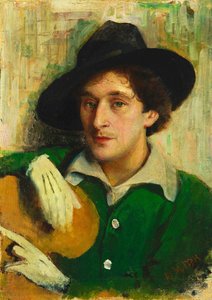
1887–1985, Bielorrússia
Marc Chagall
Vida Inicial, Família e Formação Marc Chagall chega ao mundo em 7 de julho de 1887, em Vitebsk, no Império Russo, nascido como Moishe Segal. Ele é o primeiro de nove filhos de uma modesta família judaica. Sua vida é definida pelos ritmos do trabalho e do pequeno comércio; seu pai, Khatskel Segal, trabalha como conservador de arenque em um armazém, enquanto sua mãe, Feïga-Ita Tchernina, administra uma pequena mercearia. Estes primeiros anos estão enraizados nas texturas específicas de uma cidade provincial, onde os limites de seu mundo são moldados pelas necessidades de um numeroso lar e pelas tradições de sua comunidade.
Também de Marc Chagall
 Eu e a Vila1911
 Crucificação Branca1938
 O Aniversário1915
 Sobre a cidade1918
Ensaios sobre Blue Lovers
 Belarusian artworks of the 1950s1950s Belarusian art features masterpieces by Marc Chagall, including works like The Prophet. Find museum-quality reproductions on Original…
 Dreaming in Color: The 25 Most Iconic Masterpieces by Marc ChagallStep into the dreamlike world of Marc Chagall. Explore 25 iconic masterpieces, from vibrant surrealist tales to soulful folklore. Find insp…
 Belarusian artworks of the 1960sIconic Belarusian artworks of the 1960s, including masterpieces by Marc Chagall. Explore the full collection online at OriginalUniqueArt.co…