

 Visualizar em escala
 Enviar
 Compartilhar
 Ver detalhes
 Guia de Obras do Aluno

 Baixar imagem
 Semelhantes
 Raio X
 Apresentação de slides
 Estatísticas
Banquet degenerates into brawl


 Ver mais
A obra de arte exibida nesta página é protegida por leis de direitos autorais, o que significa que não podemos criar ou vender legalmente uma reprodução idêntica. Esta proteção é aplicada por meio de acordos internacionais, tais como a Convenção de Berna e pelas leis nacionais, incluindo as estabelecidas por Lei de Direitos Autorais dos EUA - Título 17.
Este método cumpre plenamente as regulamentações de direitos autorais, pois não envolve a cópia ou duplicação da obra protegida. Em vez disso, trata-se de uma reinterpretação criativa — uma nova pintura que é influenciada pela original, mas não idêntica a ela.
Giclée / Impressão de Arte
Impressão giclée ou em tela de qualidade de museu, com produção rápida e opções flexíveis de acabamento. ( Encomendar reprodução pintada à mão Ver Imagem Digital)




P118B €10

P118H €10

P118W €10

P438Z €10

P508JH €12

P508YH €12

P805H €10

P805Z €10

P919BZ €10

P919G €10

P919XJ €10

P959ZH €10

P968JZ €12

W106C €8

W218G €10

W218JH €8

W218Y €10

W307PJ €10

W316G €10

W316PJ €8

W316Y €10

W398PJ €8

W4111J €10

W500HY €15

W500JH €15

W692G €12

W849H €8

W940BG €15

W953PJ €8




Escolha entre os nossos tamanhos pré-definidos que respeitam as proporções originais da obra de arte.

Digite a largura e a altura de que necessita, para se ajustar à sua moldura ou à sua parede. Uma impressão só pode ser cortada, nunca ampliada além da imagem original, pelo que um tamanho com uma proporção diferente perderá parte da imagem. Enviamos-lhe uma maquete digital para aprovação antes de imprimirmos qualquer coisa. A imagem apresentada nesta página não mostra o corte real — apenas a maquete o faz.
Entrega mundial () em 2 semanas, em vez das 4/5 semanas padrão. (24 Outubro)

Envio expresso gratuito para todo o mundo

Tela de Linho Premium

Seguro de transporte total

Garantia de Reembolso de Impostos Alfandegários

Garantia de Fidelidade de Cor

Política de Devolução em 100 Dias (Apenas para Defeitos)

Garantia de reembolso de 100%

Desconto para múltiplas unidades
 A opção de vidro está disponível apenas para tamanhos inferiores a 110 cm

Banquet degenerates into brawl
Giclée / Impressão de Arte
Dimensões da Reprodução
-


Preço Total
€ 70
A Chaotic Symphony of Faith and Frenzy: Marc Chagall’s “Banquet Degenerates into Brawl”
Marc Chagall's "Banquet Degenerates into Brawl," painted in 1923, isn’t merely a depiction of a party gone awry; it’s a vibrant, pulsating embodiment of the artist’s deeply rooted Jewish heritage and his unique vision of the world. Born Moishe Shagal in Vitebsk, Belarus, Chagall carried within him the echoes of folklore, religious symbolism, and a profound sense of displacement – experiences that profoundly shaped his artistic language. This lithograph, executed with the precision characteristic of the medium, captures a moment suspended between joyous celebration and explosive chaos, reflecting both the exuberance and underlying tensions of life itself.
The scene unfolds within a densely packed urban setting, reminiscent of Chagall’s beloved Vitebsk – a city brimming with cultural diversity and historical layers. Figures, rendered in elongated, almost dreamlike proportions, surge across the image plane, creating an overwhelming sense of movement. The perspective is deliberately flattened, eschewing traditional depth cues in favor of a dynamic composition dominated by bold diagonals and overlapping forms. This technique, characteristic of Expressionism, amplifies the feeling of unrestrained energy and disorientation, pulling the viewer directly into the heart of the commotion.
The Language of Lithography and Jewish Folklore
Chagall’s masterful use of lithography is immediately apparent. The smooth tonal gradations, achieved through careful manipulation of ink on stone, lend a remarkable richness to the image. Notice the subtle shifts in color – from deep blues and reds to vibrant yellows and greens – that define the figures and background. Hatching and cross-hatching are employed strategically to build texture and suggest surface details, adding visual interest without sacrificing the overall sense of dynamism. The technique itself mirrors Chagall’s approach to storytelling; each line a deliberate element contributing to the narrative.
Beyond the technical mastery, the artwork is steeped in symbolism deeply rooted in Jewish tradition. The figures themselves can be interpreted as representations of communal life – a vibrant tapestry woven from diverse personalities and experiences. The chaotic brawl isn’t simply a random outburst; it suggests a struggle between order and disorder, tradition and modernity, faith and doubt—themes that resonated powerfully within Chagall's own life and the broader Jewish experience at the time. The presence of architectural elements, reminiscent of synagogues and marketplaces, further anchors the scene in this cultural context.
A Window into the Soul: Symbolism and Emotional Resonance
"Banquet Degenerates into Brawl" is more than just a depiction of a party; it’s an exploration of human nature—its capacity for joy, its vulnerability to conflict, and its inherent contradictions. The figures are not simply individuals engaged in a quarrel; they embody universal emotions – exuberance, frustration, anger, and perhaps even a touch of bewildered amusement. The painting's raw energy and emotional intensity invite the viewer to contemplate the complexities of human relationships and the ever-present tension between harmony and discord.
Consider the central figure, caught mid-gesture, seemingly frozen in a moment of both aggression and surprise. His exaggerated features – wide eyes, open mouth – convey a sense of heightened emotion, while his contorted posture suggests a struggle for control. The surrounding figures mirror this dynamic, creating a visual chorus of conflicting emotions. Ultimately, Chagall’s masterpiece serves as a poignant reminder that even in the midst of chaos and conflict, there remains an underlying current of humanity—a shared experience of joy, sorrow, and the enduring search for meaning.
A Legacy of Vision: Marc Chagall and His Enduring Influence
Created during a period of profound social and political upheaval, “Banquet Degenerates into Brawl” reflects Chagall’s own turbulent experiences as an artist navigating the complexities of modern life. His work, deeply influenced by his Jewish heritage and his time in Paris, became a cornerstone of the Expressionist movement, paving the way for future generations of artists to explore the power of emotion and symbolism. Today, this lithograph stands as a testament to Chagall’s unique vision—a vibrant celebration of life's contradictions and a poignant reminder of the enduring human spirit.
Perguntas e Respostas
A que época pertence "Banquet degenerates into brawl"?
O período histórico de "Banquet degenerates into brawl" de Marc Chagall é High Medieval. Esta classificação situa a obra na história da arte.
Como posso obter um arquivo digital de "Banquet degenerates into brawl" de Marc Chagall?
"Banquet degenerates into brawl" está disponível como download de imagem digital em alta resolução, podendo ser adquirido diretamente em sua página de Imagem Digital.
Em qual movimento e em qual época se insere "Banquet degenerates into brawl" de Marc Chagall?
Em "Banquet degenerates into brawl" de Marc Chagall, o movimento Expressionism encontra a era Era Moderna.
Biografia do Artista
A Life Painted in Dreams: The World of Marc Chagall
Marc Chagall, born Moishe Shagal in 1887 in the small Belarussian town of Liozna near Vitebsk, wasn’t merely a painter; he was a poet of color, a weaver of dreams, and a chronicler of memory. His life, spanning nearly a century, mirrored the tumultuous currents of the 20th century, yet his art remained steadfastly rooted in a deeply personal vision—one infused with the folklore of his Hasidic Jewish upbringing and an unwavering belief in the power of imagination. Vitebsk itself was more than just a birthplace; it became the emotional core of his artistic universe, a recurring motif populated by flying figures, whimsical animals, and the vibrant hues of remembered landscapes. The town’s unique blend of cultures—Russian Orthodox churches alongside bustling Jewish marketplaces—forged an aesthetic sensibility that would defy easy categorization throughout his long career. Though he sought formal training first with a local sign painter and later in St. Petersburg under Léon Bakst, and then in Paris at the Académie de la Grande Chaumière, Chagall never fully embraced any single artistic movement. He absorbed elements of Cubism, Symbolism, and Fauvism, but always filtered them through his own intensely personal lens, creating a style that was uniquely, unmistakably Chagall.Early Influences and Artistic Beginnings
Chagall’s formative years were marked by the traditions of Vitebsk’s Jewish community—a vibrant tapestry woven with religious rituals, folk tales, and ancestral memories. These influences profoundly shaped his artistic sensibility, informing his use of symbolism and his fascination with biblical narratives. His initial training encompassed practical skills honed in the craft of sign painting, followed by a more structured education at St. Petersburg Academy of Art under Léon Bakst, where he encountered the avant-garde spirit of Russian Symbolism. However, Chagall’s artistic path diverged from conventional academic pursuits. He prioritized experimentation and intuition over technical precision, rejecting rigid stylistic constraints in favor of expressive freedom. Paintings like I and the Village (1911) exemplify this approach—a deliberate departure from realistic representation that prioritizes emotional resonance and evocative imagery. The fragmented composition captures not just a landscape but also the artist’s subjective experience of place and time, foreshadowing his signature style.The Symbolist Vision: Color and Emotion
Chagall's artistic language quickly developed into one characterized by bold color palettes and emotionally charged imagery. He eschewed naturalistic hues in favor of vibrant shades—deep blues, fiery reds, luminous yellows—that conveyed feeling rather than factual accuracy. Figures appear to float or dance across the canvas, defying gravity and logic, creating a dreamlike atmosphere that invites viewers into his inner world. This stylistic technique wasn’t merely decorative; it was integral to Chagall's artistic philosophy—a conviction that art should transcend mere imitation of reality and capture the essence of human experience. Recurring motifs—flying figures, musical instruments, animals—became emblems of Chagall’s worldview, reflecting his spiritual beliefs and his fascination with folklore. These symbols weren’t presented in a didactic manner but rather interwoven into complex compositions that demanded contemplation and interpretation.The Revolution and Vitebsk Revisited
The Russian Revolution dramatically altered Chagall's life trajectory, returning him to Vitebsk—the town that had nurtured his artistic imagination since childhood. During this period, he actively participated in cultural initiatives aimed at revitalizing Jewish identity and fostering artistic creativity. He established an art school alongside Aleksandr Rodchenko, attracting young artists from across Russia who embraced the avant-garde spirit of the era. However, Chagall’s engagement with Soviet culture was fraught with tensions—a clash between his artistic vision and the ideological imperatives of the regime. Despite these challenges, he continued to produce groundbreaking works that explored themes of exile, faith, and human dignity.International Recognition and Artistic Legacy
Chagall's reputation soared internationally after World War II, attracting commissions from prominent patrons and securing exhibitions in major museums around the globe. He relocated to Paris in 1940, where he remained until his death in 1985—a period marked by prolific artistic output and profound personal reflection. His monumental stained glass windows for the Hadassah Hebrew University Medical Center synagogue in Jerusalem stand as a testament to his enduring influence on Jewish culture and spirituality. Furthermore, his paintings like Over Vitebsk (1920-1922) and White Crucifixion (1938) continue to resonate with audiences worldwide—powerful expressions of emotion and imagination that transcend cultural boundaries. Chagall’s legacy extends beyond his artistic creations; it resides in the enduring power of his vision—a vision that celebrates love, memory, and the boundless possibilities of the human spirit. He left behind a body of work that is both deeply personal and universally accessible, inviting viewers to lose themselves in a world painted with dreams and illuminated by hope.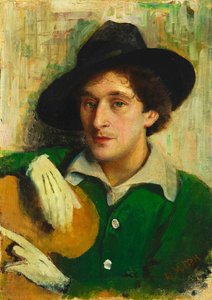
Marc Chagall
1887 - 1985 , Belarus
Informações Rápidas
- Artistic Movement Or Style: Cubismo, Surrealismo
- Artists Or Movements Influenced By This Artist:
- Surrealismo
- Modern artistas
- Artists Who Influenced This Artist:
- Bakst
- Delaunay
- Borovikovsky
- Date Of Birth: 6 julho 1887
- Date Of Death: 28 março 1985
- Full Name: Marc Chagall
- Nationality: Russo-Francês
- Notable Artworks:
- I e a Vila
- Sobre Vitebsk
- Place Of Birth: Liozna, Bielorrússia
Artigos Relacionados

Giclée Prints: Archival Quality & Aesthetic Nuances for the Discerning Collector
Explore the world of giclée prints with OriginalUniqueArt. Learn about archival quality, aesthetic nuances & investment potential. Expert guidance for discerning art collectors seeking museum-quality reproductions and lasting value.
10 Obras-Primas da Litografia que Revolucionaram a Arte | OriginalUniqueArt
Descubra 10 obras-primas da litografia que revolucionaram a arte! Explore a história de Toulouse-Lautrec, Munch e Picasso. Encontre reproduções de alta qualidade para decorar sua casa com estilo em OriginalUniqueArt.com.

The Enduring Legacy of Fine Art Prints: Technique, History & Aesthetic Impact
Explore the rich history & techniques of fine art prints. Discover investment potential, assess authenticity, and learn how to preserve your collection with expert guidance. Trusted insights for discerning collectors.

Echoes of Time: Exploring the Enduring Appeal & Historical Context of Vintage Art Prints
Explore the captivating world of vintage art prints! Discover their history, collecting tips & enduring appeal. Expert insights on chromolithography and building a legacy collection with OriginalUniqueArt.
The Enduring Legacy of Printmaking: Techniques, Themes & Artistic Innovation Across Centuries
Explore the rich history of printmaking with OriginalUniqueArt. Discover techniques from intaglio to lithography, learn about collecting valuable prints & find museum-quality reproductions. Expert insights for art enthusiasts and collectors.


