

 Visualizar em escala
 Enviar
 Compartilhar
 Ver detalhes
 Guia de Obras do Aluno

 Baixar imagem
 Semelhantes
 Raio X
 Apresentação de slides
 Estatísticas
Amantes Próximo à Ponte
 Óleo sobre tela
- Arte de Parede
- Naïve Art (Primitivism)
 1948
1948- Moderno
 99.0 x 47.0 cm
 Ver mais
A obra de arte exibida nesta página é protegida por leis de direitos autorais, o que significa que não podemos criar ou vender legalmente uma reprodução idêntica. Esta proteção é aplicada por meio de acordos internacionais, tais como a Convenção de Berna e pelas leis nacionais, incluindo as estabelecidas por Lei de Direitos Autorais dos EUA - Título 17.
Este método cumpre plenamente as regulamentações de direitos autorais, pois não envolve a cópia ou duplicação da obra protegida. Em vez disso, trata-se de uma reinterpretação criativa — uma nova pintura que é influenciada pela original, mas não idêntica a ela.
Giclée / Impressão de Arte
Impressão giclée ou em tela de qualidade de museu, com produção rápida e opções flexíveis de acabamento. ( Encomendar reprodução pintada à mão Ver Imagem Digital)




P118B €10

P118H €10

P118W €10

P438Z €10

P508JH €12

P508YH €12

P805H €10

P805Z €10

P919BZ €10

P919G €10

P919XJ €10

P959ZH €10

P968JZ €12

W106C €8

W218G €10

W218JH €8

W218Y €10

W307PJ €10

W316G €10

W316PJ €8

W316Y €10

W398PJ €8

W4111J €10

W500HY €15

W500JH €15

W692G €12

W849H €8

W940BG €15

W953PJ €8




Escolha entre os nossos tamanhos pré-definidos que respeitam as proporções originais da obra de arte.

Digite a largura e a altura de que necessita, para se ajustar à sua moldura ou à sua parede. Uma impressão só pode ser cortada, nunca ampliada além da imagem original, pelo que um tamanho com uma proporção diferente perderá parte da imagem. Enviamos-lhe uma maquete digital para aprovação antes de imprimirmos qualquer coisa. A imagem apresentada nesta página não mostra o corte real — apenas a maquete o faz.
Entrega mundial () em 2 semanas, em vez das 4/5 semanas padrão. (25 Outubro)

Envio expresso gratuito para todo o mundo

Tela de Linho Premium

Seguro de transporte total

Garantia de Reembolso de Impostos Alfandegários

Garantia de Fidelidade de Cor

Política de Devolução em 100 Dias (Apenas para Defeitos)

Garantia de reembolso de 100%

Desconto para múltiplas unidades
 A opção de vidro está disponível apenas para tamanhos inferiores a 110 cm

Amantes Próximo à Ponte
Giclée / Impressão de Arte
Dimensões da Reprodução
-


Preço Total
€ 70
Um Sonho de Amor e Anseio: “Amantes Próximo à Ponte” de Marc Chagall
A obra "Amantes Próximo à Ponte" de Marc Chagall, pintada em 1948, não é meramente uma representação de duas figuras; é uma imersão em um mundo repleto dos símbolos pessoais do artista e da sua assinatura técnica da Arte Naïve. Esta fascinante pintura a óleo sobre tela nos transporta para um reino onde a realidade se dissolve sutilmente no sonho, convidando à contemplação sobre temas como o amor, a esperança e os mistérios duradouros do coração humano. A pintura atrai imediatamente o olhar com a sua paleta vibrante – tons profundos de azul e vermelho dominam, pontuados por amarelos e brancos luminosos – criando uma atmosfera ao mesmo tempo alegre e melancólica. É um testemunho da capacidade de Chagall de condensar emoções complexas em formas simples e diretas, uma marca distintiva do seu estilo.As Raízes da Arte Naïve: Simplicidade e Ressonância Emocional
"Amantes Próximo à Ponte" reside firmemente no âmbito da Arte Naïve (ou Primitivismo), um movimento que floresceu no início do século XX, defendido por artistas que deliberadamente rejeitaram a formação académica e procuraram expressar emoções cruas através de representações diretas e não mediadas. A obra de Chagall exemplifica esta abordagem; ele evita detalhes meticulosos ou perspetiva realista, optando em vez disso por cores ousadas, formas simplificadas e uma clareza de execução quase infantil. Esta escolha estilística não foi um rejeito da habilidade, mas sim uma decisão consciente de contornar o processo intelectualizante da arte tradicional e aceder diretamente ao subconsciente. Influenciado por artistas como Paul Cézanne – cujos explorava a forma e a cor pavimentaram o caminho para os modernistas posteriores – Chagall utiliza planos achatados e pinceladas expressivas para transmitir sentimentos acima de tudo. O poder da pintura reside não na sua precisão fotográfica, mas na sua capacidade de evocar uma resposta emocional profunda.Simbolismo Tecido na Noite: Uma Ponte para o Infinito
A cena em si é rica em significado simbólico. A ponte, um motivo recorrente no trabalho de Chagall, não é simplesmente uma estrutura física; representa a ligação, a transição e talvez até mesmo um caminho desconhecido. Aqui, serve como um elo entre o reino terrestre dos amantes e a vasta extensão do céu noturno. Ao olhar para cima para a lua – um símbolo poderoso de mistério, intuição e energia feminina – sugere uma aspiração ou sonho partilhado, um anseio por algo além do imediato. A cor vibrante da camisa vermelha do homem contrasta fortemente com os tons suaves da mulher, podendo representar paixão versus serenidade, ou simplesmente destacar os seus papéis individuais no relacionamento. A inclusão de um pássaro em voo, reminiscente da sua série “So I came forth of the Sea…”, adiciona um elemento de liberdade e alegria, sugerindo que, mesmo entre o anseio, há sempre espaço para a esperança e o voo.Um Legado de Cor e Emoção: A Influência Duradoura de Chagall
Marc Chagall (1887-1985), artista russo-francês de origem bielorrussa judaica, é uma das figuras mais significativas da arte do século XX. O seu estilo único – uma síntese cativante de Surrealismo, Cubismo e Expressionismo – continua a inspirar artistas hoje em dia. “Amantes Próximo à Ponte” é um exemplo primário da sua capacidade de capturar a essência da experiência humana através de imagens aparentemente simples. Obras como "In the night" e "Moses with the Burning Bush", também disponíveis como reproduções de alta qualidade na OriginalUniqueArt.com, demonstram ainda mais a maestria de Chagall na cor, composição e ressonância emocional. A sua arte transcende a mera representação; é uma janela para a sua alma, convidando os espectadores a partilharem os seus sonhos e emoções. Para aqueles que procuram uma peça que fale diretamente ao coração, “Amantes Próximo à Ponte” oferece um testemunho atemporal do poder da arte para iluminar as complexidades do amor, da esperança e da condição humana.Explore reproduções de alta qualidade de "Amantes Próximo à Ponte" e outras obras icónicas de Chagall em OriginalUniqueArt.com.
Perguntas e Respostas
Quando foi criada a obra "Amantes Próximo à Ponte" e a qual movimento ela pertence?
"Amantes Próximo à Ponte" foi criada em 1948 como uma obra do movimento Naïve Art (Primitivism). A data e o movimento situam a obra na história da arte.
A que período da carreira de Marc Chagall pertence "Amantes Próximo à Ponte"?
Dentro da carreira de Marc Chagall, "Amantes Próximo à Ponte" pertence ao período Período Maduro. Esta fase ajuda a compará-la com outras obras do artista.
A que época pertence "Amantes Próximo à Ponte"?
O período histórico de "Amantes Próximo à Ponte" de Marc Chagall é Moderno. Esta classificação situa a obra na história da arte.
Biografia do Artista
A Life Painted in Dreams: The World of Marc Chagall
Marc Chagall, born Moishe Shagal in 1887 in the small Belarussian town of Liozna near Vitebsk, wasn’t merely a painter; he was a poet of color, a weaver of dreams, and a chronicler of memory. His life, spanning nearly a century, mirrored the tumultuous currents of the 20th century, yet his art remained steadfastly rooted in a deeply personal vision—one infused with the folklore of his Hasidic Jewish upbringing and an unwavering belief in the power of imagination. Vitebsk itself was more than just a birthplace; it became the emotional core of his artistic universe, a recurring motif populated by flying figures, whimsical animals, and the vibrant hues of remembered landscapes. The town’s unique blend of cultures—Russian Orthodox churches alongside bustling Jewish marketplaces—forged an aesthetic sensibility that would defy easy categorization throughout his long career. Though he sought formal training first with a local sign painter and later in St. Petersburg under Léon Bakst, and then in Paris at the Académie de la Grande Chaumière, Chagall never fully embraced any single artistic movement. He absorbed elements of Cubism, Symbolism, and Fauvism, but always filtered them through his own intensely personal lens, creating a style that was uniquely, unmistakably Chagall.Early Influences and Artistic Beginnings
Chagall’s formative years were marked by the traditions of Vitebsk’s Jewish community—a vibrant tapestry woven with religious rituals, folk tales, and ancestral memories. These influences profoundly shaped his artistic sensibility, informing his use of symbolism and his fascination with biblical narratives. His initial training encompassed practical skills honed in the craft of sign painting, followed by a more structured education at St. Petersburg Academy of Art under Léon Bakst, where he encountered the avant-garde spirit of Russian Symbolism. However, Chagall’s artistic path diverged from conventional academic pursuits. He prioritized experimentation and intuition over technical precision, rejecting rigid stylistic constraints in favor of expressive freedom. Paintings like I and the Village (1911) exemplify this approach—a deliberate departure from realistic representation that prioritizes emotional resonance and evocative imagery. The fragmented composition captures not just a landscape but also the artist’s subjective experience of place and time, foreshadowing his signature style.The Symbolist Vision: Color and Emotion
Chagall's artistic language quickly developed into one characterized by bold color palettes and emotionally charged imagery. He eschewed naturalistic hues in favor of vibrant shades—deep blues, fiery reds, luminous yellows—that conveyed feeling rather than factual accuracy. Figures appear to float or dance across the canvas, defying gravity and logic, creating a dreamlike atmosphere that invites viewers into his inner world. This stylistic technique wasn’t merely decorative; it was integral to Chagall's artistic philosophy—a conviction that art should transcend mere imitation of reality and capture the essence of human experience. Recurring motifs—flying figures, musical instruments, animals—became emblems of Chagall’s worldview, reflecting his spiritual beliefs and his fascination with folklore. These symbols weren’t presented in a didactic manner but rather interwoven into complex compositions that demanded contemplation and interpretation.The Revolution and Vitebsk Revisited
The Russian Revolution dramatically altered Chagall's life trajectory, returning him to Vitebsk—the town that had nurtured his artistic imagination since childhood. During this period, he actively participated in cultural initiatives aimed at revitalizing Jewish identity and fostering artistic creativity. He established an art school alongside Aleksandr Rodchenko, attracting young artists from across Russia who embraced the avant-garde spirit of the era. However, Chagall’s engagement with Soviet culture was fraught with tensions—a clash between his artistic vision and the ideological imperatives of the regime. Despite these challenges, he continued to produce groundbreaking works that explored themes of exile, faith, and human dignity.International Recognition and Artistic Legacy
Chagall's reputation soared internationally after World War II, attracting commissions from prominent patrons and securing exhibitions in major museums around the globe. He relocated to Paris in 1940, where he remained until his death in 1985—a period marked by prolific artistic output and profound personal reflection. His monumental stained glass windows for the Hadassah Hebrew University Medical Center synagogue in Jerusalem stand as a testament to his enduring influence on Jewish culture and spirituality. Furthermore, his paintings like Over Vitebsk (1920-1922) and White Crucifixion (1938) continue to resonate with audiences worldwide—powerful expressions of emotion and imagination that transcend cultural boundaries. Chagall’s legacy extends beyond his artistic creations; it resides in the enduring power of his vision—a vision that celebrates love, memory, and the boundless possibilities of the human spirit. He left behind a body of work that is both deeply personal and universally accessible, inviting viewers to lose themselves in a world painted with dreams and illuminated by hope.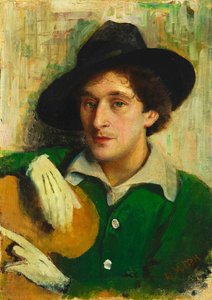
Marc Chagall
1887 - 1985 , Belarus
Informações Rápidas
- Artistic Movement Or Style: Cubismo, Surrealismo
- Artists Or Movements Influenced By This Artist:
- Surrealismo
- Modern artistas
- Artists Who Influenced This Artist:
- Bakst
- Delaunay
- Borovikovsky
- Date Of Birth: 6 julho 1887
- Date Of Death: 28 março 1985
- Full Name: Marc Chagall
- Nationality: Russo-Francês
- Notable Artworks:
- I e a Vila
- Sobre Vitebsk
- Place Of Birth: Liozna, Bielorrússia
Artigos Relacionados
Raw, Bold, Unfiltered: Why Naive Art is the Ultimate Vibe for Your Space
Ditch the boring decor. Discover why Naive Art's raw, bold, and unfiltered aesthetic is the ultimate trend for modern urban spaces. Learn how to use vibrant colors and unstudied sincerity to create a high-impact, authentic vibe in your home or studio.
The Enduring Motif of Love in Art History: A Cross-Cultural Exploration of Representation and Emotion
Explore the rich history of love in art! Discover iconic masterpieces, artistic techniques & cultural symbolism from antiquity to modern times. Expert analysis for collectors.

The Pure Charm of Naïve Art: Finding Beauty in Simplicity, Soul, and the Unfiltered Vision
Discover the profound beauty of Naïve Art. Explore how self-taught masters bypass academic tradition to capture raw emotional truth through vibrant color and soulful simplicity. A cultural journey for the true art lover seeking depth beyond convention.

The Untamed Vision: Exploring Naïve Art & Primitivism's Rejection of Convention
Explore the revolutionary world of Naïve Art & Primitivism! Discover how artists challenged academic traditions with raw emotion & unique styles. Learn about Picasso, Rousseau & more at OriginalUniqueArt.
Presentes de Casamento Memoráveis: 10 Obras de Arte com Significado Especial | OriginalUniqueArt
Encontre o presente de casamento perfeito! 10 obras de arte icônicas de Monet, Van Gogh e Klimt com histórias inspiradoras. Decore com quadros românticos e reproduções de alta qualidade em OriginalUniqueArt.com. Explore a coleção!


