Surrealist Dreamscape · 1947
A rooster (Marc Chagall, 1947)
Marc Chagall (1887–1985) criou A rooster. Data de 1947. Pertence ao movimento Surrealist Dreamscape. É feito em Tempera.
- 1947
- Tempera

 Visualizar na parede

 Pintura a Óleo Feita à Mão
 Compartilhar
 Compartilhar
 Ficha técnica


 Baixar imagem
 Semelhantes
 Raio X
 Ver diaporama
 Perguntas e Respostas

 Estatísticas
A rooster, em resumo
- Título
- A rooster
- Artista
- Marc Chagall (1887–1985)
- Artista nascido em
- Liozna, Bielorrússia
- Data
- 1947
- Técnica
- Tempera
- Movimento
- Surrealist Dreamscape
- Período
- Modern
- Tema
- rooster symbolism, fantasy imagery, sphere composition, jewish folklore, dreamlike quality, color palette
O que A rooster retrata?
A Visionary Dance of Color and Spirit
In the quiet, profound depths of Marc Chagall's 1947 masterpiece, "A Rooster Among Spheres," we encounter more than a mere depiction of nature; we step into a dreamscape where the boundaries between reality and the subconscious dissolve. This evocative work serves as a cornerstone of Chagall’s distinctive surrealist language, acting as a distillation of memory, folklore, and raw emotion. The painting presents a striking, deceptively simple composition: a vibrant rooster perched atop a luminous sphere, set against an enveloping dark backdrop. Yet, beneath this surface simplicity lies a complex tapestry of meaning that invites the viewer to linger within its celestial atmosphere. For the collector or the enthusiast of fine art, this piece offers a window into a universe where gravity is optional and color speaks the language of the soul.
Chagall’s technique in this work is nothing short of poetic. Utilizing tempera on canvas, he achieved a remarkable luminosity that allows the central figures to glow with an ethereal light, as if illuminated from within. His brushstrokes are bold and purposeful, characteristic of his ability to blend the structural lessons of Cubism with the raw, emotive energy of Fauvism. The contrast between the deep, shadowy background and the brilliant, saturated hues of the rooster creates a dramatic tension that commands attention in any space. This interplay of light and dark does more than provide depth; it creates a sense of cosmic theater, making the artwork an ideal focal point for sophisticated interior designs that seek to evoke mystery and intellectual depth.
Symbolism and the Surrealist Soul
To understand "A Rooster Among Spheres," one must look beyond the physical forms to the symbolic weight Chagall carries within his imagery. The sphere, a recurring motif in his oeuvre, serves as a powerful emblem of wholeness, unity, and perhaps even spiritual transcendence. By placing the rooster atop this orb, Chagall suggests a state of dominance that is simultaneously fragile and elevated. This tension reflects the artist's own life—a journey shaped by the cultural crucible of Vitebsk and the profound influence of his Hasidic Jewish heritage. The rooster itself, often a symbol of dawn and renewal in folklore, stands as a sentinel of hope amidst the darkness.
Historically, this painting emerged from a period of immense global upheaval. Created in the aftermath of World War II, the work resonates with the burgeoning Surrealist movement's desire to liberate art from the constraints of rational thought. Influenced by figures like André Breton, Chagall embraced the irrational and the dreamlike as a sanctuary from the anxieties of the era. For those looking to adorn their homes with a piece that transcends mere decoration, this artwork offers an enduring optimism. It is a testament to the resilience of the human imagination—a vibrant, floating ballet of color that promises that even in the darkest of nights, there is a light that refuses to be extinguished.
Imagens em alta resolução de A rooster
Protected by copyright: these files are for personal reference, not a licence to republish.
Marc Chagall, A rooster (1947).
Perguntas sobre A rooster respondidas
Em que ano foi criada a obra "A rooster", de Marc Chagall?
"A rooster", de Marc Chagall foi criado em 1947.
Qual técnica foi utilizada em "A rooster", de Marc Chagall?
"A rooster" é executada em Tempera.
Quais temas aparecem em "A rooster", de Marc Chagall?
Os temas presentes em "A rooster", de Marc Chagall incluem rooster symbolism, fantasy imagery, sphere composition, jewish folklore, dreamlike quality, color palette, biblical allusion. Juntos, eles sintetizam o assunto da obra.
"A rooster" está em domínio público?
Informação de direitos autorais para "A rooster", de Marc Chagall: a obra está em ainda protegido por direitos autorais. Isso determina se reproduções da imagem podem ser feitas livremente.
Quem é o artista por trás de "A rooster"?
O artista por trás de "A rooster" é Marc Chagall. A obra está catalogada sob o nome de Marc Chagall.
A qual estilo pertence "A rooster"?
"A rooster" é uma obra do Surrealist Dreamscape. O movimento indica a tradição artística da qual a obra faz parte.
A que fase da trajetória de Marc Chagall "A rooster" pertence?
Dentro da trajetória de Marc Chagall, "A rooster" pertence ao período Mature Surrealism. Esta fase permite compará-la com outras obras do artista.
Qual era a idade de Marc Chagall ao criar "A rooster" em 1947?
Quando "A rooster" foi criada em 1947, Marc Chagall — nascido(a) em 1887 — tinha 60 anos.
"A rooster", de Marc Chagall, está em domínio público? E por quê?
"A rooster", de Marc Chagall está em ainda protegido por direitos autorais. O período de direitos autorais conta a partir do falecimento do artista, ocorrido em 1985.
Sobre o artista, Marc Chagall
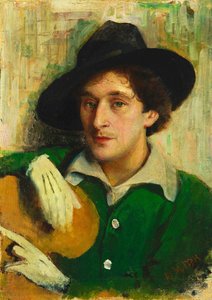
1887–1985, Bielorrússia
Marc Chagall
Vida Inicial, Família e Formação Marc Chagall chega ao mundo em 7 de julho de 1887, em Vitebsk, no Império Russo, nascido como Moishe Segal. Ele é o primeiro de nove filhos de uma modesta família judaica. Sua vida é definida pelos ritmos do trabalho e do pequeno comércio; seu pai, Khatskel Segal, trabalha como conservador de arenque em um armazém, enquanto sua mãe, Feïga-Ita Tchernina, administra uma pequena mercearia. Estes primeiros anos estão enraizados nas texturas específicas de uma cidade provincial, onde os limites de seu mundo são moldados pelas necessidades de um numeroso lar e pelas tradições de sua comunidade.
Também de Marc Chagall
 Eu e a Vila1911
 Crucificação Branca1938
 O Aniversário1915
 Sobre a cidade1918
Ensaios sobre A rooster
 Belarusian artworks of the 1960sIconic Belarusian artworks of the 1960s, including masterpieces by Marc Chagall. Explore the full collection online at OriginalUniqueArt.co…
 Dreaming in Color: The 25 Most Iconic Masterpieces by Marc ChagallExplore 25 iconic Marc Chagall masterpieces. Discover the dreamlike stories behind his colors on OriginalUniqueArt.com.
 Belarusian artworks of the 1950s1950s Belarusian art features masterpieces by Marc Chagall, including works like The Prophet. Find museum-quality reproductions on Original…