- Início

- Imagem Digital
- mabel frances layng
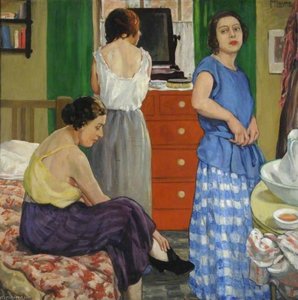
- The Tea Table

 Comprar impressão Encomendar pintura
 Enviar
 Compartilhar
 Detalhes da obra
 Adicionar aos favoritos

 Baixar
 Semelhantes
 Raio X
 Slideshow
The Tea Table
 1937
1937 60.0 x 75.0 cm
 Ver mais
Adquira uma imagem digital de alta resolução e aprimorada, muito superior à prévia online.
Cada arquivo é meticulosamente preparado por nossos especialistas internos, utilizando ferramentas avançadas e retoques manuais de alta precisão. Garantimos que cada imagem apresente clareza excepcional, fidelidade de cores e detalhes minuciosos.
O arquivo final é entregue por e-mail em até 72 horas, otimizado para uso imediato em ambientes profissionais, editoriais e de impressão. Esta é a mesma qualidade utilizada por estúdios de design de alto nível, editoras e galerias.
Imagem Digital
Baixe um arquivo de alta resolução para exibição pessoal, impressão e projetos criativos.
Incluído em cada pedido de imagem digital
Entrega Digital Especializada, Garantida
Ao escolher o OriginalUniqueArt.com, você não está apenas recebendo uma imagem — você está recebendo uma obra de arte digital profissionalmente aprimorada, elaborada com precisão e com garantia de satisfação. Aqui está tudo o que acompanha seu pedido, automaticamente:

Entrega rápida por e-mail
O seu arquivo de imagem digital em alta resolução será enviado por e-mail em até 72 horas após o pedido — pronto para uso imediato.

Arquivo Digital com IA
Sua obra de arte é otimizada profissionalmente por meio de ferramentas avançadas de IA e edição manual, garantindo o máximo de detalhes, clareza e precisão de cores.

Reenvio Gratuito Vitalício
Apagou ou perdeu o seu ficheiro acidentalmente? Não se preocupe – nós reenviamos para si a qualquer momento, gratuitamente.

Sem Taxas de Importação - Sempre
Desfrute da sua obra de arte instantaneamente, sem taxas alfandegárias, impostos ou custos de entrega — downloads digitais são sempre isentos de taxas.

Garantia de Precisão de Cores
Garantimos que sua imagem digital reflita as cores originais com a maior fidelidade possível, utilizando ferramentas profissionais e gerenciamento de cores.

Garantia de Satisfação de 60 Dias
Se você não estiver satisfeito com sua imagem digital, nós a revisaremos ou reembolsaremos 100% dentro de 60 dias — sem perguntas.

Garantia de Reembolso 100%
Não está satisfeito? Receba o reembolso total em até 60 dias após o recebimento do seu arquivo digital — sem perguntas.

Descontos para pedidos em lote
Compre 3 imagens, economize 10% - Compre 5, economize 15% - Compre 10+, economize 20%. Ideal para projetos criativos, galerias e agências.
Biografia do Artista
Mabel Frances Layng: A Victorian Observer of Everyday Life
Mabel Frances Layng (9 November 1881 – December 1937) emerges from the annals of British art as a quietly significant observer of early 20th-century life. Often overshadowed by her contemporaries, Layng’s work offers a delicate yet remarkably perceptive glimpse into the domestic routines and social customs of Victorian England and its immediate aftermath. Born in Macclesfield, Cheshire, to Alfred Edward Freestone Layng and Ada Mary Coates, her upbringing provided a foundation for an artistic sensibility deeply rooted in observation and a nuanced understanding of human interaction.
Her early education included studies at the St. John’s Wood Art School and, crucially, under Frank Brangwyn at the London School of Art between 1906 and 1908. This latter connection proved pivotal, exposing her to a style that blended Impressionistic techniques with a focus on capturing fleeting moments and atmospheric effects. Following this formative period, Layng established herself as a professional artist, primarily supporting herself through painting, a relatively uncommon path for women artists of the time. She moved to Ealing, Middlesex, in 1914, where she remained until her death, dedicating herself to her craft and quietly building a body of work that reveals both technical skill and a genuine empathy for her subjects.
A Career Defined by Observation and Detail
Layng’s artistic career unfolded during a period of significant social change. The First World War profoundly impacted British society, and Layng's paintings often reflect the anxieties and rhythms of this era. She joined the Voluntary Aid Detachment of the British Red Cross in 1915, providing medical assistance at various London hospitals – an experience that undoubtedly informed her depictions of everyday life and the resilience of ordinary people. Her artistic output was consistently exhibited throughout her lifetime, gaining recognition through venues such as the Royal Academy, the Paris Salon, and numerous galleries across Britain, including Walker’s Galleries in London. These exhibitions showcased a diverse range of subjects – landscapes, portraits, and scenes of urban life – all rendered with a meticulous attention to detail and a subtle use of color.
Notable amongst her works are paintings like “The Strolling Players” (1916), which captured the vibrancy of street performers, and “Mars and Venus” (1920), a romantic depiction of a couple. Her later pieces, such as "The Picnic" (1921) and "Crossing the Road" (1928), continued to explore themes of domesticity and social interaction, often portraying women engaged in everyday activities – shopping, socializing, or simply enjoying quiet moments within their homes.
Technique and Style: A Delicate Realism
Layng’s artistic style is characterized by a delicate realism that avoids grand gestures or dramatic compositions. She favored small-scale works—often oil paintings on canvas—that invite close scrutiny. Her brushwork is generally smooth and understated, prioritizing tonal variations and subtle shifts in color to create a sense of atmosphere and depth. She skillfully employed light and shadow to model forms and evoke the feeling of a particular moment in time. Influenced by Impressionism, she captured the fleeting effects of light and movement with remarkable sensitivity, yet her work retains a distinctly British sensibility – an appreciation for quiet observation and a nuanced understanding of human behavior.
Her use of color is particularly noteworthy. Layng favored muted tones—soft blues, greens, and browns—that contribute to the overall sense of tranquility and intimacy in her paintings. She avoided bright, saturated colors, instead opting for subtle harmonies that create a harmonious and inviting atmosphere. This restrained palette allows her subjects – often ordinary women engaged in everyday activities – to emerge with a quiet dignity and charm.
Legacy and Significance
Mabel Frances Layng’s contribution to British art is often overlooked, yet her work deserves recognition for its quiet beauty and insightful observations. She represents a significant voice within the broader context of women artists in the early 20th century, demonstrating both artistic skill and resilience in a period when opportunities for female artists were limited. Her paintings offer a valuable window into Victorian and Edwardian England, capturing not only the visual appearance of daily life but also the social dynamics and emotional nuances that shaped this era. Today, her works are held in several museums and galleries across the United Kingdom, ensuring that her quietly compelling vision continues to resonate with audiences.
Her legacy is further cemented by the efforts of Staffordshire Archives and Heritage, which have meticulously documented her life and work, making it accessible for research and appreciation. Layng’s story serves as a reminder that even in the shadows of more celebrated artists, there are countless individuals whose contributions deserve to be remembered and celebrated.
mabel frances layng
1881 - 1937
Informações Rápidas
- Artistic Movement Or Style: Impressionism
- Artists Who Influenced This Artist: ['Frank Brangwyn']
- Date Of Birth: November 9, 1881
- Date Of Death: December 1937
- Full Name: Mabel Frances Layng
- Nationality: British
- Notable Artworks:
- The Strolling Players
- Mars and Venus
- The Picnic
- The Workroom
- Crossing the Road
- Place Of Birth: Macclesfield, Cheshire

