

 Visualizar em escala
 Enviar
 Compartilhar
 Ver detalhes

 Baixar
 Semelhantes
 Raio X
 Apresentação de slides
Courtyard


 Ver mais
Reprodução em Óleo Feita à Mão
Óleo sobre tela pintado à mão no seu tamanho e moldura, feito sob encomenda pelos nossos artistas. ( Ver impressão do pedido Baixar imagem em alta resolução)




































Escolha entre os nossos tamanhos pré-definidos que respeitam as proporções originais da obra de arte.

Pode inserir as suas próprias dimensões para se adequar a uma moldura ou espaço específico. Se o tamanho selecionado não corresponder às proporções da imagem original, iremos cortar a obra de arte ou estender a pintura com elementos adicionais pintados à mão. Um esboço digital será enviado para sua aprovação antes do início da produção.
Tenha em atenção que a pré-visualização no ecrã não reflete o corte ou extensão real. Apenas o esboço mostrará com precisão a composição final.
Embora tamanhos personalizados estejam disponíveis, recomendamos selecionar uma dimensão da lista predefinida para preservar as proporções originais.
Após o pedido, a equipa OriginalUniqueArt.com enviará um e-mail ao cliente para solicitar instruções e fornecer uma prévia do esboço.
Entrega mundial () em 3 a 4 semanas, em vez das 5 semanas padrão. (11 Agosto). Sem comprometer a qualidade.

Envio Expresso Gratuito para todo o Mundo

Tela de Linho Premium

Seguro de transporte total

Garantia de Reembolso de Impostos Alfandegários

Garantia de Fidelidade de Cor

Política de Devolução de 60 Dias (Apenas para Defeitos)

Garantia de reembolso de 100%

Desconto para múltiplas unidades
 A opção de vidro está disponível apenas para tamanhos inferiores a 110 cm

Courtyard
Técnica de Reprodução
Dimensões da Reprodução
-


Preço Total
$ 300
Biografia do Artista
Jean Fouquet: A Pioneer of Portraiture and Renaissance Innovation
Jean Fouquet, a figure shrouded in intriguing mystery, stands as one of the most pivotal artists of early 15th-century France. Born around 1420 in Tours and dying in 1481, he wasn’t merely a painter; he was a revolutionary who fundamentally altered the course of European art by pioneering portraiture and introducing Italian Renaissance techniques to a French audience. While much about his life remains elusive – his early training is debated, with theories suggesting influences from both the Van Eycks in Bruges and the Master of Flémalle in Ghent – Fouquet’s impact on subsequent generations of artists is undeniable.
Fouquet's career unfolded against a backdrop of intense political and social change. The Hundred Years’ War was still raging, and France was grappling with establishing its own distinct identity amidst the influence of England. This context profoundly shaped his work, particularly his commissions for the French court under kings Charles VII and Louis XI. He wasn’t simply producing devotional images; he was actively participating in a deliberate effort to solidify national pride through art, as evidenced by his iconic portrait of Charles VII, a rare depiction of a reigning monarch during that era.
Fouquet's artistic style is characterized by a remarkable synthesis of Northern European and Italian Renaissance elements. He inherited the meticulous detail and rich colors of the Flemish masters, particularly in his panel paintings, but he also embraced the innovations of the burgeoning Italian Renaissance – linear perspective, atmospheric modeling, and a heightened sense of realism. His works are distinguished by their elegant compositions, refined drapery, and subtle use of light and shadow, creating an illusionistic depth rarely seen in contemporary French art. He was a master of capturing fleeting expressions and conveying psychological nuance, particularly evident in his portraits.
The Development of Portraiture
Perhaps Fouquet’s most significant contribution to the history of art lies in his development of portraiture as a distinct genre. Before him, depictions of individuals were largely confined to religious or allegorical contexts. Fouquet, however, began creating intimate and individualized portraits that captured the likenesses of prominent figures – courtiers, diplomats, and even members of the royal family. These weren’t simply formal representations; they possessed a remarkable degree of psychological insight, revealing the personalities and character of their subjects.
His most famous portrait, the depiction of Charles VII, exemplifies this innovation. The painting is not merely a likeness but a carefully constructed image designed to project an aura of authority and legitimacy. Fouquet skillfully employed techniques such as sfumato – a subtle blurring of outlines – to create a sense of depth and volume, while his use of color and composition contributes to the overall impression of regal dignity. This portrait marked a crucial shift in artistic practice, paving the way for future generations of portraitists.
Techniques and Influences
Fouquet’s technical skill was exceptional, reflecting a deep understanding of both Flemish and Italian painting traditions. He mastered the use of oil paint, which allowed him to achieve greater luminosity and subtlety than tempera, a medium commonly used at the time. His meticulous attention to detail is evident in his rendering of fabrics, jewelry, and facial features – all rendered with astonishing precision.
His artistic journey was profoundly shaped by his travels to Italy. During this period, he encountered the works of masters such as Fra Angelico and Filarete, absorbing their innovative techniques and stylistic approaches. He skillfully integrated these influences into his own work, creating a unique synthesis that distinguished him from his contemporaries. The influence of Italian perspective is particularly noticeable in his later paintings, where he employed linear perspective to create a more realistic sense of space.
Legacy and Historical Significance
Despite the challenges of reconstructing his life and career, Jean Fouquet’s legacy as one of the most important artists of the early 15th century is firmly established. He was a pioneer in portraiture, introducing a new level of psychological realism to European art. His innovative use of perspective and his synthesis of Northern and Italian artistic traditions profoundly influenced subsequent generations of painters, including those who would later contribute to the development of the Renaissance.
Fouquet’s work stands as a testament to the dynamism and creativity of early 15th-century France. He was not merely a painter; he was an artist who helped shape the cultural landscape of his time, leaving behind a body of work that continues to fascinate and inspire art historians today. His contributions are often overlooked in favor of more prominent figures of the Renaissance, but his influence on the development of portraiture and European painting is undeniable.
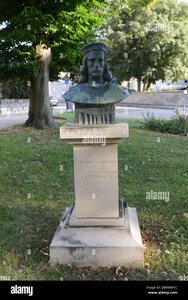
luciano laurana
1420 - 1479 , Italy
Informações Rápidas
- Artistic Movement Or Style: Early Renaissance
- Artists Or Movements Influenced By This Artist:
- Fra Angelico
- Masaccio
- Artists Who Influenced This Artist:
- Van Eycks
- Lorenzo Monaco
- Date Of Birth: c. 1420
- Date Of Death: 1481
- Full Name: Jean Fouquet
- Nationality: French
- Notable Artworks:
- Portrait of a Young Man
- Haft Paykar copy
- Episodes from Lives
- Place Of Birth: Tours, France

