Berlin Secession · 1900
Salome, Second Version (Lovis Corinth, 1900)
Lovis Corinth (1858–1925) criou Salome, Second Version. Data de 1900. Pertence ao movimento Berlin Secession. É feito em Acrylic On Canvas. Está conservada no Museum der bildenden Künste, em Leipzig, Alemanha. Mede 127 × 148 cm.
- 1900
- Acrylic On Canvas
- 127 × 148 cm
- Museum der bildenden Künste, Leipzig

 Visualizar na parede

 Pintura a Óleo Feita à Mão
 Compartilhar
 Compartilhar
 Ficha técnica


 Baixar imagem
 Semelhantes
 Raio X
 Ver diaporama
 Perguntas e Respostas

 Estatísticas
Salome, Second Version, em resumo
- Título
- Salome, Second Version
- Artista
- Lovis Corinth (1858–1925)
- Artista nascido em
- Tauwade, Rússia
- Data
- 1900
- Técnica
- Acrylic On Canvas
- Dimensões
- 127 × 148 cm
- Onde ver
- Museum der bildenden Künste, Leipzig, Alemanha
- Movimento
- Berlin Secession
- Período
- 19th Century
- Tema
- salome, herodias, dance, tragedy, execution, biblical
O que Salome, Second Version retrata?
A Descent into Shadow and Desire: Lovis Corinth’s ‘Salome, Second Version’
Lovis Corinth's “Salome, Second Version,” painted in 1900, isn’t merely a depiction of the biblical tale; it’s a visceral exploration of power, betrayal, and the unsettling allure of darkness. This arresting canvas, currently residing within the Museum der Bildenden Künste in Leipzig, immediately commands attention with its dramatic composition and intensely expressive palette. Corinth, a pivotal figure bridging Impressionism and Expressionism, masterfully eschews traditional romanticism, instead presenting a Salome far removed from the idealized figures of earlier portrayals. Instead of a passive object of desire, she emerges as a complex, almost defiant presence – a woman caught in the throes of her own ambition and haunted by the consequences of her actions.
The painting’s genesis lies within the turbulent artistic landscape of early 20th-century Berlin. Corinth, having moved there from Munich, found himself at the heart of a vibrant, often contentious, art scene. The Secession group, with its emphasis on freedom and innovation, provided a fertile ground for his evolving style. “Salome” reflects this period’s fascination with psychological depth and emotional intensity – a departure from the polished surfaces of academic painting. Corinth deliberately chose to revisit the legend, not as a straightforward narrative illustration, but as an opportunity to delve into the character's inner turmoil and the moral ambiguity at the heart of the story.
The Dance and its Discontents: Technique and Composition
Corinth’s technique is immediately striking. He employs a bold, almost frenetic brushstroke – thick impasto applied with visible energy – that imbues the canvas with a sense of movement and urgency. The colors are rich and saturated, dominated by deep reds, purples, and blacks, creating an atmosphere of dramatic intensity. The composition itself is carefully constructed to draw the viewer into the scene. Salome, positioned centrally, dominates the foreground, her body tilted forward in a pose that suggests both vulnerability and calculated seduction. The figures surrounding her – the servant bearing the head, the watchful woman with the fan, and the shadowy men – are rendered with varying degrees of detail, contributing to the painting’s overall sense of unease and disorientation.
- Brushwork: Thick, expressive strokes create a dynamic and unsettling effect.
- Color Palette: Dominated by deep reds, purples, and blacks, evoking drama and shadow.
- Composition: Salome is centrally positioned, drawing the viewer's eye and emphasizing her role as the focal point of the scene.
Symbolism and Interpretation: A Portrait of Moral Ambiguity
Beyond the literal depiction of the biblical story, “Salome” is laden with symbolic meaning. The dance itself represents a dangerous allure – a seductive invitation to transgression. The severed head on the platter isn’t simply a gruesome trophy; it's a potent symbol of ambition and the destructive consequences of unchecked desire. Corinth deliberately avoids offering a clear moral judgment, instead presenting a complex portrait of a woman driven by both her own desires and the manipulative influence of her mother. The inclusion of the fan-bearing woman, often interpreted as Herodias, adds another layer of intrigue, suggesting a conspiracy at play – a deliberate orchestration of events that leads to John the Baptist’s demise.
Furthermore, the painting can be viewed through the lens of the burgeoning feminist movement of the time. Salome's defiant gaze and her unapologetic embrace of her sexuality challenged traditional notions of female virtue and presented a powerful image of female agency – albeit one ultimately consumed by tragedy. Corinth’s decision to portray her as a figure of both beauty and menace reflects the complex and often contradictory attitudes towards women in early 20th-century society.
Emotional Resonance: A Timeless Exploration of Human Darkness
“Salome, Second Version” continues to resonate with viewers today because it taps into fundamental human emotions – desire, betrayal, guilt, and the haunting awareness of our own mortality. Corinth’s masterful use of color, composition, and symbolism creates a painting that is both visually arresting and psychologically profound. It's not a comfortable image; it confronts us with the darker aspects of human nature and reminds us that even in moments of apparent beauty and pleasure, there can be a lurking sense of unease and impending doom. Reproductions of this powerful work offer a glimpse into Corinth’s artistic genius and provide an opportunity to contemplate the timeless themes explored within its shadowed depths.
Em qual museu se encontra Salome, Second Version?
Museum der bildenden Künste
Leipzig, Alemanha
Um Legado Forjado no Tempo: A Alma do Coração Artístico de Leipzig Na vibrante paisagem cultural da Saxônia, Alemanha, ergue-se uma instituição que serve como muito mais do que um mero repositório de obras-primas; é um testemunho vivo da resiliência humana e do poder duradouro da criatividade. O Museum der bildenden Künste (MdbK) , em Leipzig, encapsula sete séculos de empenho artístico, tecendo uma narrativa que abrange desde o final da Idade Média até a vanguarda da prática contemporânea. Fundado em 1837 como a Associação de Arte de Leipzig, a jornada do museu tem sido de profunda transformação, marcada pelas sombras da destruição e pelo brilando renascimento.


Imagens em alta resolução de Salome, Second Version
Lovis Corinth, Salome, Second Version (1900), Museum der bildenden Künste. Domínio público.
Perguntas sobre Salome, Second Version respondidas
Onde "Salome, Second Version", de Lovis Corinth está em exibição hoje?
A obra original "Salome, Second Version" pode ser vista no Museum der bildenden Künste, Leipzig, Alemanha.
Em que ano foi criado "Salome, Second Version", de Lovis Corinth?
"Salome, Second Version", de Lovis Corinth foi criado em 1900.
De que técnica é feita a obra "Salome, Second Version"?
Lovis Corinth utilizou a técnica de Acrylic On Canvas para "Salome, Second Version". A técnica define a natureza material da obra original.
Quais são as dimensões da obra original "Salome, Second Version"?
A obra original "Salome, Second Version", de Lovis Corinth mede 127 x 148 cm.
Quais temas aparecem em "Salome, Second Version", de Lovis Corinth?
Os temas presentes em "Salome, Second Version", de Lovis Corinth incluem salome, herodias, dance, tragedy, execution, biblical, figures. Juntos, eles sintetizam o assunto da obra.
"Salome, Second Version" está em domínio público?
"Salome, Second Version", de Lovis Corinth está em em domínio público — seus direitos autorais expiraram. Este status determina como a imagem da obra pode ser reproduzida.
Quem é o artista por trás de "Salome, Second Version"?
"Salome, Second Version" é atribuída a Lovis Corinth.
A qual movimento artístico pertence "Salome, Second Version", de Lovis Corinth?
O movimento associado a "Salome, Second Version", de Lovis Corinth é Berlin Secession. Esta classificação situa a obra entre artistas e obras de arte relacionados.
A que período da carreira de Lovis Corinth pertence "Salome, Second Version"?
Dentro da trajetória de Lovis Corinth, "Salome, Second Version" pertence ao período Berlin Secession Era. Esta fase permite compará-la com outras obras do artista.
Sobre o artista, Lovis Corinth

1858–1925, Rússia
Lovis Corinth
A Life Forged in Paint: The World of Lovis Corinth Lovis Corinth, nascido Franz Heinrich Louis em 21 de julho de 1858, na província prussiana do leste, foi uma figura que personificou a tumultuada transição do século XIX para o início do século XX no mundo da arte. Sua jornada não foi um reconhecimento imediato, mas sim uma evolução gradual impulsionada por estudo incansável, influências diversas e, em última análise, por uma tragédia pessoal. Os primeiros anos de Corinth estavam enraizados nos paisagens rurais de seu berço, Tapiau, onde seu pai trabalhava como alfaiate. Essa exposição precoce à fisicalidade do trabalho e à beleza bruta da natureza permeou sutilmente seu trabalho posterior, mesmo em meio a explorações estilísticas mais sofisticadas.
Também de Lovis Corinth
 Na Casa de Abate1893
 Wilhelmine com uma Bola1915
 Portrait of the Painter Paul Eugène Gorge1908
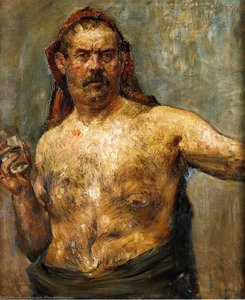 Self Portrait with a Glass1907
Ensaios sobre Salome, Second Version
 Lovis Corinth: Bridging Impressionism & Expressionism – A Study of Artistic EvolutionExplore the fascinating artistic journey of Lovis Corinth, a pivotal figure bridging Impressionism & Expressionism. Discover his evolution,…
 The Soul of the Brushstroke: Why Textured Impasto Defines the Magic of Impressionist MasterpiecesDiscover the tactile magic of Impressionism. Explore how the impasto technique breathes life into masterpieces through texture and light. E…
 Unveiling the Dreamer: The 25 Most Iconic Masterpieces by Gustave MoreauStep into the dreamlike world of Gustave Moreau. Explore 25 iconic Symbolist masterpieces, from mythic legends to opulent textures. Find in…