

 Enviar
 Compartilhar
 Ver detalhes

 Baixar
 Semelhantes
 Apresentação de slides
Maman


 Ver mais
Giclée / Impressão de Arte
Impressão giclée ou em tela de qualidade de museu, com produção rápida e opções flexíveis de acabamento. ( Encomendar reprodução pintada à mão Comprar imagem em alta resolução)




































Escolha entre os nossos tamanhos pré-definidos que respeitam as proporções originais da obra de arte.

Você pode inserir suas próprias dimensões para se ajustar a uma moldura ou espaço específico. Se o tamanho selecionado não corresponder às proporções da imagem original, iremos recortar a obra de arte ou estender a imagem com uma borda espelhada ou preenchimento sólido. Um mockup digital será enviado para sua aprovação antes do início da produção.
Por favor, observe que a visualização na tela não reflete o recorte ou a extensão real. Apenas o mockup mostrará com precisão a composição final.
Embora tamanhos personalizados estejam disponíveis, recomendamos selecionar uma dimensão da lista predefinida para preservar as proporções originais.
Entrega mundial () em 2 semanas, em vez das 4/5 semanas padrão. (21 Agosto)

Envio Expresso Gratuito para todo o Mundo

Tela de Linho Premium

Seguro de transporte total

Garantia de Reembolso de Impostos Alfandegários

Garantia de Fidelidade de Cor

Política de Devolução de 60 Dias (Apenas para Defeitos)

Garantia de reembolso de 100%

Desconto para múltiplas unidades
 A opção de vidro está disponível apenas para tamanhos inferiores a 110 cm

Maman
Giclée / Impressão de Arte
Dimensões da Reprodução
-


Preço Total
$ 80
Descrição do Item
The Genesis of a Monster
Louise Bourgeois’ *Maman* – “Mother” in French – isn't merely a sculpture; it’s an excavation of the artist’s deeply personal and profoundly unsettling relationship with her own mother. Created in 1999, this monumental bronze, stainless steel, and marble spider stands over nine feet tall and nearly thirteen feet wide, dominating any space it occupies. Initially conceived as part of the Unilever Series at Tate Modern in London, *Maman* quickly transcended its initial context to become an iconic symbol of maternal anxiety, childhood trauma, and the complex, often contradictory nature of motherhood itself. Bourgeois’s artistic process was always intensely autobiographical; she frequently drew upon her own experiences – particularly those surrounding her difficult relationship with her father and the early loss of her mother – as a wellspring for her work. *Maman* is arguably the most potent manifestation of this approach, embodying both the nurturing instinct associated with motherhood and the primal fear that can accompany it.A Spider’s Anatomy: Form and Technique
The sculpture's design is deliberately unsettling. The spider’s colossal size immediately commands attention, while its spindly, almost precarious legs create a sense of instability and vulnerability. Bourgeois meticulously crafted each individual strand of the web from stainless steel, a material chosen for its durability and reflective qualities – mirroring both the strength and fragility inherent in the maternal role. The marble eggs, nestled within the spider’s abdomen, are not smooth or polished; they're rough-hewn and uneven, hinting at the precariousness of new life. The bronze body itself is textured with a deliberate roughness, reflecting Bourgeois’s preference for materials that retain their imperfections – a conscious rejection of idealized beauty in favor of raw emotional honesty. The sculpture was cast by the Modern Art Foundry, chosen for its expertise in working with large-scale metal sculptures and its commitment to preserving the artist's vision.Symbolism Woven into Silk
The spider itself is a rich symbol laden with complex meanings. For Bourgeois, it represents her mother, Joséphine Fauriaux, who was a tapestry restorer – a profession intimately linked to weaving and creating intricate patterns from seemingly disparate threads. The spider’s web, a fundamental element of its design, symbolizes the protective embrace of motherhood, but also the inescapable trap of familial obligation. The multiple eyes on the spider's head are often interpreted as representing Bourgeois’s own fragmented memories and anxieties – a visual representation of her struggle to piece together her past. The sculpture’s size further amplifies this symbolism; it is both imposing and vulnerable, reflecting the overwhelming nature of maternal responsibility alongside the inherent fragility of life. The deliberate inclusion of the eggs within the spider's body underscores the precariousness of motherhood and the constant threat of loss.A Legacy of Emotional Resonance
*Maman* has resonated deeply with audiences since its creation, becoming a staple in museum collections worldwide and inspiring countless reproductions. Its enduring appeal lies not only in its striking visual impact but also in its ability to evoke profound emotional responses. It’s a sculpture that confronts viewers with uncomfortable truths about family dynamics, the complexities of maternal relationships, and the lingering effects of childhood trauma. Louise Bourgeois herself described the spider as “my most successful subject,” stating that it embodied her mother's strength and vulnerability – a potent symbol of both protection and predation. *Maman* remains a testament to Bourgeois’s extraordinary ability to transform personal pain into universally relatable art, solidifying its place as one of the 20th century’s most significant sculptures.Biografia do Artista
Louise Joséphine Bourgeois: A Life Sculpted by Memory
Louise Joséphine Bourgeois, a name synonymous with emotionally charged sculpture and profoundly personal artistic exploration, stands as one of the most influential figures in 20th and 21st-century art. Born in Paris in 1911 into a family deeply rooted in the tradition of tapestry restoration, her life unfolded as a complex interplay of intellectual rigor, familial trauma, and an unwavering commitment to translating inner experience into tangible form. The scent of dye and the intricate patterns of woven threads – remnants of her childhood spent amidst these textiles – became early companions, shaping an aesthetic sensibility that would later manifest in her innovative use of materials – from bronze and marble to fabric, latex, and found objects. Her formative years were marked by a profound sense of loss, stemming primarily from the untimely death of her mother when she was just eleven years old, an event that cast a long shadow over her life and became a recurring motif in her work. Coupled with the revelation of her father’s infidelity, this early grief fueled a lifelong exploration of themes surrounding motherhood, sexuality, memory, and the intricate complexities of human relationships. Initially drawn to mathematics at the Sorbonne – a pursuit she valued for its inherent order and logic – Bourgeois soon abandoned this path following her mother's death, turning instead to the more fluid and expressive world of art. She studied at prestigious institutions like the École des Beaux-Arts and École du Louvre, but also sought guidance in independent academies, absorbing diverse artistic approaches that would inform her unique vision.Early Years and Artistic Foundations
Bourgeois’s arrival in New York City in 1938, following her marriage to art historian Robert Goldwater, marked a pivotal moment in her artistic development. Immersed in the vibrant art scene of post-war America, she became associated with the Abstract Expressionist movement, yet always maintained a distinct and intensely personal voice. While sharing their emphasis on emotional intensity, Bourgeois diverged from pure abstraction, infusing her work with symbolic imagery and autobiographical references. Her early training at the Sorbonne instilled in her a love for order and precision, which she later channeled into meticulous craftsmanship and a deep understanding of materials. The École des Beaux-Arts provided her with foundational skills in drawing and painting, while her studies at the École du Louvre exposed her to the vast canon of Western art, broadening her artistic vocabulary. Crucially, she also sought guidance from independent academies, such as the Académie Colarossi and Montmartre, where she learned techniques from masters like Fernand Léger and Paul Colin – artists whose work explored themes of modernity, abstraction, and social commentary. These diverse influences coalesced to form a unique artistic voice that would define her career.From Abstraction to Introspection: The Evolution of an Artistic Voice
Bourgeois’s early sculptures were often constructed from found objects and wood, reflecting a fascination with the discarded and forgotten – materials imbued with a sense of fragility and vulnerability. These works hinted at the psychological tensions simmering beneath the surface, foreshadowing the more emotionally charged themes that would dominate her later work. As she moved through the 1940s and 50s, she experimented with various mediums, gradually gravitating towards sculpture as the most effective means of expressing her inner world. The influence of Surrealism became increasingly apparent during this period, as Bourgeois explored the realm of dreams, anxieties, and repressed memories – delving into the subconscious through symbolic imagery and unsettling forms. Her work began to incorporate elements of the unconscious, reflecting a desire to confront and process deeply buried emotions. This shift was further influenced by her experiences as a mother and wife, grappling with themes of domesticity, sexuality, and the complexities of family relationships.Recurring Themes: A Landscape of the Psyche
The core of Bourgeois’s artistic power lies in her relentless exploration of universal human experiences through the lens of her own biography. Domesticity, often depicted as a site of both comfort and confinement, is a recurring theme, explored through sculptures that evoke the architecture of homes – rooms, cells, and towers – imbued with a sense of unease and psychological tension. Quarantania I, for example, embodies this exploration, presenting a fragmented domestic space that reflects the complexities of family life. Sexuality, particularly female desire and vulnerability, is another central concern, addressed in works that challenge conventional representations of the body and explore the power dynamics inherent in relationships. Perhaps most profoundly, Bourgeois grappled with themes of the unconscious, delving into personal memories, dreams, and anxieties through symbolic imagery – spiders representing protective mothers, phallic forms embodying both creation and destruction, and fragmented bodies reflecting psychological trauma. The specter of her parents loomed large in her work, particularly the complex relationship she had with her mother and the impact of childhood loss. Her sculptures often feature distorted or fragmented maternal figures, expressing a mixture of longing, resentment, and unresolved grief. The Cell series, perhaps her most iconic body of work, encapsulates these themes, creating enclosed spaces that evoke feelings of confinement, vulnerability, and psychological introspection.Legacy and Enduring Influence
While Bourgeois exhibited throughout her career, it was in the 1980s and 90s that she experienced a significant resurgence in popularity and critical acclaim, solidifying her place as a major figure in 20th-century art. This late recognition was not merely a matter of belated appreciation; it reflected a growing cultural interest in themes of trauma, memory, and the female experience – themes that Bourgeois had been exploring for decades with unwavering honesty and courage. She paved the way for subsequent generations of female artists, challenging the male-dominated art world and demonstrating the power of personal narrative as a source of artistic innovation. Her influence extends far beyond sculpture, impacting contemporary installation art, performance art, and even feminist theory. Bourgeois’s willingness to confront difficult emotions and explore taboo subjects opened up new avenues for artistic expression, inspiring artists to embrace vulnerability and authenticity in their work. As both a French and American artist, her contributions enrich the artistic traditions of both nations. Her legacy continues to resonate today, reminding us of the enduring power of art to heal, provoke, and illuminate the complexities of the human condition.
Louise Bourgeois
1911 - 2010 , França
Informações Rápidas
- Artistic Movement Or Style: Expressionismo Abstrato
- Artists Or Movements Influenced By This Artist:
- Surrealismo
- Arte Feminista
- Artists Who Influenced This Artist:
- Fernand Léger
- Paul Colin
- Date Of Birth: 25 de dezembro de 1911
- Date Of Death: 31 de maio de 2010
- Full Name: Louise Joséphine Bourgeois
- Nationality: Francesa-Americana
- Notable Artworks:
- Maman
- Quarantania I
- Cell (Choisy)
- Place Of Birth: Paris, França
Artigos Relacionados

As 10 Obras em Bronze Mais Icônicas que Transformaram a História da Arte | OriginalUniqueArt
Descubra as 10 esculturas em bronze mais influentes da história! Explore a arte de Rodin, Michelangelo e outros mestres. Reproduções de alta qualidade para decorar sua casa com elegância. OriginalUniqueArt.

Esculturas em Bronze Icônicas: 10 Obras que Revolucionaram a Arte | OriginalUniqueArt
Descubra as 10 esculturas em bronze mais icônicas da história! Explore a arte de Rodin, Michelangelo e outros mestres. Encontre reproduções de alta qualidade para sua casa em OriginalUniqueArt.com.

The Enduring Legacy of Bronze: A Historical & Artistic Exploration for the Collector
Explore the rich history & enduring appeal of bronze sculpture with expert insights for collectors at OriginalUniqueArt. Learn about casting techniques, iconic artists, collecting tips & contemporary interpretations.
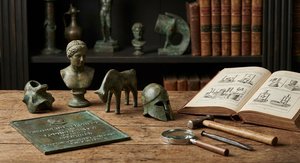
The Enduring Legacy of Bronze: History, Technique & Artistic Expression for the Collector
Explore the rich history & enduring appeal of bronze sculpture with expert insights for collectors at OriginalUniqueArt. Learn about casting techniques, iconic artists, and collecting tips.

The Enduring Legacy of Bronze Sculpture: A Collector's Guide to Form & Cultural Significance
Explore the rich history & enduring appeal of bronze sculpture with expert insights for collectors at OriginalUniqueArt. Learn about casting techniques, iconic artists, and collecting tips to build a discerning art collection.

