Text size

() ·

A painting made for you, by hand

The Visitation

Reprodução em Óleo Feita à Mão

Óleo sobre tela pintado à mão no tamanho e moldura de sua escolha, feito sob encomenda pelos nossos artistas. ( Alternar para Impressão Alternar para Imagem Digital)

Descrição do Item

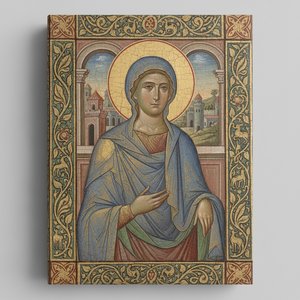
Lorenzo Monaco’s "The Visitation" (1405) is a stunning Early Renaissance tempera panel. Explore Byzantine influences, opulent gold & vibrant colors depicting divine grace. A masterpiece of piety and spiritual encounter.

Biografia do Artista

Descubra Lorenzo Monaco (1370-1425), pintor florentino que une elegância gótica e inovação renascentista precoce. Explore suas obras religiosas iluminadas e seu estilo único – um verdadeiro legado artístico!

from ·

Chapter 1

How large should it be?

Slide to change the size; the picture on the left shows the frame at its real width. The proportions of the original are kept.

Tamanho padrão
personalizado
CM
INCH

Escolha entre os nossos tamanhos pré-definidos que respeitam as proporções originais da obra de arte.

largura
altura

Insira a largura e a altura desejadas para se ajustarem à sua moldura ou parede. Como esta obra é pintada à mão, para um tamanho com proporções diferentes, o artista poderá pintar um pouco mais ao redor da imagem ou reduzir ligeiramente a composição — você escolhe. Enviamos uma maquete digital para sua aprovação antes de iniciar a pintura. A imagem exibida nesta página não representa o resultado real — apenas a maquete mostra o resultado final.

Chapter 2

How should it arrive?

Choose the edges of the stretched canvas

Choose your frame

Corner sample of the WhiteWrap canvas edge finish, stretched on madeira maciça bars
White €1
Corner sample of the BlurSideWrap canvas edge finish, stretched on madeira maciça bars
Blurside €1
Corner sample of the ExtendedWrap canvas edge finish, stretched on madeira maciça bars
Extended €1
Corner sample of the P118B picture frame: poliestireno moldado, 5 cm wide and 3 cm thick
P118B €10
Corner sample of the P118H picture frame: poliestireno moldado, 5 cm wide and 3 cm thick
P118H €10
Corner sample of the P118W picture frame: poliestireno moldado, 5 cm wide and 3 cm thick
P118W €10
Corner sample of the P438Z picture frame: poliestireno moldado, 5.5 cm wide and 3.5 cm thick
P438Z €10
Corner sample of the P508JH picture frame: poliestireno moldado, 7 cm wide and 3.5 cm thick
P508JH €12
Corner sample of the P508YH picture frame: poliestireno moldado, 7 cm wide and 3.5 cm thick
P508YH €12
Corner sample of the P805H picture frame: poliestireno moldado, 5 cm wide and 3.5 cm thick
P805H €10
Corner sample of the P805Z picture frame: poliestireno moldado, 5 cm wide and 3.5 cm thick
P805Z €10
Corner sample of the P919BZ picture frame: poliestireno moldado, 7 cm wide and 3.5 cm thick
P919BZ €10
Corner sample of the P919G picture frame: poliestireno moldado, 7 cm wide and 3.5 cm thick
P919G €10
Corner sample of the P919XJ picture frame: poliestireno moldado, 7 cm wide and 3.5 cm thick
P919XJ €10
Corner sample of the P959ZH picture frame: poliestireno moldado, 5 cm wide and 3 cm thick
P959ZH €10
Corner sample of the P968JZ picture frame: poliestireno moldado, 6 cm wide and 4 cm thick
P968JZ €12
Corner sample of the W106C picture frame: madeira maciça, 5 cm wide and 3 cm thick
W106C €8
Corner sample of the W218G picture frame: madeira maciça, 5 cm wide and 3 cm thick
W218G €10
Corner sample of the W218JH picture frame: madeira maciça, 5 cm wide and 3 cm thick
W218JH €8
Corner sample of the W218Y picture frame: madeira maciça, 5 cm wide and 3 cm thick
W218Y €10
Corner sample of the W307PJ picture frame: madeira maciça, 6 cm wide and 3 cm thick
W307PJ €10
Corner sample of the W316G picture frame: madeira maciça, 6 cm wide and 3 cm thick
W316G €10
Corner sample of the W316PJ picture frame: madeira maciça, 6 cm wide and 3 cm thick
W316PJ €8
Corner sample of the W316Y picture frame: madeira maciça, 6 cm wide and 3 cm thick
W316Y €10
Corner sample of the W398PJ picture frame: madeira maciça, 5 cm wide and 3 cm thick
W398PJ €8
Corner sample of the W4111J picture frame: madeira maciça, 6.5 cm wide and 3.5 cm thick
W4111J €10
Corner sample of the W500HY picture frame: madeira maciça, 7 cm wide and 5 cm thick
W500HY €15
Corner sample of the W500JH picture frame: madeira maciça, 7 cm wide and 5 cm thick
W500JH €15
Corner sample of the W692G picture frame: madeira maciça, 8 cm wide and 4 cm thick
W692G €12
Corner sample of the W849H picture frame: madeira maciça, 5 cm wide and 3 cm thick
W849H €8
Corner sample of the W940BG picture frame: madeira maciça, 7.5 cm wide and 4.5 cm thick
W940BG €15
Corner sample of the W953PJ picture frame: madeira maciça, 6 cm wide and 3.5 cm thick
W953PJ €8
Corner sample of the H24-GOLD picture frame: madeira entalhada com gesso, 10 cm wide and 6 cm thick
H24-GOLD €30
Corner sample of the H24-SILVER picture frame: madeira entalhada com gesso, 10 cm wide and 6 cm thick
H24-SILVER €30
Corner sample of the H36-GOLD picture frame: madeira entalhada com gesso, 15 cm wide and 6.5 cm thick
H36-GOLD €45
Corner sample of the H36-SILVER picture frame: madeira entalhada com gesso, 15 cm wide and 6.5 cm thick
H36-SILVER €45
Prévia da moldura
Com moldura

Moulding: . Overall size with the frame: .

Chapter 3

Who paints it, and should anything change?

Examples of what can be changed: Replace face with customer photo; Add pet (e.g., replace cat with dog); Include hidden message in background; Change background landscape or elements.
After order, OriginalUniqueArt.com team will email client for instructions and provide a mockup preview

Entrega mundial () em 3 a 4 semanas, em vez das 5 semanas padrão. (3 Novembro). Sem comprometer a qualidade.

Chapter 4

The finishing touches

A nameplate, as in a museum?

Detalhes da Placa de Bronze Gravada

This elegant plaque features the artist's name and the title of the artwork, finely engraved for a timeless presentation.

It is made from bronze with a refined, elegant finish. The text is precisely laser-engraved for a sharp and permanent result. Measuring 9x2 cm, the plaque is compact yet easy to read. It's built to be durable and scratch-resistant, offering a professional, museum-quality look. Mounting is simple thanks to the included adhesive backing.

Detalhes da Placa de Acrílico Transparente

The plaque includes essential engraved details such as the artist's name, the title of the artwork, the date it was created, the type of media used-like oil on canvas or watercolor-a brief description of the piece, and a QR code that links to the complete artwork information.

It is crafted from clear acrylic, offering a sleek, modern appearance. The text is UV-engraved in black to ensure strong visual contrast. With a size of 10x15 cm, it ensures optimal readability. It comes equipped with two metal hooks for secure wall mounting. The plaque is designed to be weather-resistant, making it suitable for various environments, and it includes interactive features that work seamlessly with smartphone scanning.

Detalhes da Placa de Acrílico Preto

This elegant plaque includes engraved information such as the artist's name, the title of the artwork, the date it was created, the type of media used (like oil on canvas or watercolor), a short description of the artwork, and a QR code for quick access to more information.

The plaque itself is made from refined black acrylic with a premium finish. The text is laser-engraved in white for high contrast and readability. Its size is 10x15 cm, designed to be easy to read. It comes with two metal hooks for professional mounting. The design is sleek and fits any interior style. It is also weather-resistant and durable, with built-in digital integration for mobile compatibility.

A protective varnish?

When do you need it?

Chapter 5

Your painting, as you ordered it

The Visitation

Técnica de Reprodução

Tamanho da Reprodução

-

Artista Sênior de Elite

Mais detalhes, refinamento e tempo de produção adicional

-

Moldura para Reprodução

-

-

Para obras de arte ou reproduções com mais de 105 cm (aproximadamente 41 polegadas) em qualquer um dos lados, a moldura será enviada como um kit desmontado. Este método garante uma entrega segura e evita danos durante o transporte.

Montagem profissional necessária — este não é um produto DIY (faça você mesmo).
O kit deve ser montado e a tela esticada por um profissional de molduraria experiente, utilizando cola de madeira (não inclusa), um alicate de esticar tela e grampos para manter as travessas alinhadas enquanto a cola seca. A montagem incorreta ou a tensão desigual da tela podem danificar permanentemente a obra de arte e não estão cobertas pela nossa garantia.

  • Todas as barras de madeira maciça estão incluídas, precisamente cortadas ao tamanho certo.

  • Montado com os parafusos fornecidos, além de cola para madeira para as junções dos cantos, que não está inclusa e deve ser providenciada pelo seu moldurista.

  • São necessárias ferramentas profissionais não incluídas: um alicate de estiramento de tela (esticador) e grampos para manter as ripas alinhadas enquanto a cola seca.

Importante:
As junções dos cantos requerem cola para madeira, as ripas devem ser mantidas com grampos até que a cola esteja completamente seca, e o estiramento da tela na moldura montada requer um alicate de esticar tela. Nenhum destes itens está incluído no kit. Por favor, certifique-se de contar com um profissional de molduraria experiente antes de encomendar este tamanho.

Etiqueta de identificação

-

-

Verniz de Proteção

Verniz brilhante (realça as cores e protege contra a luz e a umidade)

-

Personalizar minha obra

Exemplos de alterações possíveis: Substituir o rosto por uma foto do cliente; Adicionar um animal de estimação (ex.: substituir gato por cachorro); Incluir uma mensagem oculta no fundo; Alterar a paisagem ou os elementos do fundo.

-

Urgente

Entrega mundial () em 3 a 4 semanas, em vez das 5 semanas padrão. (3 Novembro). Sem comprometer a qualidade.

-

Envio Expresso

Entrega mundial para em 5 semanas. (10 Novembro).

Com envio incluído

Preço Total

€ 267

Preço Total € 267

A opção de vidro está disponível apenas para tamanhos inferiores a 110 cm

Included with every order

  • Envio expresso gratuito para todo o mundo
  • Tela de Linho de Alta Qualidade
  • Seguro de transporte completo
  • Garantia de Reembolso de Impostos Alfandegários
  • Garantia de Fidelidade Cromática
  • Política de Devolução em 100 Dias (Apenas para Defeitos)
  • Garantia de reembolso de 100%
  • Oferta de desconto por quantidade

The Visitation: A Florentine Monk’s Vision of Divine Grace

Lorenzo Monaco's "The Visitation," painted around 1405-1410, is more than just a religious depiction; it’s a poignant meditation on faith, family, and the profound mystery at the heart of Christian belief. Created during a pivotal transition in Florentine art – bridging the late Gothic with the nascent Renaissance – this tempera panel offers a glimpse into the deeply spiritual world of Lorenzo Monaco, a Camaldolese monk who profoundly shaped his artistic practice through his contemplative life.

The painting immediately draws the eye to its central composition: Mary Magdalene, rendered in a strikingly sober palette of muted blues and browns, stands before Elizabeth, her face radiating serenity. The scene depicts the iconic moment when Mary visits her cousin Elizabeth, bearing news of the miraculous conception of John the Baptist – an event that foreshadows the birth of Christ. Monaco masterfully captures the quiet intimacy of this encounter, eschewing dramatic gestures in favor of a subtle exchange of glances and a gentle offering of fruit, symbolizing both nourishment and divine grace.

A Byzantine Echo with Renaissance Nuances

Monaco’s style is a fascinating blend of influences. While firmly rooted in the late Gothic tradition – particularly evident in the flattened perspective, elongated figures, and rich use of gold leaf – he subtly incorporates elements that anticipate the burgeoning Renaissance. The composition, though not fully embracing linear perspective, demonstrates a greater attention to spatial relationships than typical of his predecessors. The drapery, while still stylized, possesses a newfound fluidity and naturalism, hinting at the realism that would soon dominate Florentine painting.

The panel’s execution is equally noteworthy. Monaco employed tempera on wood, a technique known for its luminous colors and durability. The layering of pigments – particularly the meticulous application of gold leaf to the architectural elements and the Virgin's garments – creates an astonishing sense of depth and texture. Notice the delicate brushstrokes that define the folds of fabric and the subtle gradations of light and shadow, contributing to a remarkably lifelike portrayal of the figures.

Symbolism Woven into Sacred Narrative

Beyond its immediate depiction, “The Visitation” is rich in symbolic meaning. The fruit offered by Mary represents both earthly sustenance and divine grace – a tangible reminder of God’s provision. The setting, though vaguely reminiscent of a domestic interior, feels more like a sacred space, imbued with an atmosphere of reverence and contemplation. The dark background, almost black in its intensity, serves to heighten the luminosity of the figures and emphasize their spiritual significance.

Furthermore, the painting’s connection to the story of John the Baptist is crucial. The Visitation foreshadows the coming of Christ, highlighting the role of Mary as a key figure in salvation history. Monaco's careful attention to detail—from the Virgin’s modest attire to Elizabeth’s serene expression—underscores the profound humility and grace associated with this pivotal moment.

A Legacy of Spiritual Intensity

Lorenzo Monaco’s “The Visitation” stands as a testament to his unique artistic vision. It's a work that transcends mere representation, offering instead a deeply felt meditation on faith, family, and the mysteries of divine grace. His ability to synthesize Byzantine influences with emerging Renaissance sensibilities resulted in a style characterized by both solemnity and emotional intensity – a legacy that continues to resonate with viewers today. Reproductions of this powerful image offer a window into the soul of a Florentine monk and his profound understanding of the sacred narrative.

Perguntas e Respostas

De que forma o estilo de "The Visitation" se relaciona com a época de seu criador?

Em "The Visitation", de Lorenzo Monaco, o movimento Early Renaissance encontra a era Renascimento.

Qual ambiente combina com as cores de "The Visitation", de Lorenzo Monaco?

A paleta de cores Dark de "The Visitation", de Lorenzo Monaco harmoniza perfeitamente com o ambiente recomendado: um(a) Living Room.

A que período da carreira de Lorenzo Monaco pertence "The Visitation"?

"The Visitation" pertence ao Early Renaissance da carreira de Lorenzo Monaco. Esta classificação relaciona a obra ao desenvolvimento do artista.

More about this painting

Visualizar na parede Visualizar em RA Alternar para Impressão Alternar para Imagem Digital Compartilhar
Detalhes Guia Adicionar aos favoritos Baixar imagem Semelhantes Raio X Ver diaporama Q&A Estatísticas

In numbers

  • 1405the year it was painted
  • 29frames to choose from
  • standard sizes, in its own proportions
  • 5weeks to paint and deliver it
Lorenzo Monaco

Lorenzo Monaco

1370 - 1425, Itália

Quick facts about Lorenzo Monaco

  • Artistic Movement Or Style: Gótico Internacional
  • Artists Or Movements Influenced By This Artist: ['Fra Angelico']
  • Artists Who Influenced This Artist:
    • Giotto
    • Spinello Aretino
    • Agnolo Gaddi
  • Date Of Birth: c. 1370
  • Date Of Death: c. 1425
  • Full Name: Piero di Giovanni Monaco
  • Nationality: Italiano
  • Notable Artworks:
    • Coroação da Virgem
    • Pietà
  • Place Of Birth: Siena, Itália

Biografia do Artista

A Visão de um Monge Florentino: O Mundo de Lorenzo Monaco

Lorenzo Monaco, nascido Piero di Giovanni por volta de 1370 em Siena, ocupa uma posição fascinante e crucial na transição da graça gótica do Trecento para os ideais emergentes do Renascimento no Quattrocento. Embora os detalhes biográficos permaneçam escassos, sua jornada artística revela uma história envolvente de adaptação, inovação e uma espiritualidade profundamente sentida. Aprendiz em Florença, ele absorveu as lições de mestres como Giotto, Spinello Aretino e Agnolo Gaddi – artistas que estabeleceram uma base de clareesia narrativa e ressonância emocional. No entanto, foi sua adesão à vida monástica em 1390, ao ingressar na ordem camaldulense no Santa Maria degli Angeli, que verdadeiramente moldou sua identidade artística e lhe rendeu o nome pelo qual é mais conhecido: Lorenzo Monaco, ou “Lourenço, o Monge”. Este compromisso com uma existência contemplativa influenciou profundamente o caráter de sua obra, imbuindo-a de uma qualidade introspectiva e um foco em temas devocionais.

Fundindo a Elegância Gótica com os Primeiros Sinais do Renascimento

As primeiras obras de Monaco, surgindo na década de 1390, demonstram um domínio magistral do estilo Gótico Internacional, então predominante em toda a Europa. Estas pinturas são caracterizadas por sua elegância refinada, um linearismo delicado e uma paleta inicialmente contida em seu alcance cromático. Contudo, mesmo dentro deste quadro estabelecido, indícios de sua voz artística individual começam a emergir. Ele absorveu influências de contemporâlos como Lorenzo Ghiberti e Gherardo Starnina, incorporando elementos de suas composições sofisticadas e atenção aos detalhes. Com o tempo, o estilo de Monaco evoluiu, tornando-se cada vez mais marcado por figuras alongadas, envoltas em vestimentas sinuosas e fluidas, uma preferência por bordas nítidas e cores vibrantes – particularmente os tons luxuosos de ouro e lápis-lazúli – e uma qualidade de luz sutil, quase etérea. Seus gestos são frequentemente contidos, sugerindo emoções internas em vez de exibi-las abertamente, e seus arranjos espaciais tendem a ser achatados, priorizando a ressonância simbólica sobre o realismo estrito. Ele buscou consistentemente retratar cenas imbuídas de forte valor espiritual, muitas vezes distanciando-se da busca por uma representação puramente naturalista.

Obras-Primas de Fé e Inovação ArtísticaPietà, abrigada na Galleria dell'Accademia em Florença, ergue-se como um testemunho de seu domínio precoce, exibindo uma energia nervosa em suas linhas e uma sensação palpável de tensão emocional. A magnífica Coroação da Virgem, que agora adorna a Galeria Uffizi, exemplifica seu estilo maduro – uma tapeçaria vibrante de santos retratados com formas sinuosas e cores deslumbrantes. O Políptico de Monteoliveto, também na Galleria dell'Accademia, revela uma espiritualidade profunda que antecipa o trabalho de Fra Angelico. Talvez uma de suas conquistas mais celebradas seja a Adoração dos Magos (1420-1422), onde seu uso inovador do escorço, embora carente de uma perspectiva geométrica rigorosa, cria uma composição envolvente e visualmente impactante. Seus afrescos na Capela Bartolini Salimbeni representam um de seus poucos trabalhos murais sobreviventes, oferecendo um vislumbre de sua habilidade como decorador de grandes escalas. Estas peças demonstram não apenas brilhantismo técnico, mas também uma compreensão profunda do simbolismo teológico e um compromisso em transmitir narrativas religiosas com clareza e graça.

Uma Ponte Entre Eras

Apesar das correntes artísticas revolucionárias que varreram Florença durante sua vida – particularmente as inovações sem precedentes de Masaccio e Filippo Brunelleschi na perspectiva e no naturalismo – Lorenzo Monaco permaneceu amplamente imune a esses desenvolvimentos. Ele manteve firmemente seu estilo distinto, forjando um caminho único que uniu as tradições do gótico tardio à estética emergente do Renascimento. Giorgio Vasari, ao escrever em suas Vidas dos Artistas, reconheceu o talento de Monaco, ao mesmo tempo em que notou sua morte prematura por uma infecção não identificada por volta de 1425. Embora os detalhes biográficos sejam limitados, suas contribuições para a história da arte são inegáveis. Ele se posiciona como o último expoente significativo do estilo de Giotto, preservando seu legado enquanto incorporava simultaneamente elementos que prenunciavam as transformações artísticas vindouras. Sua ênfase na espiritualidade, nas formas estilizadas e na elegância refinada representa uma estética distinta dentro da pintura florentina, deixando uma marca duradoura nas gerações subsequentes de artistas.

Legado e Influência Duradoura

A obra de Lorenzo Monaco continua a cativar os espectadores com sua beleza delicada, piedade profunda e inovações sutis. Ele não foi um revolucionário na mesma linha que Masaccio, mas sua contribuição reside em sua capacidade de sintetizar tradições existentes em um estilo harmonioso e profundamente pessoal. Ele demonstrou que a excelência artística poderia florescer dentro dos limites das convenções estabelecidas, enriquecendo-as com expressão individual e profundidade espiritual. Sua influência pode ser vista no trabalho de artistas posteriores que apreciaram sua técnica refinada e sensibilidade devocional. Hoje, suas pinturas servem como janelas inestimáveis para um momento crucial na história da arte – uma época de transição, experimentação e o poder duradouro da fé expressa através da visão artística.

Informações Rápidas

  • Location: Courtauld Institute, London
  • Title: The Visitation
  • Year: 1405-1410
  • Influences:
    • Giotto
    • Siena
  • Artistic style: International Gothic
  • Dimensions: 21 x 34 cm

Quiz de Arte

Cada pergunta possui apenas uma resposta correta.

Pergunta 1:
What artistic movement is most closely associated with Lorenzo Monaco’s style, as evidenced by ‘The Visitation’?
Pergunta 2:
The painting 'The Visitation' primarily depicts which religious event?
Pergunta 3:
What technique is most prominently used in ‘The Visitation’?
Pergunta 4:
According to the description, what is a notable characteristic of Lorenzo Monaco’s use of color in this painting?
Pergunta 5:
What does the description suggest about the spatial perspective in ‘The Visitation’?