Russian Modernism · 1922
Samarkand Sultan (Léon Bakst, 1922)
Léon Bakst (1866–1924) criou Samarkand Sultan. Data de 1922. Pertence ao movimento Russian Modernism. É feito em Ink On Paper.
- 1922
- Ink On Paper

 Visualizar na parede

 Pintura a Óleo Feita à Mão
 Compartilhar
 Compartilhar
 Ficha técnica


 Baixar imagem
 Semelhantes
 Raio X
 Ver diaporama
 Perguntas e Respostas

 Estatísticas
Samarkand Sultan, em resumo
- Título
- Samarkand Sultan
- Artista
- Léon Bakst (1866–1924)
- Artista nascido em
- Hrodna, Bielorrússia
- Data
- 1922
- Técnica
- Ink On Paper
- Movimento
- Russian Modernism
- Período
- Modern
- Tema
- eastern costume, ornate design, theatrical figure, stylized portrait, vibrant colors, russian culture
O que Samarkand Sultan retrata?
A Study in Grandeur
In this 1922 work, we encounter a figure of quiet authority, a Samarkand Sultan rendered with a graphic precision that feels both ancient and modern. The subject is centered, filling the frame with a verticality that commands attention without needing to shout. He is draped in a robe of deep reds and blues, a garment defined by its intricate geometric patterns—triangles, diamonds, and stripes that dance across the fabric. There is a certain stillness in his expression, a tranquil gaze that suggests a man accustomed to the weight of his own status. His dark beard is long and neatly kept, providing a sharp contrast to the luminous colors of his attire.
The composition relies on a sophisticated layering of shapes and colors to create a sense of presence. While the perspective remains somewhat flattened, reminiscent of theatrical sketches or costume studies, the use of shading gives the figure a tangible, sculptural quality. The light appears to fall from above, catching the edges of his elaborate headwear and the subtle folds of his sleeves.
The Language of Ornament
The detail in the Sultan's attire reveals a meticulous approach to pattern and texture. The artist uses line and color to suggest materials that one can almost feel through the visual surface:
- A large turban adorned with blue and white beads and a singular, striking white feather.
- Sleeves and hems lined with a soft, heavy fur that adds a sense of tactile luxury.
- A complex arrangement of geometric motifs that break up the saturated fields of color.
This work belongs to the Art Nouveau movement, a period where the boundaries between fine art and decorative design often blurred. The influence of Orientalism is palpable here, not as a mere imitation of the East, but as a way to explore new visual languages through exotic silhouettes and intense color palettes. The use of ink and watercolor allows for a certain fluidity, where bold outlines meet softer, shaded transitions.
A Vision of the Stage
There is an inherent theatricality to this piece, as if we are catching a glimpse of a character just before the curtain rises. The stylized forms and exaggerated features move away from photographic realism, opting instead for a heightened sense of character. It feels less like a portrait of a specific historical individual and more like an exploration of an idea—the idea of power, of ceremony, and of the exotic. The emotional weight of the piece lies in this tension between the graphic, almost two-dimensional quality of the illustration and the profound sense of dignity held in the subject's eyes.
Imagens em alta resolução de Samarkand Sultan
Léon Bakst, Samarkand Sultan (1922). Domínio público.
Perguntas sobre Samarkand Sultan respondidas
Em que ano foi criada a obra "Samarkand Sultan", de Léon Bakst?
"Samarkand Sultan" data de 1922. A data situa a obra na carreira de Léon Bakst e em sua época.
Qual técnica foi utilizada em "Samarkand Sultan", de Léon Bakst?
Léon Bakst utilizou a técnica de Ink On Paper para "Samarkand Sultan". A técnica define a natureza material da obra original.
O que representa "Samarkand Sultan"?
"Samarkand Sultan", de Léon Bakst retrata: eastern costume, ornate design, theatrical figure, stylized portrait, vibrant colors, russian culture, decorative art.
"Samarkand Sultan" está em domínio público?
Informação de direitos autorais para "Samarkand Sultan", de Léon Bakst: a obra está em em domínio público — seus direitos autorais expiraram. Isso determina se reproduções da imagem podem ser feitas livremente.
Quem é o artista por trás de "Samarkand Sultan"?
O artista por trás de "Samarkand Sultan" é Léon Bakst. A obra está catalogada sob o nome de Léon Bakst.
A qual movimento artístico "Samarkand Sultan", de Léon Bakst pertence?
"Samarkand Sultan" é uma obra do Russian Modernism. O movimento indica a tradição artística da qual a obra faz parte.
A que período da carreira de Léon Bakst pertence "Samarkand Sultan"?
"Samarkand Sultan" representa o Early Modernism de Léon Bakst.
Qual era a idade de Léon Bakst ao criar "Samarkand Sultan" em 1922?
Quando "Samarkand Sultan" foi criada em 1922, Léon Bakst — nascido(a) em 1866 — tinha 56 anos.
"Samarkand Sultan", de Léon Bakst, está em domínio público? E por quê?
O status de direitos autorais de "Samarkand Sultan" - em domínio público — seus direitos autorais expiraram - decorre do falecimento do artista em 1924.
Sobre o artista, Léon Bakst
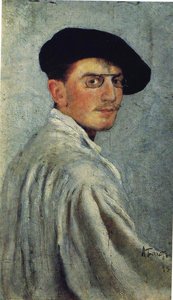
1866–1924, Bielorrússia
Léon Bakst
Early Life and the Seeds of Artistic Rebellion Born Leyb-Khaim Izrailevich Rosenberg in 1866, within the pale of settlement in Grodno—a city then part of the Russian Empire—Léon Bakst’s journey toward artistic renown was a compelling narrative woven with both innate talent and societal constraints. His family, though comfortably middle class, possessed connections to the imperial court through his grandfather, a celebrated tailor who enjoyed patronage from the Tsar. This background instilled in young Leyb a keen awareness of cultural nuances alongside an early passion for drawing, vividly demonstrated when he won a contest at just twelve years old. However, this burgeoning artistic inclination initially met with resistance from his parents, hesitant to embrace such an unconventional path.
Também de Léon Bakst
 Design com Flores em Grade
 Operatic costume designs1911
 Costume design for the ballet ''Cleopatra''1909
 Drawing young divinity Narcisse costume, ballet Diaghilev1911
Ensaios sobre Samarkand Sultan
 The Soft Soul of Art: Exploring the Tactile Beauty and Timeless Narrative of Textile MasterpiecesEmbark on a sensory journey through the tactile beauty of textile art. Explore how thread, silk, and loom weave human history, from ancient…
 French artworks of the 1860s1860s French masterpieces by Édouard Manet, Claude Monet, and Gustave Courbet. View the full collection online at OriginalUniqueArt.com.
 Masterpieces of Emotion: The Top 25 Artworks by Théodore GéricaultExplore 25 iconic works by Théodore Géricault, from Romanticism to his greatest masterpieces. Discover the full collection on OriginalUniqu…