 Visualizar na parede
 Compartilhar
 Compartilhar
 Detalhes
 Guia
Guia

 Baixar imagem
 Semelhantes
 Raio X
 Ver diaporama
 Perguntas e Respostas
 Estatísticas
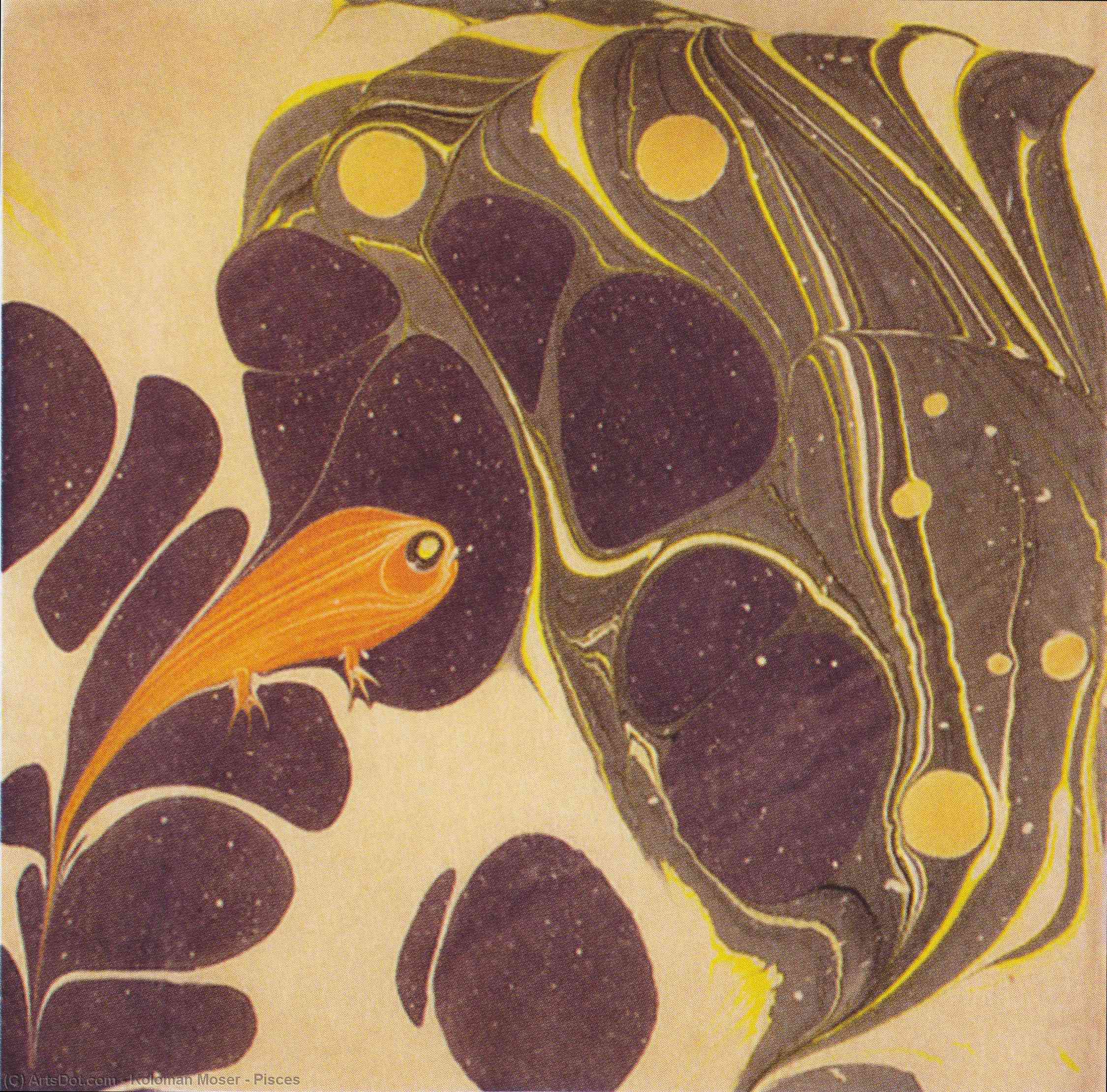
Pisces

- 17.0 x 17.0 cm


 Ler mais
Obtenha um arquivo pronto para impressão que vai muito além da visualização na web. Cada imagem digital que vendemos provém de um arquivo mestre de alta resolução em nosso banco de dados — geralmente entre 5.000 e 15.000 pixels de largura — para que você possa imprimir em grandes formatos, realizar cortes precisos ou reproduzir detalhes minuciosos com total confiança.
Nenhum arquivo sai do nosso estúdio sem passar por um cuidadoso processo de revisão. Um especialista digital verifica as cores em relação à pintura original e as corrige se necessário, aumentando então a clareza e o detalhe com ferramentas profissionais de retoque — sempre mantendo a fidelidade às pinceladas e ao estilo do artista. O resultado é uma imagem que se assemelha à pintura, e não a um scan com filtros.
Aprovação antes da finalização: nosso especialista enviará a imagem por e-mail em até 72 horas para sua revisão. Não ficou satisfeito? Solicite melhorias ou correções, ou peça o reembolso caso a qualidade não atenda às suas expectativas.
Esta é a qualidade em que confiam editoras, estúdios de design, galerias e gráficas.
Imagem Digital
Baixe um arquivo de alta resolução para exibição pessoal, impressão e projetos criativos. ( Alternar para Impressão Comprar pintura feita à mão)
Incluído em cada compra de imagem digital
Entrega Digital Especializada e Garantida
Ao escolher o OriginalUniqueArt.com, você não está apenas adquirindo uma imagem — você está recebendo uma obra de arte digital profissionalmente aprimorada, elaborada com precisão e com garantia de satisfação. Aqui está tudo o que acompanha seu pedido, automaticamente:

Entrega rápida por e-mail
O seu arquivo de imagem digital em alta resolução será enviado por e-mail em até 72 horas após o pedido — pronto para uso imediato.

Arquivo Digital com IA Otimizado
Sua obra de arte é otimizada profissionalmente por meio de ferramentas avançadas de IA e edição manual, garantindo o máximo de detalhes, clareza e precisão de cores.

Reenvio gratuito vitalício
Apagou ou perdeu o seu ficheiro acidentalmente? Não se preocupe – nós reenviamos para si a qualquer momento, gratuitamente.

Sem Taxas de Importação - Sempre
Desfrute da sua obra de arte instantaneamente, sem taxas alfandegárias, impostos ou custos de entrega — downloads digitais são sempre isentos de taxas.

Garantia de Fidelidade de Cores
Garantimos que sua imagem digital reflita as cores originais com a maior fidelidade possível, utilizando ferramentas profissionais e gerenciamento de cores.

Garantia de satisfação de 100 dias
Se não estiver satisfeito com a sua imagem digital, nós a revisaremos ou reembolsaremos 100% dentro de 100 dias — sem perguntas.

Garantia de Reembolso 100%
Não está satisfeito? Receba o reembolso total em até 100 dias após o recebimento do seu arquivo digital — sem perguntas.

Descontos para pedidos em lote
Compre 3 imagens, economize 10% - Compre 5, economize 15% - Compre 10+, economize 20%. Ideal para projetos criativos, galerias e agências.
Biografia do Artista
Early Life and Artistic Foundations
Koloman Moser, a name synonymous with the vibrant spirit of Vienna’s artistic landscape at the turn of the 20th century, was born on March 30, 1868, in the heart of Vienna, Austria-Hungary – a city already brimming with creative energy. His origins were deeply intertwined with the cultural currents shaping his future as an artist and designer. His father, Josef Moser, held a position within the Viennese Academy, exposing young Koloman to the world of art from an early age. This familial connection fostered a profound appreciation for aesthetics and craftsmanship, laying the groundwork for his later explorations across diverse artistic disciplines. Formal education at both the Wiener Akademie and the Kunstgewerbeschule proved instrumental in shaping Moser’s technical skills and broadening his understanding of design principles. The Kunstgewerbeschule, in particular, provided him with a rigorous training in applied arts – a crucial element that would inform his later work in furniture design, ceramics, and textiles. It was during this period that he developed a keen eye for detail, an appreciation for geometric forms, and a fascination with the interplay between functionality and beauty—qualities that would become hallmarks of his distinctive style. The influence of his family’s background, combined with the structured environment of these esteemed institutions, provided him with a solid foundation upon which to build his artistic career.A Pioneer of Vienna Secession and the Wiener Werkstätte
Moser's emergence as a significant figure in Viennese art coincided with the rise of the Vienna Secession in 1897 – a movement that challenged the established norms of the time and championed innovation, experimentation, and a rejection of academic traditions. He quickly embraced the Secession’s ethos, becoming one of its founding members alongside artists like Gustav Klimt and Josef Hoffmann. This association proved pivotal, exposing Moser to a network of fellow creatives who shared his desire to push artistic boundaries and redefine the role of art in society. In 1903, building upon the principles of the Secession, Moser co-founded the Wiener Werkstätte (Vienna Workshop) – a collaborative endeavor that aimed to integrate art into everyday life by producing a wide range of aesthetically pleasing household goods. Alongside Josef Hoffmann, this workshop became a crucible for artistic innovation, bringing together artists, craftsmen, and designers to create furniture, textiles, ceramics, and more—all united by a shared commitment to “Gesamtkunstwerk” – the concept of a total work of art where every element contributes to a cohesive and harmonious whole. Moser’s leadership within the Wiener Werkstätte was characterized by his tireless energy, his visionary ideas, and his ability to inspire others to embrace new approaches to design.A Diverse Artistic Palette: Graphic Design, Architecture, and Applied Arts
Moser's artistic output spanned a remarkably diverse range of media, reflecting his versatility as an artist and designer. His contributions to graphic art were particularly noteworthy, characterized by their clarity, elegance, and innovative use of typography. He designed postage stamps, magazine vignettes, and other printed materials with distinctive geometric patterns and stylized imagery—works that demonstrated his mastery of visual communication. Beyond graphic design, Moser’s talent extended to fashion, stained glass windows, porcelains, ceramics, blown glass, tableware, silver, and jewelry. His architectural designs, most notably the apse mosaic and glass windows for the Kirche am Steinhof in Vienna (1904), showcased his ability to blend artistic vision with functional design—a testament to his holistic approach to art and architecture. The intricate details of these works, combined with their harmonious integration into the surrounding environment, exemplify Moser’s unique aesthetic sensibility.Influences, Evolution, and Enduring Legacy
Moser's artistic development was profoundly influenced by several key movements, including Art Nouveau, Symbolism, and the Vienna Secession itself. He drew inspiration from Japanese woodblock prints, which informed his use of flat planes of color and simplified forms—a stylistic choice that contributed to the distinctive visual language of his work. Over time, his style evolved, becoming increasingly abstract and geometric while retaining a sense of elegance and refinement. His legacy is deeply embedded in the fabric of Viennese art and design. His designs were immortalized on the Austrian 100 Euro Steinhof Church commemorative coin (2005), recognizing his enduring influence on art and design. Koloman Moser’s contributions helped shape the course of modern art and design, emphasizing the importance of integrating beauty into everyday objects and spaces—a principle that continues to resonate with artists and designers today. He died in Vienna in 1918, leaving behind a rich body of work that serves as a testament to his creativity, innovation, and enduring artistic vision.
Koloman Moser
1868 - 1918 , Croácia
Breve Biografia
- Artistic Movement Or Style: Secessão de Viena
- Artists Or Movements Influenced By This Artist: ['Wiener Werkstätte']
- Artists Who Influenced This Artist: ['Hodler']
- Date Of Birth: 30 de março de 1868
- Date Of Death: 18 de outubro de 1918
- Full Name: Koloman Moser
- Nationality: Austríaco
- Notable Artworks:
- Apolo
- O sapo
- As três graciosas
- Place Of Birth: Viena, Croácia