
 Visualizar em escala
 Enviar
 Compartilhar
 Ver detalhes
 Guia de Obras do Aluno

 Baixar imagem
 Semelhantes
 Raio X
 Apresentação de slides
 Estatísticas
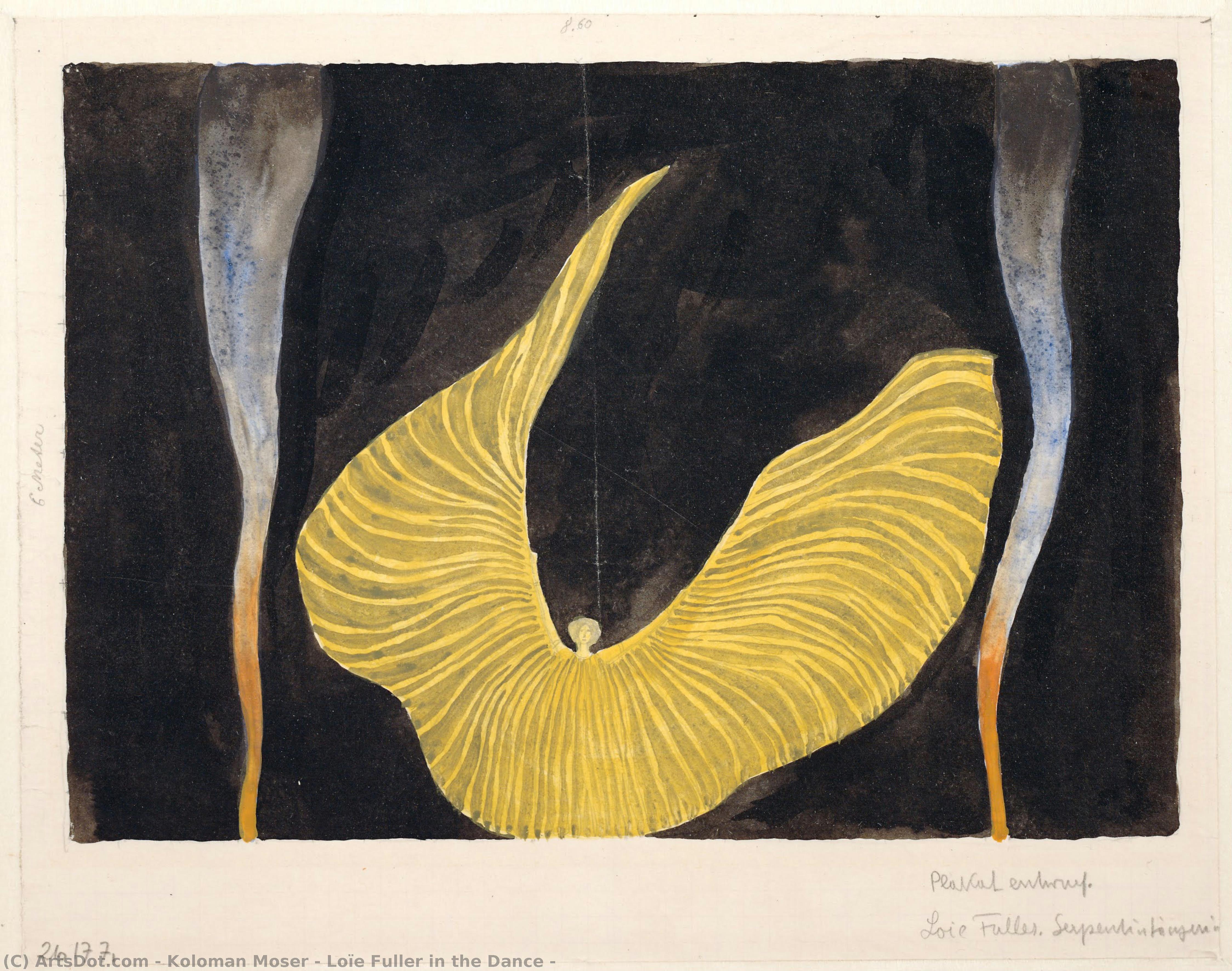
Loïe Fuller in the Dance


 Ver mais
Giclée / Impressão de Arte
Impressão giclée ou em tela de qualidade de museu, com produção rápida e opções flexíveis de acabamento. ( Encomendar reprodução pintada à mão Ver Imagem Digital)




P118B $10

P118H $10

P118W $10

P438Z $10

P508JH $12

P508YH $12

P805H $10

P805Z $10

P919BZ $10

P919G $10

P919XJ $10

P959ZH $10

P968JZ $12

W106C $8

W218G $10

W218JH $8

W218Y $10

W307PJ $10

W316G $10

W316PJ $8

W316Y $10

W398PJ $8

W4111J $10

W500HY $15

W500JH $15

W692G $12

W849H $8

W940BG $15

W953PJ $8




Escolha entre os nossos tamanhos pré-definidos que respeitam as proporções originais da obra de arte.

Você pode inserir suas próprias dimensões para se ajustar a uma moldura ou espaço específico. Se o tamanho selecionado não corresponder às proporções da imagem original, iremos recortar a obra de arte ou estender a imagem com uma borda espelhada ou preenchimento sólido. Um mockup digital será enviado para sua aprovação antes do início da produção.
Por favor, observe que a visualização na tela não reflete o recorte ou a extensão real. Apenas o mockup mostrará com precisão a composição final.
Embora tamanhos personalizados estejam disponíveis, recomendamos selecionar uma dimensão da lista predefinida para preservar as proporções originais.
Entrega mundial () em 2 semanas, em vez das 4/5 semanas padrão. (26 Setembro)

Envio expresso gratuito para todo o mundo

Tela de Linho Premium

Seguro de transporte total

Garantia de Reembolso de Impostos Alfandegários

Garantia de Fidelidade de Cor

Política de Devolução em 100 Dias (Apenas para Defeitos)

Garantia de reembolso de 100%

Desconto para múltiplas unidades
 A opção de vidro está disponível apenas para tamanhos inferiores a 110 cm

Loïe Fuller in the Dance
Giclée / Impressão de Arte
Dimensões da Reprodução
-


Preço Total
$ 80
The Ethereal Dance of Abstraction
Gazing upon this watercolor, one is immediately drawn into a realm suspended between waking dream and vivid memory. The piece, titled Loïe Fuller in the Dance, transcends mere portraiture; it captures an ephemeral moment of pure kinetic energy made visible. Two large, stylized forms seem to materialize from the deep, velvety expanse of the background, suggesting figures caught mid-waltz or immersed in a ritualistic ballet. The composition is breathtaking in its ambiguity, inviting the viewer not just to look, but to feel the movement itself—the sweep of fabric, the arc of an outstretched limb, all rendered with exquisite delicacy.
Technique and Luminous Mystery
The mastery displayed here lies profoundly within the handling of watercolor. The artist has employed a technique that speaks directly to the fluidity of emotion: wet-on-wet washes create areas where color bleeds into neighboring tones, resulting in a soft, almost breathable texture. Against the near-black void, luminous pools of pale blue and vibrant yellow seem to glow from an internal source. These colors do not merely sit on the paper; they appear to emanate light, suggesting that the very act of dancing is a source of illumination. The visible brushstrokes are not flaws, but rather signatures of the process—a testament to the artist's hand guiding pigment across damp paper.
Symbolism of Form and Flow
The forms themselves resist easy categorization. They are curvilinear, amorphous, and deeply suggestive rather than literal. This abstraction points toward deeper symbolic currents. The swirling patterns woven through the figures evoke concepts far grander than a mere performance—they speak of energy, the ceaseless flow of life force, or perhaps the intricate entanglement of human intimacy. In the context of early 20th-century artistic movements, this emphasis on emotional resonance over strict realism aligns with Expressionist impulses, suggesting that the true subject is not Loïe Fuller, but the universal experience of ecstatic movement and connection.
Historical Echoes and Decorative Resonance
While the piece evokes a sense of timeless mystery, its creation around 1902 places it within a fascinating cultural crucible. It hints at the burgeoning modernism that would soon challenge academic traditions. For the collector or designer, this artwork offers unparalleled decorative depth. Imagine this vision rendered in reproduction—its soft glow against richly paneled walls or alongside minimalist furniture would create an immediate focal point of sophisticated drama. It is art that whispers secrets rather than shouting statements, lending any space an air of cultivated, introspective romance.
Biografia do Artista
Early Life and Artistic Foundations
Koloman Moser, a name synonymous with the vibrant spirit of Vienna’s artistic landscape at the turn of the 20th century, was born on March 30, 1868, in the heart of Vienna, Austria-Hungary – a city already brimming with creative energy. His origins were deeply intertwined with the cultural currents shaping his future as an artist and designer. His father, Josef Moser, held a position within the Viennese Academy, exposing young Koloman to the world of art from an early age. This familial connection fostered a profound appreciation for aesthetics and craftsmanship, laying the groundwork for his later explorations across diverse artistic disciplines. Formal education at both the Wiener Akademie and the Kunstgewerbeschule proved instrumental in shaping Moser’s technical skills and broadening his understanding of design principles. The Kunstgewerbeschule, in particular, provided him with a rigorous training in applied arts – a crucial element that would inform his later work in furniture design, ceramics, and textiles. It was during this period that he developed a keen eye for detail, an appreciation for geometric forms, and a fascination with the interplay between functionality and beauty—qualities that would become hallmarks of his distinctive style. The influence of his family’s background, combined with the structured environment of these esteemed institutions, provided him with a solid foundation upon which to build his artistic career.A Pioneer of Vienna Secession and the Wiener Werkstätte
Moser's emergence as a significant figure in Viennese art coincided with the rise of the Vienna Secession in 1897 – a movement that challenged the established norms of the time and championed innovation, experimentation, and a rejection of academic traditions. He quickly embraced the Secession’s ethos, becoming one of its founding members alongside artists like Gustav Klimt and Josef Hoffmann. This association proved pivotal, exposing Moser to a network of fellow creatives who shared his desire to push artistic boundaries and redefine the role of art in society. In 1903, building upon the principles of the Secession, Moser co-founded the Wiener Werkstätte (Vienna Workshop) – a collaborative endeavor that aimed to integrate art into everyday life by producing a wide range of aesthetically pleasing household goods. Alongside Josef Hoffmann, this workshop became a crucible for artistic innovation, bringing together artists, craftsmen, and designers to create furniture, textiles, ceramics, and more—all united by a shared commitment to “Gesamtkunstwerk” – the concept of a total work of art where every element contributes to a cohesive and harmonious whole. Moser’s leadership within the Wiener Werkstätte was characterized by his tireless energy, his visionary ideas, and his ability to inspire others to embrace new approaches to design.A Diverse Artistic Palette: Graphic Design, Architecture, and Applied Arts
Moser's artistic output spanned a remarkably diverse range of media, reflecting his versatility as an artist and designer. His contributions to graphic art were particularly noteworthy, characterized by their clarity, elegance, and innovative use of typography. He designed postage stamps, magazine vignettes, and other printed materials with distinctive geometric patterns and stylized imagery—works that demonstrated his mastery of visual communication. Beyond graphic design, Moser’s talent extended to fashion, stained glass windows, porcelains, ceramics, blown glass, tableware, silver, and jewelry. His architectural designs, most notably the apse mosaic and glass windows for the Kirche am Steinhof in Vienna (1904), showcased his ability to blend artistic vision with functional design—a testament to his holistic approach to art and architecture. The intricate details of these works, combined with their harmonious integration into the surrounding environment, exemplify Moser’s unique aesthetic sensibility.Influences, Evolution, and Enduring Legacy
Moser's artistic development was profoundly influenced by several key movements, including Art Nouveau, Symbolism, and the Vienna Secession itself. He drew inspiration from Japanese woodblock prints, which informed his use of flat planes of color and simplified forms—a stylistic choice that contributed to the distinctive visual language of his work. Over time, his style evolved, becoming increasingly abstract and geometric while retaining a sense of elegance and refinement. His legacy is deeply embedded in the fabric of Viennese art and design. His designs were immortalized on the Austrian 100 Euro Steinhof Church commemorative coin (2005), recognizing his enduring influence on art and design. Koloman Moser’s contributions helped shape the course of modern art and design, emphasizing the importance of integrating beauty into everyday objects and spaces—a principle that continues to resonate with artists and designers today. He died in Vienna in 1918, leaving behind a rich body of work that serves as a testament to his creativity, innovation, and enduring artistic vision.
Koloman Moser
1868 - 1918 , Croácia
Informações Rápidas
- Artistic Movement Or Style: Secessão de Viena
- Artists Or Movements Influenced By This Artist: ['Wiener Werkstätte']
- Artists Who Influenced This Artist: ['Hodler']
- Date Of Birth: 30 de março de 1868
- Date Of Death: 18 de outubro de 1918
- Full Name: Koloman Moser
- Nationality: Austríaco
- Notable Artworks:
- Apolo
- O sapo
- As três graciosas
- Place Of Birth: Viena, Croácia
Artigos Relacionados

Ephemeral Visions: Exploring the Artistic Legacy & Contemporary Practice of Watercolor Painting
Explore the captivating world of watercolor painting! Discover its rich history, essential techniques, influential artists & collecting tips. A comprehensive guide for art enthusiasts from OriginalUniqueArt.

Aquarelas Imortais: 10 Obras-Primas que Revolucionaram a Arte | OriginalUniqueArt
Descubra as 10 obras-primas em aquarela que revolucionaram a arte! Explore a história de Turner, Cézanne e outros mestres. Encontre reproduções de alta qualidade para decorar sua casa com elegância. OriginalUniqueArt: arte atemporal ao seu alcance.

Ephemeral Visions: Exploring the History & Emotional Resonance of Watercolor Painting
Explore the captivating history of watercolor painting, from ancient techniques to modern masters like Kandinsky & Blake. Discover essential artists, collecting tips & the emotional power of this luminous medium. Expert insights for art enthusiasts.
Koloman Moser: A Synthesis of Art Nouveau, Secessionism & the Gesamtkunstwerk Ideal
Explore the life & work of Koloman Moser, a pivotal figure in the Vienna Secession & Wiener Werkstätte. Discover his stunning graphic design, architecture, and applied arts – a true pioneer of Viennese Art Nouveau. Learn more at OriginalUniqueArt.

The Vienna Secession: A Rebellion of Form & Spirit in Fin-de-Siècle Art
Discover the revolutionary Vienna Secession art movement! Explore Klimt, Olbrich & more. Learn about its history, characteristics & lasting influence on modern art. High-quality reproductions available.
