

 Visualizar na parede
 Compartilhar
 Compartilhar
 Detalhes
 Guia
Guia

 Baixar imagem
 Semelhantes
 Raio X
 Ver diaporama
 Estatísticas
Vita somnium breve
 Acrílico sobre tela
- Arte de Parede
- Art Nouveau Modern
 1906
1906 163.0 x 143.0 cm
 Museu Nacional de Cracóvia
 Ler mais
Giclée / Impressão de Arte
Impressão giclée ou em tela de qualidade de museu, com produção rápida e opções flexíveis de acabamento. ( Comprar pintura feita à mão Alternar para Imagem Digital)




P118B €10

P118H €10

P118W €10

P438Z €10

P508JH €12

P508YH €12

P805H €10

P805Z €10

P919BZ €10

P919G €10

P919XJ €10

P959ZH €10

P968JZ €12

W106C €8

W218G €10

W218JH €8

W218Y €10

W307PJ €10

W316G €10

W316PJ €8

W316Y €10

W398PJ €8

W4111J €10

W500HY €15

W500JH €15

W692G €12

W849H €8

W940BG €15

W953PJ €8




Escolha entre os nossos tamanhos pré-definidos que respeitam as proporções originais da obra de arte.

Insira a largura e a altura desejadas para se ajustarem à sua moldura ou parede. Uma impressão pode ser apenas cortada, nunca ampliada além da imagem original; portanto, um tamanho com proporções diferentes resultará na perda de parte da imagem. Enviamos uma maquete digital para sua aprovação antes de realizarmos a impressão. A imagem exibida nesta página não mostra o corte real — apenas a maquete o faz.
Entrega mundial () em 2 semanas, em vez das 4/5 semanas padrão. (25 Outubro)

Envio expresso gratuito para todo o mundo

Tela de Linho de Alta Qualidade

Seguro de transporte completo

Garantia de Reembolso de Impostos Alfandegários

Garantia de Fidelidade Cromática

Política de Devolução em 100 Dias (Apenas para Defeitos)

Garantia de reembolso de 100%

Oferta de desconto por quantidade
 A opção de vidro está disponível apenas para tamanhos inferiores a 110 cm

Vita somnium breve
Giclée / Impressão de Arte
Tamanho da Reprodução
-


Preço Total
€ 70
Vita Somnium Breve: A Window Into Polish Symbolism
Józef Mehoffer’s “Vita Somnium Breve” (Life is a Short Dream), completed in 1906, stands as a cornerstone of Art Nouveau stained glass artistry and embodies the spirit of Young Poland – a movement dedicated to reviving Polish national identity after centuries of partitions. Created by Krakowski Zakład Witrażów i Mozaiki S.G. Żeleński, established in 1902, this monumental window is housed within the National Museum in Kraków and represents more than just decorative splendor; it’s a profound meditation on mortality and remembrance. ### Artistic Style and Technique: The Fluid Embrace of Art Nouveau Mehoffer's approach to stained glass aligns perfectly with the tenets of Art Nouveau – a style characterized by organic forms, flowing lines, and intricate floral motifs. Unlike the rigid geometric patterns prevalent in earlier styles, “Vita Somnium Breve” revels in curvilinear shapes that mimic natural elements like branches and leaves. The artist skillfully employs a technique known as *pointillé*, where tiny dots of color are meticulously applied to create textured surfaces and luminous effects. This method maximizes light diffusion, transforming the window into an ethereal space filled with shimmering hues—primarily shades of emerald green and amber—that evoke the tranquility of a forest grove. ### Symbolism Rooted in Remembrance and Renewal The imagery depicted within the window is laden with symbolic significance. Dominating the composition are figures representing women and children, bathed in soft light, symbolizing femininity, nurturing, and the continuity of life. Their postures convey serenity and contemplation, suggesting an acceptance of the ephemeral nature of existence. Surrounding them are stylized trees—a motif frequently utilized in Art Nouveau—representing resilience, growth, and the cyclical renewal inherent in the natural world. The overarching theme is undoubtedly one of remembrance – honoring those who have passed while embracing the promise of future generations. It’s a poignant reflection on the brevity of life contrasted against the enduring beauty of nature's rhythms. ### Historical Context: Young Poland and Artistic Expression “Vita Somnium Breve” emerged during a period of fervent nationalist fervor in Poland, following the Russo-Polish War of 1892. Young Poland championed artistic endeavors as instruments for bolstering national identity and fostering cultural pride. Mehoffer’s work exemplifies this ethos—a deliberate rejection of academic conventions in favor of expressive freedom and stylistic innovation. The window's commission underscores the importance placed on visual arts within Polish intellectual circles, demonstrating a desire to elevate artistic craftsmanship alongside philosophical contemplation. ### Emotional Impact: A Window Into Tranquility and Reflection Looking upon “Vita Somnium Breve” is akin to stepping into a sanctuary of calm. The harmonious blend of color and form invites viewers to pause, contemplate, and consider the profound questions posed by mortality. Its luminous glow casts an aura of serenity over its surroundings, transporting observers to a realm where beauty transcends time—a testament to Mehoffer’s artistic vision and the enduring power of Art Nouveau stained glass as a medium for conveying spiritual contemplation.Perguntas e Respostas
Onde posso encontrar um guia sobre "Vita somnium breve"?
A página Ficha informativa de "Vita somnium breve", de Józef Mehoffer oferece uma ficha informativa imprimível em duas folhas: a obra de arte com sua tabela de identificação, uma linha do tempo situando-a no período de vida do artista, outras obras do artista, a paleta de cores extraída e citações prontas para copiar em quatro estilos.
Como é construída a composição cromática de "Vita somnium breve", de Józef Mehoffer?
Em "Vita somnium breve", um Contraste máximo contraste une-se a uma Paleta de cores contrastantes harmonia.
As cores de "Vita somnium breve" são vibrantes ou suaves?
"Vita somnium breve", de Józef Mehoffer apresenta uma saturação Cores sutis e uma intensidade Equilibrado.
Biografia do Artista
A Life of Color and Glass
Józef Mehoffer arrived in the world in Ropczyce, Poland, in 1869, though his path to the easel was not immediate. Before he embraced the brush, he pursued legal studies, a direction that only shifted after a gift of paints revealed a different vocation. He sought formal training at the Academy of Fine Arts in Kraków under Władysław Łuszczkiewicz, later expanding his horizons through studies in Vienna and Paris at the Académie Colarossi. This period of wandering through Europe’s great art centers allowed him to absorb the diverse currents of his era.
His work became a bridge between the academic traditions of his teachers, such as Jan Matejko, and the emerging avant-garde. He moved with ease between easel painting and the monumental demands of decorative arts. Whether working on portraits, landscapes, or intricate book illustrations, Mehoffer sought a fusion of form and color. His style grew to include elements of Post- Impressionism and the Secession movement, often utilizing bold palettes and fluid lines that mirrored the organic spirit of Art Nouveau.
The Light of Fribourg
While his presence was felt throughout Poland, Mehoffer achieved significant recognition through his work in Switzerland. Between 1895 and 1936, he dedicated decades to a cycle of thirteen stained-glass compositions for the Cathedral of St. Nicholas in Fribourg. This undertaking required immense technical precision, as he treated the lead came not merely as a structural necessity but as an autonomous graphic line. He selected glass of varying thicknesses and textures, using silver stain and vitreous black to manipulate how light moved through the windows.
The success of these windows brought him international attention. At the 1900 Paris World's Fair, his window titled The Martyrs earned a gold medal. This period of his life saw him blending Polish folk motifs with the sophisticated aesthetics of European Art Nouveau. His ability to translate complex religious and symbolic themes into luminous glass remains a central part of his professional identity.
A Decorative Legacy
Mehoffer’s creative output was remarkably broad, refusing to be confined to a single medium. He was as much a designer of furniture, textiles, and posters as he was a painter of canvases. His hand could be found in the mosaics of the Armenian Cathedral in Lviv and the frescoes of Wawel Cathedral. In 1897, he helped found the society Sztuka, an organization that sought to assert the independence of Polish art from the influence of occupying powers.
In his later years, Mehoffer established a home and studio on Krupnicza Street in Kraków. This house, which he purchased in 1932, became a center for musical and literary gatherings, reflecting his role as a figure of the Polish intelligentsia. He lived through the profound shifts of the early twentieth century, continuing to work even during the hardships of the Second World War. When he passed away in Wadowice in 1946, he left behind a body of work that spanned the transition from nineteenth-century tradition to the modern decorative era.

Józef Mehoffer
1869 - 1946
Dados Rápidos
- Artistic Movement Or Style:
- Young Poland
- Post-Impressionism
- Secession
- Art Nouveau
- Symbolism
- Artists Who Influenced This Artist:
- Jan Matejko
- Władysław Łuszczkiewicz
- Henri Matisse
- Full Name: Józef Mehoffer
- Nationality: Polish
- Notable Artworks:
- Vita somnium breve
- Three Kings
- The Farewell
- The Muse
- Medusa
- Place Pigalle in Paris
- Place Of Birth: Ropczyce, Poland
- Date Of Birth: 1869
- Date Of Death: 1946
Artigos Relacionados
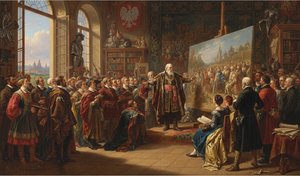
Jan Matejko: Historical Narrative & National Identity in 19th-Century Polish Painting
Explore the powerful historical paintings of Jan Matejko, Poland's national artist. Discover his iconic works & learn how he shaped Polish identity in the 19th century. High-quality reproductions available.
Art Nouveau: 10 Obras-Primas que Definiram um Movimento Atemporal | OriginalUniqueArt
Descubra as 10 obras-primas que moldaram a Art Nouveau! Explore a beleza floral de Mucha, o simbolismo de Klimt e a inovação de Gaudí. Encontre reproduções de arte exclusivas e inspire sua decoração em OriginalUniqueArt.com.
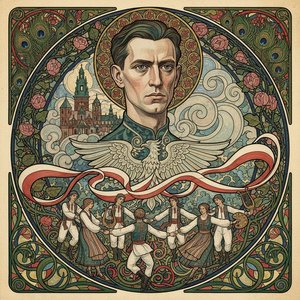
Stanisław Wyspiański: Symbolism, National Identity & the Polish Secession
Explore the life & work of Stanisław Wyspiański, a pivotal figure in Polish Symbolism and the Young Poland movement. Discover his iconic paintings, dramas, and stained glass designs reflecting national identity & artistic innovation.
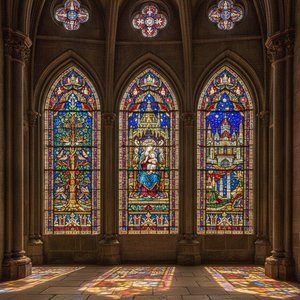
Luminous Masterpieces: The Captivating Beauty and Timeless Elegance of Stained Glass Artworks
Embark on a visual journey through the luminous world of stained glass art. Discover the exquisite craftsmanship, historical significance, and captivating beauty of masterworks from Art Nouveau to the Gothic era, curated for the discerning fine art enthusiast.
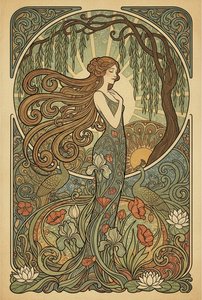
The Flowing Line & Flourishing Form: Exploring Art Nouveau's Aesthetic Legacy
Explore the captivating world of Art Nouveau! Discover its origins, key artists like Horta & Mucha, regional styles, innovative techniques, and lasting influence on architecture & design. A comprehensive guide for art enthusiasts.
