
 Visualizar em escala
 Enviar
 Compartilhar
 Ver detalhes

 Baixar
 Semelhantes
 Raio X
 Apresentação de slides
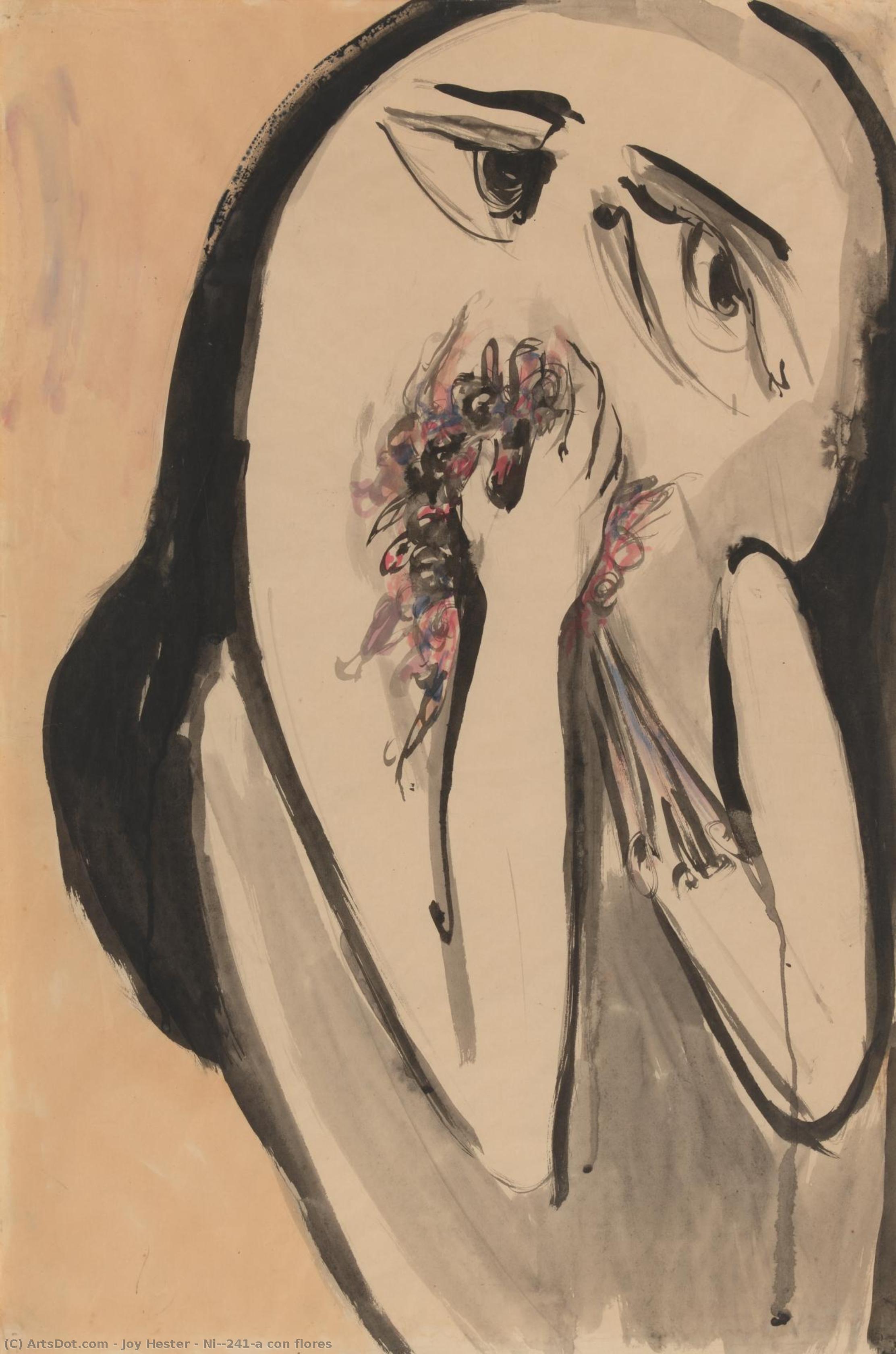
Niña con flores
 Watercolor
- WallArt
- Expressionism
 1956
1956- Modern
 76.0 x 50.0 cm
 Galeria Nacional de Victoria
 Ver mais
Adquira uma imagem digital de alta resolução e aprimorada, muito superior à prévia online.
Cada arquivo é meticulosamente preparado por nossos especialistas internos, utilizando ferramentas avançadas e retoques manuais de alta precisão. Garantimos que cada imagem apresente clareza excepcional, fidelidade de cores e detalhes minuciosos.
O arquivo final é entregue por e-mail em até 72 horas, otimizado para uso imediato em ambientes profissionais, editoriais e de impressão. Esta é a mesma qualidade utilizada por estúdios de design de alto nível, editoras e galerias.
Imagem Digital
Baixe um arquivo de alta resolução para exibição pessoal, impressão e projetos criativos. ( Encomendar impressão Encomendar reprodução pintada à mão)
Incluído em cada pedido de imagem digital
Entrega Digital Especializada e Garantida
Ao escolher o OriginalUniqueArt.com, você não está apenas adquirindo uma imagem — você está recebendo uma obra de arte digital profissionalmente aprimorada, elaborada com precisão e com garantia de satisfação. Aqui está tudo o que acompanha seu pedido, automaticamente:

Entrega rápida por e-mail
O seu arquivo de imagem digital em alta resolução será enviado por e-mail em até 72 horas após o pedido — pronto para uso imediato.

Arquivo Digital com IA Otimizado
Sua obra de arte é otimizada profissionalmente por meio de ferramentas avançadas de IA e edição manual, garantindo o máximo de detalhes, clareza e precisão de cores.

Reenvio gratuito vitalício
Apagou ou perdeu o seu ficheiro acidentalmente? Não se preocupe – nós reenviamos para si a qualquer momento, gratuitamente.

Sem Taxas de Importação - Sempre
Desfrute da sua obra de arte instantaneamente, sem taxas alfandegárias, impostos ou custos de entrega — downloads digitais são sempre isentos de taxas.

Garantia de Precisão de Cores
Garantimos que sua imagem digital reflita as cores originais com a maior fidelidade possível, utilizando ferramentas profissionais e gerenciamento de cores.

Garantia de Satisfação de 60 Dias
Se você não estiver satisfeito com sua imagem digital, nós a revisaremos ou reembolsaremos 100% dentro de 60 dias — sem perguntas.

Garantia de Reembolso 100%
Não está satisfeito? Receba o reembolso total em até 60 dias após o recebimento do seu arquivo digital — sem perguntas.

Descontos para pedidos em lote
Compre 3 imagens, economize 10% - Compre 5, economize 15% - Compre 10+, economize 20%. Ideal para projetos criativos, galerias e agências.
Descrição do Colecionável
A Portrait of Sorrow and Resilience: Exploring Joy St Clair Hester’s “Niña con Flores”
Joy St Clair Hester's "Niña con Flores" (Girl with Flowers), created in 1956, is not merely a portrait; it’s a deeply resonant exploration of grief, memory, and the enduring strength of the human spirit. This arresting work, rendered primarily in evocative ink washes and punctuated by flashes of vibrant red and pink, immediately draws the viewer into a world steeped in melancholic beauty. Hester, a pivotal figure within Australia's burgeoning Modernist movement, masterfully employs a restrained yet intensely expressive style, characteristic of her engagement with the Heide Circle and the Angry Penguins.
The subject herself remains partially obscured, veiled by a dark, amorphous shape that suggests concealment or perhaps the lingering shadow of loss. Her face, though fragmented, is dominated by an arresting gaze – large, sorrowful eyes that seem to hold both vulnerability and a quiet defiance. This deliberate ambiguity invites speculation about her story, prompting us to project our own experiences of sadness and remembrance onto the canvas. The use of predominantly dark shades—charcoal greys, deep blacks—creates a sense of profound stillness, while strategically placed bursts of color – particularly the passionate reds and pinks of the blossoms erupting from her mouth – inject moments of startling intensity and symbolic weight.
Technique and Materials: A Dance of Ink and Wash
Hester’s technique is both delicate and assertive. The work is executed primarily in watercolor and ink wash on paper, a combination that lends itself beautifully to the creation of layered textures and subtle tonal shifts. Loose brushstrokes contribute to an atmosphere of immediacy and emotional rawness, while careful shading establishes depth and form. Notice how she utilizes broken washes—allowing the colors to bleed into one another—to create a sense of fluidity and movement within the composition. The deliberate lack of precise detail emphasizes the emotional impact over realistic representation; lines are used expressively to define features rather than as literal depictions.
The choice of ink, particularly black ink, is crucial to Hester’s signature style. It allows for a remarkable control—the ability to build up layers of dark tones with incredible precision, creating both dramatic contrasts and subtle gradations of value. The blossoms themselves are rendered with a surprising degree of detail, their vibrant hues acting as potent symbols within the broader context of the piece. The overall effect is one of controlled chaos – a visual representation of the turbulent emotions that lie beneath the surface.
Symbolism: Flowers, Grief, and Remembrance
The most striking element of “Niña con Flores” is undoubtedly the profusion of flowers emerging from the woman’s mouth. This imagery transcends mere botanical detail; it's a potent symbol of grief, loss, and perhaps even remembrance. The blossoms can be interpreted as representing the bittersweet nature of memory—beautiful yet tinged with sadness. They also suggest a connection to nature, offering a glimmer of hope amidst the prevailing darkness. The veil-like shape obscuring her face further reinforces this theme of concealment and unspoken sorrow.
Considering Hester’s own life – marked by the early loss of her father and later battling Hodgkin's disease – it is not surprising that her work frequently grapples with themes of mortality and resilience. “Niña con Flores” can be seen as a deeply personal meditation on these experiences, transformed into a universal expression of human vulnerability and enduring strength. The image resonates with the broader artistic tradition of exploring psychological states through symbolic imagery.
Historical Context: A Voice in the Australian Modernist Movement
Joy St Clair Hester’s work emerged during a pivotal period in Australian art history – the mid-20th century, when artists were actively seeking to forge a distinctly national identity. She was a key member of both the Heide Circle and the Angry Penguins, groups that challenged established artistic conventions and pushed the boundaries of modernism. Her association with these influential circles provided her with access to a vibrant intellectual and artistic community, but also exposed her work to critical scrutiny. Despite facing challenges in gaining widespread recognition during her lifetime, Hester’s legacy has steadily grown over time, cementing her place as one of Australia's most important Modernist artists.
Resources for further exploration include the National Gallery of Victoria’s collection (where “Niña con Flores” is held), online archives dedicated to Joy St Clair Hester, and scholarly articles examining her work within the context of Australian art history. WikiArt offers a valuable visual resource: https://www.wikiart.org/en/joy-hester/nina-con-flores-1956
Biografia do Artista
Joy St Clair Hester - Australian Dictionary of Biography
Joy St Clair Hester (1920–1960), artist, was born on August 21, 1920 at Elsternwick, Melbourne, second child of Robert Ferdinand Hester, a bank officer from England. Louise Hester, née MacGillivray, was a teacher and daughter of Scottish immigrants. Her father died from a heart attack when Joy was twelve years old, an event that would subtly yet profoundly influence the emotional depth of her later work. She attended St Michael’s Grammar School from 1933 to 1937 and Brighton Technical School in 1938. At 17, she studied Commercial Art for a year at Brighton Technical School before enrolling at the National Gallery School in Melbourne in 1938 where she won the Drawing Head from Life prize—a prestigious accolade recognizing her exceptional talent for capturing human form with remarkable accuracy and sensitivity. This early success signaled not just technical skill but an emerging ability to convey profound emotion through visual representation—a characteristic that would become her signature style. It was also during this period that Hester began to break free from traditional artistic conventions, seeking a more expressive and personal visual language.Early Life and Artistic Training
Joy’s formative years instilled in her a deep appreciation for observation and detail, shaping her approach to artmaking. Her father’s untimely death instilled a quiet resilience and fueled her determination to pursue her passions despite adversity. The National Gallery School provided invaluable training in draughtsmanship and composition, equipping her with the foundational skills necessary for developing her distinctive artistic vision. Notably, she excelled in life drawing classes, honing her ability to translate three-dimensional forms onto two-dimensional surfaces—a skill that would prove crucial to her later explorations of human psychology. Her fascination with capturing the essence of human experience—particularly its vulnerability and complexity—would become a defining element of her oeuvre.The Heide Circle and Angry Penguins
Joy’s artistic trajectory took a decisive turn in 1938 with her meeting Albert Tucker, initiating both a significant romantic relationship and an important artistic partnership. This connection blossomed into a profound friendship and collaboration that would shape their lives and careers. Together they moved to East Melbourne where they established a home filled with art and intellectual curiosity. Their association with Sunday Reed—a champion of Australian avant-garde art—further enriched their creative environment, fostering dialogue and inspiring experimentation. They joined the Heide Circle alongside Sidney Nolan, Arthur Boyd, Charles Blackman, and John Perceval—artists united by a shared commitment to challenging artistic norms and forging new paths. The Heide Circle’s ethos encouraged artists to confront societal conventions and explore unconventional perspectives—a spirit that resonated deeply with Hester's own artistic sensibilities. Simultaneously, she became a founding member of the Contemporary Art Society (CAS) and, crucially, the sole female participant in the groundbreaking Angry Penguins movement. This association wasn’t merely circumstantial; Hester’s work embodied the group’s rebellious ethos and unwavering dedication to Modernism—a stance that directly confronted the conservative artistic climate of Australia at the time. Her inclusion challenged prevailing prejudices against women in art and cemented her place as a pioneer of Australian Expressionism.A Distinctive Style: From Observation to Emotion
Hester’s artistic style was characterized by a remarkable fusion of technical precision and emotional intensity—a hallmark of her oeuvre. Initially influenced by traditional draughtsmanship techniques, she swiftly embraced bolder forms and expressive lines, rejecting academic constraints in favor of a more visceral approach. Her mastery of watercolor and ink allowed her to convey profound psychological states with unparalleled subtlety and nuance. Recurring motifs—faces rendered with haunting detail—served as visual anchors for her explorations of human emotion and experience. Hester’s distinctive style was informed by the writings of Danila Vassilieff, who championed the integration of art and life—a philosophy that profoundly shaped her artistic vision. Her meticulous attention to observation combined with a willingness to confront difficult themes—mortality, loss, and vulnerability—created images that were both intellectually stimulating and emotionally resonant.Major Achievements and Legacy
Joy St Clair Hester’s contribution to Australian Modernism is undeniable. Her series *Face*, *Sleep,* and *Love* (1948–49)—amongst many others—remain iconic representations of human emotion and psychological complexity. These works exemplify her ability to transform personal experience into universal statements about the human condition—a feat achieved through masterful draughtsmanship and evocative imagery. Hester’s unwavering commitment to artistic integrity—coupled with her courageous exploration of challenging themes—established her as a pivotal figure in Australian art history. Her legacy continues to inspire artists today, demonstrating that profound emotion can be conveyed through deceptively simple forms. Despite facing personal hardships—including Hodgkin's lymphoma and the dissolution of her marriage—Hester persevered in her artistic pursuits until her untimely death in December 1960 at the age of 40—leaving behind a body of work that stands as a testament to the enduring power of human expression. Her influence extends beyond her own creations, shaping the trajectory of Australian art and fostering a dialogue about vulnerability, emotion, and the complexities of human experience.
Joy St Clair Hester
1920 - 1960 , Austrália
Informações Rápidas
- Artistic Movement Or Style: Expressionismo Modernista
- Artists Or Movements Influenced By This Artist: ['Australian Modernism']
- Artists Who Influenced This Artist:
- Ailsa O'Connor
- Danila Vassilieff
- Date Of Birth: August 21, 1920
- Date Of Death: December 4, 1960
- Full Name: Joy St Clair Hester
- Nationality: Australiana
- Notable Artworks:
- Face série
- Love série
- The Lovers
- Place Of Birth: Elsternwick, Austrália

