
 Visualizar na parede
 Compartilhar
 Compartilhar
 Detalhes
 Guia
Guia

 Baixar imagem
 Semelhantes
 Raio X
 Ver diaporama
 Q&A
Q&A Estatísticas
Flirt

- 34.0 x 49.0 cm


 Ler mais
Obtenha um arquivo pronto para impressão que vai muito além da visualização na web. Cada imagem digital que vendemos provém de um arquivo mestre de alta resolução em nosso banco de dados — geralmente entre 5.000 e 15.000 pixels de largura — para que você possa imprimir em grandes formatos, realizar cortes precisos ou reproduzir detalhes minuciosos com total confiança.
Nenhum arquivo sai do nosso estúdio sem passar por um cuidadoso processo de revisão. Um especialista digital verifica as cores em relação à pintura original e as corrige se necessário, aumentando então a clareza e o detalhe com ferramentas profissionais de retoque — sempre mantendo a fidelidade às pinceladas e ao estilo do artista. O resultado é uma imagem que se assemelha à pintura, e não a um scan com filtros.
Aprovação antes da finalização: nosso especialista enviará a imagem por e-mail em até 72 horas para sua revisão. Não ficou satisfeito? Solicite melhorias ou correções, ou peça o reembolso caso a qualidade não atenda às suas expectativas.
Esta é a qualidade em que confiam editoras, estúdios de design, galerias e gráficas.
Imagem Digital
Baixe um arquivo de alta resolução para exibição pessoal, impressão e projetos criativos. ( Alternar para Impressão Comprar pintura feita à mão)
Incluído em cada compra de imagem digital
Entrega Digital Especializada e Garantida
Ao escolher o OriginalUniqueArt.com, você não está apenas adquirindo uma imagem — você está recebendo uma obra de arte digital profissionalmente aprimorada, elaborada com precisão e com garantia de satisfação. Aqui está tudo o que acompanha seu pedido, automaticamente:

Entrega rápida por e-mail
O seu arquivo de imagem digital em alta resolução será enviado por e-mail em até 72 horas após o pedido — pronto para uso imediato.

Arquivo Digital com IA Otimizado
Sua obra de arte é otimizada profissionalmente por meio de ferramentas avançadas de IA e edição manual, garantindo o máximo de detalhes, clareza e precisão de cores.

Reenvio gratuito vitalício
Apagou ou perdeu o seu ficheiro acidentalmente? Não se preocupe – nós reenviamos para si a qualquer momento, gratuitamente.

Sem Taxas de Importação - Sempre
Desfrute da sua obra de arte instantaneamente, sem taxas alfandegárias, impostos ou custos de entrega — downloads digitais são sempre isentos de taxas.

Garantia de Fidelidade de Cores
Garantimos que sua imagem digital reflita as cores originais com a maior fidelidade possível, utilizando ferramentas profissionais e gerenciamento de cores.

Garantia de satisfação de 100 dias
Se não estiver satisfeito com a sua imagem digital, nós a revisaremos ou reembolsaremos 100% dentro de 100 dias — sem perguntas.

Garantia de Reembolso 100%
Não está satisfeito? Receba o reembolso total em até 100 dias após o recebimento do seu arquivo digital — sem perguntas.

Descontos para pedidos em lote
Compre 3 imagens, economize 10% - Compre 5, economize 15% - Compre 10+, economize 20%. Ideal para projetos criativos, galerias e agências.
A Dance of Desire and Distortion
In the vibrant, restless landscape of late 1960s Latin American art, few works capture the electric tension of human interaction as vividly as Jorge de la Vega’s "Flirt." Created in 1968, this masterpiece serves as a window into a world where the boundaries between reality and surrealist distortion begin to blur. The painting centers on a captivating scene of social interplay, featuring two women in bikinis who command the viewer's gaze through their poised yet suggestive stances. One figure rests upon the ground, grounded and earthy, while her companion stands nearby, creating a dynamic compositional tension that pulls the eye across the canvas. As the title suggests, there is an undeniable sense of playfulness—a rhythmic, almost musical quality to their movements that hints at the unspoken dialogues of attraction and social performance.
Beyond the central duo, de la Vega weaves a complex tapestry of secondary figures, including a man kneeling in close proximity to the women. This layering of bodies creates a sense of a crowded, bustling environment, perhaps a sun-drenched social gathering where glances are exchanged and secrets are whispered. The composition is far from static; it breathes with a kinetic energy that reflects the artist's ability to capture the "seismographic" shifts of his era. For the collector or interior designer, this piece offers more than just a visual focal point; it provides a narrative depth that invites long periods of contemplation, making it an ideal centerpiece for spaces that value intellectual stimulation and avant-garde flair.
The Mastery of Neo-Figurative Expression
Technically, "Flirt" is a testament to de la Vega’s departure from the rigid constraints of his early architectural training. Moving away from geometric abstraction, he embraced a more fluid, neo-figurative style that allowed for greater emotional expression. The brushwork in this piece possesses a certain urgency, where colors and forms are applied with a confidence that mirrors the spontaneity of the subject matter itself. The artist utilizes a palette that balances the warmth of human skin tones with the vibrant, sometimes jarring accents characteristic of his mid-career evolution. This technique does not merely depict a scene; it reconstructs it, using texture and form to evoke the heat and the psychological weight of the moment.
The symbolism within "Flirt" operates on multiple levels. While at first glance it appears to be a celebration of leisure and summer vitality, there is an underlying layer of social commentary typical of de la Vega’s work. The way the figures are integrated into the background—sometimes merging with the environment or appearing slightly fragmented—suggests the instability of identity in a rapidly changing modern world. It captures the essence of 1968: a year of global upheaval, where the surface-level "flirtation" of society often masked deeper, more profound transformations. To possess a reproduction of this work is to hold a fragment of history, a piece that resonates with the spirit of rebellion and the beauty of metamorphosis.
An Essential Addition to the Sophisticated Interior
For those looking to curate an art collection or design a sophisticated living space, "Flirt" offers a unique opportunity to introduce a sense of movement and historical gravity. Its medium-sized format (34 x 49 cm) makes it incredibly versatile, capable of anchoring a gallery wall or serving as a singular, powerful statement in a minimalist study. The painting’s ability to evoke both nostalgia for the late sixties and a timeless fascination with human connection ensures that it remains relevant across changing decor trends.
Investing in a high-quality hand-painted reproduction of this work allows the admirer to experience the tactile soul of de la Vega's vision. The interplay of light, the deliberate distortion of form, and the evocative subject matter provide an emotional resonance that mass-produced prints simply cannot replicate. Whether you are drawn to its bold aesthetic or its complex psychological layers, "Flirt" stands as a profound testament to the enduring power of Argentine modernism, promising to inspire anyone who encounters its captivating, rhythmic beauty.
Perguntas e Respostas
Quem é o autor de "Flirt" e a qual movimento pertence?
Por trás de "Flirt" estão Jorge De La Vega e o movimento Pop Art.
A que período pertence a obra "Flirt", de Jorge De La Vega?
"Flirt", de Jorge De La Vega data do período Modern. Este período fornece o contexto histórico da obra.
"Flirt" é mais claro ou mais escuro no geral?
"Flirt", de Jorge De La Vega apresenta um brilho de brilliant, com uma luminância de Bright Balance.
Biografia do Artista
A Life Interrupted: The Multifaceted World of Jorge de la Vega
Jorge de la Vega, a name resonating with the restless energy of mid-20th century Argentina, was more than just a painter; he was a cultural seismograph, registering the tremors of societal change through canvases brimming with unsettling imagery and, later, through poignant protest songs. Born in Buenos Aires in 1930, de la Vega’s initial trajectory seemed set towards architecture, enrolling at the Universidad de Buenos Aires in 1948. However, the rigid structures of design soon proved insufficient to contain his burgeoning artistic spirit. He abandoned formal architectural studies after six years, choosing instead a path of self-directed exploration—a decision that would define his remarkably diverse and ultimately truncated career. The early 1950s saw him experimenting with both representational forms and the prevailing abstract geometric styles, laying the groundwork for a unique visual vocabulary that would soon challenge the established order.The Rise of Nueva Figuración and a Critical Eye
A pivotal moment arrived in 1961 with the formation of *Otra Figuración* (Other Figuration), alongside fellow Argentine artists Luis Felipe Noé, Rómulo Macció, and Ernesto Diera. This movement, also known as *Nueva Figuración* (New Figuration), was a direct response to the dominance of geometric abstraction in the Argentine art scene—a deliberate attempt to reintroduce the human figure, not merely as an aesthetic element, but as a vessel for existential anxieties and social commentary. The group’s collective aim wasn't simply to depict humanity, but to dissect it, exposing its vulnerabilities and contradictions. A formative trip to Europe with *Otra Figuración* proved deeply influential, broadening their artistic horizons and solidifying their commitment to challenging conventional norms. They explored the art of Surrealism and Picasso, absorbing influences that would permeate their subsequent work. Later, a period spent in the United States exposed de la Vega to the burgeoning Pop Art movement in New York City—an encounter that would profoundly impact his style, injecting it with bold imagery and a critical edge. He was captivated by artists like Warhol and Lichtenstein, recognizing the potential of appropriation and repetition as artistic strategies.Decoding a Visual Language of Discomfort
De la Vega’s art is characterized by its unflinching engagement with the complexities of modern life. His canvases are populated with distorted figures, fragmented forms, and symbolic objects—a visual language designed to provoke discomfort and incite critical thought. He wasn't interested in beauty for beauty’s sake; rather, he sought to expose the absurdities of consumer culture, the alienation of contemporary existence, and the underlying anxieties that plagued post-war society. His technique involved meticulous layering of materials – rags, glass shards, mirrors—creating textured surfaces that mirrored the fractured realities he depicted. He employed anamorphic projections, disrupting perspective and forcing viewers to actively engage with his imagery. Works like “Praise,” “Try Again,” “Flirt,” “Games of Love and Chance,” “Incubation,” and the series titled "Puzzle" exemplify this approach, presenting fragmented narratives that challenge viewers to confront uncomfortable truths. His style anticipated digital aesthetics, with a sense of rendering and manipulation that was remarkably prescient for its time.From Canvas to Song: A Shift in Medium
In a surprising turn, de la Vega dramatically shifted his focus in the final years of his life, turning away from visual art altogether and dedicating himself to composing songs. He became a popular singer-songwriter, crafting protest songs that echoed the satirical worldview evident in his paintings. This transition wasn’t merely a change in medium; it was an extension of his artistic philosophy—a desire to reach a wider audience with his message of social critique. He collaborated with Jorge Schusseim and Marikena Monti, performing extensively throughout Argentina and internationally. His lyrics were sharp and insightful, reflecting his deep concern for political injustice and the human condition. Tragically, de la Vega’s life was cut short in 1971 at the age of 41, leaving behind a body of work that remains both compelling and hauntingly incomplete. Despite his premature death, Jorge de la Vega’s impact on Latin American art history is undeniable. He redefined Argentine artistic expression during a period of significant political and social upheaval.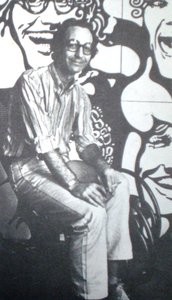
Jorge De La Vega
1930 - 1971 , Argentina
Breve Biografia
- Artistic Movement Or Style: Nueva Figuración, Pop Art
- Artists Or Movements Influenced By This Artist: ['Nueva Figuración']
- Artists Who Influenced This Artist: ['Pop Art artists']
- Date Of Birth: March 27, 1930
- Date Of Death: August 26, 1971
- Full Name: Jorge Luis de la Vega
- Nationality: Argentine
- Notable Artworks:
- Praise
- Try Again
- Flirt
- Games of Love and Chance
- Incubation
- Puzzle
- Place Of Birth: Buenos Aires, Argentina