

 Visualizar na parede
 Compartilhar
 Compartilhar
 Detalhes
 Guia
Guia

 Baixar imagem
 Semelhantes
 Raio X
 Ver diaporama
 Q&A
Q&A Estatísticas
William Bligh
 Oil On Canvas
- WallArt
- Neoclassicism
 1776
1776- Early Modern
 95.0 x 83.0 cm
 National Portrait Gallery
 Ler mais
Giclée / Impressão de Arte
Impressão giclée ou em tela de qualidade de museu, com produção rápida e opções flexíveis de acabamento. ( Comprar pintura feita à mão Alternar para Imagem Digital)




































Escolha entre os nossos tamanhos pré-definidos que respeitam as proporções originais da obra de arte.

Insira a largura e a altura desejadas para se ajustarem à sua moldura ou parede. Uma impressão pode ser apenas cortada, nunca ampliada além da imagem original; portanto, um tamanho com proporções diferentes resultará na perda de parte da imagem. Enviamos uma maquete digital para sua aprovação antes de realizarmos a impressão. A imagem exibida nesta página não mostra o corte real — apenas a maquete o faz.
Entrega mundial () em 2 semanas, em vez das 4/5 semanas padrão. (31 Outubro)

Envio expresso gratuito para todo o mundo

Tela de Linho de Alta Qualidade

Seguro de transporte completo

Garantia de Reembolso de Impostos Alfandegários

Garantia de Fidelidade Cromática

Política de Devolução em 100 Dias (Apenas para Defeitos)

Garantia de reembolso de 100%

Oferta de desconto por quantidade
 A opção de vidro está disponível apenas para tamanhos inferiores a 110 cm

William Bligh
Giclée / Impressão de Arte
Tamanho da Reprodução
-


Preço Total
€ 71
A Glimpse into Naval Grandeur: The Portrait of William Bligh
In this captivating portrait from 1776, the artist John Webber invites us into the intimate yet commanding presence of a young William Bligh. Before the tumultuous legends of the HMS Bounty and the infamous mutiny became etched into maritime history, Webber captures Bligh in a moment of poised potential. The subject is presented with a striking dignity, dressed in the crisp naval uniform of a master and lieutenant. His attire—a deep blue suit contrasted against stark white trousers and a refined black bow tie—speaks to the discipline and order of the Royal Navy during the late eighteenth century. There is an undeniable gravity in his gaze; he looks directly at the viewer, his dark hair framing a face that suggests both the exceptional navigational intellect and the formidable, perhaps even volatile, character that would later define his career.
The composition is masterfully balanced, blending the intimacy of a personal portrait with subtle nods to the maritime world that shaped Bligh’s destiny. As the man holds a pipe, a detail that lends a touch of human vulnerability and contemplative stillness to the scene, the background begins to whisper stories of adventure and exploration. The presence of two boats flanking the figure serves as more than mere decoration; they are symbols of the vast, uncharted oceans Bligh would soon traverse. This layering of personal character against the backdrop of nautical elements creates a profound sense of anticipation, as if the viewer is witnessing the calm before a great historical storm.
Technique and the Artistry of John Webber
John Webber’s technical prowess is on full display in this work, showcasing the refined training he received at the Académie Royale in Paris and the Royal Academy in London. The brushwork is deliberate and smooth, creating a surface that allows light to play across the textures of the fabric and the subtle contours of Bligh's face. Webber employs a sophisticated use of chiaroscuro, utilizing light and shadow to bestow a three-dimensional quality upon the subject, making him appear almost tangible within the frame. The meticulous attention to detail—from the precise folds in the naval uniform to the delicate rendering of the clock hanging above—demonstrates a level of craftsmanship that elevates the piece from a mere likeness to a work of high art.
For the discerning collector or interior designer, this painting offers a rich tapestry of textures and tones that can serve as a sophisticated focal point in any curated space. The deep blues and classic whites provide a timeless color palette that complements both traditional and contemporary decor. Whether placed in a study filled with leather-bound books or a grand hallway, the portrait commands attention through its historical weight and aesthetic elegance. It is not merely a depiction of a man, but an invitation to contemplate an era of discovery, discipline, and the enduring human spirit of exploration.
Perguntas e Respostas
Onde posso encontrar um guia sobre "William Bligh"?
A página Ficha informativa de "William Bligh", de John Webber oferece uma ficha informativa imprimível em duas folhas: a obra de arte com sua tabela de identificação, uma linha do tempo situando-a no período de vida do artista, outras obras do artista, a paleta de cores extraída e citações prontas para copiar em quatro estilos.
Como o movimento e a época se encontram em "William Bligh", de John Webber?
"William Bligh" pertence ao movimento Neoclassicism, e seu criador atuou na era Early Modern.
Qual é a técnica e as dimensões da obra "William Bligh"?
"William Bligh" foi realizada em Oil On Canvas e mede 95 x 83 cm em sua forma original.
Biografia do Artista
Early Life and Education
- Birth and Family: John Webber was born on October 6, 1751, in London, United Kingdom. His father, Abraham Wäber, was a Swiss sculptor who anglicized his name upon moving to London and marrying Mary Quant in 1744.
- Early Training: Webber received his initial education in Bern, Switzerland, where he lived with his paternal aunt from the age of six. He began his artistic training as an apprentice to Johann Ludwig Aberli, a prominent landscape painter.
- Studies in Paris: From 1770, Webber continued his studies at the Académie Royale in Paris for four years, focusing on drawing and oil painting. This period honed his skills and broadened his artistic horizons.
- Return to London: After completing his education abroad, Webber returned to London and further refined his techniques at the Royal Academy.
The Pacific Expedition with Captain Cook
- Appointment as Artist: In 1776, Webber was selected as the official artist for Captain James Cook's third voyage of discovery in the Pacific. This opportunity arose through a recommendation from Daniel Solander, a botanist who had accompanied Cook on his first voyage.
- Voyage and Documentation: From 1776 to 1780, Webber meticulously documented the landscapes, people, and cultures encountered during the expedition. He created numerous drawings and watercolors of scenes in New Zealand, Hawaii (then known as the Sandwich Islands), Alaska, and other Pacific locations.
- First European Contact with Hawaii: Webber became the first European artist to make contact with Hawaii, producing significant visual records of the islands and their inhabitants. His watercolor landscapes of Kauai and Hawaii Island, including Kealakekua Bay and Kowroaa village, are particularly notable.
- Portraits of Indigenous Peoples: Webber also created portraits of prominent figures like Tereoboo, King of Owyhee, offering valuable insights into the appearance and customs of Pacific Islanders.
- Illustrations for Admiralty Account: His work was crucial in illustrating the British Admiralty's official account of the expedition, published in 1784. These engravings brought the discoveries of Cook’s voyage to a wider audience.
Career and Artistic Style
- Exhibitions at the Royal Academy: Following his return to England in 1780, Webber exhibited around 50 works at the Royal Academy between 1784 and 1792. His paintings showcased both landscapes and figures.
- Recognition and Membership: He was elected an associate of the Royal Academy in 1785 and a full member in 1791, demonstrating his growing reputation within the British art world.
- Landscape Focus with Figurative Elements: Webber’s artistic style primarily focused on landscapes, often incorporating figures to add narrative or scale. A notable example is “A Party from H.M.S. Resolution shooting sea horses,” exhibited in 1784.
- Influence of Earlier Masters: While his work reflects the influence of earlier landscape painters like Aberli, Webber developed a unique style characterized by detailed observation and accurate representation of natural environments.
Legacy and Collections
- Historical Significance: John Webber’s artwork provides invaluable visual documentation of Captain Cook's voyages and the first European encounters with Pacific cultures. His images offer a unique perspective on 18th-century exploration and cultural exchange.
- Museum Holdings: His works are held in numerous prestigious collections worldwide, including the Anchorage Museum of History and Art (Alaska), the Bishop Museum (Honolulu), the British Museum (London), the National Maritime Museum (London) ,the Bern Historical Museum (Switzerland), and the San Antonio Museum of Art.
- Enduring Impact: Webber’s paintings continue to be studied by art historians, anthropologists, and scholars interested in the history of exploration, Pacific cultures, and 18th-century art. His detailed depictions offer a glimpse into a pivotal period of global interaction.
- Death and Remembrance: John Webber died on May 29, 1793, leaving behind a significant artistic legacy that continues to resonate today.

John Webber
1751 - 1793 , United Kingdom
Dados Rápidos
- Full Name: John Webber
- Nationality: English
- Date Of Birth: 1751
- Date Of Death: 1793
- Place Of Birth: London, United Kingdom
- Notable Artworks:
- Ship Cove
- Cook's Portrait
- Poedua portrait
- Artistic Movement Or Style: Landscape, Portraiture
- Artists Who Influenced This Artist: ['Aberli']
Artigos Relacionados

John Singer Sargent: As 25 Obras-Primas que Definem um Ícone da Arte
Descubra as 25 obras-primas de John Singer Sargent, o mestre do retrato e do impressionismo americano. Explore a história, técnica e beleza atemporal de seus quadros mais famosos. Encontre reproduções de arte exclusivas para decorar sua casa com elegância em OriginalUniqueArt.com.

John Constable: As 25 Obras-Primas que Definem o Mestre da Paisagem Inglesa | OriginalUniqueArt
Descubra as 25 obras-primas de John Constable, o mestre da paisagem inglesa! Explore a arte romântica, cores vibrantes e histórias fascinantes por trás de 'Hay Wain' e outras pinturas icônicas. Encontre reproduções de alta qualidade para decorar sua casa com OriginalUniqueArt.com.
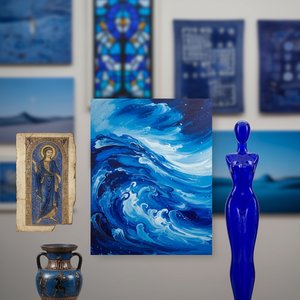
The Allure of Azure: Exploring the Symbolic & Aesthetic Depths of Blue in Art History
Explore the rich history of blue in art! Discover its symbolism, from ancient pigments to modern masterpieces by Kandinsky & Seurat. Uncover the psychological impact and cultural meanings behind this captivating hue.

Elevando a Estética do Espaço de Trabalho: As 5 Principais Tendências Artísticas para Escritórios Contemporâneos
Descubra as 5 principais tendências artísticas para transformar seu escritório em um espaço inspirador e produtivo! Design, bem-estar e identidade visual para o sucesso do seu negócio.

As 10 Obras Mais Famosas em Tons de Azul Ardósia | OriginalUniqueArt.com
Descubra as 10 pinturas mais emblemáticas em tons de azul ardósia! Explore a história, artistas como Monet e Van Gogh, e o significado da cor na arte. Encontre reproduções de alta qualidade para decorar sua casa com OriginalUniqueArt.com.