

 Visualizar em escala
 Enviar
 Compartilhar
 Ver detalhes
 Guia de Obras do Aluno

 Baixar imagem
 Semelhantes
 Raio X
 Apresentação de slides
 Estatísticas
The Buffalo Hunt
 Oil On Canvas
- WallArt
- Renaissance Composition
 1855
1855 75.0 x 99.0 cm
 Crystal Bridges Museum of American Art
 Ver mais
Reprodução em Óleo Feita à Mão
Óleo sobre tela pintado à mão no tamanho e moldura de sua escolha, feito sob encomenda pelos nossos artistas. ( Alternar para Impressão Ver Imagem Digital)




P118B €10

P118H €10

P118W €10

P438Z €10

P508JH €12

P508YH €12

P805H €10

P805Z €10

P919BZ €10

P919G €10

P919XJ €10

P959ZH €10

P968JZ €12

W106C €8

W218G €10

W218JH €8

W218Y €10

W307PJ €10

W316G €10

W316PJ €8

W316Y €10

W398PJ €8

W4111J €10

W500HY €15

W500JH €15

W692G €12

W849H €8

W940BG €15

W953PJ €8




Escolha entre os nossos tamanhos pré-definidos que respeitam as proporções originais da obra de arte.

Pode inserir as suas próprias dimensões para se adequar a uma moldura ou espaço específico. Se o tamanho selecionado não corresponder às proporções da imagem original, iremos cortar a obra de arte ou estender a pintura com elementos adicionais pintados à mão. Um esboço digital será enviado para sua aprovação antes do início da produção.
Tenha em atenção que a pré-visualização no ecrã não reflete o corte ou extensão real. Apenas o esboço mostrará com precisão a composição final.
Embora tamanhos personalizados estejam disponíveis, recomendamos selecionar uma dimensão da lista predefinida para preservar as proporções originais.
Após o pedido, a equipa OriginalUniqueArt.com enviará um e-mail ao cliente para solicitar instruções e fornecer uma prévia do esboço.
Entrega mundial () em 3 a 4 semanas, em vez das 5 semanas padrão. (13 Outubro). Sem comprometer a qualidade.

Envio expresso gratuito para todo o mundo

Tela de Linho Premium

Seguro de transporte total

Garantia de Reembolso de Impostos Alfandegários

Garantia de Fidelidade de Cor

Política de Devolução em 100 Dias (Apenas para Defeitos)

Garantia de reembolso de 100%

Desconto para múltiplas unidades
 A opção de vidro está disponível apenas para tamanhos inferiores a 110 cm

The Buffalo Hunt
Técnica de Reprodução
Dimensões da Reprodução
-


Preço Total
€ 302
A Vision of the American Frontier: The Buffalo Hunt by John Mix Stanley
John Mix Stanley’s “The Buffalo Hunt” isn't merely a painting; it’s a meticulously crafted window into a pivotal moment in American history and the vibrant culture of the Blackfeet people. Completed in 1855, this monumental canvas transports us to the vast expanse of the Montana prairie, capturing not just a hunt but a complex interplay of observation, artistic interpretation, and a burgeoning fascination with the ‘wild west.’ Stanley, a pioneer himself who spent years documenting Native American life across the American West, imbued this work with a deliberate formality—a conscious nod to Renaissance composition—that elevates it beyond simple documentary representation. The pyramidical arrangement of figures, echoing the stability of classical art, subtly contrasts with the untamed energy of the scene, suggesting an attempt to impose order upon the raw power of nature and the Blackfeet’s mastery over it.
A Study in Earth Tones and Dynamic Movement
The painting's immediate impact lies in its rich palette—a symphony of earthy browns, tans, muted greens, and deep blues that evoke the stark beauty of the prairie landscape. Stanley skillfully employs atmospheric perspective, receding elements into a hazy distance to create an illusion of immense depth. The strong diagonal lines generated by the charging horses and the purposeful strides of the warriors inject a palpable sense of movement, drawing the viewer’s eye through the composition. Notice how the darker hues of the horses and figures stand in sharp contrast against the lighter background—a deliberate choice that emphasizes their strength and dominance within this environment. The brushwork itself is remarkably detailed, hinting at Stanley's traditional oil painting technique; visible strokes suggest a layering process, adding texture to the fur of the buffalo and the clothing of the hunters.
Echoes of Renaissance Art and Respect for Indigenous Culture
Stanley’s artistic choices reveal a fascinating dialogue with European art history. The pyramidal composition, reminiscent of Renaissance masters like Raphael and Leonardo da Vinci, lends an air of grandeur and authority to the scene. However, Stanley doesn't simply replicate classical forms; he adapts them to depict a distinctly American subject matter. The figures themselves—mounted Blackfeet warriors—are rendered with a remarkable degree of respect, recalling early equestrian portraits that celebrated European leaders. This deliberate gesture suggests Stanley’s recognition of the Blackfeet’s skill and courage as hunters and warriors, imbuing the painting with a subtle sense of admiration. The historical context is crucial: Stanley witnessed firsthand the hunting skills of the Piegan Indians at Fort Benton in 1853, an experience that profoundly shaped his artistic vision.
Lost Legacy and Enduring Symbolism
Sadly, much of Stanley’s vast collection of paintings documenting Native American life was destroyed in the devastating 1865 fire at the Smithsonian Institution. Only seven works survived, a tragic loss for art history. Despite this, “The Buffalo Hunt” remains a powerful testament to Stanley's artistic talent and his insightful portrayal of the American West. The painting’s symbolism extends beyond a simple depiction of a hunt; it speaks to themes of exploration, cultural encounter, and the complex relationship between humans and nature. It serves as a poignant reminder of a lost legacy—a collection of paintings that once offered invaluable insights into the lives and traditions of Native American tribes during a transformative period in American history. Reproductions of this iconic work continue to resonate today, offering viewers a glimpse into a bygone era and prompting reflection on the enduring spirit of the frontier.
Perguntas e Respostas
Como "The Buffalo Hunt" de John Mix Stanley conecta Renaissance Composition ao país de origem do artista?
"The Buffalo Hunt" conecta o movimento Renaissance Composition com Estados Unidos da América por meio do local de nascimento de seu criador.
Onde posso ver uma prévia de "The Buffalo Hunt"?
Para visualizar uma reprodução de "The Buffalo Hunt" de John Mix Stanley, acesse a página de Visualização da obra.
Qual era a idade de John Mix Stanley ao criar "The Buffalo Hunt" em 1855?
John Mix Stanley tinha 41 anos quando criou "The Buffalo Hunt" em 1855. A idade é calculada a partir do ano de nascimento do artista, 1814.
De que material é feita a obra "The Buffalo Hunt"?
"The Buffalo Hunt" é executada em Oil On Canvas.
Como "The Buffalo Hunt" equilibra luz e sombra?
"The Buffalo Hunt" possui bright de brilho geral, e sua luminância é Gentle Luminance.
Qual ambiente é sugerido para "The Buffalo Hunt" de John Mix Stanley?
"The Buffalo Hunt" de John Mix Stanley é recomendado para um(a) Living Room. Esta sugestão baseia-se no tema, nas cores e na atmosfera da obra.
Qual uso e espaço são recomendados para "The Buffalo Hunt" de John Mix Stanley?
O uso de (Statement) e o espaço (Living Room) são as duas recomendações registradas para "The Buffalo Hunt" de John Mix Stanley.
Quem é o artista por trás de "The Buffalo Hunt"?
O artista por trás de "The Buffalo Hunt" é John Mix Stanley. A obra está catalogada sob o nome de John Mix Stanley.
Biografia do Artista
A Pioneer of the American West: The Life and Art of John Mix Stanley
John Mix Stanley, born in Canandaigua, New York, on January 17, 1814, wasn’t merely a painter; he was an explorer, a documentarian, and a vital witness to a rapidly transforming America. His life story is one woven with threads of resilience, artistic passion, and a profound connection to the landscapes and peoples of the American West – a region he relentlessly sought to capture on canvas. Orphaned at the tender age of twelve, Stanley’s early years instilled within him an unwavering self-reliance that would shape his adventurous spirit and inform his approach to art. He began his journey not with formal training, but through diligent self-teaching, absorbing the techniques of sign painting and portraiture from a coach maker – a practical apprenticeship that laid the foundation for his later artistic explorations.From Detroit’s Streets to the Southwest’s Trails
Stanley's artistic trajectory took its first significant turn in 1832 when he migrated to Detroit, Michigan, a bustling frontier town brimming with opportunity and a burgeoning art scene. Here, he honed his skills as an itinerant painter, capturing portraits of local residents and adorning storefronts with vibrant signs. This period wasn’t simply about mastering technical proficiency; it was a crucial phase of observation – learning to discern the nuances of light, form, and human expression, skills that would later become hallmarks of his distinctive style. However, Stanley's ambition extended beyond the confines of Detroit. Inspired by the work of George Catlin, who sought to document Native American life with empathy and respect, he embarked on a transformative journey westward in 1842, accompanied by Sumner Dickerman.Documenting Cultures: The Indian Territory Expeditions
This expedition to the American Southwest marked a pivotal moment in Stanley’s career. He wasn't merely seeking scenic vistas; he was driven by a genuine desire to record the lives and customs of Native American tribes – a mission that resonated deeply with his own sense of adventure and his growing appreciation for diverse cultures. Establishing himself at Fort Gibson in Indian Territory (present-day Oklahoma), Stanley immersed himself within tribal communities, attending significant councils like the one between Cherokee and Texas representatives at Tahlequah. He meticulously documented these encounters through portraits – intimate studies that captured not just physical likenesses but also a sense of personality and dignity – alongside scenes of daily life, offering an invaluable visual record of a world on the cusp of profound change. His commitment to this documentation continued throughout the Mexican-American War in 1846, where he served as a draftsman for Colonel Stephen Watts Kearney’s expedition to California and the Oregon Territory, producing detailed sketches that captured the scale and drama of the military campaign.Hawaii's Royal Portraits and Beyond
Stanley’s explorations didn’t end with the American West. In 1847, he traveled to Hawaii, where he spent nearly twelve months painting portraits of King Kamehameha III, his wife, and members of the royal family – a testament to his versatility and willingness to embrace new cultural experiences. This period showcased his ability to adapt his artistic style to suit diverse subjects and settings, further solidifying his reputation as a skilled and adaptable artist. He continued his travels throughout the 1850s, undertaking expeditions to various locations across the American West, documenting landscapes and Native American tribes with unwavering dedication.Style, Influences, and Historical Significance
Stanley’s artistic style was rooted in academic principles – he meticulously studied anatomy and perspective – yet infused with the immediacy of on-site observation. His paintings weren't simply representations; they were carefully composed narratives that captured the essence of a particular moment or subject. While he drew inspiration from George Catlin, whose empathetic depictions of Native Americans profoundly influenced him, Stanley’s approach often lacked the same level of emotional depth. Nevertheless, his work remains invaluable as historical documentation, providing unique insights into 19th-century encounters between European Americans and Native American tribes – a period defined by both conflict and cultural exchange. The tragic loss of much of his artwork in the 1865 Smithsonian Institution fire—along with subsequent losses in other fires—significantly impacted his legacy, obscuring his contributions for decades. However, recent years have witnessed a renewed appreciation for Stanley’s work, recognizing its significance as both art and historical record.A Legacy Rediscovered
Despite the devastating loss of many of his paintings, John Mix Stanley's legacy endures through the surviving works held by museums across the nation. These paintings serve as poignant reminders of a pioneering artist who dedicated his life to documenting the landscapes and peoples of the American West – a region forever shaped by exploration, conflict, and cultural exchange. Stanley wasn’t just an artist; he was a visual chronicler, a witness to a vanishing world, and a vital link to a pivotal chapter in American history. His paintings offer invaluable insights into the lives and cultures of those who inhabited this vast and dynamic landscape, reminding us of the importance of preserving and understanding our shared past.
John Mix Stanley
1814 - 1872 , Estados Unidos da América
Informações Rápidas
- Artistic Movement Or Style: Realismo Romântico
- Artists Who Influenced This Artist: ['George Catlin']
- Date Of Birth: 17 Jan 1814
- Date Of Death: 10 Abr 1872
- Full Name: John Mix Stanley
- Nationality: Americano
- Notable Artworks:
- Ko rak koo kiss
- Passagem de um obstáculo
- Place Of Birth: Canandaigua, EUA
Artigos Relacionados

John Constable: As 25 Obras-Primas que Definem o Mestre da Paisagem Inglesa | OriginalUniqueArt
Descubra as 25 obras-primas de John Constable, o mestre da paisagem inglesa! Explore a arte romântica, cores vibrantes e histórias fascinantes por trás de 'Hay Wain' e outras pinturas icônicas. Encontre reproduções de alta qualidade para decorar sua casa com OriginalUniqueArt.com.

Realismo Americano: 10 Obras-Primas que Moldaram a Arte e Decoram o Lar
Descubra as 10 obras-primas do Realismo Americano! Explore a história de Hopper, Homer e Cassatt. Encontre reproduções de arte com qualidade museológica para decorar sua casa. Inspire-se em cores vibrantes e atmosferas únicas. Explore a coleção completa na OriginalUniqueArt.com.

Grant Wood & American Regionalism: Identity, Myth & the Rural Landscape
Explore the world of Grant Wood & American Regionalism with OriginalUniqueArt. Discover the symbolism behind 'American Gothic', recurring themes, and the movement's lasting impact on art history. High-quality reproductions available.

John Singer Sargent: As 25 Obras-Primas que Definem um Ícone da Arte
Descubra as 25 obras-primas de John Singer Sargent, o mestre do retrato e do impressionismo americano. Explore a história, técnica e beleza atemporal de seus quadros mais famosos. Encontre reproduções de arte exclusivas para decorar sua casa com elegância em OriginalUniqueArt.com.
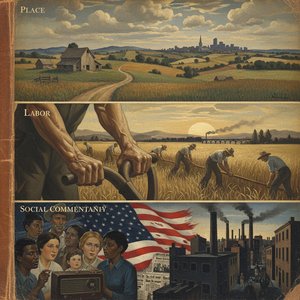
American Regionalism: A Crucible of Identity – Exploring Themes of Place, Labor & Social Commentary
Explore American Regionalism's powerful depiction of the American heartland during the Great Depression. Discover Grant Wood, Thomas Hart Benton & more. Expert analysis & high-quality art reproductions at OriginalUniqueArt.
